Borderland communities are often a vibrant nexus of trade, culture, and power. These eclectic spaces offer opportunities to capitalise on diverse commodity flows and differences in currency exchange rates, trade regulations, and market patterns. People living in borderlands – often closer to foreign countries than their own capital cities – tend to share deep and longstanding familial, ethnic, and cultural connections.
But borderlands can also be sites of fierce contestation, violence, and suffering. Clashes between neighbouring states often play out in periphery regions – with devastating effect on communities caught in the crossfire. Decisions made thousands of miles away at the state centre can suffocate life at the border, and the threat of violent incursions, cross-border crime, and border closures wreak havoc on lives and livelihoods. This is particularly the case in regions where borders remain contested and state-building efforts raise complaints of disenfranchisement and neglect.
How war in Ethiopia’s Tigray region fractures frontier communities
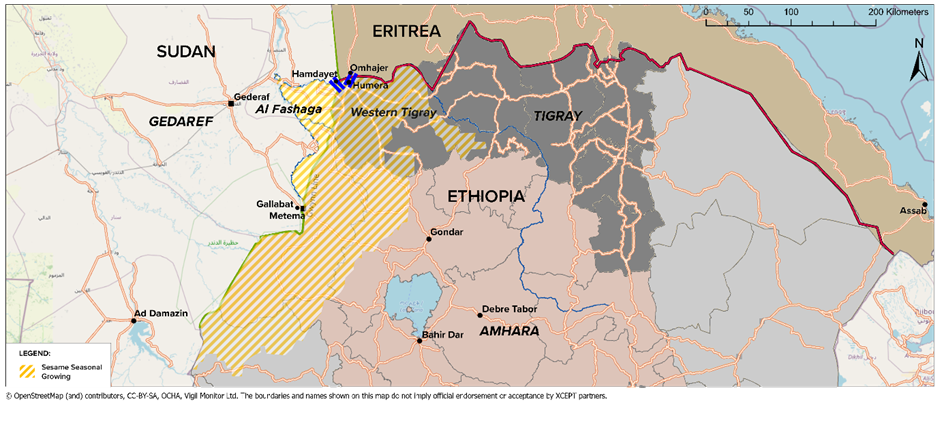
Take the Horn of Africa. In the borderlands of Ethiopia, Eritrea, and Sudan – a region far from the bitter politics of their respective capital cities – the close-lying border towns of Humera (in contested Western Tigray, Ethiopia), Om Hajer (Eritrea), and Hamdayet (Sudan) have long relied on agriculture, pastoralism, and cross-border trade for their livelihoods. Each of these communities experienced dramatic changes following the outbreak of conflict in Tigray in northern Ethiopia in November 2020.
Further south lie the towns of Metema (Ethiopia) and Gallabat (Sudan), little more than a stone’s throw from each other on either side of the Ethiopia-Sudan border. Both communities gained significance as an indirect result of political upheaval in the Horn of Africa in the 1990s. Gallabat’s importance grew following Eritrea’s secession from Ethiopia in 1991, which created a landlocked Ethiopia. The Ethiopian and Sudanese governments collaborated over the next few years to link fertile regions of Amhara via the trading town of Gondar by road through the border towns of Metema and Gallabat and the eastern Sudanese state of Gedaref, providing Ethiopia with an alternative connection to the Red Sea at Port Sudan. Metema, meanwhile, rose in significance as a source of agricultural labour for Sudan, following the loss of South Sudanese workers after that country’s independence in 2011.
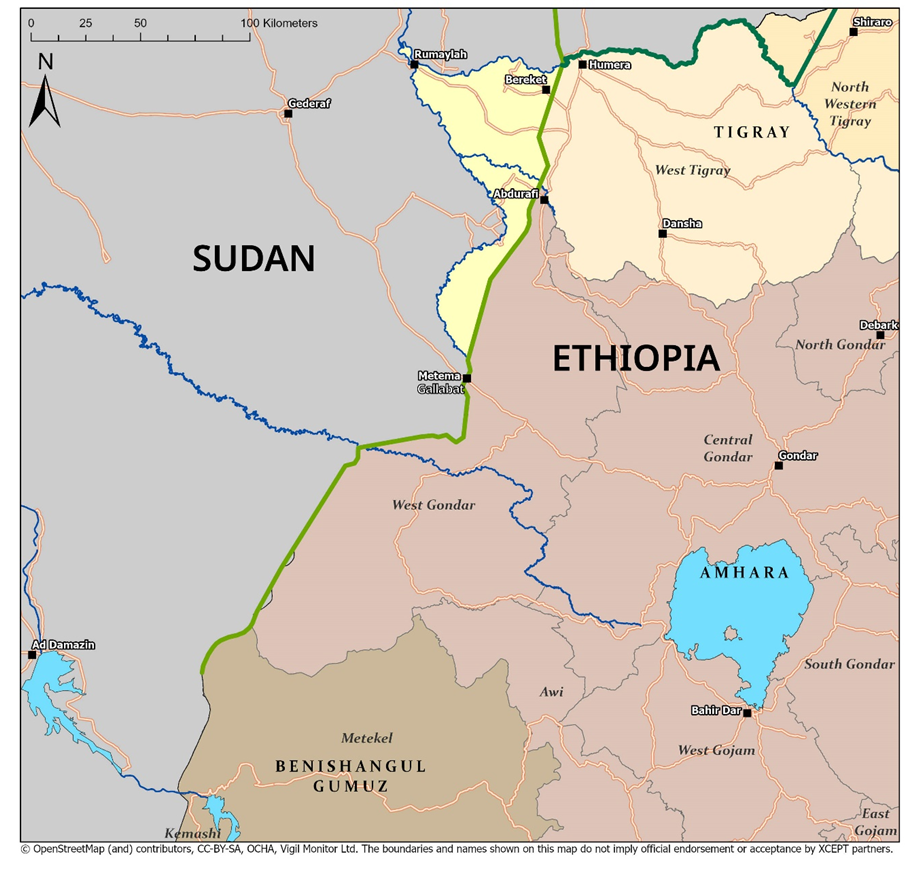
In Tigray’s north-western tip, the displacement of Tigrayan populations has broken the cultural, social, and economic ties that used to span the Sudan-Ethiopia-Eritrea border. Since the outbreak of war in November 2020, the town of Humera has experienced dramatic demographic changes, as a result of the huge outflow of Tigrayans and the influx of Amhara to Western Tigray. An initial exodus in November 2020 saw many Tigrayans flee from Humera into Eastern Tigray, followed by a second exodus in July 2021. Many Tigrayans also made their way to the Sudanese border town of Hamdayet, which hosts UNHCR’s reception centre for refugees. By December 2020, it recorded over 20,000 arrivals from Tigray. These numbers have now fallen: in March 2022, only a few dozen Tigrayan refugees were recorded as having arrived at the centre.
These flights transformed the ethnic makeup of Humera town, which is now predominantly Amhara – particularly people from the Amhara Special Forces and the youth movement Fano, who came north to annex Western Tigray. Remaining Tigrayans in Humera are mainly women, children, and the elderly, including some masquerading as ethnically Wolkait – an Amhara group living in Tigray close to the Amhara border – to avoid the risk of persecution on the grounds of ethnicity in this now predominantly Amhara town.
Further south, Metema also is becoming increasingly ethnically Amhara. Many Tigrayan residents moved back to Tigray in 2016, with another exodus in 2020/21 due to the current conflict. Only a handful remain today, alongside other ethnic groups living in a strained co-existence, including a sizeable Sudanese population, who are acutely affected by border closures and political tensions between Ethiopia and Sudan. Politically, the growing preponderance of Amhara in Metema might explain why the hard-line National Movement of Amhara (NaMA) is gaining in popularity over Ethiopian President Abiy’s Prosperity Party in this region.
A shake-up in trade
The newly arrived Amhara populations in Western Tigray have forged new trade links between across regions of Ethiopia and across the border into Eritrea. These include links between Humera (in contested Western Tigray) and Metema (in Amhara), Ethiopian towns lying around 150 kilometres from each other: gold is smuggled between them based on ethnic links between Amhara traders. Sesame and other agricultural produce are also illicitly traded from Humera south to the Amhara region and north to Eritrea. Income streams are thus being transferred from Tigrayan to Amhara and Eritrean control, possibly providing a financial means to sustain their forces in the conflict.
The border between Om Hajer in Eritrea and Humera in Ethiopia – which had been closed for two decades following the 1998-2000 Ethiopia-Eritrea war – is now only safe for Eritreans and Amhara people to cross. There are reports that Tigrayans have returned to northern Ethiopia across this border, propelled by the desire to join the fight in Tigray or due to lack of livelihoods support in Sudan. Such a journey would have been highly risky and necessarily covert, given the area is controlled by forces opposing the Tigray People’s Liberation Front (TPLF) and Tigrayan Defence Forces (TDF).
A rise in illegal trade
The conflict has stifled licit trade across regional borders but increased opportunities for lucrative, albeit dangerous, illicit trade. For example, formal trade has completely evaporated between the Ethiopian town of Humera and to towns of Hamdayet in Sudan and Om Hajer in Eritrea. Daily boat journeys that used to carry goods across the Tekeze River between Hamdayet and Humera – the official border – have stopped.
Illicit trade routes here are now controlled by Amhara armed groups and the Eritrean Defence Forces manning the border between Ethiopia and Eritrea. On the Sudanese side, smugglers from ethnic groups which straddle the Eritrean-Sudanese border work with authorities at the border. Illicit trade is more conflict-orientated, with both fighters and local communities buying weapons. Furthermore, hardened borders mean that the commodities and essential goods that do reach markets are sold at inflated prices, further plunging border communities into crisis.
The nature of trade has also changed dramatically at Metema-Gallabat, the main border crossing between Sudan and Ethiopia. Political tensions have led to frequent closures of the border since November 2020. This has had a devastating impact on local livelihoods on both sides of the border. Thousands of Ethiopian seasonal migrants who used to cross into Sudan at Metema and the town of Mai Khadra further north for agricultural work now remain at home. As a result, economic livelihoods are suffering in each town.
The lucrative trade in guns and people
Illicit trade has long been a significant source of income for border communities in this area. But the nature of smuggling has changed dramatically since the war, with a rise in arms and people smuggling. The Metema-Gallabat border is a long-established crossing on the migration route west and north through Sudan and Libya to Europe and a vibrant market for the movement of people – both trafficked against their will and smuggled by paid brokers. This crossing has seen the numbers on the move swollen by people forced to flee by war, and a rise in people smuggling.
Weapons smuggling has also surged due to the huge demand for guns created by the conflict. Trade in guns and people are both associated with increased criminal activity, making communities more fearful of their safety moving around and between the towns.
Repairing relations among periphery communities
Reports from these borderland communities, where some of the most violent fighting has occurred during the Tigray conflict, highlight the disruption of longstanding inter-ethnic relationships as a result of the fighting. “Now, there is no link or good relationship among Amhara and Tigrayans and no hope they will live together as before” cited one refugee Tigrayan farmer in Sudan. Another Tigrayan refugee described smooth relations between Ethiopia and Sudan and ethnic Amhara and Tigrayans prior to the conflict: “our town was where people lived together as a family; but the conflict broke the bond among the people”.
Restoring economic and community links across borders is key to security and stability in these areas, where the history of working together across ethnic divisions for mutual benefit runs deep. Repairing cross-border relations also would be a boon to governments, which stand to benefit from greater volumes of trade and attendant customs duties. But there are few signs to date of improving conditions. On the contrary, hardened borders are exacerbating community insecurity, constraining trade, driving smuggling, and enabling the proliferation of arms that sustain the conflict. As a result, links among the local communities could suffer for years to come.
Decades of persecution of the Rohingya community in Myanmar have culminated in large waves of forced displacement, and a total of nearly one million now live as refugees in the camps of Cox’s Bazar across the Bangladesh border. Many others have sought refuge in Malaysia and other countries across the region.
Seeking mobility to flee violence and persecution has been predominantly a life-saving necessity, and sometimes it is also an attempt to secure better long-term prospects and security. But the prospect of transnational mobility gives rise to a tapestry of risks: people sometimes suffer sexual violence, starve, or drown during boat journeys. Despite these risks, some Rohingya people continue to pursue transnational mobility in an effort to improve their own lives and those of their families.
In 2019–2020, researchers from the Centre for Peace and Justice (CPJ), Brac University held interviews with residents of the refugee camps encouraging them to share their family’s stories. These interviews have now been written into narratives, taking into account sensitivities and security. Names and other identifying details have been changed or omitted where appropriate to protect respondents. Accompanying the narratives are illustrations of emerging themes interpreted by a Bangladeshi artist and are not meant to represent accurate depictions of the situation.
The result of these interviews is a rich collection of multigenerational oral histories that shed light on each family’s unique and personal circumstances. As a Rohingya learner who is a participant in a CPJ training course notes, “Life is not easy to survive without freedom, wherever you go but maintaining your identity is very important.” These visual storytelling narratives aim to amplify the voices of these Rohingya people while bringing awareness to their plight. To read the full narratives, visit https://rohingyastories.org/
A Refugee Child Labours to Achieve His Goals
As a kid, Amin provided labor services in the camp. He started as a porter carrying firewood and food rations, earning about 0.01 USD per load. On some nights he would attend a private learning center and study until the morning. To earn more, he found work at a tea stall and later applied as a volunteer with an NGO. He was able to pay tuition with his new job. At the time, few Rohingya refugee students reached secondary school. Through a friend who noticed his academic talent, he came to Cox’s Bazar to take admission exams and was admitted at a high school. He studied there for three years. When he received his high school exam results, Amin was overjoyed to learn that he had passed. He obtained admission to a technical college but began dreaming of attending a university.

“As a kid, I would go to early morning madrassa classes, then to a private tutor to study until later in the morning. After that I would go to NGO offices looking for loads to carry. It was a slow and hard way to make money.“
His study time was often compromised by the need to continue working full-time as an NGO teacher to help support his family. Good luck occurred when, two months before his final graduating exams, there was a protest in the camp by all the teachers – a strike to demand higher salaries. This gave Amin two free months to study without the option to work. After graduating from technical college, he managed to get admission to a university in Bangladesh, where he now studies.
Providing Remittances from Jammu Kashmir
“In 2012, some Rohingya girls were raped by the Tatmadaw,” Asma says. At the age of 13 Asma was sent to India by her family as the situation in Myanmar was getting worse and her family did not have enough money to pay for a dowry for a good marriage in Myanmar. She first traveled to Bangladesh and through a trafficker continued her travels to India with a group of migrants. Once they arrived by train in Jammu Kashmir, she was connected with a Rohingya family.
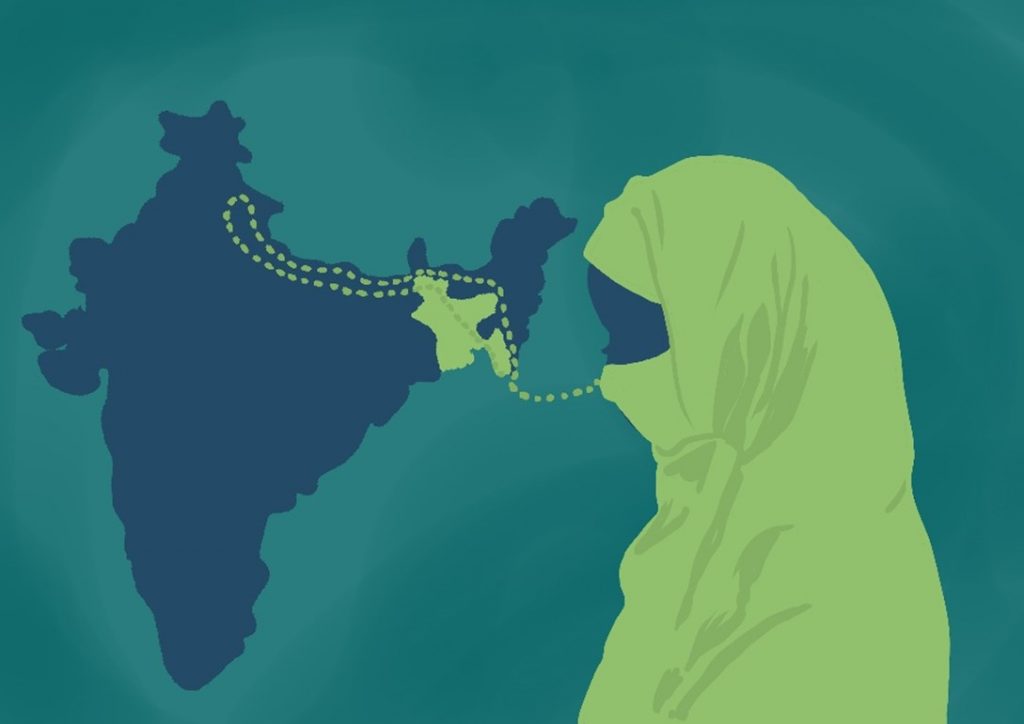
Asma stayed with the family for a month until her marriage was arranged. Her husband who is eight years her senior, worked as a cleaner at a cinema. During the time, Asma and her husband sent remittances to his siblings as well as to Asma’s parents in Myanmar, relying on the services of a hundi. In 2018 she and her husband decided to come to Bangladesh, mainly to be closer to their families. Asma says that she and her husband think it best to stay in the camps for now, and are awaiting the day when they can repatriate to Myanmar.
Willful Imprisonment as a Strategy to Reunite
Hirul worked with an international NGO in Northern Rakhine State after graduating with an LLB degree. After resigning from the NGO he left his wife and two young children to migrate to Saudi Arabia. Hirul’s intention was to save up some money for a few years, then arrange for his family to come to Bangladesh and help them get established there. He thought this would be a way for his family to live safely and happily. He sent a portion of his earnings to his wife every two or three months. In 2015, when the NLD came into power, like people all over Myanmar and the world, Hirul was hopeful that Myanmar would progress into a more peaceful era. He flew to Bangladesh, where he spent ten days before being arrested when he crossed the border back into Myanmar.

“I talked with a friend who advised me that yes, six months is ok, because after that I would be able to live peacefully with my family. So I came.”
Without explanation, Hirul learned one day that his sentence had been extended from six months to five years. He was released in late 2019 after serving three years of a five-year sentence. Hirul did not find crossing the border too difficult or dangerous, but it was expensive. On the day he arrived in the refugee camp his son came to meet him in the market and showed him the way to the family’s tarpaulin shelter. “I didn’t recognize him,” Hirul remarks. “He was six when I left and he is 16 now.”
A Young Teacher Flees to India, then Bangladesh
Showrife is a 25-year-old young man born in northern Rakhine State during a time of political tensions in the early 1990s. His father was killed by Myanmar security forces when Showrife was two years old after being detained along with four relatives. Showrife’s mother was left to raise three boys on her own, and tried hard to educate them despite not having much access to income. Showrife and his two brothers were raised in part by their mother’s father, whom everyone calls Nana, an affectionate term for grandfather in the Rohingya language.

Showrife first fled to India as a teenager in 2012. He says he missed Nana and his other family members terribly and cried a lot during those days. Fortunately, he reached Jammu Kashmir, where he stayed with his brother, who helped him. Although he grew professionally in India working as an interpreter, in 2018 he traveled to Bangladesh and reunited with Nana and his mother, who had become refugees in Cox’s Bazar. Nana, now 72 and a fluent English speaker, says he is the only Rohingya medical doctor living in the camps. He was a government servant, a Myanmar citizen.
Showrife says Nana “taught us discipline. In life, you only have a few people who really show you how to live, who really guide you. Nana was that for me.”
Remittances, Education, and Fulfilling Family Duties
Yassir hails from a family of seven sons and two daughters. Two of Yassir’s brothers are in Malaysia and one sister remains in Myanmar. The rest of the family live in the camps, and depend partially on remittances sent by the brothers in Malaysia. Yassir’s two brothers in Malaysia each earn about 2,000 Malaysian ringgit per month (480 USD), one as a construction captain, and one as a worker in a teashop. The brothers’ cost of living in Malaysia is about 1,000 ringgit per month and they send the rest to their parents and siblings in the camps. Yassir says they do this gladly, knowing that their contribution supports the many members of the large family.
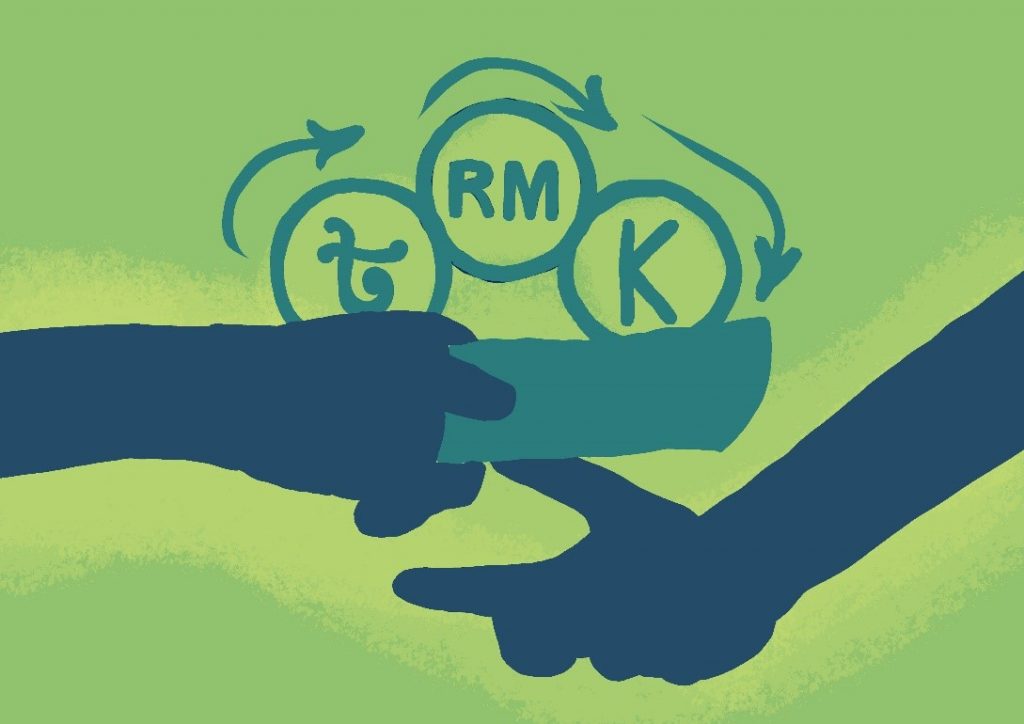
Of the two brothers in Malaysia, the elder went to Malaysia in 2012 by flight. The younger brother followed him in 2015, traveling by boat. After sailing five days to Thailand, he then traveled to Malaysia by land. Upon arriving at the Thailand-Malaysia border, Yassir’s family had to pay 1,500,000 Myanmar kyats (1,140 USD) to a trafficker before crossing. Yassir recalls how worried his family was during his brother’s journey, as they didn’t have any contact with him. Fortunately, he arrived safely.
When Syria’s Bashar al-Assad was running for re-election in 2021, scenes of patriotic regime loyalists piercing their fingers to vote “yes” in blood went viral on social media and in the country’s news blogs. Similar videos of emotional and near-ritualistic support for the regime have been the norm for decades, going back to the initial ascendance of Hafez al-Assad, Bashar’s father, in the 1970s. While some of these spectacles may be staged and enforced by the regime, the sheer volume and enthusiasm of loyalist affinity poses a challenge to those who would like to believe that Assad is isolated and that he maintains power only through fear and violence. The ideological and emotional hegemony that is often wielded by dictators should not be underestimated, and it has significant implications for the notion of shared futures and national reconciliation.
Western visions for a post-war Syria often entail the creation of disarmament and reintegration programs oriented toward members of Islamist groups and militias. However, there is less discussion about how the legacies of state authoritarianism in regime-controlled or otherwise loyalist areas will likely hinder any type of post-war reconciliation. Even in countries that have transitioned to democracy after decades of authoritarianism, the process has often been slow and fragile partly due to the psychological legacies and habits of dictatorship, which can lead people to see authoritarianism and patronage as a first answer to any hardship, conflict, or other personal difficulty.
Many analysts and political pundits have categorized Syrians into seemingly clear-cut divisive groups, labelling them according to their sect, religion, ethnicity, or more aggressively according to their political orientation. Terms such as “loyalist” (mwali) and “opposition” (mu’arud) in a binary narrative have also featured predominately among opposition groups and regime officials. Another term, “neutral” (ramady), also became popular among both opposition and regime officials. In his interview with Barbara Walters on Dec. 6, 2011 Assad hailed those with neutral political standpoints, claiming that they provided him with legitimacy. At the same time, those who have an ambivalent political position such as the neutrals are continuously perceived by the opposition as accomplices of the regime; this again imposes a politicized binarism that “if you are not with the revolution, then you are an Assadist.” Such hardened categorization of Syrians underestimates the impact of the process of ideological indoctrination and consequently divides Syrians even more.
While some have framed the logic of support or regime loyalty as stemming from sectarian affiliation, material benefits, or social status, no one has addressed how ideology and socialization over the previous five decades have impacted Syrians’ political judgment and in turn helped form a support base for Assad. Indeed, as in any war and armed conflict, the simplistic classification of parties — dividing Syrians into “opposition,” “loyalist,” and “neutral” camps — reflects an inadequate understanding of how political loyalty, passive consent to a polity, or even mobilization of dissent are to great extent shaped by long decades of ideological indoctrination and coercive tactics.
For more than 50 years the Ba’ath regime in Syria has propagated a model of national ideology that emphasizes a chivalrous and militaristic affiliation with the regime as a form of personal identity and a mode of social advancement. While the top-down control of material resources and information certainly contributed to the maintenance of the Assads’ power, the widespread internalization and replication of loyalist ideology among large segments of the general population have become the central means by which the regime continues to function. Even among those Syrians who do not consider themselves Assad loyalists, there is often a sense of political apathy or lack of belief that a different society could be possible. Such Syrians frequently describe themselves as politically “neutral” or “grey” (ramady) and focus instead on personal material success and stability. Many so-called neutrals as well as loyalists tend to look back with nostalgia on the era of relative social order and the submersion of sectarian and ethnic differences that was enforced under the Baathist dictatorship. With an opposition that is increasingly fragmented among various identities and ideologies, and a war that has dragged on for more than 10 years, there is great reason for concern that political fatigue, depression, and authoritarian nostalgia will continue to plague Syrian politics far beyond any potential political agreement to end the conflict.
The current pressing question that dominates analyses of the Syrian conflict is how to end the war in a military sense. Once that happens, however, we will be confronted with the question of how to build an alternative vision and put Syria back together to prevent a resurgence of violence. The sharpening of sectarian and ethnic lines that has occurred during the conflict will create an obstacle to democratic reforms, as will the continuation of mental and political habits ingrained through multiple generations of authoritarianism. In order to challenge these authoritarian legacies and help prevent a resurgence in political violence, the international community must pay close attention to how U.N. Security Council Resolution 2254 will be implemented, and its impacts on identity narratives and citizens’ attitudes.
While no two countries are identical, past examples of post-authoritarian nations offer useful insights for policymakers. In post-Baathist Iraq, the interim U.S.-led regime purged the Iraqi government of anyone who was identified with or linked to the Ba’ath party. Senior professionals holding high-level positions in the political, military, and civil sectors were removed. This resulted in a strong sense of exclusion and disenfranchisement among significant portions of the Iraqi population, and it was commonly viewed as a sectarian effort targeted against Sunnis. In addition, the legitimacy of the interim government was severely damaged by the perception that it was the puppet of a foreign power (the U.S.). The refusal to allow anyone associated with the Baathists to participate in the national reconstruction of Iraq directly contributed to the outbreak of civil war in 2006.
The need to address and re-integrate regime loyalists (as well as various militia factions) into a shared society raises the question of what kind of process and policies would be more effective. I would argue that authoritarian legacies should be countered by a bottom-up process in which diverse Syrian civil organizations are empowered to mediate reconciliation efforts and to establish new national narratives and common ground. This does not mean that combatants should be given broad amnesty, as occurred in Lebanon after that country’s civil war. In that case, the predominant narrative became one of enforced amnesia, in which underlying memories and tensions were never truly examined and resolved. This again contributed to protracted conflict and civil dysfunction. Thus, the international community should continue to support Syrian-led initiatives to prosecute combatants who are proved to have committed crimes, for example in a process similar to the recent Koblenz trial that convicted a senior Syrian regime official of crimes against humanity. Such prosecutions, however, should not extend to a blanket alienation or condemnation of all individuals associated with the regime. The difficult choices faced by such individuals and the decades of widespread social indoctrination that they encountered should be taken into account, as a starting point for developing new political narratives of democracy and reintegration.
Another potential point of common ground for Syrians can be found in the rejection of foreign “meddling.” Close following of loyalists and even the official page of the Syrian Republic Guard on social media show explicit criticism of Iranian and Russian intervention. Likewise, most of the country’s diverse factions agree that interventions by regional and international powers during the war have largely served to advance those foreign countries’ geopolitical agendas rather than the interests of Syrians. For example, the sanctions imposed by the U.S. in that country’s “Caesar Syria Civilian Protection Act” are widely viewed in Syria as being equally harmful to the opposition’s efforts as they are to Assad. Academics and policy analysts have questioned the benefits of sanctions in overthrowing authoritarian regimes or even changing regime behavior. Moreover, sanctions have also stripped Syrians of their agency, as they have become part of the broader dispute between the U.S. and Russia, turning the Caesar Act into leverage used by great powers to further their own interests as opposed to a political tool in the hands of Syrians. Because sanctions were encouraged by and perceived as an outcome of Syrian lobbying in the U.S., this has created a social fracture among Syrians. Ordinary Syrians living in regime-controlled areas, who are also subject to regime’s entrenched anti-Western propaganda and a narrative that casts any Syrian opposition as a terrorist, fundamentalist, or accomplice with Israel, look with hostility toward Syrian opposition groups and attribute their hardships to Syrians who fled the country. Therefore, Syrians in the diaspora should offer help through civil organizations and the West and the U.N. should facilitate such communal networks. This will help to construct more of an inclusive national narrative — one that goes beyond with/against Assad — and create a sense that Syrians are all one in this. Moreover, effective steps can be taken by Syrian lobbying groups in the West where steps to alleviate economic sanctions must only be made if mechanisms to ensure the safe return of refugees and allow local civil society organizations to distribute aid are implemented first.
Mounting criticism of the regime from its loyalist base for its economic failure can be another common ground among all Syrians. One way Syrian diaspora groups and independent Syrian policy actors can reclaim agency is through producing an inclusive national narrative that focuses on criticizing Assad’s manipulation of sanctions by diverting millions in aid from foreign agencies. Reclaiming agency by producing an alternative narrative by Syrians in the diaspora that facilitates criticism against authoritarianism and cronyism should go in parallel with developing a mechanism to support vulnerable groups in regime-controlled areas to survive a desperate economic situation. This should not be by inducing Syrians inside the country to risk their lives to confront an aggressive regime but by playing an active role in challenging a siege mentality created by the sanctions and in discrediting the regime’s claims to legitimacy, which use anti-Western, “rally around the flag” narratives as mobilizing tools. This in turn could help build a base to challenge authoritarian tendencies in post-conflict Syria. The international community should explore ways to support spaces for political dissidence inside regime areas, simultaneously working with regional actors to support decentralized governance structures in non-regime-controlled areas under their influence. In a similar fashion, many loyalists have become resentful of Russian and Iranian involvement, suspecting that these powers do not really have their wellbeing at heart. Syrians can come together to reclaim their agency by opposing the country’s use as a pawn in international power games, while also tackling issues of authoritarianism and cronyism within Syrian society that help to enable this foreign meddling. Improving local governance and living conditions in non-regime-controlled areas could present an alternative desirable politics for loyalists and neutrals who are concerned with re-establishing order and prosperity.
Finally, the reconstruction of Syria can benefit from the safe return of refugee and diaspora populations and the empowerment of the younger generations. Civil groups and policy makers should also think of how to benefit from the emergence of a new generation of Syrians over the decade-long conflict. Many such individuals today have little allegiance to either the Assad regime or opposition militias. As such, they are well-situated to establish connections with Syrians inside the country and to help depolarize and depoliticize the narrative. It is vital to challenge the knee-jerk authoritarian assumption that differences in political views are grounded in conflicts between different communities, identities, sects, and patronage networks. This can be done by ensuring that reconstruction does not exclude any group or pit one sect or ethnicity against another. We know from prior experiences with democratization that its success depends on the establishment of a new form of political culture and an active citizenry. Therefore, the process of reconciliation and conflict reduction should begin with Syrians looking inward and assessing their country’s own civic conditions, rather than assuming that external agencies or strongmen can step in and rescue us from the destructive legacy of the war.
This article was originally published by the Middle East Institute.
In February 2021, three months into the war in Tigray in northern Ethiopia, researchers noticed something that would confirm their worst fears about the nature of the conflict.
With a communications blackout and access to the region largely closed off, the team from research organisation Vigil Monitor turned to satellite data to monitor the conflict. On the 10 February, after noticing a NASA fire management readout of a single fire in the middle of a road in a rural village called Adi Chilo, Vigil’s alarm bells went off and a rapid response satellite image was requested. The devastation in the area was stark and upon first inspection, the images of burnt-out vehicles, houses, and food stocks pointed towards damage caused by battle, says Alexander Lee, Vigil’s director and lead investigator.
But something didn’t look right. The structures were burned from the inside out without connecting burn scars, and the damage was far too extensive. From above the scars resembled a shotgun spread-like pattern that indicated a possible systematic door-to-door burning of homes and livelihoods.
The team analysed high- and low-resolution satellite imagery from different dates and triangulated this with other data – witness testimonies, social media, local and expert insights, and media reports of mass killings on 10 February. Vigil deduced there had been two incidents, not one: damage to vehicles inflicted on 9 February during a military ambush; and fire damage to houses and grain stores on 10 February. The second incident appeared to be a deliberate retaliation on the civilians in the immediate area by the security forces who were ambushed. This atrocity was by no means unique. The Vigil team applied their mixed methods research in multiple locations to demonstrate that the tactic of following up military ambushes with civilian attacks was, in fact, a trend across Tigray. Incident by incident, they developed an overall picture of widespread and systematic human rights abuse of thousands of civilians across the Tigray region.
A New Direction for Conflict Analysis
Satellite and open-source data are now reshaping how we understand the drivers, dynamics and direction of conflicts – particularly in regions off-limits to international actors and subject to information blackouts.
This wasn’t always the case. For decades, satellite imagery was the exclusive domain of governments, originating in the military and intelligence operations of the Cold War and the Space Race. Then, in 2000, regulations were relaxed and satellite data (also known as remote sensing) opened up to multiple sectors. For those researching and investigating conflicts, it transformed the monitoring of atrocities – providing visual evidence of violence, demolitions, mass graves, secret prisons, and other abuses.
Two decades on, the use of remote sensing research in conflict analysis is much broader. A growing number of companies provide ever-cheaper data to diverse organisations – research institutes, universities, media, governments, civil society, commercial risk analysis, and others. Researchers, including many working on the XCEPT programme, increasingly combine satellite and open-source data analysis with traditional research methods to dig deeper into why violence occurs, how conflicts connect across borders, the fallout for communities, and ways to build peace.
And, crucially, this research feeds into conflict and humanitarian response policies and interventions.
“We’re looking to use evidence and information so that we can track evolving situations, in order to prevent violence and conflict,” says Moazzam Malik, former Director General, Africa, at the UK Foreign, Commonwealth and Development Office (FCDO). As well as documenting atrocities and laying the groundwork for accountability, policymakers use this mixed methods research to “understand the motivations and entry points for a whole range of conflict actors, so that one can begin to think about resolution, mediation, and… address underlying grievances.”
Amid information wars, ‘fake news’, and authoritarian media crackdowns, sifting truth from lies is difficult. Research that draws on multiple datasets to triangulate evidence, cut through the misinformation, and arrive on policymakers’ desks in a timely, concise and reliable fashion, is vital, helping shape policy responses more finetuned to meet conflict challenges.
Melding Old and New
With the use of remote sensing technologies in the commercial and civil society space booming, it is crucial that researchers engage with them. Finding the optimal mix of new and established research methods to identify conflict trends takes time, tenacity, expertise, and sound contextual knowledge. It typically involves honing in on an incident, understanding the specifics of it as thoroughly as possible – including by triangulating research with other data sources – and then by expanding to finding similar events.
In August 2017, fleeing atrocities committed by Myanmar’s military, almost a million people from the minority Rohingya community sought refuge in camps on the Bangladesh side of the border shared by the two countries. Years later, the majority remain, unable to return due to persistent threats of violence, compounded by new economic and political crises. Lack of sufficient resources and infrastructure to accommodate Rohingya in Bangladesh, combined with increasingly restrictive measures deployed by local authorities around the movements and freedoms of refugees, have led to a protracted humanitarian and human rights crisis in this border region.
An integral part of humanitarian crisis response, but one that often receives less attention is the task of gathering insights and evidence to build contextual analysis that underpins the delivery of support. It can be challenging to undertake research in situations of protracted crisis, in terms of accessing target respondents, responding to rapid changes and unpredictability, ensuring representative sampling, and maintaining ethical practices and avoiding harm. The need to produce timely, efficient and robust data must also be balanced with the need to ensure that the research methods employed are inclusive, sensitive and appropriate for the environment.
In this context, The Asia Foundation and the Center for Peace & Justice at Brac University formed a research partnership, collecting data on the experiences and perceptions of camp residents to contribute to improved humanitarian response and service delivery. The partnership produced a set of approaches for carrying out research that emphasizes trust-building and collaboration with target groups.
The methodological approach is tailored to working with respondents who have experienced extreme conflict-related trauma, seeking to engage them directly in all stages of the process, from research design to data collection, analysis and verification of findings. The introduction of feedback loops in the research design, explicit opportunities for respondents to review work, not only contributes to their trust in and ownership of findings but also strengthens the validity and nuance of the research outputs.
The outcome of employing this approach enables greater participation of the affected population in the generation of knowledge and solutions about the issues facing them, despite increasingly restrictive policies and directives applied to refugee camp governance.
This effort links with trends in global aid and humanitarian policy around the need for localized responses. Localization recognizes that affected populations know their own needs and priorities, and that local responders should be empowered to address them. The advantages of this shift are manifold, from ensuring more equitable decision-making to improved effectiveness of aid responses and resource distribution. The potential for localization principles to extend into the humanitarian research sector merits further exploration. Experience shows that participatory approaches are possible even in severely restricted environments, such as during a pandemic or in crisis settings.
A detailed practice paper outlining the community-driven research approach developed by The Asia Foundation and Brac University’s Center for Peace and Justice is available here. The partnership is part of the UK government-funded XCEPT program’s local research network.
In January 2022, the Somaliland National Drought Committee estimated that over 800,000 people in the country were experiencing acute food insecurity and water shortages due to three consecutive failed rainy seasons. The situation has not improved since, and if the current drought conditions persist, it is expected that over 1 million people will need emergency assistance in the coming months.
Somaliland’s eastern regions—Sool, Togdheer and Sanaag—are the hardest hit. Some areas have not received rainfall for the last four years. A researcher based in the city of Lasanod explained:
The Sool region is the hardest hit in Somaliland because there are areas in the region that have not received sufficient rain for the past 3-4 years. This has resulted in migration of livestock to areas in the Haud region that received rain causing early depletion of pasture and water.
The Haud is a vast territory stretching between southern Somaliland and the north-eastern part of Ethiopia’s Somali Region. During the April to June wet season—known as the Gu—the Haud is suitable for livestock grazing. During droughts pastoralists migrate to different parts of the Haud wherever the pasture and water is sufficient.
When I visited Odweyne and Burao in the Togdheer region in February 2022, I observed that while some parts of the region still have some dry pasture, they lacked water, making emergency water trucking for livestock and people a top priority. During my visit, I saw that animals were dying and local people felt helpless in the face of the crisis.
Like other arid and semi-arid regions in the Horn of Africa, Somaliland has been facing drought since the Gu (April to June) and Dayr (October to November) rains failed in 2021. While drought is seasonal and recurrent, the intensity of the crisis is not simply a result of a lack of rain.
Several economic, social, and political factors—local and global in origin—have also undermined well-established community coping mechanisms, including external assistance from the diaspora, which have previously helped communities through periods of drought. During the current drought a combination of economic factors related to the Covid-19 pandemic, as well as more local political and security issues, have disrupted the coping mechanisms of communities in the region.
A drop in demand for livestock in Saudi Arabia
A collapse in demand by Saudi Arabia (KSA) for livestock—sheep and goats—from Somaliland since the start of the Covid-19 pandemic is a major factor in making the current drought more difficult to cope with than previous such events. During the pandemic, Saudi Arabia cancelled the Hajj pilgrimage, which usually brings millions of Muslims to the Kingdom and requires a massive increase in imports of sheep and goats from Somaliland, which are slaughtered for food. Prior to the pandemic, most pastoralists would sell their livestock in advance of the Hajj, when the demand for livestock in Saudi Arabia was at its highest. While there had already been a partial ban on livestock imports from Somalia since 2016—due to animal health concerns—the measures taken by the Kingdom to control the spread of Covid-19 made the situation significantly worse.
The current drought is consequently taking place at a time when pastoralists have been unable to sell livestock for export for two consecutive years. This has resulted in debt arrears, depletion of cash savings and the need to maintain (at significant cost) a stock of export-quality livestock that cannot be sold. The drought itself, causing the deaths of many animals, has also depleted the numbers of high-value stock, causing a serious economic loss.
Financial losses due to the Covid-19 export ban, and the reduced demand of livestock during the pandemic, have been estimated at USD 42 million across Somaliland’s livestock export value chain. Livestock producers, who rely almost entirely on the Saudi market to sell their sheep and goats, have been some of the worst affected financially by the drought.
Inflationary pressures on communities
Since the start of the pandemic, Somaliland has been battling high levels of inflation. Prices of fuel, water and staple foods have increased due to the interruption of global production and supply chains. Increasing costs of container transport globally have been felt strongly in Somaliland, leading to a spike in commodity prices. The chair of the Somaliland Chamber of Commerce revealed in February that the cost of bringing a 40 foot container from China to Somaliland has increased by more than 400 per cent, from USD 3,000 before the pandemic to USD 13,000 today.
Some food importers have suspended their businesses due to the high cost of international transportation. Ordinary people, in both urban and rural areas, have been badly affected by the resulting rise in price of basic commodities. For example, over the last year, a 50kg sack of rice has increased from USD 24 to USD 30; flour from USD 21 to USD 27; and sugar from USD 23 to USD 28. In the same period, fuel prices have increased from USD 0.6 to USD 1 per litre, triggering a demonstration by water truckers in Hargeisa in February 2022 against rising fuel and water prices.
The rising cost of water has affected emergency drought relief efforts. The regional humanitarian coordinator in Burao, who I interviewed in February said:
During this drought, we have been appealing for assistance from aid agencies for a long time. But only two aid agencies responded, and they said we would support you with a water emergency, but it has to go through a tender process in order to award a contract. However, as they were processing their tender, the price of one water tanker of 50 barrels increased from USD 180 to USD 350 in the remote border areas. Then the aid agencies cancelled their support because it was no longer feasible.
Political and security crises limit aid, access and migration
Some areas are more affected than others by the drought; Gedo, Bay, Mudug and Sool have been the most affected regions. Of these, Sool has suffered particularly badly due to political and security factors that have constrained the humanitarian response. A Somaliland government official in Lasanod said:
Security-wise, the Sool region and its capital Lasanod are considered a red zone [high risk area]. This affects the operation of NGOs. The NGOs that should have been based in Lasanod have their offices in Burao. We raised this issue with the Ministry of Internal Affairs on why Sool and Lasanod are in the red zone, but they always say we do not know. It is political.
In addition, some parts of Sool and Sanaag are considered ‘disputed areas’ between Somaliland and Puntland without a permanent and meaningful humanitarian presence. At the same time, development projects rarely reach this area, meaning there has been less assistance building up effective systems to respond to drought. Commenting on this, a Somaliland government official in Lasanod stated:
Puntland and Somaliland are competing over the control of the Sool region. There are areas like Buhoolde district in the Togdheer region, which neither Puntland nor Somaliland controls. Humanitarian NGOs do not have a presence and this district remains one of the most drought-affected areas. But the drought-affected people in Buhoodle cannot access international or government-led emergency responses due to politics.
Protracted clan conflicts have also limited migration and resource sharing between communities, particularly in the Sool region. The President of Nugaal University noted:
The Sool region faces political, security and development challenges, but there are also protracted and bloody conflicts within the local communities in the region. Such conflicts took place in the east of Lasanod, Buhoodle and Yagori areas. Due to these conflicts, the local communities cannot share water and pasture resources during this drought season, this worsens the drought conditions.
Where cross-border migration can take place, it often creates a burden on host communities and their meagre resources when they are already dealing with the drought. For example, conditions in the Sool region worsened due to the migration of drought-affected pastoralists from Haud (both within Somaliland and Somali regional state) and Mudug (Puntland) to the Nugal area, spreading diseases and parasites amongst the livestock brought there.
Competing international crises
During droughts, international donors often play an important role in the humanitarian response. However, unlike during the 2016/2017 drought, when the international community responded quickly, this time the response has also been slow. On 21 February, a senior FCDO Somalia official stated that the current conflict in Ukraine and the Covid-19 pandemic have meant that major donors have multiple crises competing for their attention, thus slowing their response to drought and famine in the Somali regions. On top of this, donors are still supporting communities displaced by previous famines in Somaliland and Somalia with transfers of cash and food..
Multiple local and international crises have exacerbated drought conditions in Somaliland, hampered community coping mechanisms and slowed down the international response. A more effective drought response should consider both short-term and long-term interventions. In the short term, water and animal feed should be delivered to the affected communities. In the case of Sool, Buhoodle and Eastern Saaang regions, Somaliland and Puntland should put their political differences aside and form a joint humanitarian committee that involves the diaspora and local business community.
Longer-term, given the dependence of pastoralists on livestock exports for revenue and commodity imports for food, a number of things can be done to make these communities more resilient to shocks. For example, insurance mechanisms can be introduced to help pastoralists cope with the loss of livestock during droughts; livestock export markets can be diversified, so as not to rely on one potentially volatile destination (in this case, Saudi Arabia); funds can be set aside to anticipate and help communities deal with crises; and there should be more investment in water sources that can be accessed during drought. On the political side, renewed efforts should be made to address security, particularly in Sool and Sanaag, which will allow more investment and development assistance in these areas, and thus reduce their vulnerability to drought.
Ahmed M. Musa is a Senior Researcher at the Peace Research Institute Oslo (PRIO) working for the Aid Accountability Project. He is also a Postdoctoral Researcher with the University of Nairobi‘s Diaspora Humanitarianism Project, which is a collaboration with the Danish Institute for International Studies (DIIS), Rako – Research and Communication Centre and RVI.
The attack against the United Arab Emirates (UAE) on January 17 was a reaction by Ansar Allah, better known as the Houthis, to neutralize the Emirati role in recent military operations in the governorates of Shabwa and Ma’rib. This will force the UAE to decide on its role in the Yemen war, where it has few good options.
In the latest incident, the Iran-backed Houthis launched a drone attack near Abu Dhabi airport, as well as a missile attack, according to their spokesman. The drone attack set fire to fuel trucks, which exploded and killed three people.
To understand the context, we need to examine what has happened in Yemen in recent months. Last November, forces forming part of the Saudi-led coalition fighting the Houthis redeployed from Hodeida Governorate to the Shabwa front. Among them were the Giants Brigades, a militia supported by the UAE that is better organized than any of the other military units backed by the coalition.
Through such a step, the coalition sought to redefine the rules of engagement in Yemen. This included the sending of allied forces to other fronts, after the freezing of the Hodeida front thanks to the Stockholm Agreement. The main objective was to halt the Houthis’ military progress in Shabwa and Ma’rib, particularly after the group took over several districts of the two governorates in the past three months. These advances occurred as negotiations in Oman between Saudi Arabia and the Houthis faltered.
The coalition’s new military plan required a consensus between the Saudis and Emiratis. This was facilitated by administrative changes in Shabwa in order to meet the UAE’s conditions for green-lighting the participation of its local allies in the battle. The UAE had demanded the removal of the governor, Mohammed bin Adyo, who is backed by the Islah Party affiliated with the Muslim Brotherhood. He was replaced by Awad al-Awlaki, who has good relations with the UAE. In addition, the UAE-backed Shabwani Elite Forces also returned to Shabwa after changing its name to the Shabwa Defense Forces.
In early January, the Giants Brigades began a military operation to push the Houthis out of the districts they controlled in Shabwa. In less than ten days, they and Yemeni government forces retook the districts of Usaylan, Bayhan, and large parts of Ayn. The battle moved to the Harib District of Ma’rib. Control of Harib would allow coalition-backed forces to take all of Ayn and dominate supply lines on Ma’rib’s southern front, to the Houthis’ disadvantage.
The reentry of UAE-backed forces into the battle against the Houthis was a significant step, after the Emiratis had announced in July 2019 that they were withdrawing from Yemen. At the time the Houthis claimed that they had reached an understanding with the UAE in which the Emiratis agreed not to escalate the situation in western Yemen, otherwise the UAE would be targeted. It is notable that, until this week, Houthi attacks with drones and missiles—a capability they acquired in mid-2017—had not encompassed the UAE, but were exclusively directed against Saudi cities. That explains why Houthi leaders mainly threatened the UAE during the recent military operations in Shabwa.
One of the main unanswered questions is whether the Houthis were actually the ones who launched the attack against Abu Dhabi, or whether their role was to claim responsibility for an attack carried out by Iran. The distance between Sanaa and Abu Dhabi is around 1,500 kilometers and there are doubts that the Houthis could have carried out so accurate a strike from Yemen. Many recalled the attack against the Aramco facilities in Abqaiq in September 2019, for which the Houthis claimed responsibility, but with which a United Nations committee later disagreed. Observers pointed the finger at Tehran as being the real culprit in that attack.
When the attack against Abu Dhabi took place this week, it may not have been a coincidence that the Houthi spokesperson, Mohammed Abdulsalam, was in a meeting with Iranian President Ebrahim Raisi. Last week, Abdulsalam met with Iranian Foreign Minister Hossein Amir-Abdollahian in Oman. Tehran appears to be benefiting from the Yemen war to intimidate its Gulf neighbors and show them that they will have to take Iranian interests into consideration in the future, otherwise their security and stability will be threatened.
In terms of destruction, the attack against the UAE was relatively limited. But its real impact is that it brings home to Emirati leaders that, if they don’t change their behavior, their country will be included in the Houthis’ target list from now on. The attack was preceded by the Houthis’ seizure of the Emirati ship Rawabi off the Hodeida coast in the Red Sea last week. The ship was transporting medical and military equipment belonging to Saudi forces from Yemen’s Socotra Island.
This incident will put the UAE in front of two choices. The first is to retreat from the escalation in Ma’rib and focus its operations on areas far from the front line with the Houthis. If the UAE steps back, it is likely that the attack this week will remain just a message from the Houthis to remind the UAE not to increase its military involvement. However, this would mean that the Emiratis would remain vulnerable to Houthi attacks or that of their backers. Moreover, such a choice would also weaken again the UAE’s partnership with Saudi Arabia.
A second choice would be, on the contrary, for the UAE to escalate its military, political, and diplomatic involvement in Yemen. However, to do so it would need to strengthen its air defenses to protect against any potential military responses in the future. It would also force the UAE to reconsider its strategy in Yemen and harmonize its military approach there with Saudi Arabia. Moreover, that could have a negative impact on the Emiratis’ relations with Iran, and could undermine the recent thaw in relations between the two countries.
Whatever the UAE decides, the repercussions of the latest incident will remain present in how the conflict in Yemen progresses. This is only the latest example of how the war has spread beyond the confines of Yemen to have major implications for the wider region. Such a direction underlines why a resolution to the conflict is more imperative than ever.
The diplomatic crisis between Lebanon and several Gulf states has little to do with the remarks of George Qordahi prior to his appointment as Lebanese information minister, in which he criticized the Saudi-led war in Yemen. Its main cause is Hezbollah’s growing role in Yemen and the party’s impact on the faltering talks in Oman between Saudi Arabia and Ansar Allah, better known as Houthis.
In the aftermath of Qordahi’s comments, Saudi Arabia withdrew its ambassador from Beirut and asked Lebanon’s ambassador to leave the kingdom. Riyadh had also indefinitely banned all Lebanese agricultural imports starting last April, after Captagon pills were found in a consignment of Lebanese pomegranates. The most recent Saudi actions were replicated by Bahrain, Kuwait, and the United Arab Emirates. While Qordahi’s remarks were a pretext for the Gulf states’ actions, their moves appeared to be premeditated and reflected growing Saudi displeasure with Hezbollah’s dominant position in Lebanon, as well as the group’s regional role on Iran’s behalf.
Saudi Arabia has long played a vital role in Lebanese affairs, and in 1989 it hosted the Taif conference that led to an agreement on a new constitution. After the assassination of Lebanon’s former prime minister Rafiq al-Hariri in 2005, which was followed by the withdrawal of the Syrian army from the country, Hezbollah’s role grew, putting Saudi-backed groups, including Sunni political parties, on the defensive. At the same time, Hezbollah became more active regionally, intervening in Syria to bolster President Bashar al-Assad’s regime and supporting Iran-backed Shiite movements elsewhere.
Hezbollah’s involvement in neighboring Yemen was of particular concern for the Saudis. The Saudi-led coalition’s military campaign against the Houthis, after they had seized control of Sanaa in September 2014, led to increased military cooperation and coordination between the Houthis and Hezbollah. Hezbollah took on several functions, including directly supervising the political, military, and media affairs of the Houthis. There have also been reports of involvement by Hezbollah military experts in Yemen.
The key question today, then, is why did Saudi Arabia escalate the crisis with Lebanon, when Hezbollah’s hostility toward the kingdom was known? A principal reason appears to be Hezbollah’s assistance to the Houthis in their ongoing offensive against oil-rich Ma’rib Governorate, the last stronghold of the Saudi-backed government of President Abd Rabbo Mansour Hadi. In recent weeks, the Houthis have taken over districts in the southern part of the governorate and have advanced towards the city of Ma’rib. Saudi media outlets have accused Hezbollah of providing military support to the Houthis.
For Riyadh, if Ma’rib were to fall it would pose two major threats. First, it would greatly strengthen the Houthis and, therefore, make them far less likely to accept political compromises that fall short of recognizing their full control of Yemen. And second, the consolidation of Houthi rule on Saudi Arabia’s southern border could potentially allow the Houthis, and beyond that Iran, to use Yemen as a pressure point against the kingdom in the future.
In a recent round of negotiations between Riyadh and Houthi representatives in Muscat, Oman, in which the Omani mediator reportedly made significant progress, the Houthis refused to put an end to their offensive in Ma’rib. On the contrary, they stepped up their attacks in order to enter the city before an agreement. According to reports, Hezbollah’s leadership pushed the Houthis not to compromise with the Saudis before the fall of Ma’rib, so as to be able to transform their victory into political gains. The battle for Ma’rib is of central importance to Iran and Hezbollah, and the party’s secretary general, Hassan Nasrallah, has mentioned it repeatedly.
Amid this crisis, two questions remain paramount for Lebanon. The first one is whether the Saudi dialogue with Iran that has taken place in Baghdad can continue under the present circumstances? Might those talks be adversely affected by recent developments on the Lebanese front? Or, conversely, might Saudi retaliation against Lebanon lead to progress in Yemen, in that Saudi Arabia would impose a quid pro quo in which it would reverse its measures against Lebanon in exchange for a settlement with the Houthis?
And the second question is how might the consequences of the battle for Ma’rib affect Lebanon? If the Houthis were to win, this would undoubtedly lead to an extension of Lebanon’s isolation by the Gulf states, at least until Saudi Arabia reached an agreement with the Houthis, which could take time. On the other hand, if the Houthis were prevented from taking Ma’rib, and talks in Oman advanced, this could have a positive impact on the Lebanese situation.
Peripheral Vision: Views from the Borderlands sheds light on how political, security and socio-economic developments affect the people living in contested borderlands and, conversely, how border dynamics shape change and transition at the national level.
In this issue we cover:
– Tunisia’s Border Regions: Between Security and Social Unrest
– Less Violence, More Tensions: Trends of Identity-Based Conflict in Subnational and Border Areas Across Asia
– Trade, Taxes and Tensions in the Somali Borderlands
Produced by The Asia Foundation, Malcolm H. Kerr Carnegie Middle East Center, the Rift Valley Institute, and their local partners—it draws on recent research and analysis produced by the project to interpret current events from the perspective of border regions. PERIPHERAL VISION is published twice a year, as a timely update of dynamics on the ground.
The Taliban’s takeover of Afghanistan is having a multidirectional impact on the mobility of Afghans. While radical shifts in the political and economic life of the country are driving an outflux of Afghans, the sudden drop in violent incidents may enable new patterns of connectivity and mobility inside the country. Geographic mobility can be categorised as cross-border (interstate), cross-country (intrastate), and local forms of human movement, with various levels of permanence, in pursuit of different goals. It is still difficult to predict in the long term what the Taliban’s rise to power will mean for internal and external mobility. However, it is certain that while international mobility remains a major challenge, domestic movement has changed in new ways as the conflict environment evolves.
Many Afghans who felt that Taliban control posed a great risk to their personal safety have tried to flee the country out of fear of reprisal. Many more wish to leave because they do not think they have a place in the country in the current context. The United States alone airlifted more than a hundred thousand vulnerable Afghans out of the country. At the same time, the flow of foreign funds into the country has virtually stopped, precipitating a catastrophic humanitarian crisis and a surge in economic emigration. The United Nations High Commissioner for Refugees predicted in late August that up to one million Afghans may flee their homeland by the end of 2021.
The migration of Afghans across land borders has been slow so far because governments of neighbouring Pakistan, Iran, and Turkey, as well as countries in Europe, have stepped up border restrictions. While Pakistan’s political leadership at times has tried to downplay the risk of refugee exodus, countering the narrative that most Afghans wish not to live under Taliban rule, Pakistani leaders have also said that “Pakistan is in no condition right now to accept any more refugees”. Pakistani local government officials have stated that even if an emergency unfolds, new refugee camps should be set up on the Afghan side of the border. The country already hosts 1.5 million Afghan refugees, some of whom have been living there for more than 30 years. Iran, home to the second-largest Afghan refugee population after Pakistan, is also stepping up border measures in the face of increasing flows of Afghans seeking security and livelihoods. European countries, often the ultimate destination for Afghans travelling through Pakistan and Iran, are signalling that they are unwilling to accept new refugees, and Turkey, a major gateway to Europe, is increasing restrictions on its border with Iran. In the emergency G20 meeting on Afghanistan (October 13, 2021) the European Union pledged USD 1.15bn to Afghanistan and its neighbours which are taking in refugees. Humanitarian aid will be critical in slowing down the pace of the Afghan exodus.
Since the beginning of this year, the sharp increase in violence that pre-empted the Taliban’s takeover of the country has led to an additional 400,000 internally displaced Afghans, on top of 2.9 million who were already internally displaced. Many of those displaced during the intense fighting between June and August were sheltering in Kabul. The drop in violence that followed the Taliban military victory makes it possible for many to return to their homes in parts of the country that until recently were all but unliveable. Many displaced families are returning to their homes, at the behest of Taliban authorities in the capital who claim to have already facilitated the return of more than a thousand families by mid-October. However, the process has been slow, especially for the families from the north who were part of the last wave of displacement before Kabul fell. Thousands more families are living in open areas of Kabul, some lacking income and shelter as winter is fast approaching. Other groups are facing increasing risk of displacement with the Taliban’s takeover. In addition to the expulsion of Afghans from Panjsheer province due to the Taliban’s heavy-handed military approach to countering resistance, the balance of power has shifted against Hazaras in central Afghanistan causing mass expulsions from the area. Many Panjsheeris and Hazaras are finding their way to Pakistan and Iran to avoid further Taliban aggression. The increasing threat of the so-called Islamic State of Khurasan is likely to prompt Shias of Afghanistan, who are mostly Hazaras, to seek safety in Shia-majority Iran.
The prevalence of the Taliban across the country has caused an unprecedented reduction in violence, especially in rural Afghanistan. In mid-September, a doctor in Wardak province, less than 100 km from Kabul, reported that for the first time in over two decades of his work there, they had no patients with conflict-related injuries. Reduced barriers to the overland movements of goods and people are opening new patterns of connectivity and movement inside the country, which may present opportunities for decentralised approaches to aid delivery to reach the most vulnerable Afghans. Truck drivers tell reporters that extorsion and bribery have virtually stopped on major highways. At the same time, however, other parts of society are seeing a return to some of the Taliban’s well-documented oppressive policies. While there is uncertainty around women’s freedom of movement with documented divergences between formal policy and practice as well as a regional variation, the prognosis for Afghan women is not positive. Especially considering that the Afghan conflict has left many Afghan families with a matriarch, who may have no choice but to leave Afghanistan to survive potential Taliban restrictions on women’s activities in the public domain.
Government and NGO jobs were a major drive for rapid urbanisation in Afghanistan. The collapse of the country’s foreign-dependent economy dramatically reduced the appeal of urban centres driving Afghans to migrate from cities to rural areas. Many employees of the former government and NGOs have been among the first to leave Kabul. Migrating back to rural areas may help reduce living costs for the urban-to-rural migrants but they face uncertain futures in rural Afghanistan. While the agricultural sector will likely become an increasingly important source of livelihoods, with exports able to generate the foreign currency that Afghanistan badly needs to import other necessities, many mobile Afghans had severed their ties to land in their villages, lost farming skills, and will be returning to rural Afghanistan during a severe draught. It is crucial that humanitarian aid, especially food, consider the impact it may have on the Afghan agricultural sector. Investment in sustainable farming is needed to enable Afghans to capitalize on the new opportunities for revival in the countryside that have emerged with the drop in violence.
The points explored in this article underscore how Afghans may be even more economically vulnerable in the face of political and economic isolation now than they were during the last period of Taliban rule in the 1990s. Though much of the international community’s attention remains focused on the movements of Afghans looking to flee the country, internal mobility dynamics present opportunities and challenges as longer-term needs for humanitarian aid and development support emerge.
The conflict between the federal government and the Tigray Defence Forces (TDF) has spread beyond Tigray, intensified old animosities between Tigray and Amhara, and drawn in armed groups from Oromia, Benishangul, and Afar, deepening identity-based contestations across Ethiopia.
These days fighting is moving ever closer to the capital, Addis Ababa, threatening a catastrophic escalation. Ethiopia’s cabinet declared a nationwide state of emergency and there are widespread reports of Tigrayan civilians being arrested without reasonable grounds. Governments around the world, from the US to Turkey, are advising their citizens to leave the country immediately.
Meanwhile, northern Ethiopia is facing a worsening humanitarian crisis, with more than eight million people in urgent need of assistance. In Tigray, at least 400,000 people are believed to be living in famine conditions. Two million people have been internally displaced and there are more than 60,000 refugees in Sudan. The first humanitarian convoys for more than a month recently entered the region, but there is still a need for 100 trucks a day to meet the local population’s most basic needs.
An joint investigation by the United Nations (UN) and the Ethiopian Human Rights Commission (EHRC), plus a subsequent report by the EHRC, have laid bare the widespread abuses, torture, and sexual violence against civilians committed by the Ethiopian National Defense Force (ENDF) as well as Tigrayan, Amhara, and Eritrean forces during different phases of the conflict including some which may amount to crimes against humanity and war crimes.
Tigrayan Advances But End Game is Unclear
Ethiopian government forces have been on the back foot in recent months. The TDF has captured significant territory including major cities and towns such as Weldiya, Dessie, and Kombolcha. Tigrayans also formed an alliance with the Oromo Liberation Army (OLA), which has captured territory in many parts of Oromia facing limited resistance from the ENDF and its allies. Joint forces are within 200km of Addis Ababa.
In Afar, the insurgents seek to cut off the main supply route to Addis Ababa from neighbouring Djibouti which would allow them to impose a blockade on the capital and potentially open a crucial supply line to Tigray. As such they have been met with stern resistance from federal and Afari forces.
But the end game of the Tigrayans is still not clear. They are yet to articulate a coherent political plan or form a coalition that has a chance of gaining national legitimacy.
The Tigray People’s Liberation Front (TPLF) and OLA recently established an alliance with seven smaller groups calling for the formation of a transitional authority, but the details of the agreement, which does not include many legitimate stakeholders, remain unclear. It is still uncertain whether the TPLF-TDF is fighting to conquer the entire country, to secure Tigrayan autonomy in a confederated Ethiopia, or to secede.
For his part, Prime Minister Abiy Ahmed remains bullish and committed to military victory, having declared he would lead the army from the frontline, and calling on citizens to take up arms against groups his government has designated as terrorists. He maintains significant backing in Addis Ababa but the federal government is no longer the only power base in the country.
Regional administrations are leading their own forces and prioritising their own ethno-federal agendas – fighting not only to protect and expand their territory but also to carve out favourable positions for themselves in possible future political dispensations. A self-sustaining logic of violence is at risk of being established.
Limited International Leverage
Neither side seems willing to listen to external calls for peace. Abiy appears to believe the international community wants to remove him and so his only option is to pursue a winner-takes-all approach. The TPLF/TDF also sees little value in negotiation, especially since its recent advances. Both sides perceive the other as an existential threat.
The European Union (EU) and the US have exerted some pressure by halting aid, with the latter also suspending Ethiopia from the African Growth and Opportunity Act, to try and bring the conflict to an end. Sanctions on Ethiopian actors have been withheld, at least for now, to allow time for negotiations to bear fruit, but targeted measures have been placed on Eritrean officials and institutions due to their destabilizing role in the conflict.
However, these efforts have had little success so far and the punitive action by external actors has been instrumentalized to stoke nationalism and mobilize resistance. Mediation will be crucial to resolving this conflict – but there is no single actor who can effectively carry it out.
The African Union (AU) Horn of Africa representative, former Nigerian president Olusegun Obasanjo, is engaging in shuttle diplomacy but his team needs more support and resources to achieve meaningful progress. US and EU envoys are also playing an important role in talks with domestic and regional players.
The AU is in a delicate position. Its headquarters are in Addis Ababa and its decision-making model demands consensus, making strong action such as suspending Ethiopia highly improbable. The regional bloc – the Intergovernmental Authority on Development (IGAD) – is similarly hamstrung due to upheaval in post-coup Sudan, the current chair. Even before the coup, deteriorating relations between Khartoum and Addis Ababa, and the ties between IGAD’s Ethiopian executive secretary and Abiy, made it challenging for the bloc to act as a mediator.
In the absence of feasible institutional mechanisms, the engagement of regional leaders such as President Uhuru Kenyatta of Kenya is vital. Kenya, currently a non-permanent member of the UN Security Council, has protected Addis Ababa from sanctions – along with China and Russia – insisting instead on an African-led resolution to the conflict. But it has also been outspoken on the humanitarian crisis and urged an end to hostilities. Following his talks with Abiy in Addis Ababa, Kenya’s president discussed ways to resolve Ethiopia’s conflict with US Secretary of State Antony Blinken, and South Africa’s president Cyril Ramaphosa.
Genuine Dialogue and Reconciliation
A road map to sustainable peace in Ethiopia can only be drawn after a ceasefire is achieved. For de-escalation to happen, both the federal government and rebels need to acknowledge each other as interlocutors. This would require the federal government to lift the designations of TPLF and OLA-Shene as terrorist groups and the rebel groups to accept the legitimacy of federal jurisdiction. The government and federal states would also need to allow humanitarian relief to reach Tigray as a matter of urgency. Meanwhile, a UN-mandated independent monitoring and evaluation commission could be established to oversee the ceasefire.
All sides would then need to recognize the overarching need to find a new political settlement and address Ethiopia’s deep-rooted structural problems. They need to start working towards reconciling their conflicting historical narratives, agreeing on a division of power between the centre and the regions, managing demands for ethnolinguistic self-determination, and resolving territorial disputes.
To move forward peacefully, Ethiopian leaders need to find a way to accommodate competing ideological perspectives and build a vision for consensual governance. This can only happen through national dialogue and an inclusive transitional process.
To this end, a dialogue platform has been established by the Ministry of Peace and several local organizations. But to strengthen this emerging process, the government should be an equal partner – alongside civil society groups and others – with peacebuilding and reconciliation endeavours reinforced.
The transitional process should include the federal government, rebel movements and senior opposition party leaders such as Jawar Mohammed, Bekele Gerba, and Eskinder Nega, as well as civil society and religious leaders, and eminent personalities.
Such an inclusive process could lead to an interim government of national unity recognised by all stakeholders. This government, with a short, pre-determined tenure, could implement institutional reforms to strengthen the federal project and allow for genuine devolution which would pave the way for national elections which meet local expectations and international standards.
A transitional justice strategy – essential for societal healing and holding perpetrators of atrocities to account – should also be developed. And stakeholders should agree on a process to manage autonomous regional security forces and reunify the national army. Addressing the economic drivers of conflict, such as ensuring peace dividends at a local level, is an important element of any long-term solutions. International partners should support this process with resources and technical expertise.
This article was originally published on Al Jazeera.
The head of Sudan’s armed forces Lieutenant General Abdel-Fattah al-Burhan claims the military coup of 25 October was to protect the transition to democracy because political infighting was stalling progress on establishing crucial institutions. But despite a clear determination to make the coup stick, the military is clearly under pressure and may have overestimated its chances of success.
The coup has been accompanied by arrests of politicians, activists, and leaders of local resistance committees, including some of Sudan’s most effective advocates for democratic transformation. Additionally, administrators appointed since the revolution have been dismissed while members of the old regime and Bashir’s feared intelligence service have reappeared.
Despite a communications blackout being used as cover for the security services forceful disruption of the resistance, with reports of 14 killed and hundreds injured, the Sudanese public – which removed Bashir’s Islamist regime with the most powerful protest movement in the country’s history – are demonstrating they will not accept a return to authoritarian rule.
Millions participated in coordinated pro-democracy protests across Sudan and beyond its borders on 30 October, and the non-violent resistance has continued, with large protests planned for 13 November and mass strikes paralyzing the country’s economy. This gives hope that the coup could still be reversed.
No Effective Leadership or Support
The military failed to build an effective civilian coalition in advance of the coup, or to have an alternative government in place, relying instead on opportunistic allies among its patronage network, Darfuri armed movements, and the Islamists. It is proving much more difficult than expected to persuade reputable civilians to join a post-coup government.
The generals also misjudged the strength of external reactions, with widespread international condemnation and calls for an immediate return to civilian rule from Sudan’s international donors and regional partners. The African Union (AU) has suspended Sudan while the US – clearly incensed the coup took place just hours after their regional envoy Jeff Feltman had been in Khartoum – reacted strongly and sought to coordinate with its allies.
Riyadh and Abu Dhabi notably joined calls for the restoration of the civilian-led transitional government, encouraged by Washington and London. Despite their strong prior relationship with the Sudanese military establishment, the Gulf states have already shown that they will not cover the costs of propping up Sudan’s failing economy.
Sudan’s generals are isolated, although geo-strategic interests do help them retain Russian and Israeli backing. Support is chiefly coming from Egypt which lobbied to soften the AU stance on suspension. Having quelled its own pro-democracy uprising in 2013, Cairo seeks Khartoum’s support in its dispute with Ethiopia over the Grand Ethiopian Renaissance Dam.
A major pressure point is Sudan’s ongoing economic crisis, further amplified by COVID-19. In July, inflation was more than 400 per cent worsening already dismal living conditions for many. Meaningful economic recovery is heavily reliant on international support which key donors have made clear is contingent on the political transition moving forward.
The US immediately paused its $700m assistance and the World Bank suspended $2 billion in development grants. Sudan had also been on course to write off much of its $56 billion external debt under the Heavily Indebted Poor Country (HIPC) Initiative, also now threatened.
The military have unlocked an ongoing economic blockade of Sudan’s eastern ports and flooded markets with cheaper foods in an attempt to soften resistance on the street. This further highlights its enduring control over key levers of the economy and is evidence of its previous efforts to sabotage the transition.
An Emerging Political Settlement?
With the military under pressure, there remains a possibility that the coup could be reversed. But talks between representatives of the Forces for Freedom and Change (FFC) and the generals remain precarious. The outline of a potential settlement has emerged which would see the prime minister Abdalla Hamdok resume his functions, all political detainees released, and the transitional constitutional order restored. Hamdok is the sole credible figure to lead a civilian transition and is understood to see these as minimum requirements for his return.
Shuttle diplomacy by the United Nations (UN), the Troika, AU, and other officials has yielded only glimmers of progress. Four civilian cabinet members have been released but other key figures remain in detention.
And the military continues to demonstrate a lack of good faith, arresting members of the FFC central council following a meeting with UN envoy Volker Perthes, and disbanding the committees that were recovering assets acquired corruptly by the former regime, detaining both their members and records. The concerning release of Islamist allies and appointments of officials from the Bashir era only further undermines Burhan’s claim to be acting in the interests of civilian rule.
These moves have hardened civilian demands for a full handover of power and for charges to be brought against the coup leaders, but Burhan remains under intense pressure not to back down from hardliners within Sudan’s powerful security apparatus. These forces are headed by generals who held senior posts in the Bashir regime and include Islamists and Bashir sympathisers determined to block the democratic transition so they can regain control of the state apparatus.
Without realistic means of removing the military from the political scene there are clear risks of escalating violence, but it is still possible to build a more inclusive civilian-military partnership with determination and compromise on both sides.
As a first step to de-escalate tensions, all those detained for political reasons since 25 October should immediately be released, and Sudan’s international and regional partners must maintain pressure on the military and its backers to accept a legitimate civilian transition is paramount for stability in Sudan.
The military has controlled Sudan for 52 of its 65 years of independence and is deeply entrenched in key aspects of the economy such as agriculture, industry, and mining, so civilian pro-democracy forces will have to accept a continued role for the military is unavoidable for some time yet.
And they may need to address the fears of the military leaders, perhaps through an amnesty programme, in return for concessions that reinforce the transition. Sudan’s international partners must likewise emphasise the need for compromise and realism to its civilian and civil society leaders.
Creating and Strengthening Institutions
Neither side finds these bitter pills easy to swallow, so it is imperative political and institutional spaces are created and protected to allow for debates and disagreements to be both aired and contained. This would also provide an opportunity to re-double efforts to create a set of strong civilian-led institutions which will put Sudan back on the path to a more stable future.
A joint civilian-military body should be established to discuss the military’s direct interests, such as unresolved issues of power-sharing, corruption, and security sector reform. Establishing an effective parliamentary security committee would apply crucial civilian oversight of reform and address the military’s role in key economic sectors. Tackling justice and accountability requires setting up the high judicial council, a constitutional court, and appointing a chief justice, as well as dealing with the issue of Bashir and others subject to ICC arrest warrants.
Creating a legislative assembly is vital to broadening political participation and ensuring checks and balances on the leadership. Decisions under the transition were taken by only 41 people in cabinet and the sovereign council, so representatives from Sudan’s political movements and civil society should be given places in the transitional institutions and parliament, with suitable experts chosen for the 11 independent commissions provided for in the constitution.
And there is no need to rush to early elections, but there should be an emphasis on creating a conducive environment to enable people all across Sudan, including in the peripheries, to fully participate rather than opening the door for the old regime to return through sham elections.
The coup is a major setback for Sudan’s democratic transition and the freedom, peace, and justice dreamed of by its people. There are fears of an Islamist counter-revolution by stealth which could yet lead to a brutal crackdown and renewed conflict. But in carrying out the coup, Sudan’s military leaders may have inadvertently exposed their own fragile foundations both at home and abroad.
With steadfast, unified diplomacy, pressure on those seeking to support the coup, and consistent messages to all parties on the necessity of compromise, Sudan’s external partners can still help its long-suffering and courageous people put the civilian transition back on track.