This special edition of Peripheral Vision examines the short- and medium-term impact of the Covid-19 pandemic on cross-border conflicts in fragile and conflict-affected states in Africa, Asia, and the Middle East. It draws on the work of the X-Border Local Research Network, part of the broader XCEPT Program, in the borderlands of Afghanistan, Iraq, Iran, Libya, Myanmar, Pakistan, Somalia, South Sudan, Sudan, Syria, and Yemen.
Published by the X-Border Local Research Network—a partnership between The Asia Foundation, the Carnegie Middle East Center, the Rift Valley Institute, and their local partners—it draws on recent research and analysis produced by the project to interpret current events from the perspective of border regions. PERIPHERAL VISION is published twice a year, as a timely update of dynamics on the ground, while also highlighting the latest news from the X-Border Local Research Network’s activities.
In those parts of Syria controlled by the Assad regime today, what is regarded as politically permissible behavior is different than what was before 2011. What has also changed during the Syrian conflict is the status and influence of intermediaries between regime and society who often played a crucial role in mediating on behalf of those who had crossed the regime’s red lines.
Many Syrians, especially those living outside regime-held areas during the war, have lost their once superb sense of operating within these treacherous red lines. At the same time, formerly influential people have lost their ability to reconcile between the state and members of their communities.
For decades, Syrians skillfully navigated the invisible boundaries of the politically acceptable. Complaining about corruption and nepotism was permissible; criticizing the president was not. Confronting a civil servant who wouldn’t process papers without a bribe was permissible; doing this to a security official was far riskier. Syrians, many of whom spent their lives living in a police state, developed a keen sense of such subtleties, allowing them to go on with their lives without crossing the invisible boundaries.
These lines, however, were sometimes breached, at times deliberately to challenge what the regime determined was not permissible. Despite the regime’s record of not tolerating perceived threats, these breaches didn’t always end in violence. That is because intermediaries who had good connections with the regime intervened on behalf of those who had transgressed the red lines and helped undo the harm. The beginnings of Syria’s two civil wars—one with the Muslim Brotherhood that culminated in the 1982 Hama massacre and the uprising that started in 2011—provided many such examples.
Today, the boundaries in regime areas are vaguer and constantly shifting, while the role of the old intermediaries has declined. Two stories from Deir Hafer near Aleppo—one involving a shepherd and the other a tribal notable—illustrate this transformation in state-society relations.
The story of an unfortunate man who recently returned from opposition-held areas to Deir Hafer illustrates how vague and decentralized the regime’s red lines have become. A shepherd by profession and a singer by passion, the man in his fifties had never engaged in any political activity. Confident of his “clean record,” he decided to come home after being internally displaced. The man successfully crossed into regime-held areas near Al-Bab, suggesting he was not on the regime’s wanted list, and returned to his hometown. However, a few days later he was called in by the local security forces and has not been heard from since.
It is not known why he was targeted. Did he cross a red line? Did the local security agent act on his own? Did someone report on him to settle a personal score? It is exactly this kind of uncertainty that makes the boundaries drawn by the regime and its local affiliates indeterminable. That is especially true for those who left regime areas during the conflict, therefore did not have to continuously adapt to the new limitations on what could be said and done.
Might an intermediary who has good contacts with the local authorities and knowledge of the shepherd save him? Possibly. The politics of informal intermediation remain a defining characteristic of Syria, though many such mediators now have new faces. Someone who felt this change most personally is a notable from the same city. The leader, or sheikh, of his clan, with a long history of pro-regime activity, this notable used to be an important figure in Deir Hafer before 2011. Today, however, he no longer appears to be.
After the regime recaptured Deir Hafer from the Islamic State* in 2017, the sheikh mediated with the authorities for the return of his brother from opposition-held areas. The plan was that his brother would come back, settle his security issues with the local security authorities, and return to normal life. Such a process was very much possible in pre-2011 Syria, especially after the intervention of an influential intermediary. The plan, however, took a horrifying turn. The notable’s brother was detained upon his return, severely tortured, and soon thereafter succumbed from his wounds in a local hospital.
Very little can be taken for granted in today’s Syria. State violence in pre-2011 Syria was an ugly phenomenon and shaped every citizen’s behavior in one way or another. But it also had a certain logic to it, and most ordinary people understood the limits. Today’s state violence has become uglier and multifaceted. It is often decentralized, uncontrolled, and sometimes applied without any logic that could help Syrians adapt their behavior accordingly.
This blog was originally published by the Malcolm H. Kerr Carnegie Middle East Center.
The American withdrawal from areas east of the Euphrates in October 2019 was a turning point in the conflict in northeastern Syria. It allowed Turkey to expand into the area, effectively moving its border deeper inside Syria to create a buffer zone with the Syrian Democratic Forces (SDF). The SDF is a heterogeneous alliance of multiethnic armed groups led by the People’s Protection Units, which Turkey sees as an extension of the Kurdistan Workers Party (PKK), an organization it accuses of engaging in terrorist activities.
This expansion has fundamentally altered the nature of Turkey’s border areas with Syria, linking them politically, socially, economically, and in security terms to Turkish provinces just over the frontier. While stopping short of outright annexation, such integration has reshaped the social and economic framework of these regions. It also may lay the groundwork for future, more far-reaching, steps by Ankara in the area.
The U.S. withdrawal was followed by a Turkish military operation known as Peace Spring, which resulted in Turkey’s military taking control over a strip of land between Ras al-‘Ayn and Tell Abyad. This established a new border zone, much as Turkey’s Euphrates Shield and Olive Branch operations had done in other parts of northern Syria. The Peace Spring area is closely connected to Sanliurfa Province in Turkey in terms of administration, services, and trade. However, it is also isolated from surrounding areas inside Syria. The area has strategic importance for Turkey in that it intervened to prevent the emergence there of an entity effectively controlled by the PKK. That is why the expanse between Ras al-‘Ayn and Tell Abyad is highly securitized and is not one to which Syrians can easily return today.
Turkish involvement in the area runs deep. Every local council has a coordinator who is affiliated with the province of Sanliurfa. These coordinators help local councils secure the logistical support and funding necessary to carry out service projects. They also help coordinate the delivery of Turkish assistance to local bodies through the Syrian opposition’s interim government. This includes such things as healthcare, property and civil status registration, and education.
The depth of this involvement is illustrated by the fact that when the interim government declared the formation of a local council in Tell Abyad on October 28, 2019, the governor of Sanliurfa, ‘Abdullah Erin, visited the city and expressed his support for the new council. When the local council for Ras al-‘Ayn was formed on November 7, 2019, Erin visited this city as well, stressing that Turkey would continue to rebuild the area and encourage a Syrian refugee return.
In the education sector, the Turks have reopened 146 schools operating in the Ras al-‘Ayn area, enrolling more than 15,000 students. Harran University has also signed a memorandum of understanding to open a branch there soon. Scholarships are given out to a number of students who have achieved high scores on the YÖS Turkish-language exams, especially for universities located in Harran, Mardin, and Hatay.
In another example of what Turkey is doing, last May it allowed 85 combined harvesters to pass through its territory from areas captured in the Euphrates Shield operation to the area of Ras al-‘Ayn and Tell Abyad in order to harvest wheat and barley. This was necessary as there is no direct connection between the two areas under Turkish control. According to sources on the ground, the Turkish authorities also granted entry permits to 1,500 farmers during the harvest season so that they could move through Turkey to harvest their land in Syria. After the end of the harvest, transit procedures will be eased in order to move seeds to the Euphrates Shield areas. The Turkish aid groups IHH and the Disaster and Emergency Management Authority, as well as the Turkish Red Crescent, are also involved in the area, filling the gap left by U.S. and European aid agencies no longer active there.
The Ras al-‘Ayn and Tell Abyad area is highly connected to Turkey but has closed its boundaries with the rest of Syria. This has encouraged smuggling. According to people on the ground, building materials are cheaper in the Peace Spring areas, where they are stored. Steel costs $500 per ton in these areas, but $650 per ton in Raqqa, controlled by the SDF. A ton of cement costs $42 in Peace Spring areas and $100 in Raqqa. The opposite is true for fuel products, because SDF-controlled areas produce oil. A barrel of fuel oil costs $37 in Peace Spring areas but just $15 in Raqqa, while gasoline costs $84 per barrel in Peace Spring areas and $40 per barrel in Raqqa.
This indicates that while the area is technically in a border zone with Turkey, it also acts as a border between Turkey and the rest of Syria. The fact that it is closely connected to Turkey yet remains isolated from Syria makes an imminent large-scale refugee return unlikely. Asked about the prospect of refugees returning, a local commander stressed the deficiencies in local infrastructure and the difficulties in procuring sufficient resources. “The electricity, water, and food are just enough for us. We don’t want anyone to come back,” he said.
The idea behind Turkey’s reshaping of Syria’s northern border areas is not to seize these territories for Turkey, but to create a buffer zone with the SDF to absorb the impact of any confrontation with the group. These parts of Syria will likely remain Syrian, but under Ankara’s heavy influence. That said, the situation could create more options for Turkey in the future. But for now, as its administration of these areas has in many ways been successful, Turkey may be encouraged to replicate such a model east of the Euphrates.
Pakistan is neither the worst-affected nor the worst-performing coronavirus case in the neighborhood. In fact, the country experienced a sharp decline in infection and fatality rates after an early surge. Many bright spots of good crisis leadership have emerged in a number of cities and provinces. But in early March, a remote border crossing called Taftaan on the Pakistan-Iran border became a flashpoint. The experience delivered some important lessons on preexisting fragility, as cracks emerged between the national and provincial governments, between the provincial center and the deprived peripheries, and between citizens and the state. Based on accounts of first-hand experiences, and using Pakistan as a case study, this essay examines how Covid-19 exacerbated fragility where grievance and inequality were already rife.
When the WHO declared Covid-19 a global pandemic on March 11, the provenance of Pakistan’s pandemic experience had already been established by nationals streaming home from Iran, where there was a severe outbreak of the disease. On February 26, a Karachi student returning from pilgrimage in Iran became Pakistan’s first documented case of Covid-19. Pakistan closed the border in late February, seeking to delay the arrival of approximately 6,000 Pakistani pilgrims at the Taftaan crossing, 630km from the nearest major city, in the province of Balochistan. The Zaireen, predominantly Shias from communities across Pakistan, were returning home from holy sites in the Iranian cities of Qom and Mashhad, which were already heavily afflicted by the coronavirus. Facing an urgent situation, the government launched plans to quarantine the Zaireen in the stark, primitive landscape of Taftaan.
The federal government made major pandemic decisions through an emergency commission that became the National Command and Operation Center. Compared to other provinces, Balochistan is historically neglected and under-resourced, and it is also perhaps more dependent on direct guidance from the center. According to Pakistan’s constitution, “health” as an area of governance is the domain of the province, but an infrastructure exists for cooperation and coordination between the center and the provinces, and to deal with Covid-19 all hands were needed on deck.
By February 27, the special assistant to the prime minister for health had made a well-documented trip to Taftaan to arrange the pandemic response. There was concern that the burden had fallen to the most impoverished and ill-equipped province, and that additional resources would be needed. The minister designated Pakistan House, the main federal government building at Taftaan, as a quarantine facility, and pledged that a special team from the National Disaster Management Authority would aid the effort, but people we interviewed told us that supplies were dispatched late or were never manufactured in sufficient quantities. Hobbled by its preexisting deprivation, the border remained a poorly defended front line of the crisis.
In the first few days of March, as returnees poured in across the border, they were shocked and dismayed by the conditions of their confinement: the absence of medical personnel, the lack of sanitation or clear guidelines, and the unregulated movement of people inside the camp. “Inside the compound there were no standard operating procedures and no communications from the government,” said one witness. Provincial officials used thermometer guns to check temperatures once a day, but there were few standard measures for pandemic containment, like testing, isolation, or social distancing.
Alarm grew among the residents of the camp, many of whom had fallen ill. “I didn’t see any doctors,” said one of the quarantined, a tour guide. “The compound had Panadol and a few other tablets, but not even enough masks. Later, a container with a few medical supplies, manned by a pharmacist, was installed, but it was outside the compound.” As the days went by, the camp began to resemble, to this researcher, a holding area for displaced persons more than a quarantine facility.
We often see a national-security reflex as states rely on “muscle memory” to confront a crisis, simply replicating conditioned behaviors instead of adapting to new circumstances. Pakistan’s institutions have extensive experience managing refugees and displaced populations, but none managing contagion. At Taftaan, the Zaireen were subjected to a policy of vector containment without treatment or basic health, safety, or sanitation facilities. This response unfortunately created a petri dish for virus contamination, which then spread through the country.
Peripheral populations in Pakistan, particularly those in challenging topographies, struggle to obtain proper health services. Chaghi, where Taftaan is situated, is the largest district in the province, but it performs poorly on human-development indicators. As a border district, Chaghi hosts a scattered, rural population, including many Afghan refugees. With few functioning mechanisms for relief or containment, Chaghi was the least likely candidate for frontline crisis response. “I spent 22 days in the camp,” a resident told us. “For 18 days there was no testing. On the 19th day they did a swab test, and I tested positive.”
There were difficulties in finding and dispatching medical personnel. Staffing state health facilities in Pakistan’s peripheries is a challenge in the best of times, but in this case the prospective staff did not have confidence in their employers’ care for their safety. “There was too much fear about the pandemic,” said one, “and we knew there was no protective gear available.” The Young Doctors Association of Balochistan resisted deployment to Taftaan, and protests demanding protective equipment resulted in unsavory images of doctors facing a baton charge and being arrested for insubordination and agitation. The Lady Medical Officers also refused a Health Department order to go to Taftaan, and were then directed to file a formal explanation.
To add to a complicated scenario, Covid-19 inflamed an old sectarian faultline. Evidence from 2016 to 2019 suggests that trouble for Shia pilgrims at the Pakistan border has been a regular feature of their annual pilgrimages to Iran. The history of terrorist incidents in Balochistan requires security screenings that the border checkpoint is ill-equipped to process at speed. Border economies and trading systems are rudimentary on the Pakistan side, and the rough experience of traversing this terrain can sap a traveler’s confidence in the state.
For the minority Shia pilgrims who must navigate this passage, the difficult experiences at the Taftaan Gate have given rise to a somewhat “othered” sentiment. Returning pilgrims complain of being detained for long periods, which sometimes sparks protests, often in a sectarian vernacular. “I once spent three days in the crowd at Taftaan trying to get into Iran,” said a journalist who travels frequently in the border region. “There was a scuffle with the Frontier Constabulary—they used batons, and I even fell in the melee.” These narratives of alienated citizenship indicate a fragile social contract frayed by rankling grievance.
With this baggage, the Taftaan camp crisis also acquired sectarian trappings, as the media began to report that the Zaireen were “responsible for the spread of coronavirus in Pakistan.” When the angry and exhausted pilgrims were finally released from Taftaan, their onward journeys were beset by conflict and incident that led to openly sectarian blame and antagonism on social media. Independent media sources and government officials responded with warnings against a “Shia media trial.” Fortunately, the social media campaigns were effectively countered and did not progress to vigilante attacks, but the brief flare-up is a warning as we continue to see more virulent manifestations of Covid-fueled identity conflict in South Asia.
The coronavirus struck Pakistan at its most vulnerable points, clothing old problems in the new garments of the pandemic. On the one hand, longstanding structural inequalities and resource constraints hampered cooperation between the national government and the provinces. On the other hand, the government’s ineffective quarantine of the travelers reawakened old sectarian identities and resentments. Most important, though, is the outcome: in the underserved periphery of the borderland, the status quo remained unchanged in the hour of greatest need.
Ultimately, Pakistan’s Covid-19 story is one of good intentions, sincere efforts, and some success, but also one where cracks in an already fragile system derailed the best-laid plans. Covid-19 has shown that structural inequality is a problem in any context—one that defines who are the most vulnerable, where are the cracks, and where the crisis will seep through.
If one battle in Yemen’s war seems designed to kill as many fighters as possible, it is the one currently taking place in Ma’rib Governorate. Five years of fighting between Ansar Allah, usually referred to as the Houthis, and armed groups loyal to the internationally recognized Yemeni government have killed thousands on both sides, and the battle has been escalating. Neither side has suffered a full defeat or won a convincing victory. Both are fighting in terrain that makes it difficult to advance. What is taking place in Yemen is a largescale war of attrition, the main consequence of which has been the exhaustion of all sides. Even if one of the parties is victorious, this is usually followed by subsequent battles of attrition.
The western governorate of Ma’rib first saw fighting in January 2015, shortly after the Houthis seized the capital San‘a, some 170 kilometers west of the city of Ma’rib. The Houthis then tried to seize cities across Yemen’s north, prompting many anti-Houthi residents to flee to Ma’rib Governorate, where local tribes mounted strong resistance to the new rulers in San‘a.
In March 2015, when the Saudi-led military coalition launched operations against the Houthis, it began sending military support to the Ma’rib front, strengthening it as a center of resistance to the Houthis and attracting many of their opponents. The government created a battalion called the National Army, made up of soldiers who refused to submit to the Houthis, along with tribesmen and fighters from the Yemeni Congregation for Reform Party, known as Islah. These forces have since recaptured some areas from the Houthis.
Despite three years of relative calm, fighting resumed with a vengeance at the beginning of 2020. The Houthis seized some areas that had been under government and loyalist tribal control, notably in neighboring Jawf Governorate and the Nahem district, close to San‘a. Today, fighting on various fronts along the northern and northwestern boundaries of Ma’rib Governorate is killing dozens of combatants almost every day.
The Houthis have launched several major offensives to seize Ma’rib, which is rich in oil and is the largest stronghold of their foes, paying little attention to the casualties. They see control of Ma’rib as a strategically vital military and economic prize. Taking the sprawling desert governorate would neutralize the biggest threat to their control over San‘a, namely the presence of pro-government forces controlling large mountainous areas within San‘a Governorate. Economically, controlling Ma’rib also means taking over the Safer oil refinery that provides many parts of Yemen with their fuel needs.
But the Houthis have faced determined opposition from pro-government forces in Ma’rib. For them, defending the governorate has become a matter of life or death. This can be seen in the intensity of the current fighting and the Houthis’ failure to make decisive advances (in contrast to their fortunes in other governorates), despite having launched blistering offensives.
The battle for Ma’rib, therefore, appears to be a zero-sum game in which neither side has any option but to continue fighting, regardless of the human and material costs. Both sides realize that the battle’s outcome will decide much of the future political landscape of the country and its alliances. It is not a marginal battle but a delayed confrontation that has lasted since 2014 and has become a seemingly permanent feature of the hills and deserts of Ma’rib.
But what is behind the recent Saudi reluctance to deal seriously with the Ma’rib battle? And what is the reason for the Houthis’ growing determination to seize the governorate now? The answers to these questions reveal important factors in the dynamics of the clashes as well as underline the Saudi-led coalition’s changing policy toward its allies on the ground.
Since the launch of the intervention in 2015, Saudi Arabia has been allied with Islah and has depended on the party’s ground forces in the fight against the Houthis. But Riyadh and Islah are little more than allies of military convenience fighting a common enemy. As Saudi Arabia’s foreign policy priorities have changed over the past two years, Turkey has emerged as a key regional rival, even ahead of Iran, which unlike Turkey does not pose a challenge to Saudi Arabia’s claims to lead the worldwide Sunni community. This has made Riyadh suspicious of groups and movements that are sympathetic toward Turkish policy. Islah is one such group, as it has ideological ties with the Muslim Brotherhood, Ankara’s most prominent ally in the Arab world and which is opposed by Riyadh.
Despite the presence of other military and tribal entities, Saudi Arabia doesn’t see Ma’rib as something other than an Islah power base. This view is reflected on the ground, with many fighters on the front lines not receiving their salaries from Saudi Arabia, a reduction in Saudi military and logistical support, and attacks against Islah by pro-Saudi newspapers and websites that accuse the party of inaction in the fight against the Houthis, or even of making secret deals with them. Saudi Arabia has also imposed restrictions on the movement of some leading Islah commanders, sidelining them and relying instead on Salafis and pro-Saudi tribal commanders. This aligns with the view of the United Arab Emirates, Riyadh’s main coalition partner, which regards Islah as a threat whose elimination is a priority.
Riyadh sees weakening Islah politically and militarily as an essential step toward preventing the movement from opposing Saudi policies. For the Saudis, weakening Islah will silence the demands of some of its commanders for an equal say, forcing them into full compliance with the goals of the kingdom. Riyadh has already imposed its decisions on the Yemeni government, which has become entirely powerless to influence events in the country. But the kingdom also realizes that it needs to continue providing some support to Ma’rib’s defenders in order to prevent it from falling to the Houthis.
Saudi efforts to weaken Islah do not mean that it favors the Houthis. Rather, Riyadh sees the battle on the Ma’rib front as chipping away at the capacities of both sides, diverting their attention away from fronts along the border with Saudi Arabia. Thus, the Houthis’ attacks on Ma’rib have been accompanied by the loss of certain positions they had seized months ago in Jawf Governorate. Saudi Arabia regards moving the Houthis away from its own borders as a priority, and has thus boosted its military supplies to fronts near the borders while cutting its support for forces deeper inside Yemen. Meanwhile, it has become clear that the Houthis’ weak point is fighting in open areas, given their lack of an air force similar to the Royal Saudi Air Force, a key asset the kingdom can control without needing a local ally.
On the other hand, the Houthis’ ability to recruit fighters has enabled them to step up their attacks on Ma’rib, taking advantage of Riyadh’s changing policy toward its allies on the ground. This has been accentuated further by the dismissal in late August of the former commander of coalition forces, Prince Fahd bin Turki, and his replacement by Lieutenant General Mutlaq bin Salem al-Uzayma‘. While these steps may not change the thrust of Saudi policy, they could alter some deployments on the ground. The Houthis appear to be carrying out preemptive attacks to exploit this transition.
Against this background, events in Ma’rib could well change course in the coming months. There are three possible scenarios in this regard. First, and most likely, loyalist forces will continue to fend off Houthi attacks and the current stalemate will persist. This is probable in light of the fierce defense these forces have mounted, along with Saudi Arabia’s determination to prevent Ma’rib from falling for the time being. Such a scenario would largely resemble the situation in the city of Ta‘ez, where fighting has taken place since the beginning of the war without the Houthis being able to seize it. This would prolong the current war of attrition. But the situation may not last, especially if there is a breakthrough in talks between the Houthis and Saudi Arabia that would enable the latter to secure its southern border. Things could also change if the kingdom stepped up its support for anti-Houthi forces and raised the pressure on them on other fronts.
The second scenario would see Ma’rib falling to the Houthis. This is unlikely to happen and would only come with major human cost for both sides. Yet if the Houthis were indeed to win, it would open the door to further battles in Yemen’s southeastern governorates, especially Hadhramawt and Mahra, which the Houthis would not hesitate to attack. That would mean Saudi Arabia would lose its influence on the ground inside Yemen, but would begin a wider war of attrition against the Houthis. Controlling a large swathe of territory could be a point of weakness rather than an asset for Houthi forces, especially as the areas in question are outside their main constituency.
There is a third scenario, which is also unlikely at present, namely that agreements will be signed between local forces to pause the fighting and reorganize the situation in Ma’rib in light of the latest military developments. Making this situation more improbable is the deep enmity between the two sides, accentuated by the terrible losses caused by the recent fighting. On top of this, neither side has much faith in battlefield agreements, which can quickly collapse. Moreover, Saudi Arabia would never accept such a violation of its wishes, and loyalist forces are not in a position to persuade it to acquiesce.
As the fighting continues, Yemen’s humanitarian catastrophe continues to be ignored. Hundreds of thousands of displaced people live in camps in Ma’rib in terrible conditions, made worse by the fighting that is approaching them. Despite this, the global powers have done little to bring an end to the disaster.
This blog was originally published by the Malcolm H. Kerr Carnegie Middle East Center.
The Covid-19 crisis has once again focused attention on political fragmentation in Myanmar, especially along ethnic divides. Much of the nation’s population in borderlands and rural areas has limited access to government healthcare and assistance, relying instead on ethnic armed organizations (EAOs) that are often the dominant political power in these regions.
Although EAOs and the Myanmar military, the Tatmadaw, have mounted joint responses to the pandemic in some cases, armed clashes have continued in the southeast, the west, and the north, including Kachin State. Heightened conflict, along with pandemic-related restrictions on cross-border movement and trade, poses a significant challenge for communities along Myanmar’s mountainous periphery.
In a recent interview, The Asia Foundation’s Araya Arayawuth spoke to Dan Seng Lawn, executive director of the Kachinland Research Center, in Kachin State, Myanmar, about the economic impact of the pandemic in Kachin, its effects on internally displaced persons (IDPs), and joint responses to the pandemic by the Tatmadaw and the Kachin Independence Organization (KIO) that have crossed the lines of conflict.
AA: Dan Seng Lawn, welcome to Views from the Field
DSL: Hi, how are you?
AA: Tell us, first, a bit about your organization, the KRC.
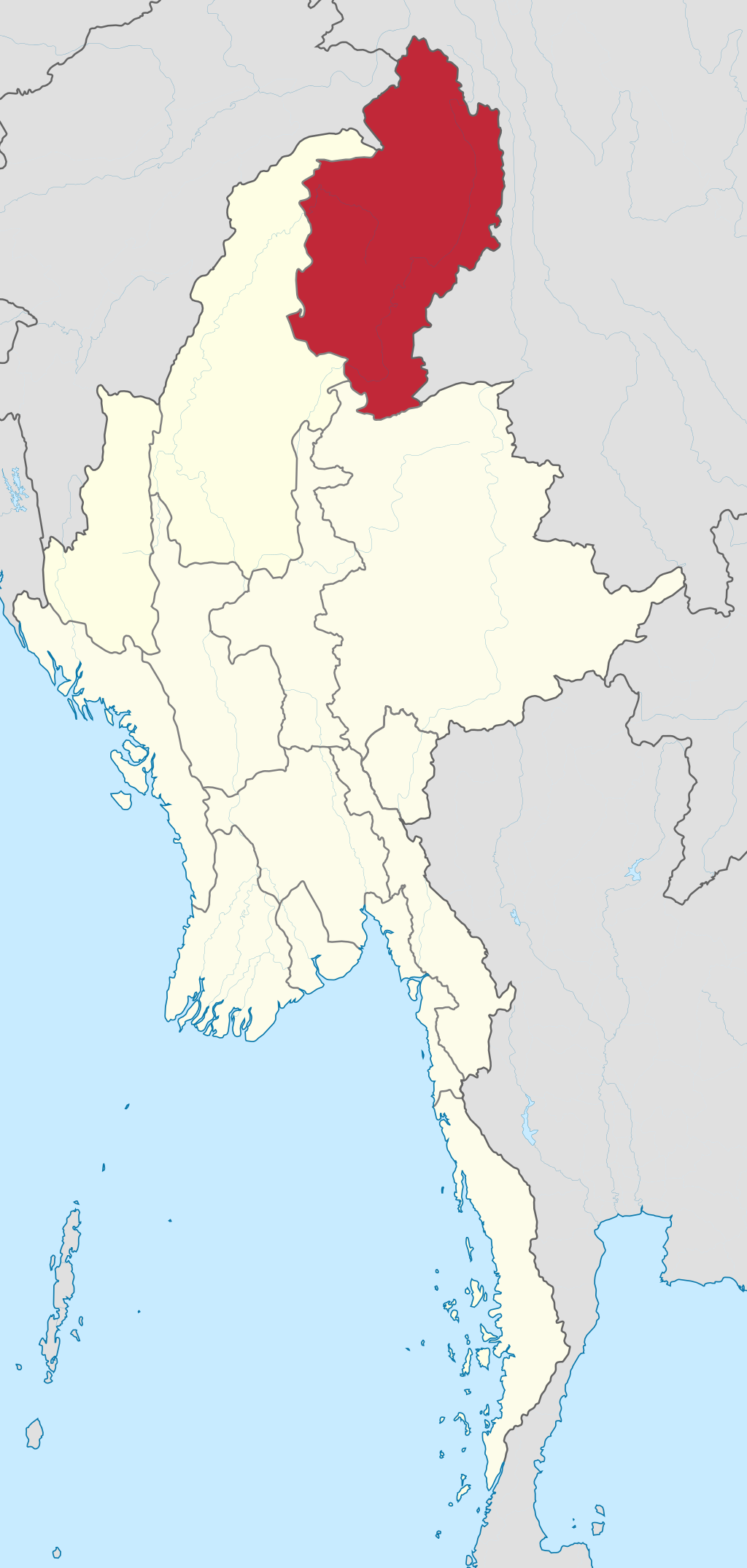
Kachin State, Myanmar (TUBS / CC BY-SA 3.0)
DSL: Very briefly, the Kachinland Research Center is a regional policy think tank that is currently involved in the Covid-19 Concern and Response Committee–Kachin, which was organized by community organizations and faith-based groups across Kachin State.
AA: As of early August, there had been just over 470 confirmed cases of Covid-19 in all of Myanmar, and most were reported in the Yangon region among citizens recently returned from abroad. What has been the impact in Kachin State, and especially among communities along the Myanmar-China border?
DSL: Looking at the official figures, there had only been two positive cases in Kachin State by early July, so I think the virus has not had a strong direct impact on communities, but the economic effects on cross-border trade have been deep and far-reaching.
Movement restrictions, not just on people, but on the movement of goods, have had significant effects on the Kachin State economy, from extractive industries like jade mining and other mineral resources to the agricultural sector.
Kachin State relies largely on cross-border trade with China. In the agricultural sector, when the Chinese government closed its border, the price of paddy went down, and farmers could not repay their agricultural loans from the government. The majority of farmers in Kachin State rely on these loans, and when they could not repay their debt, it affected the government’s ability to issue new loans.
This will definitely have an impact on this year’s agricultural cycle, which I think we will see later this year. Farm productivity will fall, and many farmers will be at risk of losing their land.
AA: Due to years of ethnic armed conflict with the national government, there is a large population of internally displaced persons in Kachin State. How have they been affected by Covid-19?
DSL: When we talk about IDPs in Kachin State, we need to understand that there are three categories of people.
One group lives in areas controlled by the Kachin Independence Organization, the KIO, which is the civilian wing of the largest ethnic armed organization in Kachin State. Its armed wing is the Kachin Independence Army. In much of Kachin, the KIO is the local authority. These people are located along the Chinese border. Since the Chinese government closed the border, humanitarian agencies supporting them have had a hard time delivering aid, because they were sending that aid across the Chinese border.
A second group, internally displaced persons living in camps in areas of government control, have been under strict Covid-19 health guidelines, imposed by camp management committees, since April. But since mid-May it has become more and more difficult to observe these strict rules about lockdown—staying at home, social distancing, and so forth. The problem is that the camp management committees cannot provide sufficient subsistence support, livelihood support. These people cannot stay forever in these camps, because they have to solve their own livelihood problems. That means they have to go out. So, the camp management committees have had to loosen enforcement of the Covid-19 guidelines since mid-May.
Finally, in mixed-control areas like Injangyang Township, there are returning IDPs. This third group is also facing livelihood issues as they try to restart their agricultural activities from scratch, and they don’t get any support from the humanitarian agencies.
So, these are the challenges facing IDPs in Kachin State.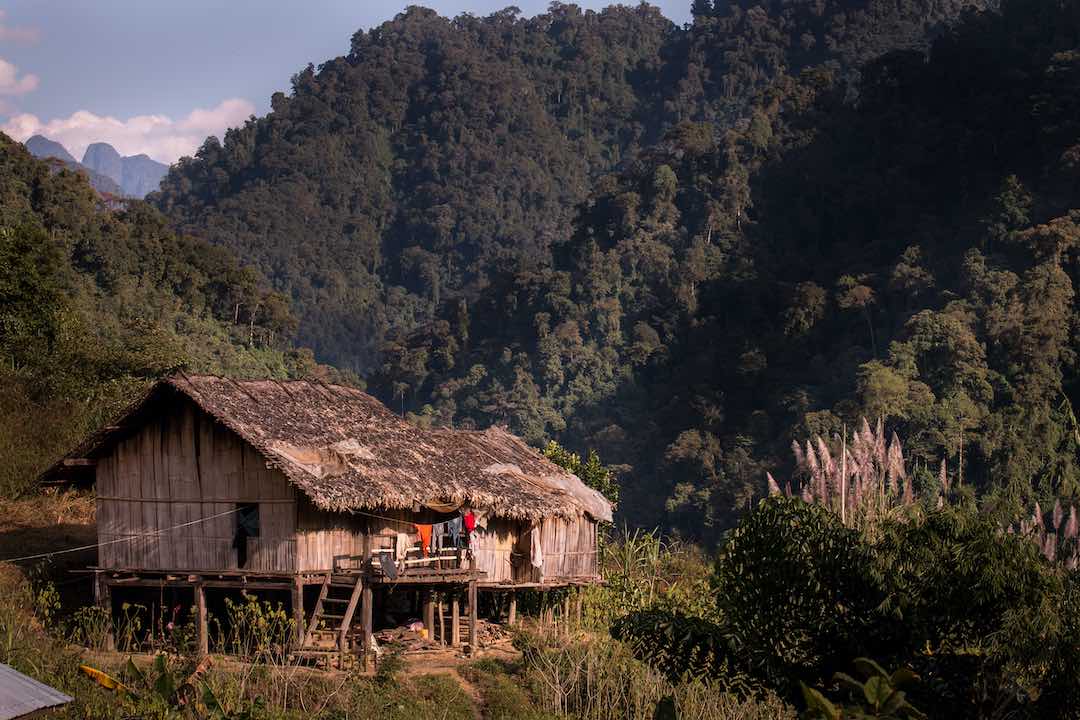
A Bamboo house in Kachin State, Myanmar, where healthcare and social services are often disrupted by ethnic conflict and competition between government agencies and rebel organizations (Sinwal / Shutterstock)
AA: In April, the government established a committee to coordinate with ethnic armed organizations on the prevention, control, and treatment of Covid-19, but there have been clashes between the Myanmar military and the Kachin Independence Army in recent weeks. What has been happening, and how are these clashes affecting coordination on Covid-19?
DSL: Looking back to May, there were good prospects for peace and collaboration between the government and the KIO. The Covid-19 Concern and Response Committee–Kachin, the CCRCK, facilitated a meeting between delegations from the Kachin State government and the KIO’s Covid-19 response committee.
On May 10, at Mai Sa Pa Village, which is under KIO control, both sides exchanged good will and identified areas where they could work together. The next week, the Tatmadaw came to Mai Sa Pa with a helicopter and delivered Covid-19 prevention materials and medical equipment to the KIO. So, the general situation in May was quite positive, and people were quite happy about it.
But then things started changing. We noticed after the first week of June that the Tatmadaw was reshuffling its troops in Kachin. Then, on June 8 and 9, armed clashes broke out in northern Shan between the Tatmadaw and the Kachin Independence Army, the armed wing of KIO. On June 22, the Tatmadaw destroyed one of the KIO’s Covid-19 cross-border checkpoints. And on June 29, there were armed clashes in central Kachin State in an area controlled by the KIO.
These clashes occurred despite the Tatmadaw’s declaration of a unilateral, three-month ceasefire in Kachin State. So, unfortunately, I think that the peace process right now is really at rock bottom.
AA: Dan Seng Lawn, thank you for sharing your insights on this very complex and tragic situation.
DSL: Thank you.

Yemen and Somalia are connected by a maritime border that runs through the Red Sea—a space of cooperation and exchange that joins rather than divides the two countries. Historically, movements of Somali and Yemeni people have occurred in both directions. But, since the start of Yemen’s civil war in 2015, most migration has been from Yemenis fleeing the conflict, with some Somalis living in Yemen also returning home. Prior to this, the proximity of the two countries, which fuelled trade between their coastal towns and cities, meant that communities of Yemenis and Somalis had developed on both sides of the Red Sea, facilitating ongoing cultural and economic interactions. Now, most Yemenis who arrive in Puntland are refugees attracted by the proximity, ease of entry and social connections with pre-existing Yemeni communities. Many see Puntland as a temporary refuge, or staging post for more ambitious future migrations. As part of RVI’s ongoing project on the cross-border connections between Yemen and Somalia (read the two reports here and here), the Institute’s partners at Puntland State University in Garowe spoke to Yemenis living in Bosaso and Garowe in Puntland, to discuss their lives there.
Since the start of Yemen’s civil war, the migration of Yemeni people to Puntland has increased as they sought a refuge from the fighting and economic collapse in their homeland. Somalia is often not the first choice destination for Yemenis as many prefer to stay in the Gulf region, where there are likely to be better economic opportunities. However, to move freely and live there they must have a kafeel—sponsor—but many do not. This is a major reason many end up in Somalia, where there is no requirement for a kafeel and there are no restrictions on entry for Yemenis fleeing the war.
Maasim Khaadim, a Yemeni living in Bosaso, said that he:
Used to smuggle khat into Saudi Arabia, it was a good business, but I was arrested by Saudi Police at the border, they entered by data into their system, and I am blocked to enter any Gulf Countries. I tried Oman but my data showed as ‘Blocked Entry’. They arrested me, transferred me to prison. During my prison time in Oman I met other Yemenis and they told me about Somalia. After release I decided to move [there].
There are other factors that pull Yemenis to Puntland. First, the established Mukulla-Bosaso transport corridor means that Puntland is quite easy to get to, particularly from Yemen’s south-eastern Hadhramaut region, where security is generally better than the rest of the country. Most refugees coming from Yemen to Puntland use Mukulla port to reach Bosaso and then move to other destinations by land. The cost of travel between Mukulla and Bosaso is very low as there are already boats which transport commodities—including fish—between the ports.
Abdalla, a Yemeni living in Bosaso who owns a restaurant there said, ‘Somalia is nearer to Yemen, its less costly to travel and living cost is cheap, we are here to earn income to send back home for our families’. Shaahir, a Yemeni who works as a waiter in Garowe, told us that ‘I have a family of 10 persons, they live in Yemen and they need USD 400 for their living costs but I only send USD 100–150 per month, sometimes nothing, they are suffering, and I am trying to help them’.
Mohamed Salim, a 21-year-old waiter now living and working in Garowe is from San’a in Yemen. He described how he had ended up in Puntland. Mohamed left Yemen in 2014 for Saudi Arabia, where he became a cashier in a supermarket. He lived in Riyadh for four years, but in 2018 the Saudi government adopted a law criminalizing foreigners working in retail businesses. His Saudi kafeel (also his employer) cancelled his job. He was then arrested and deported to Yemen. Mohamed stayed two months there and then decided to travel to Egypt, with the intention of reaching Europe. During the journey, Egyptian police arrested him at the border and he spent 57 days in prison. They later released him on condition that he go back to Yemen, but he flew to Malaysia after receiving an invitation from a friend in Kuala Lumpur to join him there. After his arrival, he got a job at a Syrian restaurant. Following a three month stay he moved to Muscat, Oman, when another friend invited him for a job. But, as Yemeni workers are only allowed to work in restaurant jobs or manual labour, such as painting buildings, Mohamed had difficulties getting a visa extension and was later arrested and deported back to Yemen. During his prison days, other inmates told him about Somalia, the route, and business opportunities. After his release, he decided to travel there.
To see an illustration of Mohamed’s journey from Yemen to Somalia via Egypt, Oman and Malaysia click here.
The long-established trade connections between Yemen and Somalia mean that the routes between the two countries are already well-known, and information is shared via pre-existing Yemeni communities in Somalia. This facilitates mobility between the two countries. When they get to Puntland, many of the Yemeni refugees often start off by living in camps supported by international agencies and the Puntland authorities.
Outside of their own communities, Yemenis feel reasonably at home in Somalia, which shares common cultural practices, including some foods, khat chewing and Islam. Inter-marriage between the two communities—both in Yemen and Somalia—is common. Many Somali returnees to Puntland have Yemeni wives and Yemenis living in Puntland have made mixed families. Abdalla Hussein told us, ‘I am Yemeni, and I married two Somali women’.
Despite the relative ease of moving and integrating into Puntland life, Yemeni refugees often struggle to survive financially even with support from aid agencies. Some have been able to start businesses—often restaurants—while others take jobs in the food and construction sectors. Businesses are mainly partnerships with Somalis. Generally, a Somali partner injects the capital, while the Yemeni provides skills and labour for running the business.
Yemeni refugees, unlike Ethiopians for example, are more likely to find employment, due to their skills and their social connections with local people. Some problems do arise with language, khat chewing and frequent conflicts, which are all raised as issues by Somali employers. A Somali NGO employee noted that, ‘most of the legal cases [we try to help resolve] concerning Yemeni refugees are over conflict with their employers or business partners, while most of the cases from Ethiopian refugees are on domestic issues’.
Hussein, a Yemeni migrant in Garowe, reported that: ‘I had a booming restaurant, near Garowe municipality building, it was a profit yielding business. One day, without prior notice, local government contractors entered the building and demolished the restaurant structures, we lost all prepared food, stock, supplies at that day, now I re-started another restaurant business’. Abdullahi, a Yemeni businessman, noted: ‘I partnered in seven businesses with Somali traders, all of them collapsed due to conflict between me and my partners, currently I run my own business in Bosaso’.
Mohamed Hussein is a Yemeni refugee in Garowe, born in Raadac in North Yemen. He was a businessman in Raadac before the start of Yemen war, but fled to Somalia. He left Yemen in 2017 through the Mukulla-Bosaso corridor, with a Somali returnee from Yemen. Mohamed planned to start a business with his Somali friend in Kismayo, but their plan failed after disagreements between them. He decided to start a business in Bosaso, but had no capital in hand. Mohamed started to look for capital and finally met a businessman in Bosaso, Yasin, who agreed to help. Yasin gave him a small loan as seed capital. He started the business and opened a restaurant selling Yemeni food. After a few months, the business collapsed. Mohamed decided to move to Garowe, the capital of Puntland, and Yasin again provided a small loan. He started a new business by partnering with a Somali trader and now employs fifteen other Yemenis. His business has become a central meeting place for Yemeni people in Garowe and Puntland at large.
As Mohamed’s story shows, Yemenis are generally resilient in coping with the difficulties of life in Puntland. They work in groups, which provides a degree of solidarity and mutual support, and often draw on their connections with the Yemeni communities that lived in Puntland before the Yemen war. But, despite the safe refuge, and some economic opportunities, Puntland is usually not the end goal for Yemeni refugees and migrants. Most of those interviewed had aspirations to move to other countries where they perceive there to be better economic prospects. These include Ethiopia, Kenya, the Gulf and even Europe. Mohamed Salim, who told us his life story before ending up in Puntland, explained how he ‘moved like a bird, from country to country, but always ends up back to Yemen. Now, I cannot go back to Yemen … my intention is to save money to reach other countries then to Europe.’ Due to its proximity and ease of travel and existing connections, Puntland seems to mostly be an interim point for Yemen’s new generation of migrants, on a long journey towards a better life.
Aid providers in the Horn of Africa have always struggled to adapt their systems and models to the simple fact that people move from place to place. Delivering aid in remote areas normally involves establishing long supply chains that rely on populations being in places where they can be relatively easily ‘accessed’. The refugee and IDP camps of the region, many of which were constructed as temporary locations for the provision of food or shelter, are an obvious symbol of this tendency.
But, the idea of populations being fixed in one place works against the intrinsic mobility in their lives; from pastoralist groups moving with their animals to grasslands for grazing, to seasonal farm labourers moving annually for work. Movement is often a survival strategy that helps people to seek refuge from conflict, food shortages or the coercive control of the state. Borders are also central to these strategies. Recent research by the Rift Valley Institute has shown the importance of the social capital created by the transnational networks that operate across borders, and how borderland populations use it as a critical component of their livelihood strategies.
Political actors have been alive to these contradictions for years, and the aid community has long experience of how aid can be used to push populations towards, or away from, particular places in support of political agendas. The COVID-19 response opens up a new front in these longstanding tensions, one that needs urgent consideration if aid delivery is not to be implicated in long-term harm.
In South Sudan and its neighbours, reducing the circulation of people has been a major pillar of the COVID-19 response. In countries where communities share small living spaces, social distancing becomes a virtual impossibility. Therefore, for public health authorities, the key response is to keep communities fixed in place. In common with COVID-19 affected countries around the world, the decision to lock down comes with complex consequences for these communities. Three key issues arise in the South Sudan context:
Small-scale cross-border flows of goods and resources are often critical for the livelihoods of populations living in border areas. For example, in RVI’s work in Akobo, on the border between South Sudan and Ethiopia, it was noted that members of the Nuer-speaking community living either side of the border would regularly cross to conduct business, access resources and visit family and kin. RVI’s work in Northern Bahr el-Ghazal, on the border with South Darfur, has shown similar patterns of cross-border movement. In both cases, local authorities seek to control and profit from these movements.
While these borders cannot, and have not been, fully shut down, attempts by national authorities to regulate movement across them as part of its pandemic response have enabled local agents of the state to increase their presence and control over economic activity. The targets of state authorities tend to be the most lucrative, or easily controlled parts of this cross-border economy. For example, in Northern Bahr-el-Ghazal this includes goods like cement and fuel, while on the Ethiopia border the focus has been on the river trade that supplies small towns like Akobo with everyday necessities. The increased involvement of the authorities in regulating, and in some cases manipulating, these flows, reduces the autonomy of local populations and shifts power balances even further.
Aid programmes in these areas have also come under pressure from national authorities during the pandemic. For example, in Gambella—on the Ethiopian side of the border with South Sudan—the government announced the closure of registration centres for refugees, which provide access to the goods and services available in refugee camps, to reduce the flow of people across the border. Although these goods and services are primarily intended for people displaced from South Sudan, there is evidence that they are as important to the Nuer-speaking population on the Ethiopian side of the border—particularly at times of economic hardship. The closures have therefore increased economic pressure on populations either side of the border.
Long-standing traditions of community mobility have created transnational networks of support that are critical to household economies in South Sudan. This includes remittance networks, which have both physical and digital components (in the form of money transfer companies). While distant territories such as the US, Canada and Australia are critical nodes in these networks, just as important—perhaps more so—are the individuals or families that have travelled to urban centres such as Juba, or over the borders into Uganda, Sudan and Ethiopia, and who circulate the cash that they earn back to their places of origin. In South Sudan, the digital remittance system is far less developed than, for example, in Somalia, so the ability for individuals or transfer agents to move in, out of and across the country is very important.
At the moment, these channels are under threat from COVID-19. This is the case for two reasons: first, if people cannot move easily across borders, or through South Sudan more generally, they cannot bring money back to their families. Second, the economic effects of the lockdown on, for example, boda-boda drivers (motorbike taxis) and tea stalls in Juba or Uganda, or on the daily income of those of South Sudanese origin in Australia or the US, mean that people will have less spare cash to send or take back to their families, who often rely on these external injections into their household budget to make ends meet.
Previous research on the transnational networks of Nuer-speaking peoples shows that a crisis in one population centre can ripple outwards to effect populations elsewhere. For example, during the December 2013 violence at the start of South Sudan’s civil war—when many Nuer living in Juba were killed—populations as far afield as Melbourne and Minnesota suffered due to the increased financial demands from relatives in South Sudan, as well as the psychological impact of observing traumatic events from a distance. Similar dynamics may play out during the current pandemic.
The response to COVID-19 also adds to the political toolkit of local and national authorities at a time of intense fragility across South Sudan. Coming after the signing of the ‘revitalized’ peace deal (R-ARCSS) between the government and opposition coalition, President Kiir’s new unity government is seeking to reassert its authority across the country. Key positions of authority at state level and below are still being appointed, and political actors at local levels are therefore seeking to increase their leverage and influence through the mobilization of local populations to pursue their agendas through force. Any new tools they are given by the COVID-19 response—for example, the ability to impose local lockdowns on particular communities, or to utilise security forces to monitor or enforce particular entry or exit points from their areas—are likely to be deployed in the service of these wider political objectives.
There is one issue on which the COVID-19 crisis may be used to encourage greater circulation of people, adding a new dynamic to the tensions around the Protection of Civilian (POC) camps across the country. The UN has long seen these camps as unsustainable and is uncomfortable with the complex politics that shrouds these highly visible, and expensive symbols of the civil war. The risks that such high-density settlements create for the rapid spread of COVID-19 provides a further justification for seeking their dispersal. For example, in May David Shearer, the head of UNMISS, said that they ‘very strongly encouraged people in the POCs to return home’. However, the sense of insecurity felt by these populations—which keeps them in the POCs—must be acknowledged, and their physical safety should not be de-prioritised in the face of the pandemic response. This is especially true given the scarcity of quality health services available in potential locations of return.
Humanitarian actors in South Sudan, and the Horn of Africa more broadly, know that the resources they provide are always at risk of manipulation or misdirection by politicians seeking to pursue their own agendas. The response to COVID-19 has opened up new fronts in this battle. Mitigating these risks requires strong analysis, close monitoring of local political dynamics and the ability to understand the links between so-called intercommunal conflicts and national politics. All of these tasks will be hampered by COVID-19. With travel between the capital and more remote locations more difficult than ever, there is a risk that Juba-based teams lose the ability to keep in touch with realities on the ground.
While seasonal rains will act as a natural constraint on mobility for a few months—providing all actors in South Sudan with a degree of space to reflect—the end of the rains will act as a trigger for movement across the country and it will be critical to have clear plans and policies in place before then. Above all, there is a need to recognise the importance of mobility as a pillar of individual and community resilience. Aid agencies must seek to understand the specifics of how the communities they work with use mobility in their everyday lives, and work with community leaders and local authorities to enable as safe and dignified passage as possible within public health guidelines.
Given the risk that political elites will seek to exert greater control over communities, the ability of aid agencies to monitor and communicate dynamics around mobility and lockdown in key locations could act as an important mitigating factor. The work that organisations such as IOM and REACH do to monitor movements across, in and out of the country becomes even more important. Analysis of this data could potentially be used as part of a strategy of more nuanced and targeted movement restrictions. Aid agencies can also play a role in promoting a more transparent debate about options for those currently living in the POCs. The donor and diplomatic community will have a critical role in creating space for discussion of the political implications of lockdown and aid.
Agencies will face particular challenges in tracking local dynamics as their own ability to move is constrained, both within the country and across borders. Creative thinking is required to enhance information gathering from particularly sensitive areas, and to ensure that there is good information sharing between locations connected by movement channels. For example, the interdependency of Nuer communities along the Ethiopia-South Sudan border speaks to a need for regular and detailed information sharing between humanitarian actors on both sides, which does not currently take place.
The humanitarian community should also explore new ways to engage with the global support networks that the communities they seek to help are part of. While there is an existing body of research on diaspora humanitarianism, current thinking risks focusing on attempts to reshape these transnational support networks into a vehicle for international aid funding, rather than trying to understand them on their own terms. At a time when accessing remote locations is more expensive and challenging than ever, aid agencies should look for opportunity in these networks—reinforcing positive effects by working in multiple locations at once.
Rather than seeing diaspora communities simply as an extension of their places of origin, aid actors should seek to develop new kinds of partnerships that help to build trust, tackle the issues that they face in their new homes, and support their efforts to strengthen social capital across their transnational networks. This will require new programming modalities, with resources that can be spent in multiple countries, by organisations with a wide range of expertise.
The aid community has talked a lot over the last decade about dealing with complexity, but translating this into action has proved harder. The basic framework of aid delivery remains too rooted in an analysis of the world predicated on states, capitals and permanent settlements. This is not how the world works. People move, they connect and use these connections to create networks that are resilient to the systems around them. Aid actors must increase their understanding of these strategies. This will help prevent their efforts becoming part of existing systems of control and maximise choice and opportunity for the populations they support.
The impact of Yemen’s long-running war is being felt not only inside the country, but also in neighboring Saudi Arabia. New developments and the changing dynamics of the conflict have had major security, social, and economic consequences for Saudis as well as Yemenis, especially inhabitants of the southern border area. While rumored negotiations between Saudi Arabia and Ansar Allah, better known as the Houthi movement, could result in political and military arrangements, the impact of events on the border will continue to shape Saudi public opinion long after the war is over.
Since Riyadh intervened militarily in Yemen in 2015, Saudis have actively discussed developments there on social media, reflecting growing public interest in Yemeni affairs. This has been accompanied by ongoing, wide-ranging debates between Yemenis and Saudis over the details and trajectory of the war and how the Saudi intervention is seen by Saudi society. Most Saudi activists have adopted a similar discourse to that of the Saudi state, partly due to government censorship and intense monitoring of social media platforms, precluding any opposing voices. However, the level of debate shows how much attention Saudis have paid in recent years to news from Yemen, which has had a direct impact on their lives.
The economic costs of Saudi involvement in the conflict alone have had major effects on Saudi society, in the form of tax hikes, raised fees for various services, and higher fuel prices. The conflict has also sparked a string of Houthi missile attacks against targets inside Saudi territory, sowing fear among ordinary Saudis and prompting many to start following the news from Yemen more closely.
Totally forbidden from criticizing their government or critiquing its policies, Saudis writing on the war have focused on the country’s enemy and limited their criticism of Saudi-backed actors in Yemen to questioning their seriousness and ability to achieve victory. The situation in Yemen has brought to prominence new Saudi writers, who have treated the subject as a safe topic for political commentary—provided that they adopt the official narrative.
Prior to the war, Yemen received hardly any attention in Saudi life, especially in light of how difficult the Saudi state has made it for Yemenis to enter the country over the past two decades. But things have changed because of the conflict, and Saudi writers and activists have emerged to meet public demand for a narrative to explain the war. Many Yemeni media figures covering the conflict have also gained a following among the Saudis, while clerics have used mosques and religious gatherings to promote the official discourse around it. This narrative has played up Saudi national identity and the ruling family’s ability to manage the conflict. Saudi media outlets have also used events in Yemen to promote the concept of the upstanding Saudi citizen, loyal to his country and its rulers.
The kingdom’s weak spot in this regard is its territory along the Yemen border, where the war has changed security arrangements and demography. When the war broke out in 2015, the Saudi government moved many residents of villages near the border to cities deeper inside Saudi Arabia, essentially turning the region into a buffer zone. This zone extends into Yemeni territory along the border, to a depth of between 10 and 40 kilometers toward Houthi-controlled territory. The goal of this was to prevent incursions into Saudi Arabia, especially as land clashes with the Houthis have dragged on.
This shift in Saudi strategy in its southern region has had major repercussions for tribes along the frontier. Before it engaged the Houthis in military conflict, Saudi Arabia relied heavily on these tribes, both inside Saudi and Yemeni territory, to secure the long border. But Houthi military operations on the Yemeni side, with cooperation from some Saudi elements due to social and sectarian links, pushed Riyadh into a brief conflict with the Houthis in 2009. This revealed the fragility of the region’s security situation and prompted Saudi Arabia to invite the Yemeni military to fight the Houthis from Saudi territory, backed by Saudi air strikes.
Throughout the current conflict Riyadh has relied on Yemeni conscripts—by some estimates numbering as many as 60,000 fighters—distributed across various fronts along the border. However, these fighters only make up the first line. Behind them are a multitude of military and security forces charged by the kingdom with securing its territories. Saudi Arabia has lost dozens of troops in the area due to clashes and artillery fire emanating from Houthi-held areas.
As many as half the Saudi troops lost in these clashes hail from the southwestern border region, especially Jizan, upon whom Riyadh has relied heavily. These casualties have naturally had a social impact. Despite Saudi glorification of soldiers sacrificing their lives to guard the frontier, the losses have been deeply felt nationwide, especially in contrast to the stability that had reigned in previous decades.
Fighting in certain border regions has also forced the closure of markets once vital to local economies. The closure of major border crossings in the Tuwal district has caused major economic losses for Saudis living in surrounding areas. Traffic that used to cross into Yemen from there has moved instead to the Wadieh crossing in the Najran region, which leads into an area controlled by the Yemeni government opposed to the Houthis. These areas have seen an economic rebound thanks to the surge in cross-border trade, especially with the anti-Houthi coalition’s partial blockade of Yemeni ports and crossing points. Residents of Najran have benefitted from this economic shift and the influx of Yemeni investment in areas close to the Wadieh crossing.
The displacement of residents from some pockets of border territory and the rise of economic opportunities in others have led to the creation of new communications channels between these regions, as well as a growth in unofficial traffic across the 1,400-kilometre border with Yemen, which is hard to control.
The war has shown that residents of Saudi Arabia’s southern cities and villages have not been shielded from the repercussions of Riyadh’s intervention. The conflict has brought changes to the way that Saudis think, which will remain strongly present in the coming years. Even after the war ends, Saudi Arabia will face many domestic problems born of the long conflict in Yemen.
This blog was originally published by the Malcolm H. Kerr Carnegie Middle East Center.
The social fabric on both sides of the Syrian-Jordanian border has remained similar, notwithstanding the fact that a century has passed since the Sykes-Picot agreement that divided the region between Britain and France. Communities on either side of the separation line remain similar, with extended families and clans (sub-tribes or ‘ashireh) dominating the social landscape. They remain linked by family and kinship ties, as well as shared customs and traditions.
But this so-called “line in the sand”—the boundary dividing British and French areas of control drawn during World War I—has also left its mark. Relations between tribal clans and their respective states differ markedly between Jordan and Syria, both in terms of their roles in the state-building process and the space that clan notables have been given to exercise traditional authority within their societies.
With the increasing levels of violence in Syria after 2011, many Syrians, especially from the border governorate of Dar‘a, sought refuge in Jordan. Statistics from the United Nations High Commissioner for Refugees show that the largest concentration of refugees is located in Amman Governorate, Jordan’s economic heartland. The second-largest is present in the northwestern border areas of the kingdom, which resemble nearby parts of Syria in their climate, geography, and even architecture. Not only is the environment similar, but many Jordanian and Syrian families have family ties and relationships from before the conflict. This helped Syrians integrate into Jordanian society after they had fled Syria.
After settling in Jordan, many refugees found that the state’s relationship with clans were different than what they had encountered in Syria. Throughout the decades of Ba‘th Party rule, the Syrian state sought to weaken tribal clan authority. Half a century of such policies prior to the uprising, along with changing ways of life, gradually reduced the role of clan notables. Still, the state used what remained of these notables’ influence for its own ends. For example, it took advantage of their authority to contain and resolve major disputes between large families and keep the peace in rural peripheries of the country.
Jordan’s tribal clans, in turn, face few of the restraints and pressures experienced by their Syrian counterparts. Instead, they remain a major power center with considerable authority and influence in the kingdom. Tribal tradition plays a crucial role in Jordanian society despite growing opposition to it. Even today, the king derives some of his legitimacy from his status as the leader of the kingdom’s tribal leaders, a historical legacy dating back to Jordan’s foundation. Despite rare bumps in ties between the state and tribal clans, especially for economic reasons, these relationships have remained essential for the stability of Hashemite rule.
The new reality in Jordan makes some Syrian notables claim that there is more respect for the clan in Jordan than in Syria. Indeed, in Jordan tribal traditions and customs similar to those in Syria are more widely practiced. This continues to strengthen the clans’ traditional authority, which gives them positions of leadership with judicial, customary, and even political roles as intermediaries between their communities and the state—far more than in Syria.
The situation in Syria has brought about deep changes in the relationship between state and society, including with clan notables. Early on in 2011, notables in Dar‘a broke with their traditional roles and were at the forefront of anti-regime protests when Brigadier General ‘Atif Najib, the head of the Political Security Directorate in Dar‘a, humiliated notables who had gone to seek the release of children arrested and tortured for writing anti-regime slogans. This is widely seen as the incident that sparked the uprising.
Tribal customs remained, and perhaps were strengthened, amid the absence of state institutions in Syria. As a result, some known personalities lost their social status as notables, while others turned the crisis into an opportunity. They gained authority and prominence within their extended families and clans and became new intermediaries with the state. These transformations are ongoing and the political role of clan notables in Syrian society today has yet to become clear. For now, many seem to have lost the roles they played before the uprising, becoming rivals and targets of the state.
The lives of Syrian clan notables in Jordan differ greatly from their lives before the uprising and from the situation of Syrians who are living in Dar‘a today. Many certainly face the hardships of being refugees and do not enjoy the same privileges as their Jordanian counterparts. Yet they live in a sociopolitical environment in which they are able to exercise their traditional authority more widely over their communities and without the fear of being targeted by the state. In that sense, despite living in exile, they are in a more favorable social and political setting than where they had been.
This blog was originally published by the Malcolm H. Kerr Carnegie Middle East Center.
The American withdrawal from areas east of the Euphrates in October 2019 was a turning point in the conflict in northeastern Syria. It allowed Turkey to expand into the area, effectively moving its border deeper inside Syria to create a buffer zone with the Syrian Democratic Forces (SDF). The SDF is a heterogeneous alliance of multiethnic armed groups led by the People’s Protection Units, which Turkey sees as an extension of the Kurdistan Workers Party (PKK), an organization it accuses of engaging in terrorist activities.
This expansion has fundamentally altered the nature of Turkey’s border areas with Syria, linking them politically, socially, economically, and in security terms to Turkish provinces just over the frontier. While stopping short of outright annexation, such integration has reshaped the social and economic framework of these regions. It also may lay the groundwork for future, more far-reaching, steps by Ankara in the area.
The U.S. withdrawal was followed by a Turkish military operation known as Peace Spring, which resulted in Turkey’s military taking control over a strip of land between Ras al-‘Ayn and Tell Abyad. This established a new border zone, much as Turkey’s Euphrates Shield and Olive Branch operations had done in other parts of northern Syria. The Peace Spring area is closely connected to Sanliurfa Province in Turkey in terms of administration, services, and trade. However, it is also isolated from surrounding areas inside Syria. The area has strategic importance for Turkey in that it intervened to prevent the emergence there of an entity effectively controlled by the PKK. That is why the expanse between Ras al-‘Ayn and Tell Abyad is highly securitized and is not one to which Syrians can easily return today.
Turkish involvement in the area runs deep. Every local council has a coordinator who is affiliated with the province of Sanliurfa. These coordinators help local councils secure the logistical support and funding necessary to carry out service projects. They also help coordinate the delivery of Turkish assistance to local bodies through the Syrian opposition’s interim government. This includes such things as healthcare, property and civil status registration, and education.
The depth of this involvement is illustrated by the fact that when the interim government declared the formation of a local council in Tell Abyad on October 28, 2019, the governor of Sanliurfa, ‘Abdullah Erin, visited the city and expressed his support for the new council. When the local council for Ras al-‘Ayn was formed on November 7, 2019, Erin visited this city as well, stressing that Turkey would continue to rebuild the area and encourage a Syrian refugee return.
In the education sector, the Turks have reopened 146 schools operating in the Ras al-‘Ayn area, enrolling more than 15,000 students. Harran University has also signed a memorandum of understanding to open a branch there soon. Scholarships are given out to a number of students who have achieved high scores on the YÖS Turkish-language exams, especially for universities located in Harran, Mardin, and Hatay.
In another example of what Turkey is doing, last May it allowed 85 combined harvesters to pass through its territory from areas captured in the Euphrates Shield operation to the area of Ras al-‘Ayn and Tell Abyad in order to harvest wheat and barley. This was necessary as there is no direct connection between the two areas under Turkish control. According to sources on the ground, the Turkish authorities also granted entry permits to 1,500 farmers during the harvest season so that they could move through Turkey to harvest their land in Syria. After the end of the harvest, transit procedures will be eased in order to move seeds to the Euphrates Shield areas. The Turkish aid groups IHH and the Disaster and Emergency Management Authority, as well as the Turkish Red Crescent, are also involved in the area, filling the gap left by U.S. and European aid agencies no longer active there.
The Ras al-‘Ayn and Tell Abyad area is highly connected to Turkey but has closed its boundaries with the rest of Syria. This has encouraged smuggling. According to people on the ground, building materials are cheaper in the Peace Spring areas, where they are stored. Steel costs $500 per ton in these areas, but $650 per ton in Raqqa, controlled by the SDF. A ton of cement costs $42 in Peace Spring areas and $100 in Raqqa. The opposite is true for fuel products, because SDF-controlled areas produce oil. A barrel of fuel oil costs $37 in Peace Spring areas but just $15 in Raqqa, while gasoline costs $84 per barrel in Peace Spring areas and $40 per barrel in Raqqa.
This indicates that while the area is technically in a border zone with Turkey, it also acts as a border between Turkey and the rest of Syria. The fact that it is closely connected to Turkey yet remains isolated from Syria makes an imminent large-scale refugee return unlikely. Asked about the prospect of refugees returning, a local commander stressed the deficiencies in local infrastructure and the difficulties in procuring sufficient resources. “The electricity, water, and food are just enough for us. We don’t want anyone to come back,” he said.
The idea behind Turkey’s reshaping of Syria’s northern border areas is not to seize these territories for Turkey, but to create a buffer zone with the SDF to absorb the impact of any confrontation with the group. These parts of Syria will likely remain Syrian, but under Ankara’s heavy influence. That said, the situation could create more options for Turkey in the future. But for now, as its administration of these areas has in many ways been successful, Turkey may be encouraged to replicate such a model east of the Euphrates.
This blog was originally published by the Malcolm H. Kerr Carnegie Middle East Center.
As coronavirus-related lockdowns are implemented worldwide, they are posing serious problems for supply chains and increasing the vulnerability of Middle Eastern and North African economies.
Supply chains in many sectors throughout the region have been severely impacted by the closure of ports and delayed shipments. The departure of goods and shipping volumes from Chinese ports have plummeted since the implementation of measures to curb the spread of the coronavirus, and the activity of many ports throughout Asia, Europe, and the Middle East has slowed.
A good example of this situation is Tunisia and its supply chains. The new Tunisian government has announced the doubling of strategic stocks of basic food, medicines, and fuel. It has done so because it aims to prevent panic buying generated by the long confinement. Because of the risk of food shortages, given the limited number of operating suppliers and the slowdown in transportation, governments are under pressure to secure a variety of basic necessities.
The coronavirus pandemic hasn’t only impacted formal economic exchanges but also invisible supply chains providing for markets across the region. Informal economies in the region don’t exist as separate entities. They are inextricably linked to domestic and international formal economies. Many goods supplying formal economies make their way through complex global commodity chains that are linked in one way or another to informal economies. In North Africa, these supply chains are usually diverted toward illicit cross-border trade through border markets, such as the one in Ben Gardan in Tunisia or Souq Dubai in Al-‘Aulma in Algeria.
Unregistered and misevaluated because of corrupt arrangements, these flows transit through ports and border posts. All across the region informal operators trade products through illicit distribution mechanisms as this means they don’t have to comply with registration, tax, and licensing regulations. Similarly, transnational economic actors use the informal economy and border markets to reach low-income segments of the population whom large formal retailers cannot supply.
Since the 1990s, border markets in North Africa have been energized by extended supply chains importing Asian-made consumer goods and low-cost products. With globalization there has been a restructuring of production and distribution in many industries, characterized by outsourcing and subcontracting through global commodity chains. Border markets and small retailers sell items that are made in Asia before being shipped to North and sub-Saharan African through Dubai. That’s how the Tunisian economy ended up being supplied with Asian goods transiting through Libya or Algeria.
In North African countries such as Egypt, Tunisia, Algeria, and Morocco, informal economies represent between 35–40 percent of GDP. Informal employment has been massive in sub-Saharan Africa, with 85 percent of employment taking place in the informal sector. In Asia, the figure is 68.2 percent and in the Arab world 68.6 percent. In total, 93 percent of the world’s informal jobs are in emerging and developing countries, showing that globalization has gone hand in hand with informalization.
The current coronavirus lockdown underlines an interesting fact, namely that many informal economies have been globalized over the decades. This is notably the case of border markets. The border market of Ben Gardane, in southeastern Tunisia, has played an important role in supplying the Tunisian and Libyan economies with consumer goods and fuel. Since the 1990s, Ben Gardan has been an entrepôt in which informal cross-border trade between Tunisia and Libya has been concentrated. Cities in western Libya have connected southern Tunisian cities to the global illicit economy. After the fall of the Qaddafi regime, the border economy became a magnet for non-state armed groups seeking to control and profit from illegal flows of goods, people, and money.
The struggle for control over economic resources and illicit cross-border traffic has had a significant impact on Ben Gardan. This has been mainly due to fighting between Libyan militias over the control of border rent and the frequent disagreements between the Tunisian authorities and their Libyan counterparts over procedures at the Ras Jedir border crossing. The closure of the crossing has sparked massive protests, strikes in Ben Gardan, and anger directed against the Tunisian authorities for contributing to the marginalization of the border region. The Libyan conflict, the coronavirus lockdowns, and the slowdown in global supply chains, will drastically limit the flow of goods transiting through Ben Gardan.
Tunisia’s government has sought to cushion the impact of the new situation and has put in place an economic package to prevent job losses and assist poor families who have been severely hit by the economic crisis. Tensions rose recently as people struggled to cope with the unprecedented sanitary and economic crises, while the government still does not have accurate data about the poor in order to help them. That is why Tunisia’s political elites have to think strategically on how to integrate the informal economy and address the needs of all those living off the books.
This blog was originally published by the Malcolm H. Kerr Carnegie Middle East Center.