


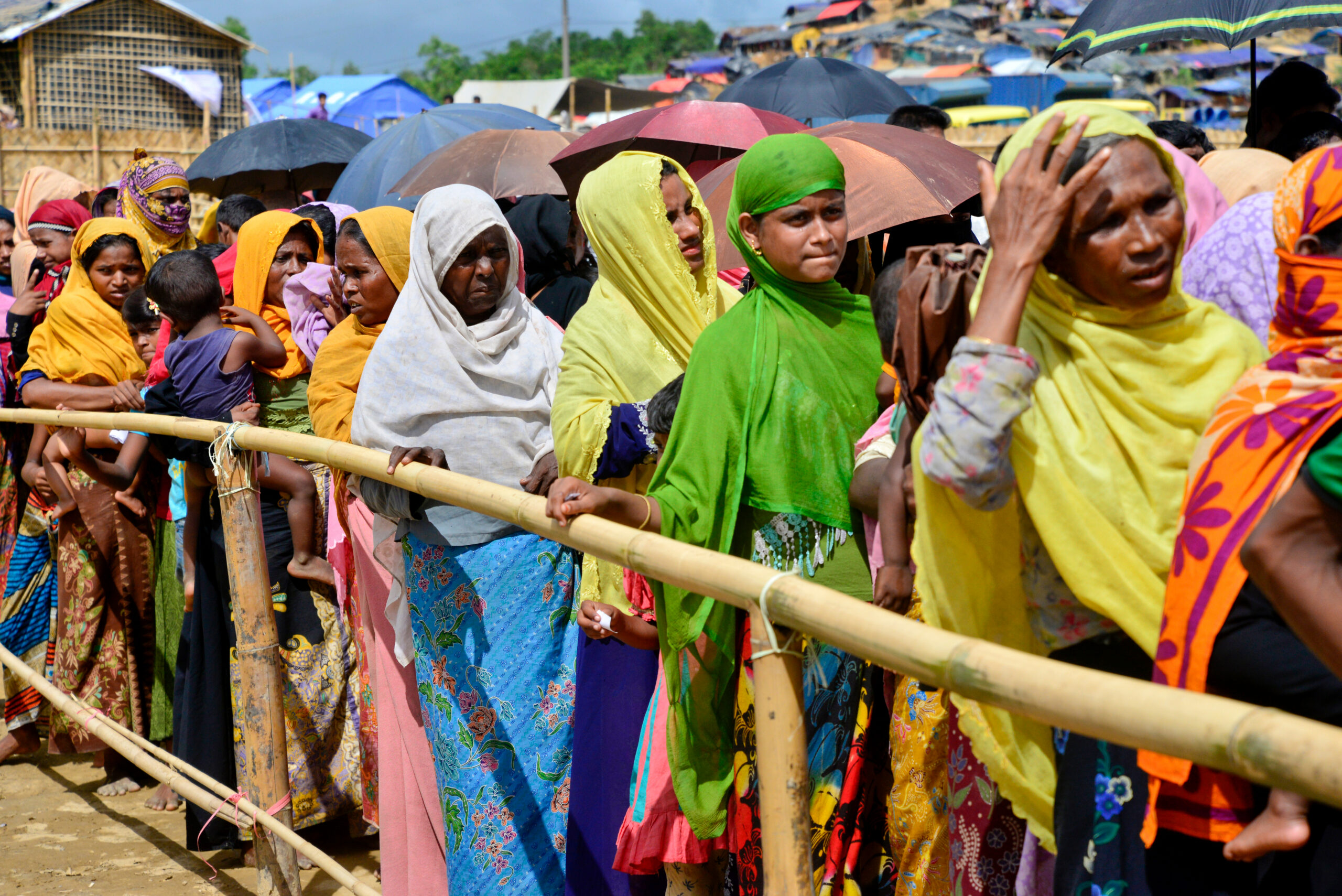
 Credit: Shutterstock/Mamunur Rashid
 Lead researcher: Farhana Afrin Rahman
Duration: November 2025 – October 2026
Countries: Myanmar, Bangladesh
The project looks at how gendered forms of authority shape refugee governance in the Rohingya camps of Cox’s Bazar on the Bangladesh–Myanmar border. It focuses on two contrasting structures: the majhi system, where Rohingya men selected by Bangladeshi authorities act as intermediaries and gatekeepers, and taleems, informal women‑only spaces that enable Rohingya women to negotiate constraints and create alternative forms of legitimacy.
The project demonstrates that gender is central to how governance, exclusion and resistance operate in contexts of displacement. It contributes to feminist borderland scholarship by conceptualising the “empowerment paradox”, highlighting how both masculinised authority structures and women’s informal practices shape power and political life in the camps.
For more information regarding this research, contact [email protected]