The Islamic Resistance in Iraq (IRI) plays a significant role in Iran’s Axis of Resistance, with its links to Iraq’s state security forces raising concerns about its influence and access to power. However, the IRI is not a unified organization; it consists of multiple armed factions, each with its own agendas and domestic interests, not all of which align with Iran’s objectives.
In this episode of the War Studies podcast, Dr. Craig Larkin speaks to Dr. Inna Rudolf and Dr. Renad Mansour, King’s College London XCEPT scholars, about their research into the IRI. They examine the domestic and transnational interests of IRI factions and discuss the extent to which the IRI can truly be considered an Iranian ‘proxy’.
I became involved in the Cross-border Conflict Evidence, Policy, and Trends (XCEPT) programme’s Local Research Network (LRN) at its inception in 2018. During the following years, the network introduced me to a wider community of researchers who share a similar interest in cross-border issues. This has led to extensive knowledge sharing and fruitful collaborations, particularly in terms of my personal focus on how agricultural transitions impact the experiences of women.
As well as helping me cultivate my networks within South Sudan, being part of the LRN has given me the opportunity to expand my horizons internationally. For example, I attended workshops in Bangkok, Addis Ababa and Nairobi, which opened my eyes to different research methodologies and provided me with guidance on writing policy papers. These skills have been further reinforced by online peer exchange events with the XCEPT programme’s international partners. I have also been able to establish lasting connections with employees of various UN agencies, NGOs, embassies and research institutions within and beyond South Sudan.
More generally, by fostering collaborative research projects with researchers from neighbouring countries, XCEPT enables comparative analysis and a more holistic understanding of cross-border dynamics. Just as importantly, the LRN facilitates direct access to local communities and their perspectives on cross-border issues, something I have found invaluable when it comes to unpacking the functioning of conflict and cooperation in borderlands. This approach has informed the various papers, blog posts and articles I have written or contributed to over recent years.
From a personal perspective, I can testify that my involvement in the project has vastly improved my data analysis and writing skills, bolstering my capacity to conduct impactful cross-borders research. In addition, I have put to practical use XCEPT capacity-building sessions on—among other subjects—conducting sensitive research in conflict zones.
Conducting fieldwork under XCEPT
I have had many extraordinary experiences during the fieldwork I conducted for XCEPT in South Sudan. In particular, I cherish my memories of women from different communities sharing their stories and experiences with me. As a South Sudanese woman who grew up in a cattle camp, I felt able to engage with my interviewees on an equal footing, providing me with insights an outsider may have struggled to glean.
Overall, my fieldwork has yielded a treasure trove of fascinating life stories. The passion for writing I have developed is in part driven by a desire to share these unique experiences with audiences around the world—something I consider to be a meaningful act of advocacy. In this respect, I am particularly proud of a briefing paper I wrote for XCEPT as part of the ‘Displaced Tastes’ research project, entitled ‘Migrating with Seeds: Women, agricultural knowledge and displacement in South Sudan’. Given the personal importance of this work, I go into further detail below, pulling out some key quotes.
Migrating with seeds
XCEPT’s focus on policy solutions means that the programme’s publications—from blog pieces to briefings to full-length reports—are tailored towards offering practical solutions to everyday challenges in conflict-affected border regions. The utility of this is demonstrated by the fact that South Sudan’s Ministry of Agriculture has acknowledged a number of important policy recommendations highlighted by the Displaced Tastes project. Moreover, ‘Migrating with Seeds’ was read by the United Nations Food and Agriculture Organization and its partners, playing a role in the Rift Valley Institute (the managing organization for XCEPT) being given responsibility for the Participatory Impact Assessment of its seed provision interventions in South Sudan.
The basis for ‘Migrating with Seeds’ was the life story of my aunt, Mary Ajok Wetkwuot, born in 1961 in Rumbek East County, Lakes State. As I describe in my briefing, ‘I came to know her as a loving and kind-hearted person born into a family dominated by women’. Her story is a fascinating one:
Mary left Rumbek in the early 1980s because of aerial bombardments during the Second Sudanese Civil War and, after settling in Wau for two years, she crossed into northern Sudan. … When she first was displaced from Rumbek, she travelled with a small black bag containing her favourite sorghum and millet seeds, which she planted in every location she was displaced to.
Over time, my aunt experienced a shift from ‘a communal to a commercial system of agriculture’. Responding to this, she ‘tried hard to preserve the tastes and networks of the old system in the new one’, and ‘By travelling with seeds, often across borders, Mary allowed people living in displacement in Kassala to keep their grain traditions alive’. In doing so, she made a name for herself as a farmer of kech (a type of sorghum):
Over the past decades, Mary has continued to transmit this farming and cooking knowledge to her daughters, cousins and grandchildren, and with the harvest of the kech seeds with which she first departed from Rumbek in the 1980s, she has built a reputation that spans the Sudans.
When I came to interview her for the briefing:
She had claimed a small corner of the barracks where she was growing indigenous varieties of sorghum and millet. Although she had carved out a space for her agricultural activities, she expressed a longing to return to her vast ancestral land in Rumbek, to farm in the soil that she grew up in.
Not only is my aunt’s story deeply meaningful to me, I felt it could cast light on ‘the changing tastes for food in South Sudan in the context of the country’s economic transition and place in the regional, cross-border economy of grain’, as well as how local women deployed the ‘social and material capital of seeds … to manage the wider transitions experienced during South Sudan’s decades of war’. The positive reception the briefing received hopefully proves I succeeded in putting across these wider concerns, and is testament to XCEPT’s willingness to give priority to the knowledge produced by locally-based researchers.
The Author
Elizabeth Nyibol Malou is a researcher with the Rift Valley Institute in South Sudan, and is the author most recently of The Triple Burden: Women selling their labour in South Sudan. She was previously a lecturer at the Catholic University of South Sudan, in Juba.
In 2019, I became a local researcher with the Cross-border Conflict Evidence, Policy, and Trends (XCEPT) programme, run by the Rift Valley Institute (RVI), an independent non-profit organization seeking to foster local knowledge on social, political and economic development in Eastern and Central Africa. Though this was not my first research experience, it was my introduction to being part of a global team of researchers—something that greatly broadened my horizons. With this in mind, the following blogpost details my varied experiences in Somalia as part of the XCEPT team.
A personal journey of growth
Enthused and curious, I joined the XCEPT team in the hope of amplifying voices too often sidelined in mainstream research. At that point, I had little idea of the extent to which the coming years would not only nurture my professional growth, but grant me unique insights into the centring of local perspectives.
In short, participating in the XCEPT project has been an enriching experience. Hands-on research in a variety of remote, conflict-affected borderlands has opened my eyes to the possibilities of research methodologies, data analysis and collaborative research design. More importantly, I have honed my ability to navigate complex social and cultural dynamics, giving me the confidence to work in environments where trust is a precious commodity.
A couple of moments in particular stand out. On one occasion I was leading a focus group discussion in the border district of Galkayo. At first, I was apprehensive about how the community members would perceive yet another data collector turning up. I needn’t have worried—my shared cultural background and understanding of local customs proved invaluable in giving the participants the assurances they needed to share their hopes and fears. For me, this experience reaffirmed the importance of using local researchers, particularly female ones, who are embedded in the communities they study.
Another experience that sticks in my mind took place when I was conducting interviews with women khat traders in Galkayo. One day, I had the rare opportunity to follow a woman named Shukri, experiencing firsthand the daily lives of those involved in the khat trade. It gave me a profound insight I might otherwise have overlooked into the struggles local women deal with as a matter of course.
Outputs from my XCEPT research
Seeking to make innovative use of my encounter with Shukri, I helped create an online visual timelinedepicting her life journey, experiences and networks. This took place during the Understanding and Visualising the ‘Transnational Everyday’ in the Horn of Africa sessions that were held in Addis Ababa in 2020, as part of the process of producing an interactive report on how individuals move and interact across borders.
I also drew on my interactions with the khat traders when writing a briefing for RVI called ‘Khat and COVID-19: Somalia’s cross-border economy in the time of coronavirus’ and a longer report titled ‘Galkayo’s Khat Trade: The role of women traders in Puntland, Somalia’. As this suggests, the research I conducted was used extensively in a variety of forms, underlining both its value and the willingness of XCEPT to seek new ways of disseminating information. Moreover, from a personal point of view, it gave me a deep insight into the complex socioeconomic landscape of Galkayo and the wider region.
The trade in khat—a mild stimulant, widely consumed by men in particular—is one of the most lucrative business sectors in the cross-border economy of the Somali regions. Additionally, the fact that khat leaves are grown in the highland areas of Kenya and Ethiopia before being exported to Somalia makes it a transnational sector. Overall, the khat trade is extremely profitable, providing numerous jobs and business opportunities for Somalis, while generating considerable revenue for various authorities. To quote my previously mentioned briefing:
According to the Somaliland Annual Statistical Report 2018, khat ordinarily accounts for 30 per cent of domestic revenues, or USD 36,449,435. Between USD 120,000 and USD 150,000 was collected daily from tax on khat imports in Kalabaydh customs station.
Nevertheless, statistical reports such as this often generalize data regarding the khat business in Somalia, thereby failing to include the voices of women. This is despite the fact, to quote my report:
For women in Puntland, many of whom live under challenging financial circumstances while fulfilling the role of breadwinner of their household, the khat trade provides opportunities to make money to support their families. Mostly this is through petty trade—selling khat in the market—which women are seen as being particularly effective at. … Having their own source of income can give women freedom and independence.
Some of the more successful women, known locally as ‘khat queens’, have even managed to gain a degree of commercial and political power through their business achievements in the sector. Amid this context, the closure of borders and subsequent governmental bans on khat that accompanied the Covid-19 pandemic had dire impacts for those engaged in khat trade, especially women. Nevertheless, even in the face of these draconian measures, khat continued to enter Somalia via unconventional routes.
Contributions to local knowledge systems
As all of the above implies, collecting gender-desegregated data is key to obtaining the information necessary to inform successful policymaking. In terms of the Galkayo study, examining how gender and other social inequalities shape access to power helped bring women’s perspectives to the fore. These views in turn contributed to local decision-making and policy development. For example, local businesswomen became important stakeholders in discussions around societal, peacebuilding and conflict-resolution issues, leading to improved service delivery for women and their families.
Following the pandemic lockdown, the municipality adjusted its strategies to make them more in line with women’s needs and local cultural norms. In particular, greater emphasis was put on fostering collaboration.Through their associations, the women khat traders were able to increase their standing within the community, allowing them to move their merchandise to safer places in Galkayo.
A phrase used by several respondents in both South and North Galkayo was ‘War la helaa Talo la helaa’, which broadly speaking means that when you have information, you can make better decisions. Or, put another way, greater understanding of specific challenges yields more effective solutions. In the case of the safety issues confronting Galkayo’s women, this translated into more street lightening for khat traders and bigger, cleaner market spaces for businesswomen. Alongside this, several cases concerning outstanding debts were resolved to the benefit of the women involved and their families.
Local Research Network (LRN)
Taking a step back from my own work, the XCEPT Local Research Network (LRN) connects researchers from across the world—South Sudan, Iraq, Lebanon, Ethiopia and Somalia—through face-to-face and online training workshops and study tours. This collaborative spirit exemplifies the project’s ethos of centring local voices, spotlighting the importance of such perspectives in unpacking complex but often taken-for-granted issues.
Collaborating with researchers from different regions and disciplines provided me with fresh perspectives and a deeper appreciation of the interconnectedness of cross-border issues. These relationships have led to ongoing collaborations that continue to enrich my work. Reflecting on my experiences, I am filled with gratitude that I have been able to contribute to a project that so explicitly prioritizes local expertise.
On top of this, the skills and connections I developed through the XCEPT project have opened the door to numerous opportunities that lie beyond the immediate scope of my research. These range from speaking at international conferences to contributing to policy discussions at the national, regional and global level.
All this has reinforced my belief in the transformative potential of locally led research when it comes to influencing broader narratives and policies. Also, from a personal standpoint, the project expanded my professional network in ways I couldn’t have anticipated.
Benefits of knowledge and evidence for local communities
Today, there is greater awareness in Somalia about the knowledge and evidence generated by XCEPT. In particular, by prioritizing the expertise of local researchers and centring local voices, the project has not only added depth to its findings, but ensured the narratives of those living in conflict-affected borderlands are represented authentically.
XCEPT’s emphasis on expanding research networks in remote regions has been transformative. In providing a platform for marginalized communities to share their experiences, stereotypes have been challenged and understandings broadened. Having ready access to credible information is also a boon for practitioners, researchers, governments and non-governmental organizations alike, potentially leading to more nuanced, effective interventions.
The links between the XCEPT project and my PhD research
There are several links and overlaps between the XCEPT project and my PhD research project. To begin with, there are thematic overlaps as both projects seek to better understand how individuals, goods and ideas interact across conflict borders and transnationally, taking Somali women as their starting point. The findings from both projects contribute to better understanding of the lived realities of Somali businesswomen in Somali and those in diaspora. My PhD research project can help inform policy actors on how diaspora women and female refugees particularly Somalis in Zambia, establish belonging and political agency necessary for mobilizing, channeling, and delivering humanitarian relief aid to families and communities in Somalia during disasters.
There are methodological overlaps as well as both projects use qualitative research methods, such as ethnography, Key Informant Interviews, and Focus Group Discussions to capture lived experiences and narratives as critical in telling complex stories for shaping policy and practice. Through a wide range of data visualization techniques and working on the visualizing the ‘transnational everyday’ project, I have learned how to use tools such as Flowmap.blue and the free online platform StorymapJS—where I was able to upload qualitative material and plot locations by place-name or coordinates. I have used the knowledge and skills gained to make sense of data from narrative and life-history interviews and recounted journeys within and across borders to simplify personal testimonies, explanations, audio/visual material data collected from Somali businesswomen in Galkayo and Lusaka into routes of movement.
Insights from the XCEPT project have enriched my PhD analysis by providing comparative perspectives between fragility and transnationalism – women in the khat trade in Galkayo vis a vis diaspora businesswomen and female refugees in Zambia. My dual role as a researcher and practitioner in Somalia allowed for a practice-informed academic perspective. The XCEPT project offered me a platform for engagement with other researchers, policymakers, development actors, and local communities. My PhD research complements XCEPT’s broader objectives by deepening understanding of transnational movements of individuals, goods and ideas across conflict borders, fragile contexts and diaspora.
Final thoughts
Being part of the XCEPT project has shown me just how important local collaborations and support networks are when conducting research in conflict-affected areas. Beyond this, through listening to the diverse experiences shared by my fellow LRN researchers, I have learned the value of building trust among communities, particularly when navigating sensitive social, political and economic issues.
In terms of the research I undertook om behalf of XCEPT, the Galkayo study on the role of women in the cross-border khat trade economy offers concrete proof of how a focus on local knowledge can help in understanding community needs and promoting effective strategies, especially in conflict-prone areas.
The Author
Sahra Ahmed Koshin is a PhD Candidate at the Universities of Copenhagen and Nairobi, specializing in the Horn of African Diaspora. She holds two MA degrees—an MA in Cultural Anthropology from the Leiden University and an MA in Development Studies from Radboud University Nijmegen both in the Netherlands. Her research focuses on Diaspora Humanitarianism in Complex Crises, particularly the role of Somali businesswomen and female refugees in Zambia. She is a Somali gender expert specializing in integrating gender and inclusion across international development programs and activities.
I was first invited to join the Cross-border Conflict Evidence, Policy, and Trends (XCEPT) programme in 2019, having previously worked with the Rift Valley Institute (RVI) on research in South Sudan. This innovative project brought together international experts and early career researchers from across Africa and Asia under the umbrella of the Local Research Network (LRN). I was thrilled to be a part of it. The blog piece below offers my reflections on my time with the XCEPT programme, including what I personally gained from it and, conversely, what I was able to contribute towards it.
One of the LRN’s many strengths is that it enables early career researchers to work directly with more experienced experts when performing fieldwork. While some studies involve collaborative work between experts and locals, others are independently led by local researchers backed up by mentorship support from experts.
Not only has this approach enhanced the capacity and skills of many early career researchers—myself included—it has produced a wealth of locally grounded insights into the causes and impacts of borderland conflicts. These in turn have fed into a series of in-depth research reports aimed at national, regional and international policymakers.
The three phases of my involvement in XCEPT
My involvement in the XCEPT programme spanned six years (2019–2024) and can be broken down into three interconnected phases. During the first phase, I was invited to participate in several training workshops om methodologies and writing skills organized by XCEPT partners. More specifically, I attended a 2019 policy brief writing skill workshop in Beirut organized by Carnegie Middle East Centre (CMEC); a gender and generation workshop in Nairobi the same year; and ethics training at the Catholic University campus in Juba in early 2020—the latter two both organized by the RVI.
I had completed my undergraduate studies in South Sudan just a year before joining XCEPT, and at that point I could not paraphrase, cite or reference the work of others properly, let alone write a coherent full-length essay that put forward my own views. South Sudan’s education system is based on teaching students to read and memorize texts, with little emphasis placed on research and critical writing skills. This is compounded by poor educational facilities, such as a lack of modern libraries or access to digital resources.
By contrast, both the workshops themselves and the connections I forged with other research experts while attending them taught me a great deal about how research should be conducted. Looking back, my time spent at the workshops was fundamental in establishing my research career and an essential step in honing my writing skills.
The second phase—which to a degree overlapped with the first—revolved around collaborative research and mentorship support. Assuming the role of junior co-researcher, I collaborated with a more seasoned research expert on two major studies on the South Sudan–Sudan borderlands. Conducted over the course of 2019 and 2020, the research delved into centre–periphery relations, focusing on militarization, labour and migration.
As co-researcher, I participated in the entire research process, from design to publication and dissemination. This hands-on experience was invaluable, as was the mentorship and support provided by the senior researcher. In particular, their guidance was crucial when it came to putting the knowledge and skills I had gained from the training workshops into practice. During our two years of collaboration, I wrote a number of blog pieces on borderland dynamics, enhancing my writing skills and giving me the confidence to take the next step of conducting research independently.
So began the third phase of my involvement in XCEPT, made possible in part by the project’s underling principle of democratizing theory and practice. Not having to spend years familiarizing myself with complex, established theories gave me the opportunity to pursue independent research work at a much earlier stage than might otherwise have been the case.
The research I conducted during this time built on the previous collaborative work, exploring cross-border labour migration and conflicts on the South Sudan–Sudan border through a livelihood transition and conflict lens. The tangible outcome was two long reports (alongside numerous briefings) examining the impacts of war, migration and work on, firstly, South Sudan’s changing social relations, and, secondly, agricultural labour and cross-border migration.
How I benefited from XCEPT
My years spent at XCEPT have sparked a profound interest in cross-border migration, conflict and livelihood transitions, motivating me to continue exploring these themes in my future research. My ongoing PhD thesis, for instance, focuses on the bidirectional relationships between war economies and agrarian transitions in the South Sudan borderlands. Here, my aim is to build on the existing XCEPT research (as well as other sources) in order to better understand how such transitions reshape gendered patterns of accumulation, class structures and people’s economic livelihoods.
I have also benefited from further XCEPT workshops while transitioning into academia. For instance, two particularly useful workshops were held in 2014: one in Bangkok organized by the Asia Foundation and the other in Addis Ababa by RVI. While the former covered essential gender concepts, the latter elucidated key borderland theories. Not only did the workshops help inform my PhD research, they provided a pathway for the early career researchers in attendance to convert their XCEPT policy reports into peer-reviewed articles.
My involvement in XCEPT also allowed me to network with experts from across the globe, both early career researchers and long-serving professionals and academics. This threw up countless opportunities to learn from the work and experiences of others. Similarly, I met diplomats and officials from various international governments and NGOs at XCEPT engagements, expanding my sphere of acquaintances beyond the research community.
Finally, I learned many new things about places and people in the borderlands I had previously thought I knew everything about. Not only have the friendships I made and maintained with borderland residents enriched my life, they will be an essential element in my future research endeavours, providing easier access and useful contacts across the region.
What I contributed to XCEPT
Reflecting on my time with XCEPT, I like to think I not only benefited from the project, but was able to make a significant personal contribution to its work. I, along with my fellow early career researchers, produced numerous reports applying locally grounded knowledge and perspectives to relevant policy discussions. In addition, as part of the LRN, I disseminated research findings and recommendations to numerous international and national-level policymakers. Among the key events I participated in were gatherings at Chatham House and SOAS in London in 2019, and meetings at the UK embassy in Nairobi and the EU compound in Juba in 2021, not to mention several online events via digital platforms.
At the local level, I actively distributed copies of my reports, engaging local officials, traditional leaders, youth and women in informal discussions to ensure they had access to my findings. When doing so, I made sure to garner feedback on my work. At the other end of the scale, I attended engagements with officials and experts from international governments and agencies seeking to learn more about the South Sudan–Sudan borderlands.
As a member of the LRN, I also sought to build the capacity of others, participating in numerous XCEPT-organized courses and seminars held in Juba aimed at training new research assistants. Alongside these, RVI organized reflection workshops—led mostly by early career researchers, with support from experienced experts—in which we discussed challenges faced in the field and how we might mitigate them. The workshops provided an important peer exchange, learning and improvement platform for both the early career researchers and the newly trained research assistants.
In addition to leading the reflection and peer exchange workshops, I provided secondary mentorship support to the research assistants. In combination, these efforts provided many fresh undergraduates with the skills they needed to conduct qualitative research, enhancing RVI’s ability to cost-effectively reach hard-to-access areas in South Sudan.
Concluding thoughts
The impact of XCEPT on my research career extends far beyond capacity and skills development. Crucial as these elements are, their importance is matched and even exceed by the enduring connections I established with researchers and officials at LRN networking events.
Overall, my personal experience is testament to the critical role played by the LRN in the research journey of early career researchers. With many of these researchers now seeking to convert their XCEPT reports into peer-reviewed papers, ongoing support from experienced experts is a must. To ensure this happens, continued Foreign, Commonwealth and Development Office funding for the LRN and its networking events is needed.
The Author
Joseph Majok is a PhD student in African Studies and a long-time national research consultant with the Rift Valley Institute (RVI) in South Sudan. He holds an MSc in Africa and International Development from the Centre of African Studies, University of Edinburgh, Scotland. Majok has been with the RVI since 2017 as a research assistant and later as part of the RVI national researchers’ team. He was involved in numerous projects and extensively in the FCDO’s XCEPT consortium project as a member of the Local Research Network. Through XCEPT, Majok has co-authored and independently written several reports, policy briefs and blogs on cross-border migrations and livelihood transitions.
This video highlights the Community-Based Participatory Methodology (CBPR) and Community-Driven Research approach developed by the Center for Peace and Justice (CPJ) at BRAC University. It will explore how this innovative approach was initially pioneered in Cox’s Bazar, Bangladesh, focusing on refugee governance, and later adapted for new research in Jessore, Bangladesh, addressing critical issues of climate change, migration, and fragility along the Bangladesh-India borderland.
In this episode, we highlight the Women Researchers Fellowship, an initiative by the X-Border Local Research Network that supports early-career female researchers in conflict-affected border regions across Asia, MENA, and the Horn of Africa. The fellows share their research, the challenges they face in male-dominated fields, and the new networks they’ve built through the XCEPT programme. Listen as these six distinguished fellows discuss their areas of interest, offer insights into researching in conflict zones, and explore the contributions they aim to make in their fields.
The Research Fellows
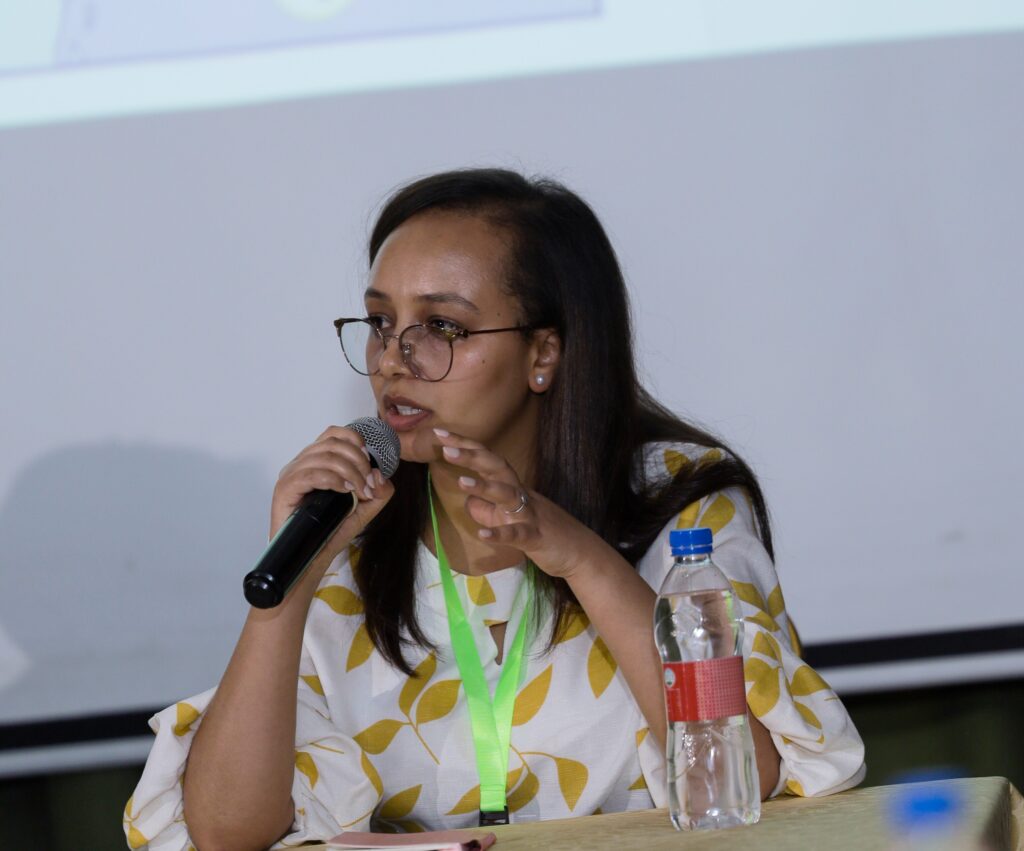
Hilina Berhanu Degefa, Ethiopia
Women’s participation in non-state ethnic and ethno-national armed groups in Ethiopia with cross-border implications with Kenya and internal borders.
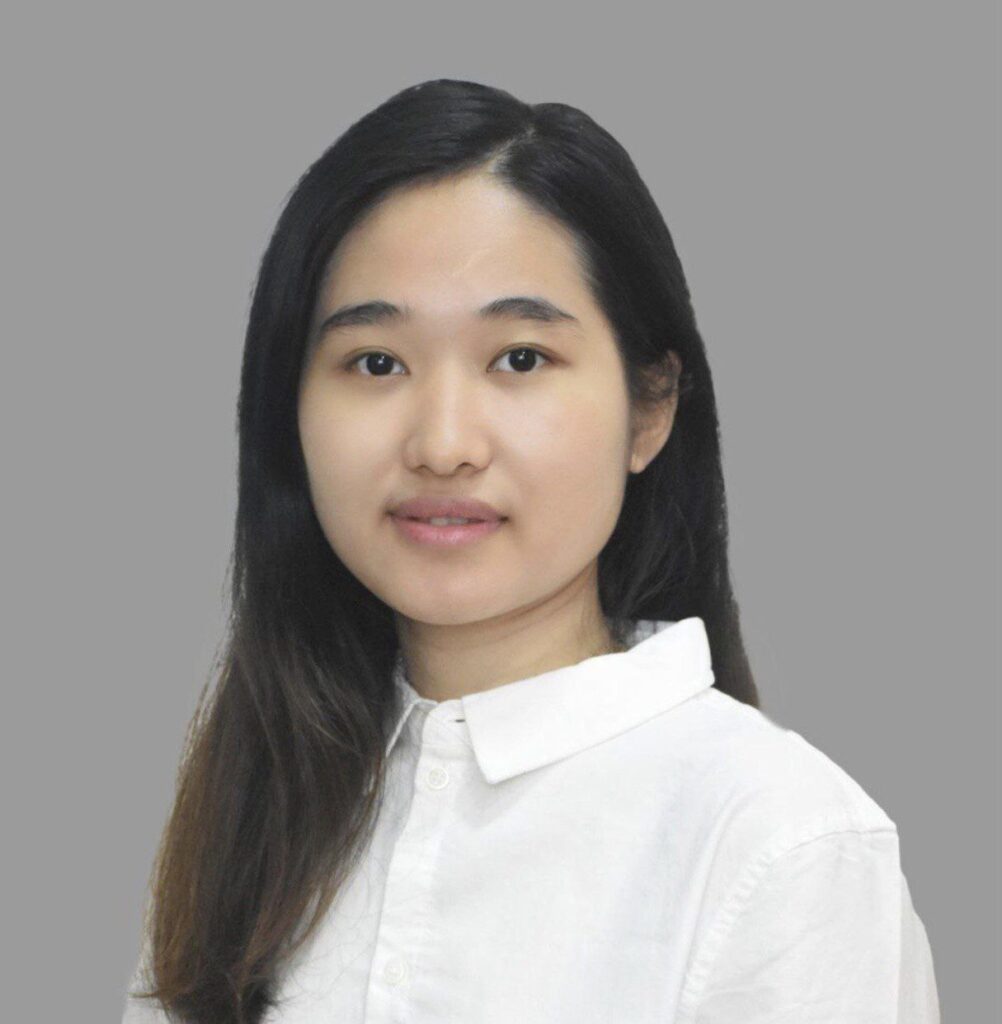
Htoo Htet Naing, Myanmar
Exploring aspirations and challenges:community perceptions of governance stability and peacebuilding in northern Rakhine states.
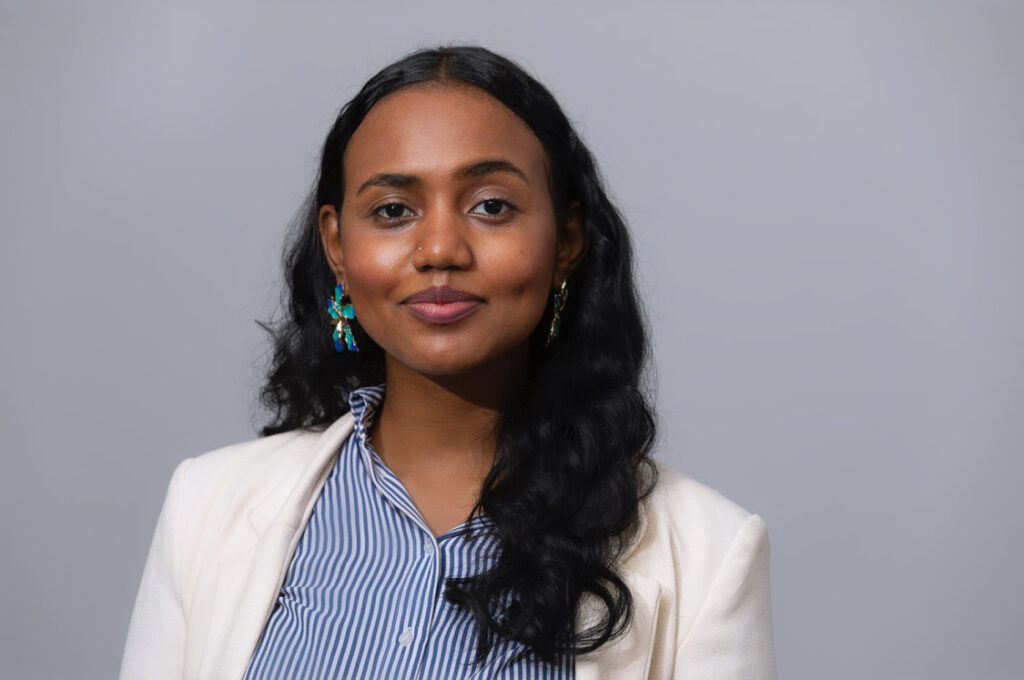
Moneera Yassien, Sudan
Use of quantitative methods to analyze the impact of localized conflict on cross-border trade on the Kenya-Uganda border.
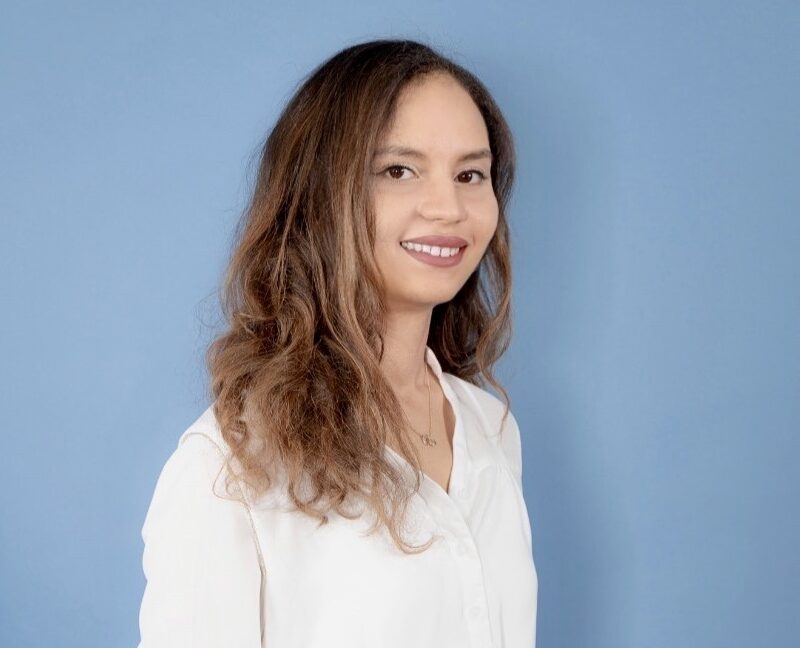
Salma Daoudi, Morocco
Complexities of healthcare and impact on security and wellbeing of displaced Syrians on the Turkish-Syria border regions.
Ilyssa Yahmi, Algeria
Smuggling and conflict in the Sahara region in two-fold: Smuggling as a tool for rebel control and governance; and studying the relationship between human smuggling and border securitization.
Faryak Khan, Pakistan
Exploring the peace and conflict nexus in new emerged tribal districts in Pakistan especially in the northwestern border with Afghanistan.
Doing research in conflict-affected areas carries particular challenges and risks. In this video edition of the podcast, researchers working in borderland regions of Asia, the Middle East and Africa share their experiences and approaches to conducting fieldwork. Key challenges include engaging with diverse actors, maintaining local networks, and establishing trust with respondents. Our experts also share their thoughts on researchers’ positionality in the bigger picture of conflict response and reduction, and how the pandemic has enabled us to think about data collection in new ways.
This episode features:
Joseph Diing Majok, an anthropologist and researcher at the Rift Valley Institute in South Sudan. His work is focused on the borderland regions between Northern Bahr el-Ghazal state in South Sudan, and Darfur and Kordofan in Sudan.
M Seng Mai and Hkawng Yang Madang from Kachinland Research Centre in Northeastern Myanmar at the border with China. Their recent fieldwork examines the nexus between post-coup conflicts and illicit activities in Kachin State, focusing on the impacts on borderland communities.
Kheder Khaddour, a non-resident scholar at the Malcolm H. Kerr Carnegie Middle East Center in Beirut. His research centres on civil-military relations and local identities in the Levant, with a focus on Syria.
Tabea Campbell Pauli is a senior programme officer with The Asia Foundation’s XCEPT programme, and can be reached at [email protected]. The views and opinions expressed here are those of the authors, not those of The Asia Foundation.
South Sudan is highly susceptible to both protracted conflicts and the impacts of climate change. Before 2011, the country experienced a long and deadly civil war. Disputes continued after independence, with violence often spilling over across borders and into nearby countries. Local impacts of climate change (e.g., droughts, flooding) disrupt economic growth and community livelihoods, potentially contributing to conflict and destabilising the region. Climate adaptation and food security can therefore have important implications for reducing violence, particularly social conflicts that involve local ethnic militias, civil defence forces, and vigilantes.
To test these implications, I collected monthly information on climate adaptation and food security projects implemented by nongovernmental organisations in South Sudan and its bordering countries between January 2012 and December 2022. Such measures include, among others, planting more resilient crops, building dams and granaries, managing environmental resources such as grazing land or water reservoirs, and training locals in more effective sustainable food production.
Unfortunately, I did not find that these types of adaptation projects have any impact on social conflict or civil war. In fact, at least in South Sudan, there was the risk that they might be associated with more conflict. A project manager I interviewed provided one explanation: “South Sudan is a complex crisis country …[while] flooding and drought have led to displacements, people move into new geographies, and conflict scenarios shift.” In these complex situations, adaptation can exacerbate these dynamics, especially if the root cause is political or socioeconomic; or, as another local policy ethnographer explained, “you cannot just ask for a local solution and detach national politics from the local issues.”
However, I did find one interesting exception. Adaptation interventions that emphasised general preparedness – including, for example, efforts to plant more resilient crops, train locals in more effective sustainable food production, and create sharing tools for renewable resources like water – were associated with lower rates of social conflict, both within South Sudan and across the border.
Why might adaptation that emphasises general preparedness help in alleviating violence? One explanation builds on the nature of social conflict actors. Social conflict actors are more prevalent than military, police, or rebel groups in the region because they thrive in contexts of weakened or decentralised government. Because these actors are more dependent on locally-sourced crops and cattle, they may also be more sensitive to the effect of weather shocks upon these resources. Adaptation strategies that emphasise general preparedness can address – albeit imperfectly – a wider range of unexpected weather shocks, reducing the need for violent competition over scarce resources.
Another explanation emphasises the disruptions the civil war caused to local livelihoods. As one policy researcher explained, by emphasising specialised adaptation, “programming tends to incentivize specific livelihood strategies…which do not respond to local livelihood trajectories.” This can increase uncertainty about the future, considering climate change’s effects are hard to predict. In contrast, adaptation strategies that emphasise building general resilience can provide local communities with more flexibility, allowing them to choose whether to maintain traditional livelihoods or, if needed, adapt to new ones.
Regardless of which explanation is correct, the finding that adaptation programs that emphasise general preparedness may help reduce conflict illustrates how important it is to consider a broad set of direct and indirect outcomes when trying to tailor climate adaptations to conflict contexts.
Nevertheless, it can be hard to convince donors who fund adaptation that this approach makes sense. Donors have their own expectations when choosing which project to fund, which leads to “top-down” pressures that often do not conform well to the local realities, where social conflict poses a constant hardship. The problem is that, “[m]ost donors don’t understand the complexities…it’s really difficult to be able on the one hand to put a proposal that supports donor demand but on the other hand, is really context driven,” as one policy practitioner explained.
At the same time, it is imperative to convince donors that considering a wider range of outcomes will improve the chances of success. Understanding how interventions designed to support climate adaptation and promote food security can be tailored to local conditions in conflict settings is crucial. By investing in projects that have a better chance not only of improving adaptation in the immediate terms, but also of reducing the risk of violence, we can improve long term resilience, thereby preventing conflict from disrupting livelihoods and harming adaptation efforts.
Dr Omar Mohammed is a renowned historian and the voice behind ‘Mosul Eye’, a blog which anonymously documented life under Islamic State (IS) in the city of Mosul, Iraq. Today, the Mosul Eye Association focuses on promoting the recovery of Mosul and its cultural heritage, as well as empowering the city’s youth. The most important task Mosul Eye is undertaking is to promote Mosul globally to replace the negative image of the city after its fall to IS in 2014 and the subsequent destruction.
Hi Omar. Thanks for joining us. Please could you explain what Green Mosul is?
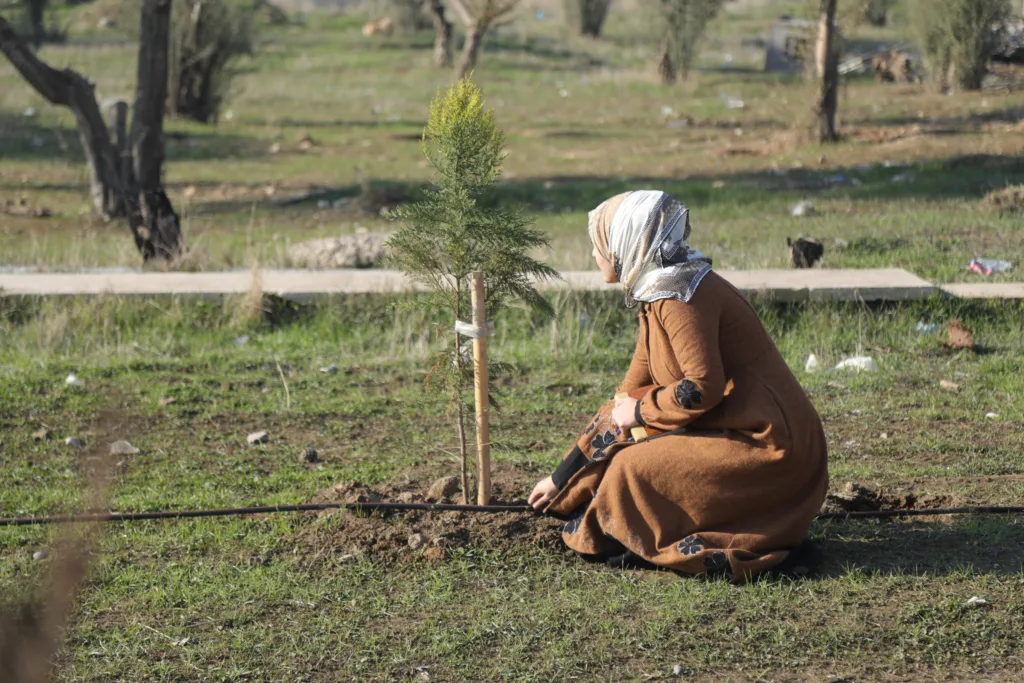
Green Mosul was an initiative started by Mosul Eye, and ultimately led by youth, to plant trees in the city of Mosul, but really it has two definitions. It refers to the greening initiative, which was the effort to repopulate Mosul with green space after the massive estruction that took place during the conflict. But it really aimed at, and can be defined as, an initiative to support reconciliation in post-war Mosul.
Following the conflict, there was a need to bring the people together, and to do that we needed to find something everyone could relate to. We wanted to disconnect them for a short time from the religious and social problems in the city, and we settled on one thing they could agree on: a tree. A tree doesn’t have a religion. It doesn’t have an ethnicity. It only has what benefits the community: clear, clean oxygen, a good view, and the ability to create a nice landscape.
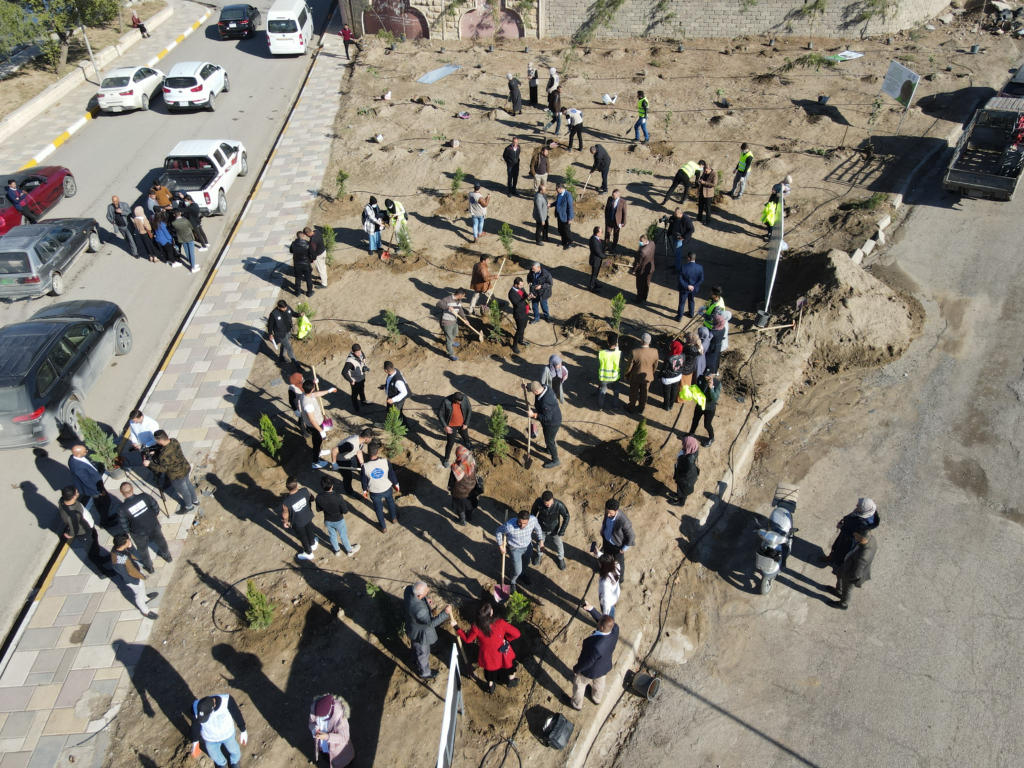
Green Mosul ran from March 2022 to March 2023, and, in that time, we planted 9,000 trees in Mosul and the wider Nineveh province. When we started the initiative, we signed agreements with the local government and with the universities, and one of the terms was that they would commit to planting trees every year. Green Mosul has now technically ended, but the University of Mosul and the Technical University of Mosul continue to plant trees on an annual basis, and the local government has also dedicated a portion of the budget to planting trees every year. Our initiative didn’t stop when we finished our work. We wanted to make sure that it continued and that others could build on it.
Was it easy to get the support you needed to launch Green Mosul? How was the idea first received?
At the very beginning, we sought the support of the Iraqi government, but they wanted to see results before they got involved. I then approached the French government, as I knew they were interested in such initiatives. Their cultural attaché liked the idea, so I went away and developed the initiative amongst the community. One month later, the French government approved the idea, and Green Mosul was borne. Once we’d secured the funds, the local authorities were keen to support us, and we signed agreements with the forestry department, the municipality, the universities, and with other entities in the city. It became a fully Mosuli initiative, where the people and the government were working together for a common interest: the urban greening and, at the same time, the rehabilitation of the social fabric of the city.
Was it important for you to have the local authorities involved?
It was. One of the hurdles to post-conflict recovery in Iraq is that many people see the authorities as dysfunctional. I might agree with them, but I see that there is a way of utilising this dysfunctional government by making it functional – and the only way to make it functional is when you involve them. So Mosul Eye brought the Green Mosul initiative to the government, and they helped make it happen. We didn’t have cars to transport the trees, so we used the municipality’s cars. We didn’t have the ability to create the irrigation system for the trees we were planting, so we used the forestry department. I think their involvement also helped the initiative grow. Members of the public are not necessarily aware of what ‘social cohesion’ is, but they saw Green Mosul as a reliable initiative because of how many people were involved.
Through Green Mosul, we were also aiming to create trust between the authorities and the population. We wanted it to be a collective effort, because the initiative also focused on a very important principle, which is that the process of healing has to be collective in order for it to be strong and impactful. Mosul Eye helped the government to understand the critical importance of social cohesion and of rehabilitating the social fabric, but at the same time, the government gave us the equipment and the space. I think we contributed collectively, and that’s why I always say that this is an initiative of Mosul – it’s not just an initiative of Mosul Eye. It’s important to show the people that they have agency in the process of their healing. They need to own it.
What was the response like among the local community? Were people keen to get involved?
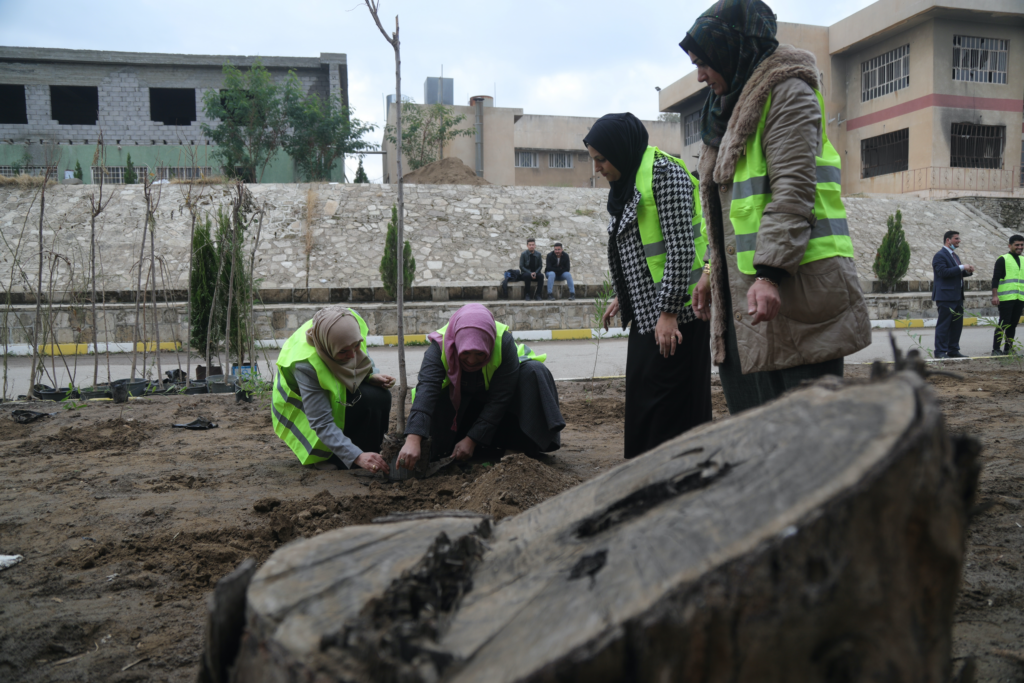
We had a specific communication strategy when we first approached the local communities. We made sure to keep the same distance with the community leaders and the public, because we didn’t want to create the impression that Green Mosul was only for elites. So we spoke to the Yazidis, to the Christians, to the Shia, to the Sunni, and to the endowment administrations of the Yazidis, the Christians, the Shia, and the Sunni. We made sure that the first communication was with the public, and then we facilitated their own communication with their community leaders. Once the locals initiated the conversation, the community leaders came to us, and asked to get involved.
In fact, one of the places where we planted trees was as a result of communication with a woman from Tel Keppe. She told us there was an empty park in the city, and the community wanted to use it to create a space for their children, but the land was owned by the church. It wasn’t easy to convince the church at that time, and distrust between the different religious communities was still strong. We were trying to avoid being labelled religiously – we were trying to be seen only as individuals who had an interest in rehabilitating these spaces – so I spoke to the head of the church and explained that it was a great space. The church would probably receive more visitors if people came to the public park, and everyone would be happy. The priest agreed, and we created a public space where there was both a religious site and a secular site. Today, the same priest is asking me for more trees to be planted.
Within the communities, we also started receiving offers from people saying they didn’t just want trees to be planted in their space, but they wanted to contribute trees to be planted elsewhere. One person also suggested that we plant trees for those lost during the conflict, and then everyone started coming forward with names. They wanted to put the name of their son or daughter, or their mother or father, with this tree or this tree. In the first few months, it was Mosul Eye and the municipality running Green Mosul, and then it became led by the people themselves.
Were the sites where the trees were planted important, or was it more about the process of bringing different communities together?
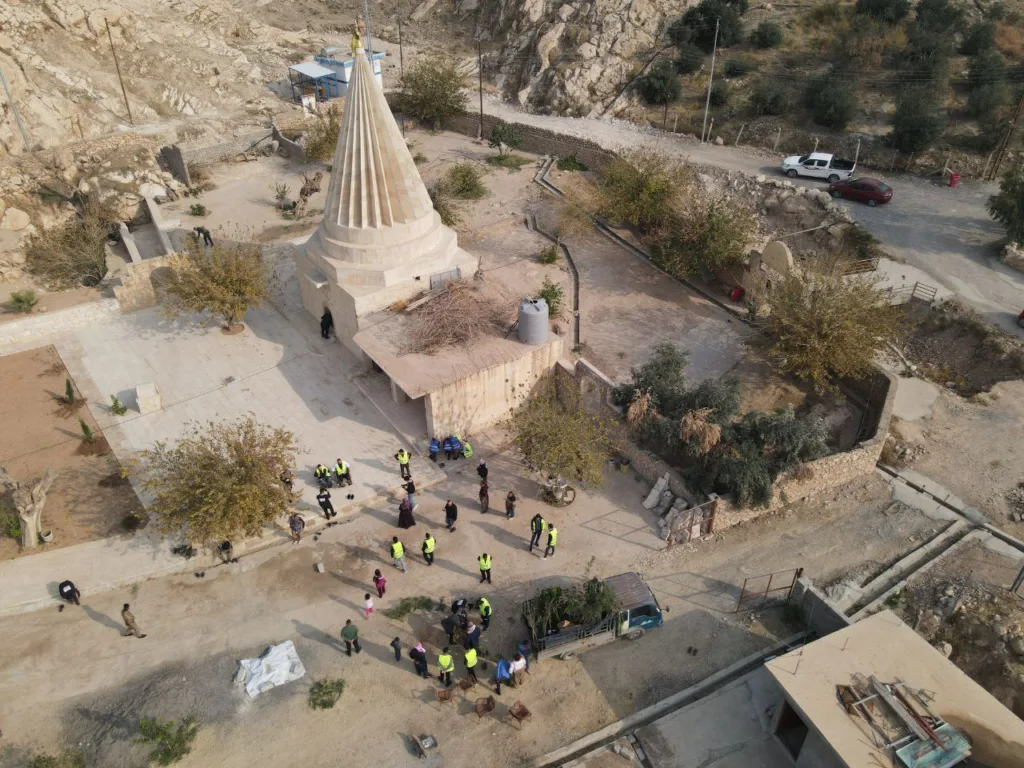
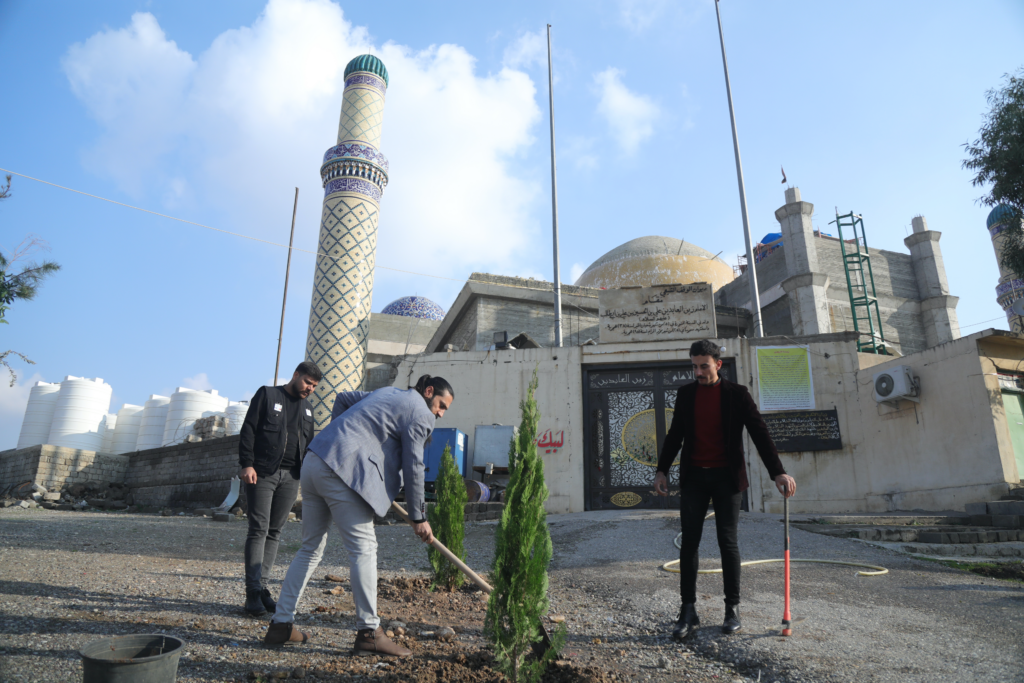
The two things were intertwined. Some of the sites we chose were religious, because we wanted to try and encourage young Muslims to go to Sinjar and plant trees around the worshipping place of the Yazidis, for example, and young Yazidis to go to Bashiqa or to Mosul and plant trees inside al-Nouri mosque and Al-Saa’a church. We tried to treat these sites holistically, so we communicated to the people of those faiths that we had an interest in their religious space, but, at the same time, they were also heritage sites and public spaces for the people. We did the same in the Shia, the Sunni, the Christian, and the Yazidi majority areas, but there was one condition: that a Yazidi plants in a Muslim side and a Muslim plants in a Yazidi side and so on.
Green Mosul also planted trees in heritage sites, and we had an agreement with UNESCO, whose supervision those sites were under. We planted trees in their sites, but on the condition they would become part of the public space. We always tried to make sure that the planting of trees was seen as being outside the lens of religion – it was a holistic approach that involved everyone.
You mentioned distrust between religious communities earlier – was it difficult to persuade a person from one religion to plant trees at the religious site of another?
At the beginning, it was difficult, and sometimes we needed to have difficult conversations. But we also trained around 25 people from all communities to use as the face of the initiative. They would reach out to their communities, and they would explain that they were there wishing no harm, but they were there to contribute to the community. And when people saw the results – when they went to a place with no trees and when they went back and saw the trees planted – they understood. After a short time, things went smoothly.
When you started Green Mosul, what did you hope the outcome would be?
To be honest, when we started, I had fears it would not succeed. Given the gravity of what had happened in the city, I was concerned people might not be interested. But we started Green Mosul with three goals. One was that we would create a sense of responsibility among the people. Many had become disconnected from the city as a result of what had happened since 2003, and we wanted to reintroduce a sense of responsibility among citizens to contribute to their city. Our second aim was to introduce a mechanism of communication between communities that wasn’t about religion or ethnicity. The third was to create trust between the government and the public. I still make sure I communicate everything I do with the government, and then I communicate this to the public. I wanted to reintroduce the meaning of governance. I wanted the public to know the government is not just people sitting behind closed doors, but that they themselves can gain access to them and work with them.
We’ve achieved those three things, but we’ve also created friendships between different communities. They still visit each other, they are friends with each other, and they are still communicating. These different communities are working together, and that’s what we aimed to do, and we succeeded. I’m so happy about the results. I’m so happy about the involvement of the community. I’m so happy that we were able to do this in a complicated context, where people are still healing. This means there is potential for people to work together in Mosul to create a sustainable future for themselves, but it will take time.
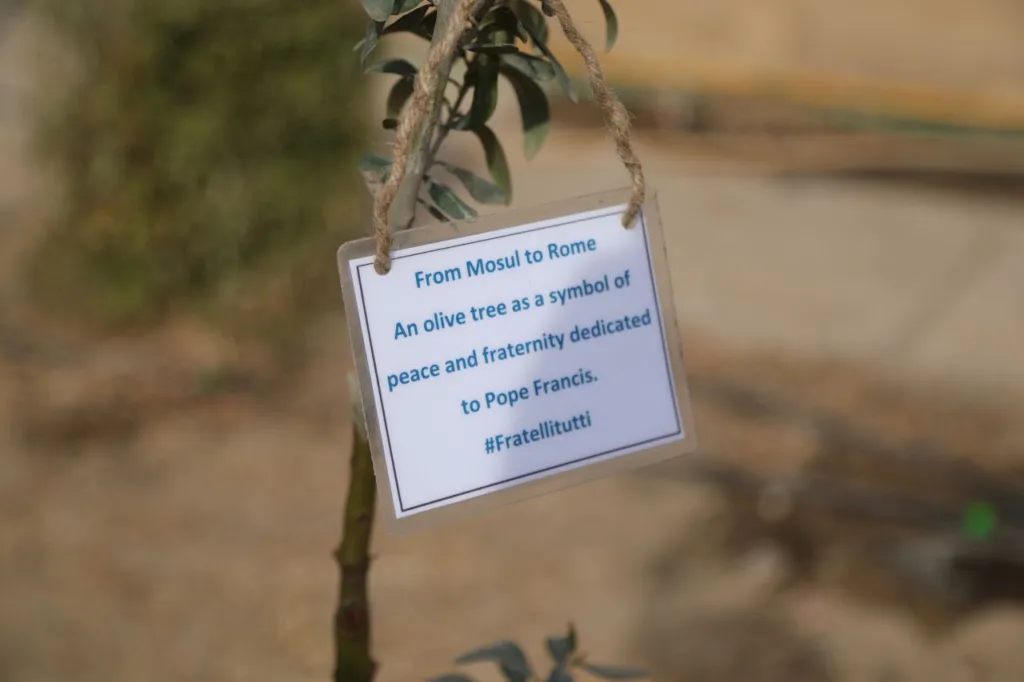
The other element we introduced is that we raised awareness about climate change in a very complicated context – imagine talking about climate change in a city that is heavily destroyed and where people are still missing. But Green Mosul succeeded in introducing the conversation around climate change, and the university is now running research and attracting more researchers to work on the subject. One topic which is dear to me is what I call ‘green heritage’. I saw the impact of the destruction of cultural heritage on the people and the potential conflicts that it might create, and I realised that, although Islamic State might not come back, there is another enemy: climate change. It’s important to address this when we speak about preserving cultural heritage. The recovery of Mosul’s cultural heritage plays an important role in the collective healing from generational trauma, and it gives hope to the people that social cohesion is still possible as well as limiting the impact of radicalisation.
It sounds like Green Mosul has been a great success. How important do you think it is to have grassroots-led vs authority-led initiatives in Mosul?
I think encouraging the grassroots to lead more initiatives is fundamental for a healthy rehabilitation of Mosul, because not all recovery efforts succeed in meeting the results they intend. A quick rehabilitation might bring the opposite outcomes, so it’s important to create a sense of responsibility among the grassroots so they feel they have a say in what’s happening. Now is the right time to work on this, and invest in this, because we are still in the process of rebuilding and healing. It’s the best time frame we have to enable people to develop this sense of responsibility.
At the same time, we shouldn’t ignore the government. The government can always contribute, and opportunities can always be created if there’s a will, a sense of responsibility, and most importantly, diplomatic expertise – because it’s all about how you communicate your ideas in a post-conflict environment.
In Mosul, we need less focus on religion. When rehabilitation efforts target certain religious groups, they’re not talking about justice for all. They’re just reinforcing divisions. Create the space, and let people be the way they want. I think let’s talk more about trees than religion. You can plant trees in a mosque or in a church, but it doesn’t have to be because they’re a mosque or a church. It can be because you care about the environment or because you simply want to enjoy green space.
You can read more about XCEPT’s research on reconciliation initiatives in Iraq here: Iraqi heritage restoration, grassroots interventions and post-conflict recovery: reflections from Mosul
Bangladesh is facing a climate emergency. Although it is one of the world’s least polluting nations, it is already experiencing some of the most severe effects of changing weather patterns. The country lies close to sea level, and much of the land is river delta that is prone to seasonal flooding, erosion, and salinity intrusion and faces the risk of devastating cyclones, all of which can be catastrophic for local communities and their livelihoods. Many families are unable to recover from such climate disasters and are forced to move to other parts of Bangladesh or across borders to rebuild their lives.
Unsurprisingly, Bangladesh has become a prominent voice in global conversations about climate change and the need for international responsibility-sharing. Developing nations generally shoulder an outsized share of the costs of climate change compared to wealthier nations, a fact recently recognised in global forums such as the United Nations Climate Change Conference, which convenes the annual Conference of Parties, or COP. In its 27th sitting, in 2022, the COP established a loss and damage fund for vulnerable countries, which was operationalized a year later at COP 28. While proponents celebrated this as a win, many practical challenges remain, including raising sufficient funds and figuring out how to measure losses and distribute resources equitably among nations. The many intersecting consequences of environmental degradation require long-term solutions and a holistic approach. Mechanisms like the loss and damage fund will not increase climate resilience if social, political, and economic factors are not considered alongside the environmental ones. Migration and displacement of affected populations is one of the most significant consequences of climate change. Along with the downstream impacts on labor markets, social networks, and transnational relationships, these will need to be accounted for in national and international climate strategies and development policies.
As “ground zero” for a shifting climate that is turning many environments inhospitable, Bangladesh offers a case study of these overlapping vulnerabilities. In parts of the borderlands with India, longstanding social and political fragilities lie beneath the new environmental stressors. The border itself has been an historical point of contention between the two countries, and security measures in the past have led to violence. The distance from central governance institutions in Dhaka can result in border regions being underrepresented in national climate strategies, including the distribution of resources, which can further marginalize ethnic and religious minorities within border communities. The risks from climate change in such areas of existing vulnerability cannot be overstated: economic instability, food insecurity, unreliable access to justice, and increased inequalities that can trigger communal violence.
Attempts to institutionalise sustainable solutions in climate-vulnerable areas must be rooted in a situated understanding of how communities experience and respond to environmental disruptions. Outsiders may struggle to grasp these nuances, which can lead to poor planning and interventions that cause further harm. In southwestern Bangladesh, for example, seasonal and informal migration to urban centers in India have become more and more of a survival mechanism for those who have lost their agricultural livelihoods. This can clash with policies that regulate cross-border movement, including the steady increase in border fencing. Researchers and practitioners working in affected areas can play an important role in collecting information and building evidence that speaks to local experiences, but this must be done with sensitivity and recognition of the power dynamics of classical research settings. Historically, the study of vulnerable populations in particular has been steeped in inequality and defined by an essentially extractive relationship between researchers and researched.
As the world mobilises to support climate adaptation and resilience, decision-makers need analysis that reflects the needs and priorities of communities at the forefront of climate change. The Asia Foundation is working with the Centre for Peace & Justice (CPJ) of BRAC University in Bangladesh to develop a framework for assessing how existing drivers of fragility interact with the onset of climate change, in order to understand the risks for future climate resilience and development programming in the country. The Foundation’s partnership with CPJ originates in the UK-funded development research program XCEPT, Cross-Border Conflict: Evidence, Policy, and Trends, which works with local researchers to provide analysis of conflicts in border regions that is grounded in the affected communities.
With support from this program, CPJ has developed a new methodology for community-driven data collection, based on “participatory research,” that seeks to avoid the vertical power dynamics inherent in traditional research models. CPJ first employed this methodology among the Rohingya refugees seeking asylum in the Bangladeshi coastal town of Cox’s Bazar, on the border with Myanmar. A network of researchers drawn from within the refugee community itself enabled the affected population to become co-producers of knowledge and solutions, building trust between aid providers and recipients and strengthening the credibility of the research findings. The insights this yielded have helped foreign donors and humanitarian agencies operating in the world’s biggest refugee camp to work more effectively. This approach is a major contribution to localising aid, as it shifts power over information towards the affected populations.
This year, CPJ is piloting the same research approach in southwestern Bangladesh, applying it to the question of how climate adaptation strategies reflect and respond to broader social and political fragilities in the local context. A scoping study first undertaken by the team in 2022 determined that this question is a major factor in the long-term success of such strategies. Subsequently, a research project was designed replicating the approach used in Cox’s Bazar, starting with the recruitment and training of young people to work as “community researchers.”
The team faced some initial challenges: refugee camps are an entirely different operational context than areas of the general population, because of the institutional control within the camps and the relative immobility of the camp population. Furthermore, the severity of the refugee crisis in Cox’s Bazar was a powerful motivator for camp residents to participate. In southwestern Bangladesh, on the other hand, researchers wondered how to build interest among local youth in participating in the data collection and how to encourage respondents to open up about their experiences and aspirations. Researchers have also reflected that the obstacles facing Rohingya refugees in their fenced camps are immediate and tangible, while slow-onset climate factors that distress and uproot communities in climate-affected border towns are less immediately apparent.
To apply a proven methodology in a completely new context, both major and seemingly minor aspects of the research study may need to be revised. CPJ’s community-based research approach acknowledges the complexity and unique social order of the borderlands, allowing for a more comprehensive understanding of the study sites. Climate realities around the world are not equal. These locally grounded methods of exploration avoid the mistakes of knowledge systems that force top-down assumptions on local communities, and instead empower them to be the voices of their own experience.
The initial phase of this new project is nearing completion, and community researchers are receiving training for the first round of data collection. From where we stand now, there is much to discover, to learn, and to unlearn, and we hope to do it together.
Tabea Campbell Pauli is a senior program officer with The Asia Foundation’s XCEPT program, and Tasnia Khandaker Prova is a research associate with the Centre for Peace and Justice of BRAC University. They can be reached at [email protected] and [email protected], respectively. The views and opinions expressed here are those of the authors, not those of The Asia Foundation.
Syria’s south is caught precariously between two realities. On one side, there is Israel’s resolute campaign to neutralize border threats, particularly after the traumatic Hamas attack of October 7 last year. On the other, there is Iran’s growing entrenchment in Syria’s southern border regions, especially Quneitra Governorate, which is aimed at securing geopolitical leverage in the region. Unless there is a significant change in the current status quo, there could be a military escalation down the road that again undermines regional stability.
Looking at southern Syria after Syrian government forces returned to the region in 2018, one can’t help but notice an irony. The deployment of the army and security forces was largely premised on an understanding among Russia, the United States, Israel, Jordan, and the Assad regime in Damascus allowing for their return, but on the condition that Iran and its allies would not return with them. Moscow was to guarantee the arrangement. However, today what we are seeing, instead, is a contest for domination of the south in which Iran has accumulated power while Russia and the Assad regime have lost ground.
The war in Ukraine, which has compelled Moscow to reallocate its resources and refocus its energies, has been the main cause for the relative decline of Russian sway. Russia had a multifaceted presence in Syria. It played the role of active combatant, with personnel on the ground; it had an influential diplomatic role in negotiations to resolve the Syrian conflict; and it played a unique intermediary role, brokering agreements among stakeholders who otherwise had no direct communication with each other, which enhanced its leverage.
The agreement to return government forces to the south in 2018 was a byproduct of this unique position. Yet since then, Israel and Iran have exploited the erosion of Moscow’s influence. At the same time, there has also been a continious decline in the strength of the Assad regime. This has resulted from a combination of factors, including U.S. sanctions, Syria’s continued isolation at the regional level, and the systematic breakdown of the Syrian state as a consequence of the uprising.
The outcome of this disastrous situation has been visible both economically and politically. For example, the Syrian pound was valued at SP3,600 to the U.S. dollar on the day Russia began its offensive in Ukraine, and now it hovers just below SP14,000—a depreciation of approximately 290 percent. Another sign comes from Suwayda, where the Druze community—historically not aligned with the opposition—has been staging continuous protests against the regime since August 2023 for failing to provide security, stability, and basic services, among other things. The authorities have not been able to quell these protests. Meanwhile Arab countries, chiefly Jordan, are also concerned about developments in the south, but have little ability to influence the course of events there.
Though Iranian influence may be rising, Tehran does not exercise control over the south, while facing numerous obstacles there. Israeli opposition is the most significant. Israel has continiously targeted Islamic Revolutionary Guard Corps and Hezbollah officials since 2013, with more than 240 strikes across Syria. Iran has also faced local pushback. In Daraa and Suwayda Governorates, the population is largely hostile to the Iranians, who have progressed in a limited way in these areas. Data collected by the author on Israeli airstrikes between 2013 and February 2024 show that Daraa and Suwayda were targeted far less frequently—only seven times—than the hundred or so times Rural Damascus Governorate was targeted. This indicates that Israel doesn’t consider Daraa and Suwayda to be substantial threats.
But Iran has had some successes as well, namely in the highlands of Quneitra that remain under Syrian control and overlook the Israeli-occupied Golan Heights. Iran and its allies have been able to consolidate their position in this region. Geographically, its rugged, mountainous terrain allows for concealment, facilitating militia operations and movement. Quneitra’s proximity to the Lebanese border, which is under Hezbollah control, and southern Rural Damascus Governorate, where Iranian influence is pronounced, has further confirmed the broader region as a nexus of Iranian-aligned activity.
In addition to this, local dynamics in Quneitra during the Syrian uprising created openings for Iran and its allies. Between 2015 and 2018, the Sunni extremist group Jabhat al-Nusra controlled the area and threatened the small Druze and Christian populations. In response, these communities forged ties with Iran and, especially, Hezbollah for protection, allowing the Iranians to retain a foothold on the Quneitra front throughout Syria’s conflict. That is likely why, since 2013, Quneitra has been the second most frequent target of Israeli strikes, being hit 30 times.
What gives a strategic edge to Iran in the south is the disorder that followed the return of government forces in 2018. The security situation has remained precarious and there is a growing illicit economy, both of which have created an environment conducive to the expansion of Iranian influence. Iran’s experience in operating in such settings in the Middle East is unparalleled. In principle, the Assad regime and its institutions should have had the advantage, given their local knowledge. However, they are resourceless, have lost the mechanisms of control they had before 2011, and are now greatly dependent on Iran.
Interestingly, after the start of the Gaza war last year, Russia stepped up its presence along the Golan Heights by establishing several observation posts. This presence could increase pressure on Iran or help mitigate an Iranian-Israeli confrontation in southern Syria, even if Moscow cannot replace or undo Iranian influence. Russia is not only dependent on Iran because of the Russian war in Ukraine, it has also failed to create a strong network of local proxies tied with patronage networks like Iran has done. Therefore, if Iran continues to reinforce itself near the occupied Golan, or deploys more weaponry there, a conflict with Israel may become inevitable.
This article was originally published on Diwan, hosted by the Malcolm H. Kerr Carnegie Middle East Center.
Since 2011, the conflict in Syria has transformed the country’s border areas. In most of these, Syrian sovereignty is now contested to varying degrees among local, national, and regional actors. These dynamics have led to a situation in which a variety of political centers (other than Damascus) have come to exercise influence over borders. Though there are stark differences among these border regions, they all have in common the fact that they are entities outside Damascus’ control, each with its own economy, security, and even ideology—effectively, de facto cantons.
Controlling Syria’s borders has always been a central aspect of the Assad regime’s power. However, given its loss of influence over many of its borders—added to its merely tentative authority over those border areas controlled by allies—what we are seeing today in the country is a significant long-term transformation in the way Damascus operates. It is unlikely that the regime will restore state sovereignty over these border areas anytime soon. Rather, in the coming years developments there are likely to be determined by local and regional actors, and the interactions between them.
Multiple variables will affect the outcome of these interactions. These can be placed into three broad categories: demographics, or more specifically the fate of the displaced and refugees; markets, or what might be called cross-border economic relations; and security. Given the likelihood that Damascus will be unable to restore full control over its border regions, the question is whether efforts to resolve the Syrian conflict should not encompass a wider range of local and regional actors, while also focusing on demographics, markets, and security? Such questions are what a group of Carnegie scholars hope to address in a forthcoming paper.
The movement of people has played a major role in border regions, notably the north. But these trends have also been characterized by a paradox. The regime has pursued a policy of reducing hostile populations under its control by allowing for the creation of large areas where it has a limited presence, or none at all—such as Idlib Governorate near the Turkish border. But this has also undermined the state’s sovereignty over these territories. Northeastern Syria, where the regime has allowed an entire segment of its population, namely the Kurds, to create a self-governing entity is equally representative of such an approach.
As cross-border markets and economic ties have developed, they have transformed, and in some cases even replaced, prewar market relationships in particular areas. Control over such relationships had also constituted a major factor in the Syrian state’s power before the conflict. New economic ties, as seen in the town of Sarmada, for instance, have tied border regions more closely to Türkiye than to Damascus. This development represents another aspect of the deterioration in Syrian state sovereignty over these areas.
Security, however, remains the main issue that will shape the future of Syria’s conflict in the country’s border regions. Over the last decade or so, Syria has seen the emergence of a number of parallel security orders—Turkish, Iranian, and American—each within specific geographical zones of operation and influence. While these may differ from each other, they too have all greatly eroded the sovereignty of the Syrian state and regime.
The Turkish security order has established effective self-defense zones and reshaped local power structures in parts of the north where the Turkish military has a presence. The more fluid Iranian model has connected Iraq to eastern and southern Syria and Lebanon through the promotion of local, pro-Tehran militias. The example of the crossing with Iraq has shown how Iran uses such passageways for its militias, allowing it to exert regional influence, even as it expands its sway over armed Arab tribal groups in the area. The United States also has a presence in eastern and northeastern Syria, as well as in the Tanf base near Jordan, which began as part of American participation in the coalition to fight the Islamic State group. For the foreseeable future, Damascus’ ability to restore its sovereignty in all these border locations will be virtually nonexistent.
The conflict in Syria has completely destroyed the country’s national framework, with local-regional having risen on its ruins. These ties have expressed themselves across all of Syria’s borders. The established approaches to resolving the crisis are therefore no longer useful today. The Geneva process, which assumed a political transition would take place within a Syrian national framework, is unrealistic. Not even the local deals that emanated from the security-focused Astana process between Iran, Russia, and Türkiye are effective. Neither takes into account the radical transformations that have shaped Syria’s political, social, and security structures since the war began. Until a new approach is tried, one that includes an effective local element within new regional equations, Syria will remain in limbo, at the expense of both its sovereignty and a society devastated by war.
This article was originally published on Diwan, hosted by the Malcolm H. Kerr Carnegie Middle East Center.