As the conflict in Syria passes its 12th anniversary, one civil society body is trying to pave the way to peace. The Council of the Syrian Charter calls for social cohesion built around a common social heritage that transcends political affiliation.
Listen to the podcast here.
In a speech given on Hezbollah’s 11 November Martyrs’ Day in 2021, the group’s Secretary-General, Hassan Nasrallah, stated that “it was with the blessing of these martyrs” that there exists “passion, nostalgia, love, adoration, psychological solace, and a lively spirit in Lebanon”.[i]
Ideas of ‘martyrdom’ in the Middle East first rose to prominence in academic scholarship in the mid-2000s, when the term became incorporated into the War on Terror zeitgeist, due in part to the perceived “numerous religiously motivated suicide-attacks in conflicts all over the world where the recourse on martyrdom discourses has been made prominent”.[ii] The vast amount of literature on martyrdom in the context of Muslim theologies and societies – its connection to radicalisation, jihad and suicide bombing, the use of the martyr as a weapon, and Western perceptions and receptions to martyrdom as a “an Islamic culture of death” – sought to construct a totalising Islamic martyrdom institution in order to find solutions to the threat of terrorism.[iii]
Yet, contrary to popular studies of radicalisation and extremism, martyrdom is not a priori. An individual does not become a martyr solely through having died and/or suffered, but is constructed as such by the societies, institutions, and other individuals who memorialise them, as part of a continuation of a lineage of centuries of theological and societal memory practice. In Lebanon, a country constituted by diverse ethnic and religious identities with a long history of intra-community conflict, martyrdom continues to be one of the most significant and mobilising carriers of memory in contemporary discourse. Narratives expand and re-shape according to cycles of violence: the martyr as hero, victim, national icon, resistance fighter; the ‘everyday’ man and the holy representative.
Most writings on political Lebanon and memorialisation acknowledge the “walls continually adorned with banners, posters, portraits immortalising iconic images and infamous slogans, an informal cornucopia of the ‘living dead’”, and “the legions of martyrs on the walls”.[iv] Yet, not many young Beirut residents could tell the story of the memorial at the centre of Martyrs’ Square, the focal point of Downtown Beirut. Why, then, are some martyr figures and narratives highlighted in memory, and others demoted? To what extent is this shifting? Whilst diverse in their representation, contemporary conceptualisations of martyrs in Lebanon serve three major functions: identity construction, legitimation and mobilisation.
Functions of martyrdom
The most defining period of contemporary martyrdom construction was Lebanon’s Civil War (1975-1990). The series of sectarian battles, massacres and evictions established a competitive field of discourse, in which martyrdom was established as “a coveted currency that parties strived to display”.[v] The memory of the dead served less as a unifying discourse, but a battleground. Each party and militia claimed to have martyrs of a particular cause, opposing the vision of others. Political leaders took advantage of the emotive memory vector of martyrdom, “not necessarily because they believed in the concept but only as a means to an end.”[vi] Martyrdom posters, now an institution in contemporary Lebanon, became a major competitive industry, carving out schisms between communities. These visual representations constituted “a relentless battle for signs and symbolic appropriation of territory”, marking out allied streets, shops, universities, places of worship and front lines.[vii]
Through martyrdom, memory could be flexed to serve a range of different purposes. Reminders of the sacrifices gave not only new combatants a cause to fight for, but current combatants a reason to continue fighting. Narratives of sacrifice also became a useful tool for parties to reframe their losses, through conceptualising martyrs as heroic defenders of the community and demonstrating the party’s legitimacy. Some parties even provided details about the way their martyrs died in an attempt to prove beyond doubt that they had ‘offered blood’. As Dabbous et al. explain, ”instead of saying ‘We lost four people’, the PLFP [Popular Front for the Liberation of Palestine] would say ‘We offered four martyrs’.
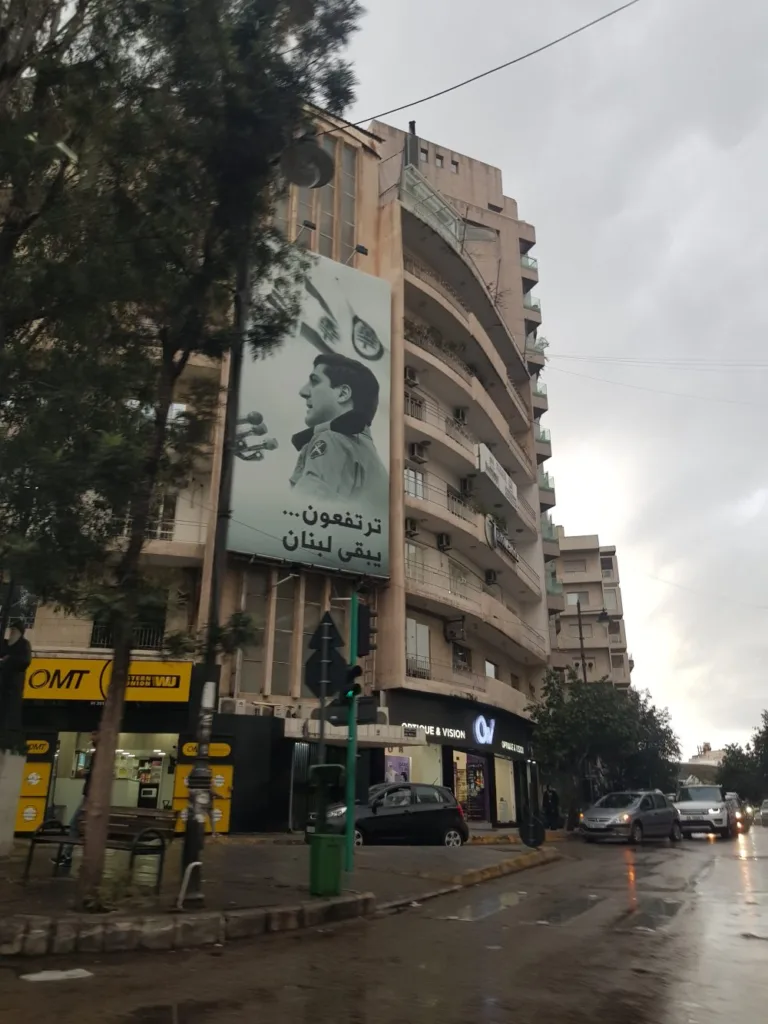
Military defeat suddenly became an honourable tribute to the party’s heroism and authority.”[viii] This became particularly significant with the deaths of party leaders. After the death of Progressive Socialist Party Leader Kamal Jumblatt in 1977 and Lebanese Forces leader Bashir Gemayel in 1982, images of the ‘martyred’ leaders became prolific in martyrdom posters, demonstrating the faithful commitment of the party to the vision of their leaders and the preservation of the party after their deaths.
Ironically, the competitive field of martyrdom did not end with the arrival of the Ta’if Agreement in 1991, and the end of the period of conflict. Instead, the combination of state-sponsored “collective amnesia” and continued violence and unrest in Lebanon created a vacuum for a proliferation of martyrdom narratives. [ix] Habitual violence and its memorialisation normalised a “hypertrophy of memory” in the form of martyrdom memorial monuments, posters and billboards, museums, documentaries and social media campaigns.[x]
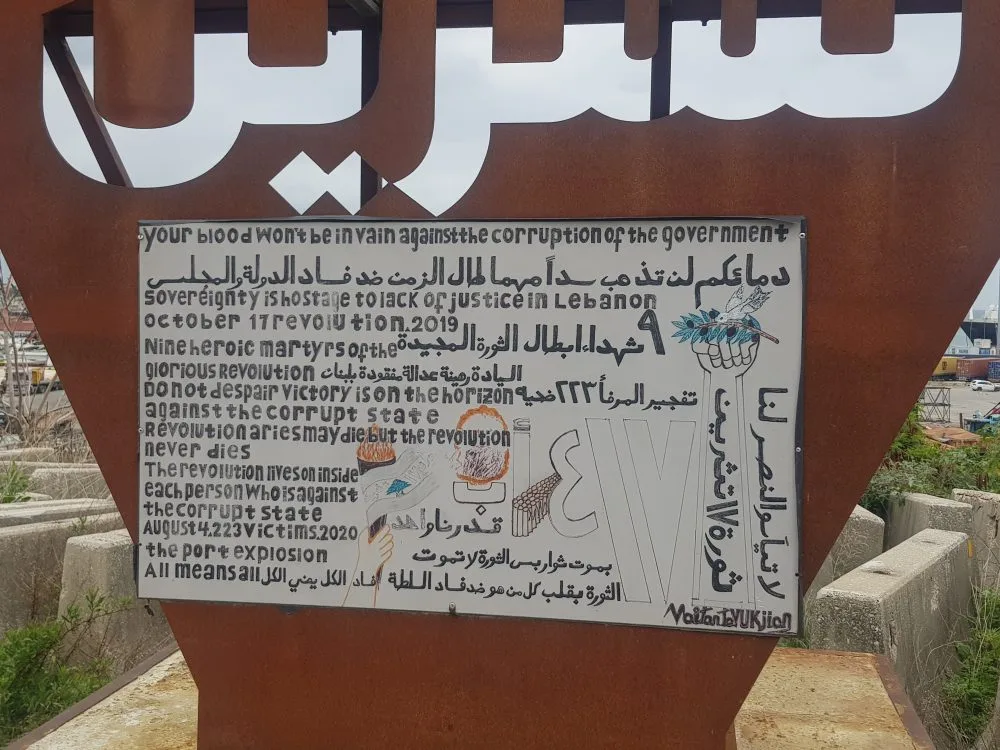
Although there were various attempts by political leaders and civil society at memorialisation of collective martyrs in the 1990s, there were, and remain, no collective martyrs of the Civil War recognised by a unified Lebanon, only sectarian schisms of memory, competing for the category of martyrs. Currently, there are more than 28 war memorials in Lebanon, and at least four (and counting) different martyrs’ days alternative to that celebrated by the centralised state. [xi]
Although Lebanon has not descended again into full-scale civil conflict, a key function of martyrdom memorialisation in contemporary Lebanon continues to be mobilisation: to remember past sacrifices, revitalised by ‘new’ conflicts and episodes of violence, and to conceptualise the more recent dead as a continuation of the community martyrdom lineage. Political commemorations of martyrdom post-Civil War have as much to do with the present as the past, in an ongoing anticipation of future violence.[xii]
Personalities of martyrdom
The icon of an individual remains an important part of contemporary martyrdom discourse. Rafic Hariri, Lebanon’s former post-war prime minister and the foremost politician to have been killed in the wave of assassinations in 2005, is memorialised as a martyr of the state. His memorial is located in close proximity to the Martyrs’ Memorial statue in Martyrs’ Square and the imposing structure he endowed, the Mohammed al-Amin mosque. Large billboards mark his domain of Downtown Beirut with visual representations of Hariri himself and the slogan “we will not forget [you]”, a continuation of the icons of religious martyrdom and the posters of the dead leaders of the Civil War.
Whilst the positioning of Hariri in the centre of Lebanon’s capital, and as a symbol of post-war unification, suggests an appeal to a national martyrdom, such memorialisations mark an important divisive aspect of the discourse of martyrdom in contemporary Lebanon: competitive legitimacy. Hariri memorialisations often bear the additional slogan, “truth”. There is no tradition for prosecuting and punishing political murders in Lebanon and, as such, the perpetrators of Hariri’s assassination have never been held to account. Martyrdom, in this context, serves the purpose of providing resolution (for not just Hariri in this instance, but also, through his iconisation, the state of Lebanon) and mobilising the population in calling for “truth”.[xiii]
Out of this competitive field, arguably the most prominent owner of martyrdom discourse in contemporary Lebanon is Hezbollah. Utilising the defining moment of the 2006 war of south Lebanon against Israel, Hezbollah industrialised martyrdom to position themselves as sole national defenders of the country of Lebanon. The militia’s perceived ‘divine and strategic victory’ over an Israeli invasion led to a shift in the group’s discourse away from localised militia narratives and into one of national defence. Secretary-General Nasrallah has even commented that “one of the martyrs’ achievements … was preventing a civil war in Lebanon, which is still lasting”.[xiv] In his eyes, Hezbollah gave blood for Lebanon when the state lacked capacity to defend itself.
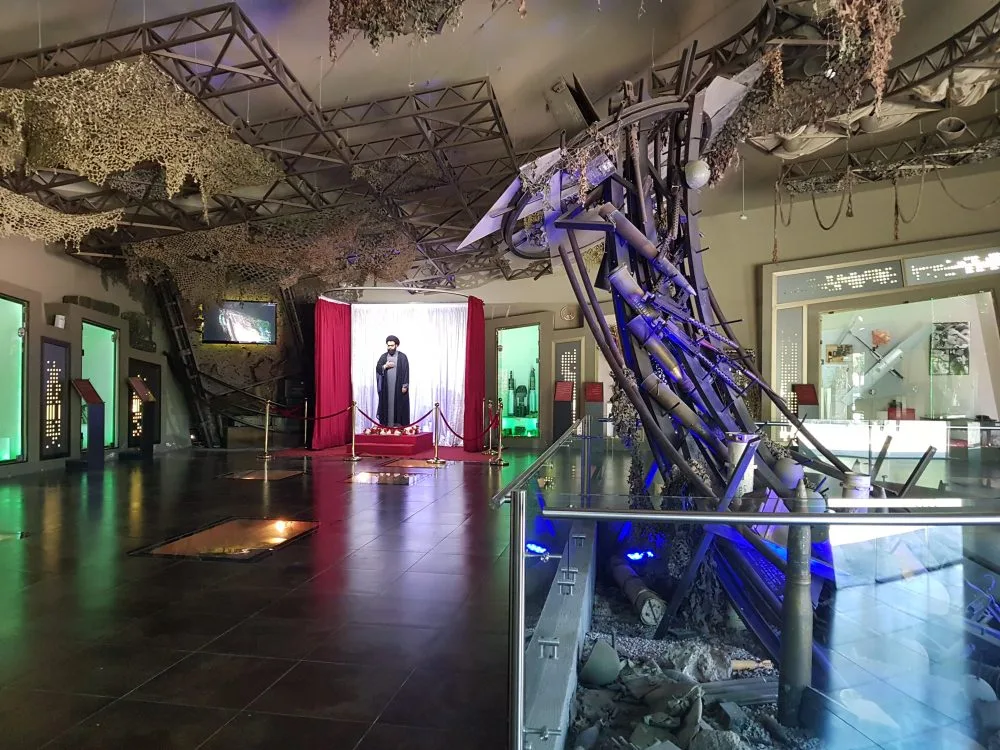
From this position, post-2006 Hezbollah’s martyrdom ‘industry’ successfully managed to monopolise the martyrdom discourse of Lebanon, with a designated Martyrs’ Foundation and clear designations of categories of martyrdom which informs specific commemoration practices (often observed by party officials to ensure correct observance). In 2010, the group opened its commemorative Tourist Landmark of Resistance to the fallen of 2006, as a means of legitimising its memory narrative using the factualising mode of the museum. In this way, Hezbollah exerts control over how such memory continues to be commemorated and anticipates future violence, whereby the resistance movement includes martyrdom “as a part of its enduring struggle to defend the ‘oppressed’ from the ‘oppressor’”.[xv]
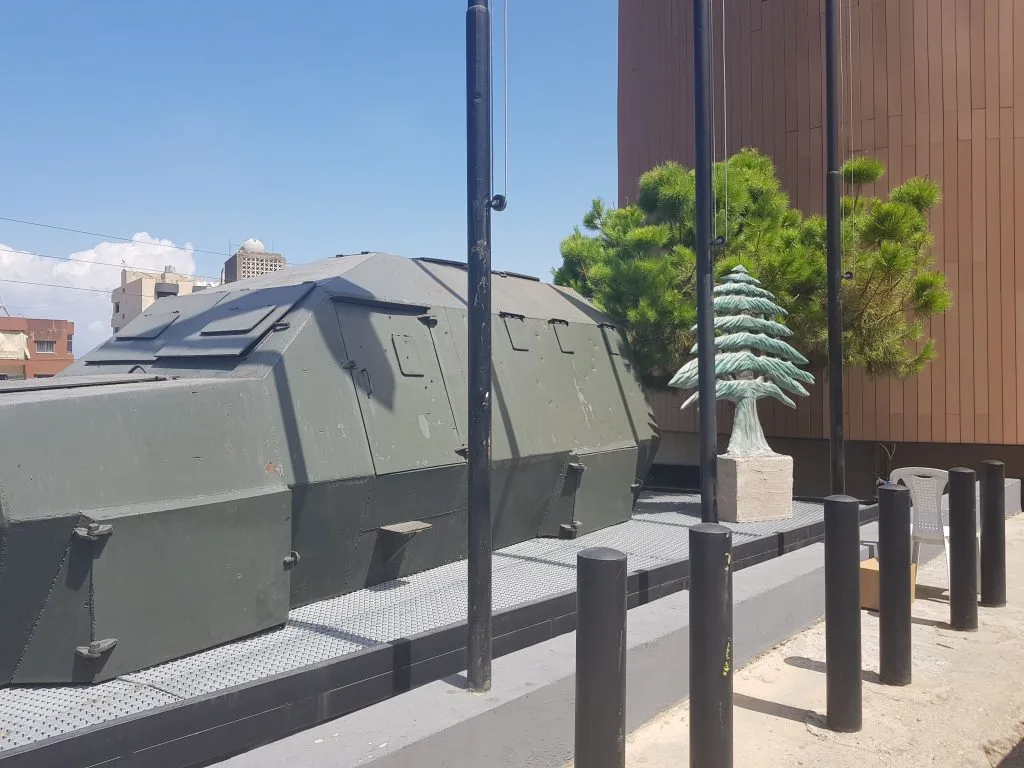
More recently, Hezbollah’s narrative of national defender is being challenged by corruption, crisis, and conflicts of the region, as well as the capacity of social media to broaden and disrupt the playing field of the discourse. The martyrs of Hezbollah’s intervention in Syria are significantly more contentious. Compared with the grandeur of the martyrdom museum of the 2006 war, positioned high on a hilltop and boasting 300,000 domestic and international visitors in its first year of opening, the memorial to the Hezbollah fighters killed in the conflict with Syria, the Garden of Zainab’s Poplar Trees mausoleum, is a relatively modest pale stone building, located in Hezbollah’s heartland of Dahieh.[xvi] There are no infographics, only Hezbollah regalia, and the room is plain and functional for the housing of 200 uniform graves.[xvii] These understated commemorations are memories for solidifying the group, rather than conquering a collective Lebanese martyrdom of national defence.
Martyrdom in an age of mass media
Institutional narratives of martyrdom have not gone unchallenged in contemporary martyrdom. The internet and social media have had a levelling, and rupturing, effect on the discourse, creating new forms of engagement and challenging traditional memory production. Televised documentaries and online media forge a martyr at a pace of minutes rather than days, while martyrdom material on social media can be created in minutes by anyone with a laptop or mobile phone and shared within seconds. The 2006 war prompted a proliferation of martyrdom content, much of it produced not by ‘memory makers’ of the political and social elite, but by the Lebanese population under the age of 30.[xviii] Many younger generations feel the discourse has been highly instrumentalised, with the ‘martyr’s body’ brutalised by political elites.
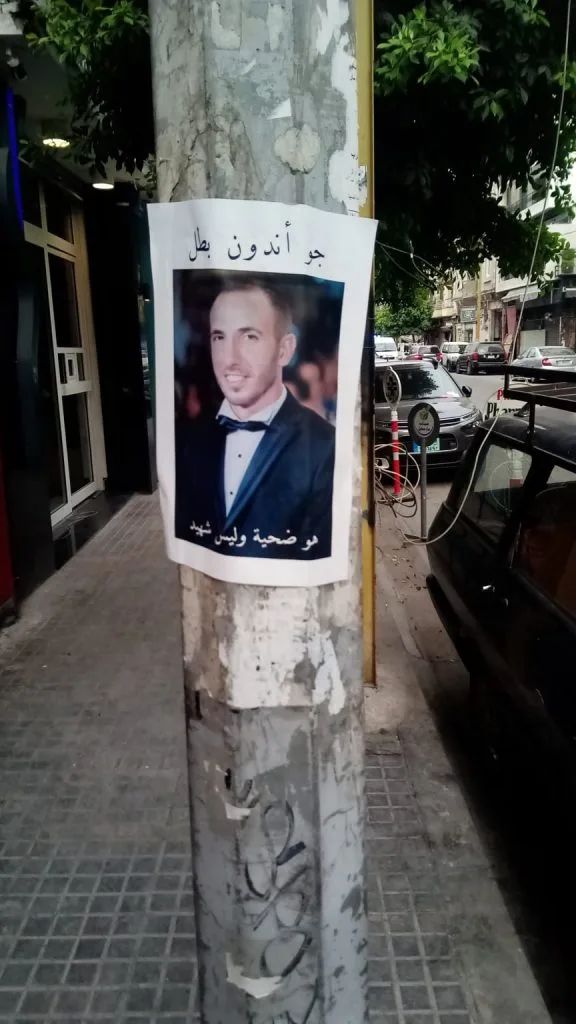
In 2014, the successful #NotAMartyr social media campaign was prompted by the death of 16-year-old student Mohammad Chaar in a car bomb in Beirut, as a protest against the use of the term which was seen to obscure the need for investigation and punishment of those responsible.[xix] There has also emerged a new wave of martyrs of political corruption, constructed by civil society and society outside of conventional ‘martyrdom makers’ through the use of social media. This includes individuals as symbols of resistance against political corruption (such as newspaper Al-Nahar editor, Gebran Tueni, assassinated in 2005, and co-founder of the Lebanese Civil War archive UMAM, Lokman Slim, assassinated in 2021); as icons of popular resistance (Alaa Abou Fakher, a protestor killed in the October 17 protests of 2019); and also as victims of such corruption (the dead of the Beirut port explosion in 2020).
The individual families of the dead of the Beirut port explosion in August 2020 have become focal points of martyrdom narratives which resist and challenge hegemonic ownership of memory. State attempts to commemorate the memory of the casualties have been largely resisted by the families of the martyrs, who perceive attempts to co-opt their memorialisation as a means of consoling the continued block on an independent investigation into the explosion.
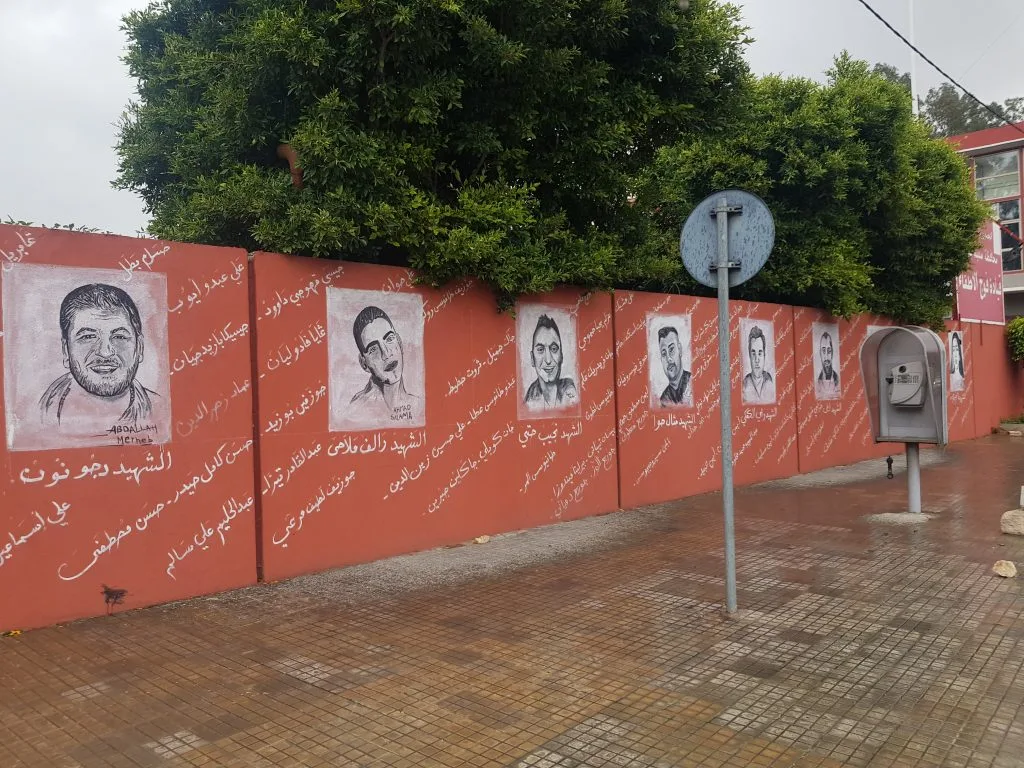
Demonstrations against the lack of progress are a form of martyr memorialisation: held on the fourth day of every month since the explosion, protestors hold posters showing the faces of the dead, with their names proceeded by diverse titles, such as ‘martyr of the state’, ‘hero martyr,’ and ‘martyr of corruption’. These new modes of martyrdom as a means of challenging political corruption through memory pose a threat to hegemonic powers in Lebanon; a memorial wall of the portraits of the martyrs installed by civil society was water blasted unexpectedly in 2023.
Martyrdom continues, and will continue, in Lebanon as a powerful tool for collective storytelling: shaping, passing down, and mobilising trauma through narratives which legitimise, control, and affirm group identity and, more recently, offer avenues of resistance. Whilst social media has opened up a larger, more diverse playing field for the creation and consumption of martyrdom material, the concept is not a new vehicle of memory, but one which is rooted in centuries of historical legacy and continually regurgitates and recycles itself. Martyrdom informs visions of the past, but, in so doing, it shapes the future of cycles of violence, revenge, and sectarianism.
Future martyrdom discourse looks to be even more diverse, prolific, and indeed democratised. According to Nayla Tueni, the daughter of the assassinated Gebran Tueni, “martyrdom itself is a cause that must be restudied; the basis and conditions of which must be specified considering some youths are being deceived. They are being deceived into believing in causes which are not actually patriotic, religious or humane but which actually serve certain parties’ personal aims.”[xx]
This article was originally published on the ICSR website.
Citations
[i] ‘Nasrallah delivers speech on occasion of Hezbollah Martyr’s Day’, Iran Press, 11 November 2021. https://iranpress.com/content/49968/nasrallah-delivers-speech-occasion-hezbollah-martyr-day
[ii] Gölz, “Martyrdom and the Struggle for Power. Interdisciplinary Perspectives on Martyrdom in the Modern Middle East,” 9.
[iii] Khosrokhavar, Afsaruddin, Cook, Understanding and Addressing Suicide Attacks. Janes and Houen, Martyrdom and Terrorism: Pre-modern to Contemporary Perspectives; Slavicek, “Deconstructing the Shariatic Justification of Suicide Bombings.”; Pape, Dying to Win. The Strategic Logic of Suicide Terrorism; Reuter, My Life Is a Weapon; Asad, On Suicide Bombing; Hatina, Martyrdom in Modern Islam. Piety, Power and Politics; Cook, Martyrdom in Islam.
[iv] Larkin, Memory and Conflict in Lebanon, 158; Fisk, Pity the Nation, 93.
[v] Dabbous, Dabbous, and Nasser, “‘Across the Bridge of Death’, the Culture of Martyrdom in Lebanon 1960s-1980s,” 610–11.
[vi] Dabbous, Dabbous, and Nasser, 610.
[vii] Maasri, Off The Wall, 3.
[viii] Dabbous, Dabbous, and Nasser, 610–11.
[ix] Haugbolle, War and Memory in Lebanon, 102.
[x] Huyssen, “Present Pasts,” 3.
[xi] Hermez, War Is Coming, 154–55.
[xii] Hermez, 151–52.
[xiii] Knudsen, “Death of a Statesman – Birth of a Martyr,” 1.
[xiv] ‘Hezbollah leader: Militants ‘won’t surrender arms’,’ CNN, 22 September 2006. https://edition.cnn.com/2006/WORLD/meast/09/22/lebanon.rally/
[xv] Kızılkaya, “Hizbullah’s Moral Justification of Its Military Intervention in the Syrian Civil War,” 213.
[xvi] ‘Hezbollah-land’ Attracting Jihad Tourists,’ ABC News, 15 July 2010. https://abcnews.go.com/International/Travel/hezbollahland-war-meets-tourism-lebanon/story?id=11173351
[xvii] “Inside the Mausoleums of Hezbollah’s Secret Syria Dead,” TRT World, 27 July 2018. https://www.trtworld.com/magazine/inside-the-mausoleums-of-hezbollah-s-secret-syria-dead-19171
[xviii] Haugbolle, War and Memory in Lebanon, 236.
[xix] ‘Outraged Lebanese protest teenager’s death with #notamartyr campaign,’ CNN, 23 January 2014. https://edition.cnn.com/2014/01/22/world/meast/lebanon-not-a-martyr-campaign/index.html;
‘#BBCtrending: Lebanon’s #notamartyr selfie protest,’ BBC News, 6 January 2014. https://www.bbc.co.uk/news/blogs-trending-25623299
[xx] ‘On Martyrdom in Lebanon,’ Nayla Tueni, An Nahar, 3 February 2014. https://english.alarabiya.net/views/news/middle-east/2014/02/05/On-martyrdom-in-Lebanon
I’m Dr Fiona McEwen, and I’m the Survey and Interventions Director for the XCEPT project at King’s College London. I’m responsible for managing a large longitudinal survey and a range of associated data collection, as well as interventions, that we’re doing in Iraq, South Sudan, and Syria/Lebanon.
We know that many people living in conflict-affected zones experience potentially traumatic events and that this can have a significant impact on their mental health. But conflict also has many other effects, such as damaging trust in institutions and decreasing social cohesion. The aim of the research we’re doing at King’s is to understand whether trauma-related mental health problems may have the potential to increase people’s propensity to seek violent, or peaceful, solutions, and how that might interact with a range of other factors. The Impact of Trauma Survey (IoTS) is a huge part of this research. It will collect data on multiple different outcome measures, such as attitudes to reconciliation or the use of political violence, and many different risk and protective factors across time to try and understand how these factors work together.
One thing which is particularly exciting about the IoTS is that it’s longitudinal. There have been lots of studies conducted in difficult contexts like this, but these are often cross-sectional, which means data is collected at a single point in time. The IoTS allows us to explore how changes in a particular factor at one point in time might influence attitudes at a later point. It’s also looking at a much wider range of factors than many studies do. We know that factors at the individual level, like people’s dispositions and personality traits, can have an impact on violent or peaceful outcomes, but conflict exposure, mental health problems, and social factors all play a role too. The IoTS will increase our understanding of the interplay between all these factors and how they feed into cycles of violence.
In this context, the core aspect is that many people will have been exposed to war events, so they may have witnessed a bombing, or seen people killed, or they may have lost family members. There may be multiple other traumas in a person’s life, however, so we’ll also be looking at things like Adverse Childhood Experiences, such as abuse, neglect, and exposure to domestic violence.
We’re working on the assumption that there’s often a cumulative impact of these traumas. So, for example, someone who has had exposure to a major traumatic event during war, but otherwise benefits from protective factors like a supportive family, may not be affected by that single trauma as much as someone who also suffered maltreatment as a child. Where individuals have experienced a series of traumatic events throughout their lives, this can have an additive impact over time, and this is what we’re trying to account for, rather than assuming that, in a war-exposed population, trauma is related only to conflict.
I originally studied biological sciences – neuroscience and veterinary medicine – but then went on to study and do research in developmental psychology and psychiatry. Most recently, I worked as the study coordinator for a programme of research centred on Syrian refugee families in Lebanon. The study was looking at mental health and resilience in these children, who were living in really challenging conditions in informal tented settlements. There were quite a few similarities between that work and the research we’re doing now on XCEPT: we used a longitudinal design to study changes in children’s mental health and behaviour over time, and delivered an intervention aimed at reducing mental health problems in children exposed to conflict and displacement. One thing we found that was really important was being alert to the fact that measures developed in one setting will not necessarily be valid in other settings.
Accounting for different contexts and cultures when carrying out data collection like this is crucial. My colleague, Dr Nafees Hamid, and I were recently in Erbil, Iraq, training the field work team who are going to be collecting the IoTS data in the country, and it was a really useful process as it allowed us to understand how our survey questions might be interpreted differently in different contexts. There can be issues with the way things have been translated or with the concepts we’re exploring. Even within one country, it’s apparent there will be different interpretations according to dialect, for example. Differing experiences across the country may also mean a question could be interpreted in a certain way, or that it may be more sensitive to the interviewees. It’s vital that we understand those differences to make sure our measures are as good as they can be. When we’re interpreting the data, we really need that local input as well to help us understand how people might have been thinking about those issues.
There are so many really exciting things about the work the King’s team is doing for the XCEPT project. It’s rare that there are research programmes doing something so large-scale, and across multiple different countries, which allows you to make comparisons across countries. I was also really keen to join a multidisciplinary research project. To date, I’ve usually been working with psychologists, psychiatrists, and biologists, so it’s been great to have an opportunity to work with people from other disciplines, including sociologists and historians. It’s exposed me to a much wider range of research and ideas than I would have been otherwise. For the team, having all these different experts and perspectives also allows us to do much more powerful research.
Another thing that really drew me to the project was the opportunity to use nested interventions – for example, psychosocial interventions that some people receive between waves of survey data collection. The advantage of this is that, once we’ve hypothesised the mechanisms by which we think something might be happening, it allows us to then manipulate that and measure the response. For example, you can try and reduce someone’s trauma-related mental health symptoms, and then measure to see if that has an impact on other outcomes you think it might be related to, like the propensity to violence. It’s rare that you have studies where you’re combining large-scale observational data with intervention data as well, and it’s great to be a part of this.
One of the core driving questions we’re trying to explore is whether trauma-related mental health problems will have a subsequent impact on people’s behaviour or their attitudes to reconciliation. There’s an assumption that untreated trauma could act as a block on achieving stability post-conflict, but we don’t yet know if that’s true. Because our research allows us to control for lots of factors, I hope we’ll be able to get more conclusive data on whether untreated trauma itself causes a problem, or whether other factors have a bigger influence on people’s attitudes towards reconciliation.
Our work should allow us to understand more about these questions, and I hope this will result in useful policy and intervention implications. This is a very large, complicated project, and it takes a long time to prepare and build, so I’m really looking forward to seeing the data coming in, and then we can get to work running analyses across the team.
Late 2020 saw the beginning of the devastating war in Tigray and the occupation of a disputed region on the Ethiopia–Sudan border – Al Fashaga – by the Sudanese army. These shocks disrupted settled patterns of land ownership and control in both Ethiopia’s volatile north and Sudan’s borderlands, historically the heart of the sesame and oilseed production that is economically vital to both countries.
These seemingly harmless cash crops are now embedded in local, subnational and national political contestations in both countries. Sesame value chains are being reshaped, with power and profits being used to entrench the grip of political and armed actors who are reinforcing new patterns of land control and driving informal and illicit trade – impacting the coping mechanisms of local communities and threatening to fuel further conflict.
Regional rivalries drive contestation over the Ethiopia supply chain
Internal borders between most of Ethiopia’s regions are marked by boundary disputes, which often degenerate into violent conflict. The most important is between the Tigray and Amhara regions. Since the war began in 2020, the Amhara region has annexed vast areas of western and southern Tigray, which the Amhara region claims were taken from them by Tigray 30 years ago, after the Tigray People’s Liberation Front (TPLF) dominated ethnic coalition came to power.
Ethiopia’s exports of spices, oilseeds and pulses brought in over half a billion dollars in 2021, roughly a quarter of the country’s total export revenues and second only to coffee. The sector has been rocked by the war in the north, which accounted for much of Ethiopia’s sesame production, with an estimated 500,000 hectares of sesame fields taken out of cultivation during the 2021 growing season. Conflict has exacerbated a steady decline in formal revenues from sesame exports, dropping over $115 million from 2016 to 2021.
Alongside falling production, the previously integrated value chain has been disrupted and decentralized by political fragmentation and land competition between Amharas and Tigrayans. Before the war, the agricultural sector in Western Tigray/Welkait was dominated by Tigrayan business interests, through the TPLF’s regional endowment fund EFFORT, a business conglomerate including subsidiaries such as Guna Trading House, and Hiwot Agricultural Mechanization.
The taking of the area by Amhara forces in late 2020 saw the control over agricultural supply chains shift to actors from the Amhara region, amid contestation between regional officials, businessmen and security actors, backed by political elites. Thousands of displaced ethnic Tigrayan inhabitants of the area have been replaced by ethnic Amharas, enticed to settle there by the Amhara regional government’s offer of grants and leases for land which promise better livelihoods. The sesame they farm is now largely exported through informal and illicit channels, with profits used to reinforce de facto regional control.
But there is also contestation within the Amhara region over the land and sesame supply chain between sub-regional elites from Gojjam, Gondar and indigenous Welkaites. Welkaites, who were marginalized under TPLF rule, believed that by aligning themselves with powerful Amharas they would reclaim land and influence. But this has not been fully realized, with the local administration reliant on Amhara region subsidies, rather than the federal budget. With little support from the federal government, local Welkait officials are strengthening their ties with Eritrea.
At the national level, regional contestation over the control over Western Tigray/Welkait feeds into shifting political alliances between the Amhara, Tigrayans and Oromo which threaten the sustainability of the peace agreement struck between the federal government and TPLF in November 2022 – despite efforts by the government to defer the thorny issue.
While the constitutional return of the land to Tigray remains unlikely anytime soon, there is a feeling that Amhara control over Western Tigray/Welkait is no longer certain. The Ethiopian government’s pursuit of peace with Tigray may lead it to turn away from the Amhara region, despite their alliance during and before the war, which could result in a renewed showdown between Amhara and Tigrayan forces.
The prospect of losing territory could also heighten Amhara nationalist claims on Al Fashaga – the loss of which was partly offset by gaining Western Tigray/Welkait – leading to renewed conflagration with Sudan, outside of federal direction. Eritrea’s presence and alliance with Amhara militias remains a concern, given Asmara’s demonstrable ability to inflame tensions.
Sudan’s securocrats battle over resources to entrench political power
The war in northern Ethiopia was also used opportunistically by the Sudanese Armed Forces (SAF) to take control of the fertile Al Fashaga borderland. This roughly 250 sq km area had been awarded to Sudan when the boundary was initially demarcated by the British in 1903, a ruling that remained contested by Ethiopia. An uneasy truce had seen Ethiopian farmers cultivate the land under nominal Sudanese administration; a settlement that collapsed in 2020 when thousands of predominantly Amhara farmers were evicted.
Local Sudanese farmers have also lost out – with some not compensated for the loss of lands to their own military, with land given to people from other parts of the country, and through lost relationships with Ethiopian farmers, labourers and investors.
The Sudanese military now allegedly controls more than 90 per cent of the disputed areas and security-linked companies and investors have moved into the lucrative sesame sector, re-routing the supply chain, which used to flow largely through Ethiopian markets. These companies are connected to Sudan’s Military Industrial Corporation, a vast conglomerate of business subsidiaries controlled by SAF – which is headed by General Abdel Fattah al-Burhan.
The commander of the paramilitary Rapid Support Forces, General Mohamed Hamdan Dagolo (or Hemedti), also has interests in agriculture, through his family business Al-Junaid. Both sit at the top of Sudan’s Sovereign Council. Hemedti’s competition with Burhan has seen him develop relations with Ethiopia’s prime minister – counter-balanced by recent rapprochement between Abiy and Burhan – as well as senior Amhara leaders, including over business activities.
Moreover, competition between Sudanese security actors fuels volatile political rivalries, and further entrenches military control of economic resources, undermining civilians at a time when pro-democracy forces are seeking to restore a reform-minded government. One of the key challenges for a new civilian government will be to quickly build up a domestic revenue base to compete with the economic heft of the country’s prominent security institutions, which will demand taking on military-controlled holdings in civic sectors such as agriculture, including sesame.
Informal and illicit trade reinforces conflict dynamics
This context has driven the informalization of trade, with cash crops such as sesame increasingly exported outside of formal channels and connected to other illicit cross-border activities between Ethiopia and Sudan. Indications are that sesame production in Western Tigray/Welkait has recovered significantly during the current 2022/23 harvest season. However, rather than contributing much needed currency to soften Ethiopia’s forex crisis, the Amhara elite-controlled supply chain is primarily being used to secure a variety of regional interests.
Uncertainty is a condition that all individuals experience, and it is something that we all, to differing extents, encounter every day. There are some situations and incidents, however, that might elicit intense and long-lasting feelings of uncertainty in people. During the Covid-19 pandemic, many of us experienced uncertainty at a much higher level than we were used to. Job security, access to medical care, and daily routines all came under attack as governments worldwide sought to cope with the constantly evolving virus and the body of scientific knowledge that grew alongside it. For those who have experienced conflict, however, enduring intense trauma and uncertainty can be a common part of life.[i] Individuals from conflict-affected places who have, for instance, also experienced violence, are often subjected to displacement, and to a sudden and dramatic change in their lives, which can be accompanied by a dearth of information.[ii]
As part of the Cross-Border Conflict Evidence, Policy and Trends (XCEPT) research programme, a multi-disciplinary team of experts at King’s College London is seeking to understand the factors that shape violent and peaceful behaviours in conflict zones. We know that uncertainty plays a role in shaping both social functioning and susceptibility to violent ideologies.[iii] In conflict-affected populations, where uncertainty is prevalent, it is therefore crucial to examine how this process takes place in order to help stop it.
What Do We Mean by Uncertainty?
When analysing the implications of uncertainty on individuals’ behaviours and decision-making, it is important to differentiate between the diverse theories around uncertainty, among which we can identify two prominent ones. The first is uncertainty-identity theory, a social psychological theory that focuses on how individuals perceive their roles in society. Individuals’ identities are shaped in significant part by the roles they perform in society, such as being a daughter or a son, a husband or a wife, or being defined by the job they do. When individuals experience losses in their positions – losing a job or a partner, for example – their identities are threatened, and they become unsure of who they are. This uncertainty makes them vulnerable to organisations characterised by highly defined in-group/out-group boundaries, norms, goals, and traditions; these groups hold significant power as they provide individuals, who are experiencing uncertainty, with specific identities. People’s choice of joining, for instance, an ultra-fundamentalist religion, or an extremist group, is indeed heavily influenced by their social ecology and group dynamics.[iv] Consequently, the core idea of uncertainty-identity theory is that individuals identify with social groups in order to reduce feelings and perceptions of uncertainty related to themselves, their identity, and future life situations.[v]
On the other side, research has largely focused on Intolerance of Uncertainty (IoU), namely a stable and permanent personality trait that, in contrast to uncertainty-identity, does not arise from specific circumstances or changes.[vi] Instead, individuals with IoU find strongly disturbing those circumstances where they lack the power to predict and control the occurrences around them, such as conflicts or wars, whereas they can conduct normal lives when able to exert control over events in their lives.[vii] This tendency has also been significantly related with diverse anxiety disorders, such as Generalized Anxiety Disorder (GAD), Panic Disorder, or Obsessive-Compulsive Disorder (OCD).[viii] Individuals with high levels of Intolerance of Uncertainty are more prone to engage in maladaptive behaviours – this is also the case with individuals experiencing uncertainty-identity – in the attempt to reduce uncertainty and to increase their control over the circumstances around them.[ix] Joining an extremist group or a cult can reduce this distress and difficulty due to the feelings of community, purpose, values, and coherence that those groups bring.[x] In the context of conflict, it is also important to note that experiences of war can create trauma which leads to more uncertainty intolerance, thus creating situations where people who are intolerant to uncertainty find themselves living in extremely uncertain circumstances.
What is the Relationship Between Uncertainty and Extremist Violence?
Research around both uncertainty-identity theory and Intolerance of Uncertainty has found that individuals largely attempt to reduce uncertainty around their perceptions, beliefs, feelings, and behaviours.[xi] They do not, however, always embrace positive methods to do this.[xii] Consequently, a new avenue of research has started investigating whether experiencing uncertainty, or having high levels of uncertainty intolerance, can influence individuals’ endorsement of extremist ideologies. This is particularly relevant when individuals are from conflict-affected areas, as terrorist and extremist groups can exploit the chaos and societal instability in these regions in order to acquire power and control, through recruitment of new members, propaganda, and the use of violence.[xiii]
While researching the paramount role of group identification, psychologists Hogg and Adelman found that individuals experiencing uncertainty about themselves were more prone to engage in criminal and extremist activities in an attempt to increase their feelings of certainty.[xiv] Another study similarly found that, when individuals are experiencing acute and chronic uncertainty, they can become significantly attracted to extremist groups and their ideologies, as the latter provides certainty around how an individual needs to behave and what to believe in.[xv] It is also believed that, when individuals experience a crisis, they can become more vulnerable and susceptible to new ideologies and beliefs. Wiktorowicz labels this process ‘cognitive opening’, whereby a personal, economic, or religious change leads someone to attempt to make sense of their life and identity.[xvi] Extremist groups can be attractive in these situations, as they provide individuals with a powerful and strongly defined sense of themselves, as well as with a rigorous structure and leadership.[xvii]
Uncertainty may play a crucial role in the endorsement of violent ideologies, and thus potentially of violent behaviours, as individuals are likely to become vulnerable to extremist groups in their attempts to reduce uncertainty.[xviii] This becomes even more relevant in the context of conflicts, where high levels of uncertainty may be prevalent due to the distressing and violent environments that individuals find themselves in, and where extremist groups are more likely to find shelter, due to the unstable and chaotic security and political situation. When deciding what interventions should be put in place to support individuals in conflict-affected areas, therefore, it is vital that policymakers consider the role that uncertainty may play in a person’s life. Yet, they should also note that uncertainty can manifest in different ways. Where someone has uncertainty-identity, interventions that help to restore a person’s role in society may be beneficial. If an individual has Intolerance of Uncertainty, they can be taught techniques which improve their ability to make decisions in moments of distress. Ultimately, however, policies at the individual level must go hand in hand with interventions to help improve the underlying socio-structural issues which cause instability and uncertainty in the lives of so many, such as in fragile and conflict affected states. Together, this may help turn people away from violent ideologies and extremist groups and create a more secure peace.
[i] Nickerson, Hoffman, J., Keegan, D., Kashyap, S., Argadianti, R., Tricesaria, D., Pestalozzi, Z., Nandyatama, R., Khakbaz, M., Nilasari, N., & Liddell, B. (2023). Intolerance of uncertainty, posttraumatic stress, depression, and fears for the future among displaced refugees. Journal of Anxiety Disorders, 94, 102672–102672. https://doi.org/10.1016/j.janxdis.2023.102672
[ii] Nickerson, Hoffman, J., Keegan, D., Kashyap, S., Argadianti, R., Tricesaria, D., Pestalozzi, Z., Nandyatama, R., Khakbaz, M., Nilasari, N., & Liddell, B. (2023). Intolerance of uncertainty, posttraumatic stress, depression, and fears for the future among displaced refugees. Journal of Anxiety Disorders, 94, 102672–102672. https://doi.org/10.1016/j.janxdis.2023.102672
[iii] Jonas, E., McGregor, I., Klackl, J., Agroskin, D., Fritsche, I., Holbrook, C., et al. (2014). “Threat and defense: from anxiety to approach” in Advances in Experimental Social Psychology. eds. J. M. Olson and M. P. Zanna, vol. 49 (San Diego, CA, US: Elsevier Academic Press), 219–286; Hogg, M. A. (2012). Self-uncertainty, social identity, and the solace of extremism. In M. A. Hogg & D. L. Blaylock (Eds.), Extremism and the psychology of uncertainty (pp. 19–35). Boston, MA: Wiley- Blackwell.
[iv] Hogg, A. M., and Wagoner, A. J. (2017). “Uncertainty—identity theory” in International encyclopedia of intercultural communication. ed. K. Young Yun (New York, NY: John Wiley and Sons, Inc), 1–9.
[v] Hogg, A. M., and Adelman, J. (2013). Uncertainty–identity theory: extreme groups, radical behavior, and authoritarian leadership. J. Soc. Issues 69, 436–454. doi: 10.1111/josi.12023
[vi] Carleton, R., Norton, M., & Asmundson, G. (2007). Fearing the unknown: A short version of the Intolerance of Uncertainty Scale. Journal Of Anxiety Disorders, 21(1), 105-117. https://doi.org/10.1016/j.janxdis.2006.03.014
[vii] Buhr, K., & Dugas, M. (2002). The intolerance of uncertainty scale: psychometric properties of the English version. Behaviour Research And Therapy, 40(8), 931-945. https://doi.org/10.1016/s0005-7967(01)00092-4
[viii] Carleton, R., Norton, M., & Asmundson, G. (2007). Fearing the unknown: A short version of the Intolerance of Uncertainty Scale. Journal Of Anxiety Disorders, 21(1), 105-117.
[ix] Shihata, S., McEvoy, P. M., & Mullan, B. A. (2018). A Bifactor Model of Intolerance of Uncertainty in Undergraduate and Clinical Samples: Do We Need to Reconsider the Two-Factor Model? Psychological Assessment, 30(7), 893–903. https://doi.org/10.1037/pas0000540
[x] Hogg, A. M., and Wagoner, A. J. (2017). “Uncertainty—identity theory” in International encyclopedia of intercultural communication. ed. K. Young Yun (New York, NY: John Wiley and Sons, Inc), 1–9.
[xi] Jonas, E., McGregor, I., Klackl, J., Agroskin, D., Fritsche, I., Holbrook, C., et al. (2014). “Threat and defense: from anxiety to approach” in Advances in Experimental Social Psychology. eds. J. M. Olson and M. P. Zanna, vol. 49 (San Diego, CA, US: Elsevier Academic Press), 219–286.
[xii] Hogg, M. A. (2014). From Uncertainty to Extremism: Social Categorization and Identity Processes. Current Directions in Psychological Science, 23(5), 338 342. https://doi.org/10.1177/0963721414540168
[xiii] United Nations. (2020). A new era of conflict and violence. Retrieved from https://www.un.org/sites/un2.un.org/files/2020/01/un75_conflict_violence.pdf
[xiv] Hogg, A. M., and Adelman, J. (2013). Uncertainty–identity theory: extreme groups, radical behavior, and authoritarian leadership. J. Soc. Issues 69, 436–454. doi: 10.1111/josi.12023
[xv] Hogg, A. M., and Wagoner, A. J. (2017). “Uncertainty—identity theory” in International encyclopedia of intercultural communication. ed. K. Young Yun (New York, NY: John Wiley and Sons, Inc), 1–9.
[xvi] Wiktorowicz, Q. (2005). Radical Islam rising: Muslim extremism in the West. Lanham, Md.: Rowman and Littlefield Publishers, Inc.
[xvii] Hogg, M. A. (2014). From Uncertainty to Extremism: Social Categorization and Identity Processes. Current Directions in Psychological Science, 23(5), 338 342. https://doi.org/10.1177/0963721414540168
[xviii] Ozer, & Bertelsen, P. (2019). Countering Radicalization: An Empirical Examination From a Life Psychological Perspective. Peace and Conflict, 25(3), 211–225. https://doi.org/10.1037/pac0000394
Within the realm of conflict zones, translators play a complex role in representing, and sustaining, narratives and the everyday stories of conflict-affected populations. Although a body of literature has focused on the role of language in war and conflict, the process of translation and interpretation in conflict zones has not yet found a fundamental place in war and conflict research.[i] Translation is the process by which a text in one language is re-contextualised into another language, yet it is more than purely linguistic arbitration.[ii] Emotions, culture, and ethics can all influence the outcome of translation, and navigating these in conflict situations can prove to be challenging.
In her book on the Egyptian revolution of 2011, Mona Baker describes translation as ‘the mediation of diffuse symbols, experiences, narratives, and linguistic signs’.[iii] Thus, if we understand conflict zones as contact spaces where distinct cultures meet, clash, and fight with each other, often in contexts of highly asymmetrical relations of power, then we can begin to understand the challenges faced by translators or interpreters, and the regulations that determine the spaces in which they work.[iv] Who is allowed to speak which language? Who can speak when? When should one be quiet? Accordingly, translation goes beyond linguistic challenges – those working in this field are confronted with political, cultural, emotional, and ethical dilemmas.
Can translation be manipulated?
Telling the stories, and navigating the narratives, of conflict-affected populations encompasses sensitive and controversial challenges, which can manifest in a translator’s political beliefs or ideologies regarding certain matters in the text. One challenge faced is that entrenched ethnic, religious, tribal, and sectarian loyalties can affect the output of a translator or interpreter. In this regard, translation can fall prey to becoming a manipulatory act that promotes or changes the meaning of the source text or interview.[v] These changes may manipulate audiences by presenting an inaccurate or fabricated translation that advances the opinions of the translator or the ideology of the translation agency. A translator’s main aim should be to accurately convey the narratives of the conflict-affected populations, yet often they are faced with enormous moral quandaries in adhering to codes of ethics while also balancing tensions between personal/professional and local/global loyalties.[vi]
Another crucial consideration that is often overlooked is the wellbeing and emotional state of someone working as a translator in conflict zones. Listening to the life stories and traumatic experiences of individuals who have lived through conflict can have an psychological toll, and it requires a great deal of emotional regulation to be able to interpret these individuals’ memories, experiences, hopes, and fears with neutrality.[vii] Translating the experiences of conflict-affected populations as part of the Cross-Border Conflict Evidence, Policy, and Trends (XCEPT) research programme, I have had to draw on both intuition and resilience to help manage the negative emotional states and responses prompted by such work. Being able to regulate your emotions is an important part of being a successful translator, but it is also important to recognise that translators may experience vicarious trauma, and to ensure that the right support is in place to help those working in this role.[viii]
On the other hand, it is also important to be able to embrace these emotions. The neurologist Antonio R. Damasio argues that “emotions play a critical role in all – also high-level – cognition and decision-making”.[ix] Emotional engagement is a powerful motivating factor that gives translators the chance to feel connected to their job and, most importantly, recall and reflect complex emotions encountered in the realm of conflict zones. One technique that translators may find advantageous in this respect is to keep a diary of their emotions. It gives them an opportunity to vent feelings that they suppress during interpersonal engagements, and, in writing, they may relive these. This enhances the interpretation and translation of the direct word for word emotive responses, so helping to accurately convey the emotions of interviewees.
Understanding local meanings
The English language has around one million words, while Arabic, one of the oldest Afro-Asiatic languages in the world, is hugely derivational, with an incredible lexicon that exceeds twelve million words.[x] When faced with this profusion of vocabulary choices, it is clear that translators are confronted with a difficult task when ensuring the selection of appropriate words and phrases. Working on the Cross-Border Conflict Evidence, Policy, and Trends (XCEPT) research programme, I have had to be sensitive to vulnerabilities and cultural boundaries before deciding which words to choose in certain circumstances. To translate the word ‘militant’, for instance, when I was working on interview transcripts with the families of Lebanese hostages held by the Islamic State in the Levant (ISIL or Daesh) and Al Nusra Front, I considered words such as fighter (muqātil), freedom fighter (munādil) or struggler (mukāfih), when referring to non-state Islamist or militant groups, such as ISIL, Free Syrian Army (FSA), Hezbollah, or state actors, such as the Lebanese Armed Forces (LAF). One lexical choice can affect the perception of an entire sentence, which can put neutrality and impartiality at stake.
There is always a complicated interaction at play between text, reader, and the first and second languages, and translators need to clearly understand the main concept of the text they are working with. One consideration that will help translators to unpick this interaction is the use of critical and reflective thinking skills, which are essential for problem-solving, judgement and decision-making, and controlling one’s feelings.[xi] Critical and reflective thinkers should be trustful, flexible, open-minded, well-informed and wise in making judgements.[xii] In translating research interviews on peacebuilding and reconstruction in Iraq post ISIL, I had to critically examine my lexical choices, and their implications, to ensure that the translation considered and respected the sensitivities, vulnerabilities, and cultural boundaries of the local population. In translating words like peacebuilding (binā al salam), reconciliation (almusalaha), and cohesion (tamasuk), I had to underline the fact that this often-used Western vocabulary is controversial and problematic in Iraqi society because they mean different things to different sectarian and ethnic groups. The use of these phrases could isolate local populations and prevent them from engaging actively in communal dialogues.[xiii] Critical thinking helped me, as a translator, to understand, assess, explain, and make decisions swiftly.
Translating and interpreting the narratives of conflict-affected populations is not a straightforward task. War and conflict studies should place translation at its core and engage in interdisciplinary discussions on emotions, culture, and ethics that influence the translation process. Translation is not only a linguistic-textual operation in which a text in one language is re-contextualised into another language. It is a complicated and multifaceted process that requires various skills – cultural awareness, adaptability, subject knowledge, curiosity, and writing, analysis, and research ability – all of which are vital if a translator is to do justice to the stories of those who have shared them.
Mohamad El Kari works as a translator for XCEPT. His translation work focuses on security and stability in Lebanon and peacebuilding in Iraq.
[i] Tesseur, W., 2019. Translating and interpreting in danger zones. Journal of War & Culture Studies, 12(3), pp.215-219.
[ii] House, J., 1997. Translation quality assessment: A model revisited. Gunter Narr Verlag.
[iii] Baker, M. ed., 2015. Translating dissent: Voices from and with the Egyptian revolution. Routledge.
[iv] Pratt, M.L., 1991. Arts of the contact zone. Profession, pp.33-40.
[v] Hamdan, J.M., Naser, R.S. and Hamdan, H.J., 2021. Arabic-English translation in the Palestinian–Israeli ‘Conflict’: Ideology in the Wings. SKASE Journal of Translation and Interpretation, 14(2), pp.80-96.
[vi] Tryuk, M., 2020. Translating and interpreting in conflict and crisis. The Routledge Handbook of Translation and Ethics, pp.398-414.
[vii] Cheng, S., 2022. Exploring the role of translators’ emotion regulation and critical thinking ability in translation performance. Frontiers in Psychology, 13; Hubscher-Davidson, S., 2017. Translation and emotion: A psychological perspective. Routledge.
[viii] Institute of Translation and Interpreting (2021) Position statement on vicarious trauma in interpreters [Online] available at https://www.iti.org.uk/resource/position-statement-on-vicarious-trauma-in-interpreters.html
[ix] Scientific American Mind (2005) Feeling our Emotions [Online] available at https://www.scientificamerican.com/article/feeling-our-emotions/
[x] Abdel Fattah, R. (2022) The translator is a traitor: translation in humanitarian response. [Online] https://blogs.icrc.org/law-and-policy/2022/12/20/traitor-translation-humanitarian-response/; Akan, M.F., Karim, M.R. and Chowdhury, A.M.K., 2019. An analysis of Arabic-English translation: Problems and prospects. Advances in Language and Literary Studies, 10(1), pp.58-65.
[xi] Cheng, S., 2022. Exploring the role of translators’ emotion regulation and critical thinking ability in translation performance. Frontiers in Psychology, 13.
[xii] Itmeizeh, M. and Hassan, A., 2020. New approaches to teaching critical thinking skills through a new EFL curriculum. International Journal of Psychosocial Rehabilitation, 24(07), pp.8864-8880.
[xiii] XCEPT (2023) Controversies and Challenges of peacebuilding in Nineveh: Revisiting Post-IS reconciliation in Iraq. [Online] https://xcept-research.org/publication/controversies-and-challenges-of-peacebuilding-in-nineveh-revisiting-post-is-reconciliation-in-iraq/
Russia’s involvement in smuggling wheat out of the occupied regions or territories of Ukraine has been widely reported over the past year. In response, the US issued sanctions in September 2022 against Russian proxy officials involved in the theft of Ukrainian grain. While these targeted measures have managed to steer many countries in the Middle East and Africa away from buying the stolen wheat, Syria has become one of its primary destinations.
Due to the sanctions already imposed on both Russia and Syria they do not have many alternative trading partners and are also less concerned about any additional consequences they may face as a result of their cooperation. Their relationship has been further encouraged by Syria’s dire need for wheat in the face of increasing food insecurity, and Damascus’ agreement to overpay Moscow for the commodity in exchange for loans. The role of sanctions in encouraging this cooperation requires careful examination of the sanctions regimes, but without increasing food insecurity in Syria, particularly in wake of the earthquake.
Syrian wheat production
Prior to the start of the Syrian conflict in 2011, Syria produced around 3.5 million tonnes of wheat per year, enough to meet domestic demand. However, the large-scale damage to agricultural infrastructure, deepening economic crisis, territorial divisions, corruption, displacement, low profitability of agricultural activities and bad weather conditions have nearly halved Syria’s wheat production.
These stresses have significantly impacted the availability of subsidized bread, an essential food staple for many Syrians, forcing millions of Syrians to cut meals or pushing them into debt. The lack of subsidized bread has contributed to the food insecurity faced by 12.1 million Syrians – approximately 50 per cent more than in 2019 – which will be further exacerbated by the impact of the recent earthquakes.
As a result, the Syrian government has become heavily reliant on wheat imports from Russia, which currently range between 1.2 and 1.5 million tonnes a year. Research by the XCEPT project shows that not all the wheat going from, or through, Russia into Syria was legally obtained; occupied Crimea alone exported over 1 million tonnes of wheat to Syria between 2019 and 2022. Sources also highlighted that Moscow’s occupation of parts of Ukraine has significantly increased the overall volume of grains being shipped.
Impact of sanctions regimes
The above findings show that, instead of reducing illicit activities, sanctions against Syria and Russia have apparently increased their cooperation. While many countries would avoid purchasing wheat that may have originated in Ukrainian territory occupied by Russia due to a fear of secondary sanctions, this is less of a concern for a country like Syria which is itself a target of international sanctions.
Russia is also able to sell the stolen wheat to the Syrian government way above market price, as it is currently one of the countries issuing loans to the Syrian government. According to leaked documents, Moscow’s condition for the loans was that the money could only be used to pay specific Russian companies. As the conflict in Syria has led to a decrease in revenue streams and foreign currency, the Syrian government did not have much choice but to accept unfavourable finance conditions to finance the import of essential commodities like wheat. The Syrian government reportedly instructed its officials to award the wheat tenders to Russian companies, regardless of how uncompetitive their offers were.
For example, the Kremlin-linked wheat company OZK sold wheat to Syria at $350 per tonne when the international market price was around $257. Similarly, Syrian Prime Minister Hussein Arnous indicated in 2021 that his country imported 1.5 million tonnes of Russian wheat for around $319 per tonne, while the global price of wheat did not surpass $235.
Addressing the conflict supply chain of wheat
Despite substantial wheat imports, the Syrian government is still struggling with dire wheat shortages. XCEPT research indicates that this is due to corruption and nepotism found throughout the wheat supply chain, whereby the elites involved in the wheat trade find ways to profit while millions of Syrians are forced to go hungry. The intersection of the different conflicts, the theft of Ukrainian wheat by Russian entities, and the corruption which is causing food insecurity throughout Syria are all facets of the conflict supply chain of wheat. And this conflict supply chain is fuelling the wars in both Syria and Ukraine. The wheat stolen so far is estimated to be worth $530 million – money used to support the war machines in both countries.
This reality is unlikely to change. Syria’s wheat production in 2023 is expected to remain around 75 per cent lower than pre-2011 levels due to insufficient rainfall and the high cost of agricultural inputs, such as fertilizers, seeds and fuel. This means its cereal import needs for this year is forecast at 2.7 million tonnes. This reliance on imports – in addition to the funds diverted to fuel conflict in Syria – almost guarantees Syria will remain a potential market for the stolen grains.
A close look at two border towns in Iraq’s western desert illustrates the law of unintended consequences. The Iraqi government, bordering countries, and the international community moved to more tightly control official border crossings in order to defeat ISIS. As a result, however, militias and smugglers have moved a great deal of commerce, legal and illicit, to other crossing points. In the meantime, people along once-prosperous trade routes suffer privation and violence, driving new conflicts.
Researchers Renad Mansour and Hayder Al-Shakeri tell the tale of trade, smuggling, and conflict across Iraq’s borders. The trajectory of trade route towns Rutba and Qaim help explain the mechanics of conflict supply chains and the unintended consequences of efforts to secure parts of the border without thinking of the spinoff effects.
This podcast is part of the ‘Order from Ashes’ series from the Century Foundation. It was originally published here.
The flow of migrants, from East and West Africa to Libya is on a scale much smaller than before, but is increasingly linked to violence along the conflict supply chain of human smuggling and trafficking.
Although the conditions for migrants in Libya is better documented, migration flows also play a key role in transit hubs like Agadez, Niger.
This podcast is part of the ‘Africa Aware’ series by Chatham House. It was originally published here.
Join former Director of the Middle East and North Africa Programme at Chatham House, Dr Lina Khatib and XCEPT Project Manager Leah de Haan for a discussion of the cross-border conflict economy moving from Lebanon through to Syria, Jordan and into Iraq.
This podcast is a Chatham House Twitter Space recording. It was originally published here.
By looking at some of the key hubs of Kufra, Sebha and Agadez, this Twitter Space asks how human smuggling and trafficking impacts communities experiencing conflict.
This podcast is a Chatham House Twitter Space recording. It was originally published here.
The war in northern Ethiopia since November 2020, and subsequent conquest of disputed farmlands in Al-Fashaga by the Sudanese army on the Ethiopia-Sudan border, has brought into focus the importance of agricultural commodities such as sesame as a potential driver of land contestation and conflict.
The panel discusses the interrelation of commodity and conflict supply chains, land contestation, and boundary disputes in the Horn of Africa, with a particular focus on the regions of Wolkait/Western Tigray in northwest Ethiopia and Al Fashaga in eastern Sudan.
This podcast is part of the ‘Africa Aware’ series by Chatham House. It was originally published here.