


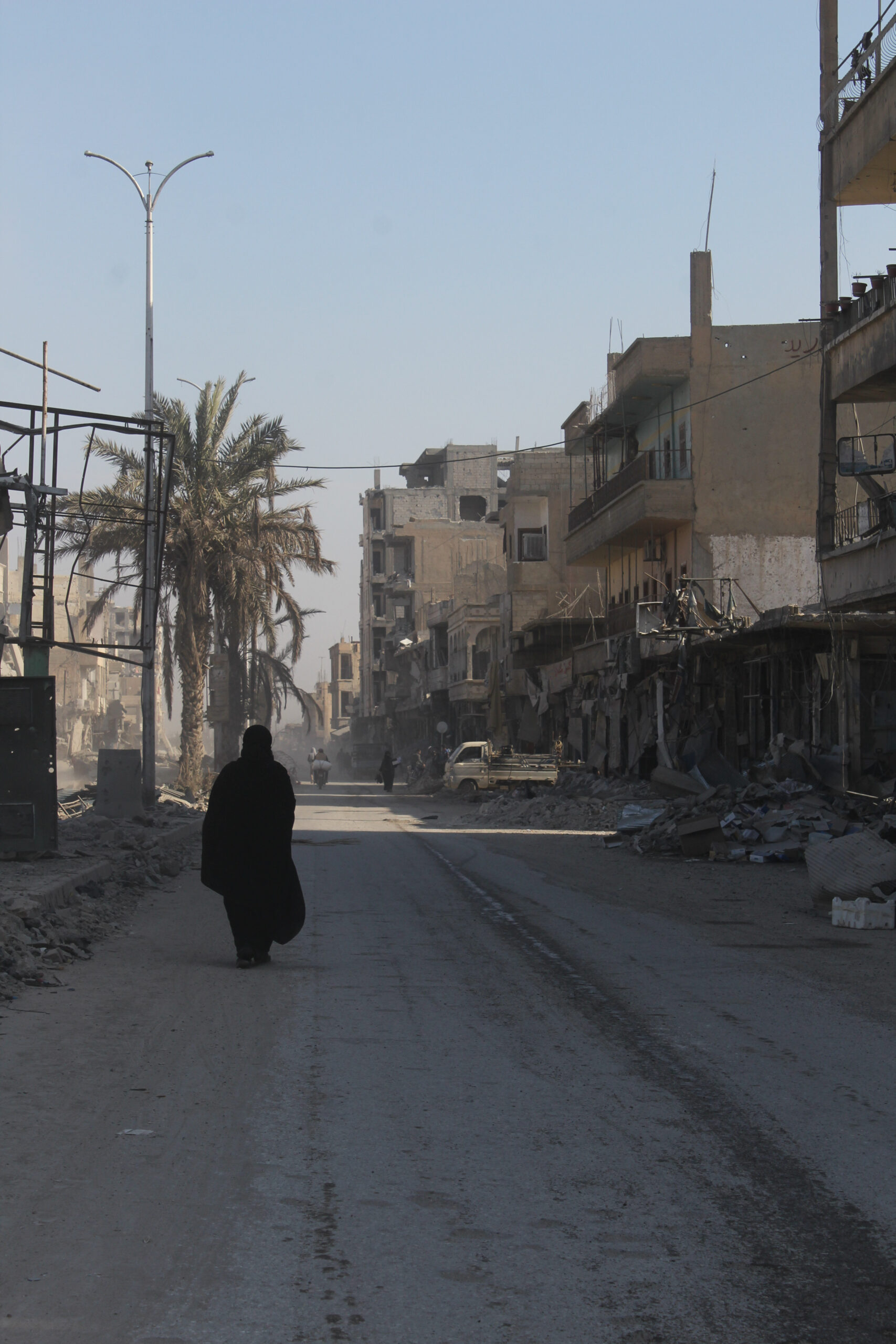
 Credit: Tomas Davidov/ Shutterstock
Lead researchers: William Smith and Amar Alhamad
Duration: March 2023 – March 2024
Country: Syria
This research project examined challenges to the effectiveness of western conflict-management interventions in northeastern Syria, a complex, cross-border conflict system that encompasses other de-facto enclaves of the country, as well as Turkey and northern Iraq. Specifically, the research explored how interventions affect – and are in turn affected by – the interests, incentives and responses of the elite (and sub-elite) groups that comprise local conflict actors. While existing studies have tended to focus on geostrategic or organisational challenges to the effectiveness of interventions in Syria, this research considered how outcomes are shaped by the dynamic interplay between the strategic and operational decisions of interveners on the one hand, and the responses of local actors on the other.
The research adopted a qualitative design, drawing on data gathered from fieldwork in northeastern Syria using key informant interviews (KIIs) and focus group discussions (FGDs). A qualitative approach using KIIs and FGDs was seen as the most appropriate approach, as the research was primarily looking to examine the understandings, perceptions and responses of local actors to conflict management interventions.
For more information regarding this research, contact [email protected]