“People don’t want to go back to the past … but some people have to deal with the past.” This reflection formulated by youth in Northern Ireland reminds us of the long-lasting impact of conflict and begs the question whether the impact of trauma, and the weight of a violent past, can also be felt by those who did not directly live it. This question has recently been met with growing interest in different disciplines. In conflict settings in particular, the legacy of trauma is often seen as either supporting peace efforts or fueling further violence.
What is (inter)generational Trauma?
Research on intergenerational trauma, also referred to as transgenerational or historical trauma, is generally understood as exploring how legacies of historical and cultural events impact future generations. More widely, it examines how traumatic events, such as war, violence, and genocide, affect the children, grandchildren, and future genealogies of survivors. These legacies can affect individuals, family environments, community social ecologies, and wider historical narratives.
Researchers across disciplines look at these trauma legacies in different ways. In the 1960s, intergenerational or historical trauma was first researched by examining long-lasting trauma among Holocaust survivors and their families through a focus on traumatic memory. Since then, the study of intergenerational trauma has developed in different scholarly directions, providing us with a better understanding of the process of intergenerational trauma and its impact. One area of research has focused on the aftermath of violence, particularly recent studies examining the intergenerational traumatic effects of slavery and colonialism, and has brought with it recognition that trauma impacts communities beyond immediate survivors.
Biology, Family and Social Environment
Studies from clinical, societal, and historical perspectives have helped us understand intergenerational trauma specifically during or after conflict. For example, in a 2014 UCL study, researchers examined the intergenerational impact of war on children. They argued that, while the immediate effects of war on children were well studied, little was understood about the ways in which conflict could impact children across generations. They wanted to find out what the social and cultural environment could tell us about the multigenerational transmission of trauma. By examining exposure to violence, trauma, and stress, the researchers found associated impact in how these experiences affected further generations.
Maternal exposure to violence, specifically, suggests consequences on children’s health. In the Democratic Republic of Congo, children born out of conflict-related sexual violence are more likely to experience community stigma, which in turn can affect their mental health. In Gaza, researchers found “a strong association between maternal symptoms of depression, anxiety and PTSD, and PTSD symptoms in children”. This research encourages practitioners to consider stress and trauma in conflict experienced by parents, and mothers specifically, as factors influencing health and wellbeing outcomes of their children, in both conflict and non-conflict settings.
Beyond maternal impact, several studies have explored the legacy of parental and family culture in transgenerational trauma. Several studies exploring how trauma can be transmitted among refugee families acknowledge the significant role played by parents and families in how trauma is processed by children. This suggests that children whose parents have experienced traumatic events are more susceptible to mental health difficulties. But what might this look like in practice? Trauma experienced can create psychological, social, and economic challenges that impact the environment in which children develop. Survival mode is the way in which this struggle has been described by Ukrainian descendants of the 1932–1933 Holodomor genocide: a “constellation of emotions, inner states and trauma-based coping strategies emerged in the survivors during the genocide period and were subsequently transmitted into the second and third generations.” While research remains limited, the result of this transmission is consequential. The physical health and wellbeing of survivors can be impacted by events that took place decades earlier.[1]
Historical Narratives and Cultural Trauma
Given the transmission of trauma within families, historical legacies of trauma matter. If the experiences of parents, and the environment in which children are brought up, impacts their mental health, so do the stories they tell. For Holocaust survivors, this fact has long been acknowledged. Memory and Holocaust studies have illuminated how children carry the burden of their parents’ trauma and help us reflect on how trauma is processed in families and how stories from the war are told. Memory and migration researchers further consider how narratives of war, of migration, and of trauma, can be transmitted through family and community histories.
Professor Joy Damousi explores the transmission of war experiences among Greek migrants and the ways in which WW2 trauma narratives are transmitted to second generation migrants. The author suggests that the ways these narratives are shared by those who lived them is a piece of the puzzle to understand migrant experiences. In other words, historical narratives of war and trauma influence the lives of migrants beyond first generations. In Australia, these experiences have been linked to a culture of silence impacting social inclusion and dislocation. Through witnessing the trauma histories of their parents and families, children can be passed on the experience of conflict. In a book entitled Haunting Legacies: Violent Histories and Transgenerational Trauma, Professor Gabriele Schwab considers transgenerational memory and asks how children may remember events they have not lived themselves. In his work on “postmemory” among Lebanese youth, Dr Craig Larkin offers some insights. Referred to as a socially experienced phenomenon or a traumatic rupture, he suggests that postmemory is the way in which the current generation is connected to, and distanced from, its collective, and potentially traumatic, past. Transgenerational trauma is experienced in the aftermath of the Lebanese civil war and contributes to explaining the continuation of communal animosities and feelings of dislocation among local communities. Years after violence has ended, these generational trauma stories remain.
Beyond an individual’s biology and their environment, social processes and narratives can shape generation after generation. Although some of the evidence remains thin, particularly when it comes to specific transmission mechanisms of trauma across generations (biological, social, psychological), there is a wide recognition that such processes take place. As we have seen, the experience of children after conflict is strongly influenced by the experiences of their parents. The historical narratives told after conflict can shape upcoming generations, even after migration. There is no one way that trauma is transmitted, just as there is no one way of experiencing trauma. Transgenerational trauma can find its roots in an individual’s biology, in the experiences of parents, or in the ways in which a society deals with the aftermath of conflict. Further research is required to identify how intergenerational trauma is transmitted and, therefore, how it can be addressed. Finding answers to these questions will help inform relevant policy responses for communities suffering cycles of violence and for societies still dealing with the legacies of the past.
This article was originally published on the International Centre for the Study of Radicalisation’s website.
[1] Another area of research developed in recent years is epigenetics. The field has focused on transgenerational trauma and yielded intense debate. For a discussion and overview of the debate on this question, see: https://www.nytimes.com/2018/12/10/health/mind-epigenetics-genes.html or https://www.bbc.com/future/article/20190326-what-is-epigenetics. Importantly, further research testing biological, individual, and societal mechanisms of transmission, such as biological, individual, and societal pathways, should nonetheless continue.
What might Ukraine’s gun-toting grannies have in common with South Sudanese cattle raiders? At first glance, not much. The first are elderly, civilian women, taking up arms under exceptional circumstances to defend their homeland from Russian aggression. The second are young men, taking part in an enduring cultural practice that has become increasingly militarised, politicised and violent. One ostensibly contradicts gender and age-based norms concerning who ‘should’ fight and who should not, whilst the other seemingly conforms to those stereotypes. We associate the first with ‘peaceful civilians’, the second with ‘violent fighters’.
Yet these two groups have more in common than we might assume. Both are part of historical patterns where those who take up arms occupy multiple roles in society, and both represent the blurring of fighter-civilian identities that shape contemporary conflict and post-conflict dynamics.
The merging of fighter-civilian roles is not a new phenomenon – what is ‘new’ is the attempt to separate them. This separation, however, can pose problems, especially when it comes to building peace.
Holding the label of a ‘combatant’ or a ‘civilian’ can determine whether a person is able to access certain support programmes. Categorising people as fighters may thus exclude them from interventions aimed at helping people deal with their conflict-related trauma and behaviours. Tackling these is fundamental to reducing violence and promoting social cohesion, and so, if we don’t acknowledge the complex identities and dynamics surrounding those living in conflict zones, we risk undermining progress towards peace. If we can unpack this blurring of civilian-combatant identity, it will help us develop more nuanced, inclusive approaches to peace building.
The civilian-combatant distinction often disappears on the ground
But what do we actually mean by ‘civilian’ and ‘combatant’? For much of ancient and early modern history, the construction of separate soldier-civilian identities was non-existent. The Pharaonic army of Ancient Egypt was essentially made up of ‘seasonal soldiers’ who lived in barracks during the campaigning season but returned to the fields afterwards. Similarly, in the Hoplite armies of Ancient Greece, fighting was mostly done by ‘amateur militias’ who, rather than being mythologised fearless warriors, were citizen-soldiers who on occasion panicked and fled the battlefield.
Throughout history, there has been a blurring of military and civilian zones. Africa’s pre-colonial period was marked by cyclical episodes of violence, where military and ‘civil’ spheres merged without clear-cut distinctions of difference. Within societies, military organisations formed and developed in response to the needs of the community they were part of. Armies were made up of farmers, herders, and administrators, and were often assembled ad-hoc to deal with specific emergencies. When the armies were no longer needed, they disbanded, and the ‘soldiers’ returned to their normal occupations. Individuals were not identified solely as ’warriors’, but rather held multiple roles and occupations in society.
It wasn’t until the development of standing armies in 17th century Europe that a more distinct sense of military identity was born, and it was only in the early 19th century that ‘civilian’ was used to specifically describe a ‘non-military man’. Whilst the term ‘combatant’ has been in use since the 12th century, the idea of military distinction based on military specialism (and professionalism) is thought to be a ‘modern’ concept.
Today, the distinction between civilians and combatants stands clear. It determines military Rules of Engagement and Just War. It is the cornerstone of International Humanitarian Law, and it aims to protect those not involved in fighting: the civilians.
For those on the ground, however, the line is not quite so clear-cut. Patterns of militarisation in the pre-colonial past were shaped by the political, social and economic environments in which violence took place, and the same stands true today.
Take the South Sudanese cattle raiders. Cattle raiding has a long history in South Sudan, but the exploitation of these local conflicts has seen the armed herders brought into wider political movements. Now, raiders are heavily armed, and the practice is often deadly.
In Eastern Congo, members of non-state armed groups often have to rely on ‘civilian’ sources of livelihood for daily survival—activities that lie outside their armed group. These include brewing and selling alcohol, making charcoal, selling firewood, farming, and manual labour.
Building on a long tradition of coalesced identities where warrior and ‘civilian’ roles intertwined, today’s ‘fighters’ are often driven by context and community need – such as, for example, Ukraine’s grannies.
Simplistic distinctions risk excluding populations from relevant support
What do these fluid, overlapping identities mean in practice? Firstly, programmes and interventions need to recognise that categorising individuals as either combatants or civilians is reductive. It reinforces binary notions of ‘perpetrator’ or ‘victim’ where the reality is much more complex. Identities are often mixed, and acknowledging only one aspect means acknowledging only one aspect of a person’s experience. As history has shown us, those living in conflict zones simultaneously navigate multiple civilian and combatant identities, and that is still the case today.
Secondly, the existence of these two distinct lenses suggests there is a hierarchy of those who are seen as ‘deserving’ of recovery: one which is constructed around the notion of victimcy and ‘civilianhood’. In the Global South, for example, a ‘civilian’ is likely to be eligible for trauma interventions, but a ‘fighter’ is not. Conversely, ‘combatants’ are enrolled into Disarmament, Demobilisation and Reintegration (DDR) programmes, but ‘civilians’ are not. It’s estimated that between 20-50% of former fighters in fragile and conflicted affected areas suffer from trauma and elevated levels of aggression, yet less than ten studies have specifically examined and addressed their mental health needs.[i] In comparison, a Google Scholar search of “trauma interventions for civilians after war” yields over 20,000 results. To help societies recover from the spill-over effects of violent conflict, policymakers need to ensure that all parties, whether civilian or combatant, are assessed for trauma and aggression so that they can access relevant support.
Finally, the blurring of civilian-combatant identities has implications for policies aimed at demobilising and reintegrating former fighters. To date, most DDR programmes prioritise occupational and socioeconomic elements over psychological support for mental health or cognitive disorders. A need for mental health support is not just the preserve of ‘civilians’, however, but also needs to include those labelled ‘combatants’. If we are to achieve peace, it is important to help people make sense of their own roles in, and experiences of, violent conflict. Policymakers must ensure that efforts to assist former fighters focus as much on addressing their behavioural, relational and cognitive needs as their economic ones. Conflict and post-conflict dynamics are complex, and it is vital that support and peace interventions can account for this.
[i] Baez, Sandra, Hernando Santamaría-García, and Agustín Ibáñez. “Disarming ex-combatants’ minds: toward situated reintegration process in post-conflict Colombia.” Frontiers in psychology 10 (2019): 73.
This article was originally published on the International Centre for the Study of Radicalisation’s website
There are dozens of illegal crossings along the Syria-Lebanon border, through which hundreds of people cross every day along various smuggling routes. The people smuggling is controlled by local smuggling networks and XCEPT field research indicates that some of these are linked to the Syrian security and military services or to the Lebanese group Hezbollah. The methods and routes used by the smugglers depend on the motives of the individuals being transported across the border.
The majority of people who arrange to be smuggled across the border do so for financial reasons, including Syrians who are unable to secure the costs of entering Lebanon legally; Syrian refugees in Lebanon who are afraid to lose the few advantages that refugee status gives them; and Lebanese border area residents who cross the border daily.
Smuggling operations for this group of people is concentrated in the countryside of Homs. The roads on these routes are easy, and smugglers use buses or cars, and sometimes motorcycles, to transport people across the border. In these smuggling operations, a group of families is often smuggled together to a specific area within Syrian or Lebanese territory. Travelling on these smuggling routes costs between $100 and $150 per person, depending on the place of origin and destination, while families pay discounted group prices. The security and military forces of the Syrian regime, as well as Hezbollah, often turn a blind eye to this type of smuggling and are satisfied with fees paid to them by the smugglers.
People also arrange to be smuggled across the border for security reasons. This group includes a wide range of political opponents of the Assad regime, armed opposition fighters, persons wanted in criminal cases against whom police search warrants have been issued, as well as deserters from compulsory or reserve military service. This group mostly consists of men between the ages of 18 and 50.
The ‘security’ smuggling routes are more rugged, requiring those crossing the border this way to do so either by walking or riding animals, as well as chaperoning by smugglers or guides. These routes are also more expensive, often costing more than $1,000 per person, and the cost increases depending on two factors: the degree of importance of the person being smuggled to the security and military apparatus of the Syrian regime, and their place of origin and destination.
The most prominent examples of ‘security’ smuggling routes are the roads to and from the Lebanese town of Shebaa and the Syrian town of Tufail. The smuggling networks operating on both routes are linked to Hezbollah, transporting people from Shebaa or Tufail to the Lebanese interior. Demand for people smuggling along these routes often increases with the threat of Syrian regime forces carrying out military operations against reconciliation areas in the countryside of Damascus, Daraa and Quneitra. In recent months, the increased possibility of regime forces storming the towns of Kanaker and Zakia in the Damascus countryside, and Tafas in the Daraa countryside, has seen dozens of people who refused reconciliation or who are wanted by the regime make this journey.
A third smuggling route is the ‘military line’, a more expensive and less common form of people smuggling. This is not the military line used by the Syrian forces during the 1976-2005 period of Syrian guardianship over Lebanon, but a description given to a method of people smuggling carried out by Hezbollah members in their cars, through specific illegal crossings. Through these ‘military lines’, passengers are not subjected to any security oversight by any party on either side of the border. The cost of such a smuggling operation between Beirut and Damascus ranges between $3,000 and $10,000. The majority who choose this route are wealthy people, holders of foreign citizenships, or Syrians residing in Europe as refugees and wishing to visit Syria without obtaining official authorization, as that could result in them losing their refugee status.
Arrests or kidnappings are common in some smuggling operations, targeting people who have tried to evade payment or who use smuggling routes that are not appropriate for their case. Most kidnappings take place in Homs, along the easier smuggling routes. In such cases, smugglers often sell people to kidnapping gangs, who negotiate with their relatives to pay the ransom. After ransom is paid, the gang may offer them a choice: return to Syria or continue the process of being smuggled to Lebanon.
The methods used to smuggle someone between Syria and Lebanon will vary depending on the person’s security situation and their financial status. If a person’s security situation becomes more complicated, the smuggling method changes and the price increases. Smuggling networks seem to have a unified price list for the different types of security concerns, from criminal charges to being wanted by the security and military services. For the right price, it seems, anyone can be smuggled across the border, no matter how much they oppose the Syrian regime or Hezbollah, and no matter what crime they have committed.
This article was originally published on the Chatham House website.
Abdullahi Umar Eggi grew up in a nomadic family in Taraba State, Nigeria, and has undertaken extensive research to understand how and why pastoralism is changing in the region. He’s currently carrying out research on cross-border pastoralism, environmental change, peace and conflict along the borders of Nigeria, Cameroon and Niger as part of Conciliation Resources’ XCEPT research. Here, he tells us about his upbringing, and what he’s learning from his latest research.
I grew up in a Fulani nomadic family in Karim Lamido, part of Taraba State in northeastern Nigeria. I also spent time in Cameroon during my childhood, as my mother is Cameroonian. Growing up, I would migrate around north-eastern Nigeria and into Cameroon with my family in search of greener pasture for our livestock. This is called ‘transhumance’. It is a central part of our community life and identity; yet it also allowed me to gain a good understanding of the region’s topography as well as its many communities, including communities that weren’t from the Fulani tribe. The region is a patchwork of different tribes – there are around 200 in Taraba and Adamawa States alone.
I attended a nomadic school during my early years. Some of the nomadic schools were permanent structures while others were teaching under the shade of trees. The teachers were normally from the villages near our dry season and rainy season camps. For some weeks, during seasonal transhumance with our animals, there would be no school, but when we reached our destination, the children would proceed with their education in the nomadic school in the new location. These schools were well-resourced when I was young, but sadly pastoralist children nowadays struggle to get a decent primary education.
I met Adam Higazi, the lead researcher on the Promoting peaceful pastoralism project, during my time at University in Jos. We’ve been working togetherfor over 10 years now, exploring different facets of pastoralism across the whole region.
There is a general misperception in Nigeria of the relationship between pastoralism and issues such as criminality. We realised from our fieldwork that a lot of Nigerian media has a superficial understanding of what is happening on the ground; it’s widely reported that pastoralists from outside Nigeria – from Niger, Chad and Cameroon – are arriving in Nigeria and causing trouble. Our research to date hasn’t shown that to be the case. In Jigawa and Kano, some of the border communities we visited were not Fulani but actually Hausa and Kanuri – tribes seen to be less inclined to be friendly to pastoralists – but they reported to us that the cross-border herders were peaceful. In our study area in the central axis of northern Nigeria (Jigawa, Bauchi, Gombe), we found peaceful cooperation between pastoralists moving south from Niger during the dry season and their host communities.
At the same time, we can’t deny that there are pastoralists who are involved in violence and criminality in northern Nigeria. In Katsina, Zamfara and Sokoto States, towards Nigeria’s northwest, there are serious problems related to banditry. In these areas, many of those undertaking violence are Fulanis recruited into criminal gangs. But some of their biggest victims are Fulani pastoralists themselves; in these areas, pastoralists are routinely attacked and their livestock stolen. This creates the bandits of the future; when young pastoralist men lose their cattle they lose their livelihoods, and it makes them vulnerable to recruitment by criminal gangs.
This partly explains why banditry has rapidly escalated in Nigeria’s northwest, but it is not the whole story. Negligent governance has meant grazing reserves and cattle routes have not been maintained, and ‘land grabbing’ of common land has increasingly been allowed to happen. Despite the peaceful situation in our XCEPT study areas to date, we recorded these kinds of governance failings starting to play out, and worry that it will lead to increased cattle rustling and banditry in previously peaceful areas. Just this morning, my brothers informed me that some of our family’s cattle was stolen in Taraba State, and the gang kidnapped six of the herders. So it’s already starting to happen.
Despite the fact that it’s a very small minority of Fulani involved in criminality, non-Fulani Nigerians have lost trust in the Fulani. But there’s a real lack of understanding of what is going on in northern rural areas, and there are no effective government policies or interventions which separate out the criminal elements amongst the Fulani from the majority that are peaceful. So if things keep going the way they are, mistrust of pastoralists will grow even further.
What we observed from the research in Adamawa – as well as the XCEPT research we did in early 2022 in Bauchi, Gombe and Jigawa states – is the pressures of the massive population increases that are occurring in the north of the country. Farmers need more land to meet demand, whilst pastoralist communities continue growing and need land for grazing; so there’s a clash of interest between these two communities. On top of this, land grabbing further reduces land availability.
Environmental protection has also suffered. Traditionally, there was a culture of respect towards nature. Now large-scale farming clears forests and woodland to make way for cultivation, which has degraded the grasses and trees needed for grazing, and increased desertification. All of this means a large number of pastoralists are leaving Nigeria to go to Cameroon because the conditions in Nigeria are no longer conducive for their livelihood. Future fieldwork in Cameroon will help us understand the consequences of this.
Our previous research in Yobe and Borno states in Nigeria looked at these issues. We found that the Shekau faction of Boko Haram has been extremely predatory towards pastoralist communities in their areas of operation: attacking camps, rustling cattle, kidnapping and killing people. Even last year, my uncle was a direct victim of Shekau – his cattle were stolen and the herder he had hired to rear the animals was killed. Boko Haram attacks resulted in large-scale displacements of pastoralists southwards into Adamawa and Taraba, but also across to Cameroon and as far as Central African Republic. But recently the Shekau faction has been greatly weakened as a result of internal splits and military pressure, so we’re seeing pastoralists return – to a certain extent – to areas that would have been no-go a few years back.
ISWAP, which operates near Lake Chad, is largely tolerant of pastoralist communities, so long as they pay their zakat (tax) to the group. Our XCEPT research will take us to Maiduguri in Borno State to gain an updated understanding of the ongoing insurgency and its impact on pastoralist movement.
I think this kind of research can be really helpful. What we realise is that most of the information that people base their opinions and actions on in northern Nigeria isn’t based on what is happening at the grassroots. This has hardened attitudes towards pastoralists and Fulani people, and made it harder for those trying to take action to be effective.
We’ve seen examples of peacebuilding initiatives which show promise, but often the people leading them don’t grasp the local realities of pastoralism. In the next three or four years, pastoralism may become impossible.
Politically, pastoralists suffer from a lack of genuine representation. In effect, there are two levels of Fulani: the ‘town’ Fulanis, who have political influence, and those who are rural, largely nomadic, pastoralists. At the state and federal levels, Fulanis are actually quite well represented, but crucially these people aren’t pastoralists, and there’s a wide gap between them and rural pastoral communities. A lack of education for pastoralists reinforces this, with very few managing to get into positions of influence.
So this research is building a base of knowledge which can assist those who really want to create better responses to the challenges in these regions. We’re gaining access to local-level perspectives which need to be shared with people at the state, federal and international level, but also locally, to help to build confidence and dialogue within communities so that their livelihoods can be protected and they can co-exist more peacefully.
Top photo: Pastoralists at home on Jereende Pampo, a small island on the River Benue, Yola North LGA, Adamawa State, Nigeria. Recently arrived migrant farmers are trying to take over the island for cultivation, reducing the space for grazing there. Conciliation Resources/XCEPT researcher Abdullahi Umar Eggi is furthest to the right.
In 2022, populations across the world have reeled from a global cost of living crisis. Children in low and middle income countries are going to bed hungry, while for some families, drops in income will wipe out the equivalent of household healthcare budgets. By some estimates, 71 million people could fall into poverty.
African populations have borne some of the greatest hardships of crises taking place both near and far. While attention has rightly been on war between Russia and Ukraine, local and regional conflict has long undermined economic development across almost a third of the African continent. Local and regional conflict compounds (and is sometimes caused by) other supply constraints rooted in climate change and poor infrastructure, particularly in the agricultural sector.
This matters because struggles to eat, go to work, and save for the future threaten political stability and could create further violent conflict, which would accelerate economic decline. In Europe, fuel price hikes have already stoked social unrest. While some governments are spending big to protect citizens through tax reductions, wage increases, and price subsidies, others will have few tools at their disposal. Instead, their populations will be forced to adapt, changing patterns of work, consumption, and trade.
Research for XCEPT by Emani sought to understand this at a local level. In March and April 2022, in the immediate aftermath of Russia’s invasion of Ukraine, we spoke to over 3,000 people across 11 locations in Ethiopia, Libya, Niger, Nigeria, and Sudan (Figure 1) – all of which import wheat from Russia or Ukraine.
The research zoomed in on the local effects of this conflict and the unique ways in which these effects interact with local dynamics. It compared the current situation with local challenges over the last decade, wider patterns of economic marginalisation, and the agency of residents – how are they coping with these challenges? What are the local effects of government policies? And what are the wider implications for stability in the region?
Here are five of our key takeaways.
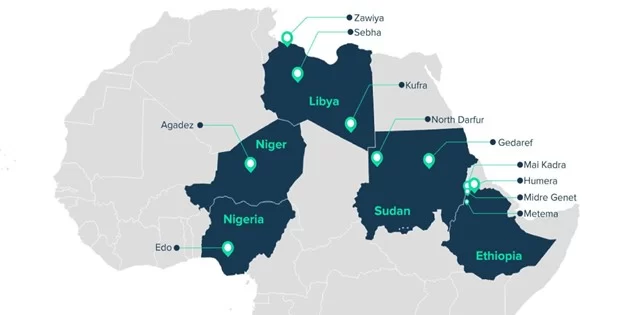
1. Food and fuel prices have climbed fast
We asked survey respondents to tell us how much they were paying for staple foods ‘now’ (April 2022). Then we asked them to compare current prices with their experiences of spikes in price since 2010. Consumers were suffering particularly where imported products were popular. For example, Algerian milk was being sold in Agadez for nearly five times more in 2022 than 2010. A 25kg bag of rice cost 62% more in Agadez compared with 2011, and a ‘rubber’ (4kg bag) of rice in Oredo (Nigeria) cost 69% more. Some of the increases, however, were recent and sudden. In Sebha and Zawiya (Libya), flour was up 22% and 33% respectively in April compared to the beginning of 2022.
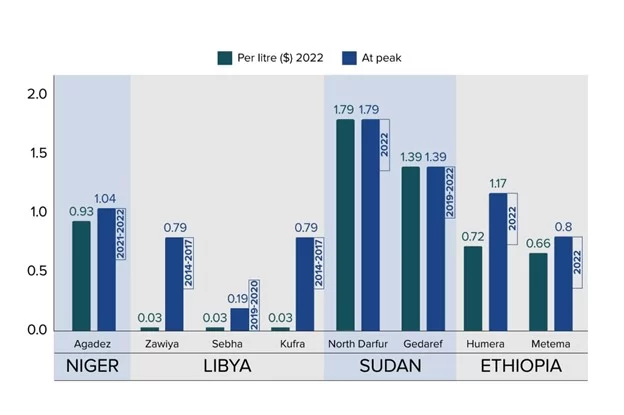
In some places, we asked about motor fuel too. Fuel prices in locations in Ethiopia, Sudan, and Niger were at their 12-year peak at the time of data collection (Figure 2).
2. Conflict, COVID-19, and currency values drove price fluctuations
Conflict is one of the main drivers of fuel prices in Libya. Libyans usually enjoy relatively cheap, subsidised fuel at around $0.03 per litre. As a result, when subsidised fuel becomes scarce, the rates set by the market are much higher than elsewhere. For example, for the three years after the outbreak of the Libyan civil war in 2014, the average fuel prices in Zawiya and Kufra skyrocketed to $0.79, 26 times the typical price.
In the areas we studied, the real, on-the-ground issue that shaped trade – and, by extension, prices – was the ability to move goods. Insecurity in Libya made driving goods down from the northern ports to Sebha (and onwards to Agadez) more expensive, with drivers asking higher fees and militia groups demanding unofficial taxes.
The availability of space for goods in southward-moving vehicles may also have been affected by policies designed to disrupt organised crime. A clamp-down on the smuggling of migrants from Agadez (Niger) through Sebha (Libya) reduced the number of vehicles travelling north with passengers and, correspondingly, the number of vehicles returning south with space to carry goods. Interviewees told us that this made it more expensive to move goods from Libya to Niger.
The unpredictable security environment had similar effects in Ethiopia and Sudan. The outbreak of the conflict in Tigray, northern Ethiopia, in late 2020 led to closures along the border. Towns on either side of the border, such as Gallabat in Sudan and Metema in Ethiopia, were cut off from one another. These towns had previously benefitted from joint trading agreements allowing for free cross-border movement during market days. The impact has been an increase in cross-border smuggling and in the cost of basic goods. For example, residents of Mai Kadra, on the Ethiopian side of the border, noted the price of vegetables and cereals rising as a result of supply shortages caused by blockades at Sudanese border crossings.
Onions per kilo [have gone] from 5 birr to 40 birr, tomatoes per kilo [have gone] from 4 birr to 40 birr… The main reason for this is the war and the resulting blockade of trade through the border crossings at Lugdi, Hamdayit and Medebay [district] … and the general national level shortage of supplies.
Interviewee in Mai Kadra
[Since] the blockage of the border some of the [businesses] are not performing well and some of the labourers are [laid-off] … There is very [little] merchandise imported from the border.
Survey respondent, Metema
In addition to conflict, a second key factor driving price fluctuations was the cost of foreign currency and reliance on – or desire for – imported goods, including basic food items such as pasta, flour and rice. For example, the COVID-induced closure of the Niger-Algeria border strongly impacted the price of pasta – widely consumed in Agadez and almost exclusively imported from Algeria.
With the exception of the pegged and stable West African Franc, people told us that wild variations in the value of the Naira, Libyan Dinar, Sudanese Pound, and Ethiopian Birr severely hampered their ability to pay for foreign goods. Other reasons were poor infrastructure, mismanagement of public resources and funds (Kufra), interruption in fuel subsidies (Sudan), and a ban on imported goods (Nigeria).
The closure of the Algerian border had a significant impact, especially on the price of wheat flour.
Representative of local government business centre, Agadez
3. Self-reliance offers some protection against price spikes
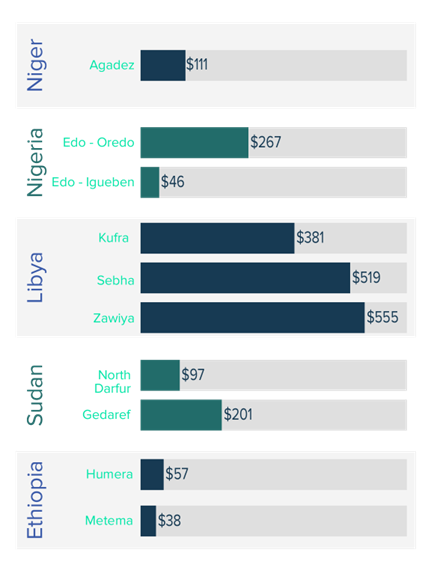
Monthly incomes vary considerably across the locations we studied (Figure 3). Yet the pain consumers are feeling does not necessarily correspond to their purchasing power. In rural Edo State (Nigeria), where the average income is only $46 per month, respondents were much less likely to notice spikes in food prices than in other areas we studied. Almost all Nigerians purchase at least some of their food, but those who rely on subsistence farming seem to be somewhat protected from market volatility.
Economic hardship may be driving deeper change in social and economic relations at the micro level. We found that residents of Oredo in Benin City (Edo State, Nigeria) were increasingly spending weekends in their ancestral villages to grow the vegetables they could no longer afford to buy on the market. This is despite the average income in peri-urban Oredo being nearly six times that of rural Igueben, a couple of hours drive away.
The only way I cope is visiting my home town to cultivate some of our own food and survive through that means.
Male, 25, in Oredo, Nigeria
Conversely, dependence on more expensive imported foods left some vulnerable to increases in price. For many, consumption of imported rice is a show of status – such that even local rice is sometimes packaged as having come from abroad in order to attract a premium. Nigeria’s ban on the import of most rice from abroad plus the more recent devastation of rice paddies in floods will drive prices up. Many households will feel noticeably poorer and have to change what they consume. At worst, they may struggle to put food on the table.
4. People are coping, some better than others
The situation appears most desperate in Kufra (Libya), where many respondents had stopped cooking hot meals to save on cooking gas – and some had reduced the number of meals they eat to save money on food, while taking on debt to make ends meet. Respondents in Sebha (Libya) were eating less meat and baking more at home. Across our Libya research sites, respondents reported switching to low-cost food brands. Facebook groups were important in helping residents to find good deals.
In Gedaref (Sudan), farmers were switching from sorghum, millet and wheat to more profitable cotton and maize production. This will decrease domestic food production and potentially exacerbate food insecurity in the region. People in Ethiopia, Niger and Nigeria described substituting cooking gas for wood, even though many were aware of the damage this could do to the environment – from deforestation in Edo State (Nigeria) and in Tigray (Ethiopia) to desertification in Agadez (Niger).
We are dependent on the electricity supply when there is no gas [and when it’s not available] we can sometimes cook just once per week.
Interviewee in Sebha, Libya
Sometimes we have to use wood to prepare food, and I walk long distances because of the lack of time to get gas for the car.
Interviewee in Kufra, Libya
5. Crime thrives in the absence of the state
In most locations, the state regulated and often subsidised the sale of both staple foods and fuel. In Kufra (Libya), with the lowest average income of the three areas studied in Libya, most respondents were receiving subsidies for food (82%) and medicine (76%). Government support was otherwise quite limited in scale and reach. Participants in Edo (Nigeria) mostly said support was negligible. The same was true for Gedaref and North Darfur (Sudan). Respondents in Mai Kadra (Ethiopia) said that government support had collapsed following the outbreak of conflict in 2020.
When the state cannot provide, people turn to other means and methods, which can further undermine the government’s ability to maintain the rule of law. Research participants in Metema (Ethiopia) told us about the importance of smuggling to bolster incomes. In Libya, subsidised goods were being appropriated by criminal groups and sold at high prices. In Sudan, the gap in officially sanctioned financial services is filled by unofficial money lenders and remitters.
Most local people have livelihoods strongly linked with contraband and smuggling … the smuggling is the source of non-food items such as soap, cloths, and related [goods].
Focus group participant, Metema, Ethiopia
Cooking gas is officially 5 dinars and is sold in the black market for 35-90 Dinar ($7.42 – $19.09).
Interviewee in Sebha, Libya
Peace through economic wellbeing
Even if the geopolitical and public health issues that have throttled food and fuel supply chains are resolved soon, people will continue to struggle. Among other repercussions, the scarcity of affordable goods on formal markets will drive the growth in informal trade, which will undermine state revenues and so the capacity of governments to provide services, in turn leading to a lack of public faith in the government. Declining tax revenues, popular discontent, and illicit financial flows are a potent mix in the Sahel, Horn of Africa, and Libya, where state authority is often already in question.
It’s not the first time that the countries we were researching – and others in Africa – have faced being locked into a vicious cycle of conflict and constrained economic growth. Economic growth rates are as much as 2.5 percentage points lower in countries affected by conflict, and the longer the conflict lasts the more those countries fall behind. And just as conflict constrains growth, prosperity can boost peace.
Yet as others have pointed out before, responses to conflict on the continent tend to focus on security, with the licit economy often collateral to measures aiming to disrupt illegal trade and armed groups. Instead, prioritising the licit flow of goods in critical cross-border towns and provinces can improve wellbeing, a sense of local stability, and weaken incentives towards potentially destabilising activities, from appropriation and smuggling of subsidised goods, to the more nefarious trade in drugs and arms.
Between May 2021 and January 2022, the Iraqi government repatriated nearly five hundred Iraqi families from al-Hol camp in northeast Syria via the Jeddah 1 rehabilitation centre in Iraq. Some 86% of these returnees were under the age of 18. Thus began the admirable government-led efforts to start returning home some of the approximately thirty thousand Iraqis who comprise roughly half the residents of al-Hol camp – the camp infamous for housing many of the local and international Islamic State (IS)-affiliated families and supporters who were detained by the SDF and held after the territorial defeat of the group in 2019.
For Iraqis, the task ahead is complex for several reasons. First, this group of Iraqis largely comprises women and children, meaning age and gender must be taken into account at every step of the return process, longer-term rehabilitation and reintegration. For the purposes of this piece, I will focus on the needs of children, though those of the women detained deserve greater attention as well. Second, the communities these Iraqis are returning to were heavily impacted by IS governance and violence. Consequently, the Iraqi government must balance local needs and grievances with reintegration imperatives. Third, as IS focused on establishing a governance project, children became involved and impacted in various ways. For many years, the children under IS rule lived at the centre of a major international conflict – from 2014, local forces on the ground were supported by the US-led coalition, eventually defeating IS in early 2017 in Iraq, and next door in Baghouz, Syria in 2019. Those whose families were affiliated with IS risk being viewed as collectively guilty for the sins of their fathers, especially in the case of male children. Others who were born in IS territory and issued IS documentation such as birth certificates are currently prevented from attending schools in Iraq due to a ‘lack of documentation’, as IS documents are not recognised by the Iraqi government. As such, depending on their age and experiences under the caliphate, these children present a diverse and complex range of needs and profiles.
This article will briefly discuss the experience of Iraqi children who lived under IS. It will then consider their additional experiences in al-Hol camp and highlight several considerations that will be important for their successful return and integration eight years after IS first took control of an area the size of Britain across Iraq and Syria.
Children and life under IS
During the years IS controlled territory throughout Iraq and Syria, children were impacted in diverse ways. It is claimed that tens of thousands attended IS-led schools (if they were even able to attend school), where instead of normal subjects, they were exposed to an IS curriculum and indoctrination. In many cases, as the conflict progressed, many children simply could not receive any education at all and today face significant gaps in educational attainment, literacy and, in the case of older youth, vocational skills. In some cases, military training or becoming child soldiers was the route for young boys, causing significant psychosocial impacts and implications. In the case of young girls, many became child brides and married IS fighters or supporters. Others were imbued with the gendered ideology of the group and faced uniquely gendered experiences.
Children were exposed to IS violence and life in a conflict zone more broadly, as regional forces supported by an international coalition pushed back IS. For the thousands of children born between 2014 in this period, many may have not yet experienced ‘normal’ life and face additional challenges related to personal documentation (for example, birth certificates, as noted above), which further impact their prospects and access to government support and successful reintegration.
Children in al-Hol camp
While some aspects of life improved for children when many of these families were moved to al-Hol camp in 2019 after the defeat of IS in Baghouz, the general instability and violence present in the camp produced new challenges and added to existing ones. Furthermore, children have lacked the long-term support required to deal with the concerns raised from their time under IS, including psychosocial, educational and other types of support.
In al-Hol camp, children have continued to be exposed to violence, including murders and assaults. Almost 500 children died in the camp in 2019 alone; in 2021, two children every week on average were dying. Al-Hol camp also lacks sufficient tailored, child-focused services and long-term plans to support their growth and development. At least 850 boys are also being held in detention settings, impacted by events such as the attack in al-Hasakah prison that saw several boys killed and others taken hostage.
Considerations upon return to Iraq
Clearly, it is imperative for the governments and other actors legally responsible for these children to assess and address the situations they face. The Iraqi government has already taken the first steps by starting to return these persons through the Jeddah 1 rehabilitation centre, at which children can access some services, such as mental health and psychosocial support in the centre. By focusing on the risks, stigmas, and resilience factors related to children of IS-affiliated families, researchers can better identify what may negatively impact these children’s normal lives and development. Such an identification allows for the better targeting of efforts that can reduce the challenges faced by these children on the complex paths ahead.
Beyond the experience of life under IS and the continued concerns around conditions in al-Hol camp, many of these children now face complex psychosocial problems, educational limitations and societal stigmas. Research in other fields that has focused on child soldiers, refugee children, children exposed to war, and children in gangs or cults, among others, can help to inform this work and support rehabilitation and reintegration programming. This could include, for example, specific training and support for those, such as health care workers and educators, caring for and working with these children, or helping children to build social bonds and self confidence through art therapy or sports programmes. As highlighted by the EU-funded PREPARE project, and recent work by ICCT which I am involved in, it is important to identify and reduce the risks and stigmas children may face when their families are affiliated with terrorist networks, and to also build their resilience factors. Appropriately supported as they grow up, they will be better able to rehabilitate (as necessary) and reintegrate successfully and may be less likely to develop grievances or other challenges associated with these aspects of their life. Some of the potential inter-related implications, whether anti-social behaviour, trauma-related impacts and implications, or increased susceptibility to violent extremist narratives and recruitment, can also be more directly addressed. In turn, this can help to prevent or reduce tensions, and contribute to societal cohesion in communities receiving these families. This could prove to be one of the most fundamental aspects of recovery from conflict in the region. Supporting the rehabilitation and reintegration of children affiliated with IS must be the focus not only of governmental actors but also the research community, which can support this work.
More than thirty years after some scholars wondered if the end of the Cold War might herald the end of war as we know it, humanity is fighting at least 27 armed conflicts, more than at any time since the Second World War.
Two billion people, one out of every four humans on Earth, live in a conflict zone. Russia’s invasion of Ukraine in early 2022 drove the number of people displaced by fighting to over 100 million: the most since the United Nations began keeping records.
With violence worldwide worsening for a decade, the UK aid-funded Cross-Border Conflict Evidence, Policy and Trends (XCEPT) research programme has gathered a team of King’s College London (KCL) researchers from a diverse array of disciplines not often associated with war studies. The idea is to employ new tools, techniques and perspectives to answer some of the most complex questions surrounding the roots of human conflict, including: Why does one person turn to violence in response to a traumatic event and another to peace?
The study of armed conflict is as old as war itself, but the team at KCL are hoping to bring a new point of view to the field. While much of the scholarship has tended to view problems from a single perspective – with an economist investigating the financial interests of two warring nations, for example, or a political scientist exploring how cultural divisions and disenfranchisement lead to violence – the KCL team includes experts in such varied fields as epigenetics (the study of how behaviour and environment influence genetic expression), gender, memory, neuroscience, and trauma.
Researchers are employing techniques ranging from brain scans to storytelling to try and tell a fuller story of the causes of violent and peaceful behaviour, and perhaps even to begin triangulating a person’s life experience and very biology with their beliefs and actions.
What Brain Science Teaches Us About Radicalisation
Neuroscientist Nafees Hamid wanted to know how, precisely, did the chatty young man in skinny jeans and trainers come to be so taken with violent extremism? And just as importantly, might it be possible to change his mind?
Hamid rolled the 20-year-old into an MRI machine in Barcelona recently, as part of the first study to use brain scans in attempting to answer such questions. The good-natured would-be jihadist, who spoke repeatedly of his desire to travel to Syria and die for his cause, answered questions and played a video game as Hamid and his colleagues studied his brain activity. Searching for the neurobiological underpinnings of his radicalisation, the researchers were focused especially on regions of the brain that perform cost-benefit analyses and process social pressures.
Hamid and his colleagues have now examined the brains of over 70 men living in Spain, all “devoted actors”, in the parlance of some social scientists, due to the strength of their convictions, in this case to Islamic fundamentalist ideologies. He is interested in the development of so-called “sacred values,” convictions so cherished people are willing to fight and die for them, and whether those values might be altered again, rendered “non-sacred”.
Results from the first two studies indicate that the distress of being excluded from a social group, long known amongst sociologists and criminologists as a powerful motivator, can solidify formerly “non-sacred values” into potentially more volatile “sacred” ones.
As with other groups, however, even the radicalised “devoted actors” tended to reduce their commitment to violence if they believed it left them out of step with their peers, perhaps suggesting community as a tool for moderating extreme beliefs.
How Narratives and Memories Can Drive, Resolve, and Avoid Conflict
While much of Hamid’s recent work has focused on people sympathetic to violent groups, many of his colleagues are working with victims of violence – sometimes of violence committed by those very same groups – including refugees in Syria, Iraq, and South Sudan. All places that have been at war for years.
Narrowly-focused research efforts risk overlooking what happens just beyond the parameters of a study. A project might investigate the desire for revenge amongst people wounded in conflict, for example, but neglect those whose trauma is psychological.
To try and fill some of the gaps between disciplines, therefore, XCEPT researchers are turning to the age-old tradition of storytelling, asking refugees, combatants, survivors, and prisoners to share their experiences in their own words.
In order to understand the ideological and psychological journey many terrorists take, researcher Rajan Basra has turned to an institution that’s been at the heart of countless political movements: prison.
From Marxism in Latin America during the 20th Century, to Loyalism and Republicanism in Ireland during The Troubles, to Islamic jihad in Iraq in the 2000s, ideologies of every sort have been shaped and spread by prisoners. Some then go on to plan, or carry out, insurgencies, revolutions, and terror attacks.
But if prisons have long served as centrepieces of propaganda, and recruiting stations for ideologues, they’ve also been a place where many extremists have had a change of heart. Basra is gathering stories from former inmates – people either accused or convicted of extremist and terror charges in Lebanon – to learn more about how they chose their paths. He hopes his work will offer everyone from peacekeepers to policymakers a more complete picture of how people come to choose violence or peace, as well as practical strategies for breaking cycles of violence.
Tracing Conflict’s and Peacebuilding’s Impact on People Over Time
The evolution of war over the past century, from primarily conflicts between nation states, to civil wars, insurgencies, terror attacks, and other non-state violence, is the primary reason that, even today, casualty rates are a fraction of what they were during the wars of the early 20th century. Those same developments, however, have meant that contemporary wars often involve more parties with more competing claims, and tend to last longer.
Between them, Iraq, South Sudan, and Syria are home to hundreds of thousands of combatants, and millions more people traumatised by fighting and displacement. This is why XCEPT’s KCL researchers have chosen the three countries for one of their most ambitious projects: the Impact of Trauma Survey.
The Impact of Trauma Survey is designed to examine relationships between violence, trauma, mental health, and social cohesion: a little-studied nexus that researchers hope will reveal clues about how the effects of war often lead to further violence. Researchers will employ surveys across the conflict zones, and then speak again with participants after they have received counselling and other mental health interventions. The aim of the project is to study how therapy, as well as changes on the ground — renewed fighting, for example, or an extended period of peace — can influence such things as a desire for revenge or reconciliation. The team at KCL hope to use this research as a base from which to propose psychosocial interventions which could help to reduce violence and promote peace.
New insights from a new approach
The KCL team has begun publishing its new research on the XCEPT website, and, along with the programme’s other partners, laying out its vision for an interdisciplinary future in conflict studies that includes new kinds of scholarship from a broader variety of fields.
In an effort to probe several under-explored topics in conflict research, XCEPT plans in the coming years to meld the KCL team’s work with a variety of analyses, as well as with new research that other programme partners are conducting now – topics that include the dynamics of cross-border conflicts and how they impact people living in borderlands.
If the ultimate goal of conflict studies is to end armed conflict, the past decade has made it clear once more that there is work to be done. The researchers at XCEPT and KCL are hoping new approaches might lead to a greater understanding of how people come to choose violence or peace.
The most recent work of the King’s College London team of XCEPT researchers can be found here:
Over decades of conflict and instability, the border town of Torkham, one of the main crossing points between Afghanistan and Pakistan, has found a way to endure and to profit. Even as the Taliban swept across Afghanistan in August of last year, seizing major roads and border crossings on their way to Kabul, Torkham was closed to traffic for just hours. Despite the chaos in Afghanistan, state agencies and chambers of commerce in both countries worked together to ensure that cross-border trade through this vital gateway would continue.
Conflicts in border areas are prevalent across South and Southeast Asia, and they are some of the most challenging environments to navigate, owing to both their remoteness from the centers of national political power and the clash of local, national, and regional interests. Borders are where the competing interests of neighboring states collide, but they remain highly dependent on the cooperative flow of trade and the movement of people, creating inevitable tensions.
How these tensions can descend into violent conflict, and the durability of border towns like Torkham, are the focus of, Border Towns, Markets, and Conflict, a new report from the XCEPT programme. The report examines the unique dynamics at work in six border towns within some of the most intractable conflicts in Asia, the Middle East, and Africa. While these regional conflicts are notorious for their levels of violence and the suffering of the local populations, these border towns highlight the complexity of modern conflicts and the role that continuing cross-border trade can play in providing a modicum of stability.
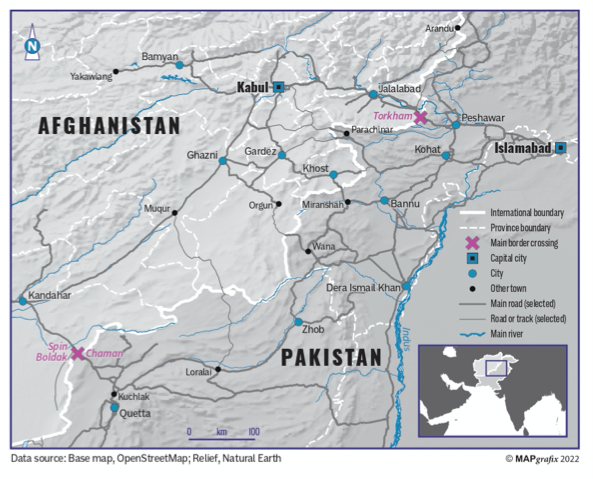
Borders are about control and security, but also about flows and movement, creating a paradox for governance of conflict-affected regions. Over the past five years, Pakistan has sought to stabilize its border with Afghanistan through a series of overlapping security and governance initiatives. Responding to high levels of militancy and the cross-border flow of weapons and contraband, it has pursued an aggressive counterterrorism strategy while also garrisoning border gates, expanding customs and immigration facilities, and fencing almost all of the 2,600km Afghanistan-Pakistan border.
At the same time, Islamabad has strengthened its rule over its border regions, folding the erstwhile Federally Administered Tribal Areas into the province of Khyber Pakhtunkhwa, and replacing customary practices with state-run governance and judicial systems. Altogether these efforts have shown some success in improving regional governance and security, but the instability that followed the Taliban’s takeover in August has contributed to an increase in violence in the past 12 months.
These dynamics are covered in detail by Azeema Cheema, director of research and strategy at Verso Consulting in Pakistan, in the opening chapter of the new report. While writing about the changing security and trade environment at Torkham, she also highlights the uneven and often negative effects on local communities of Pakistan’s efforts to secure and formalize trade along its border.
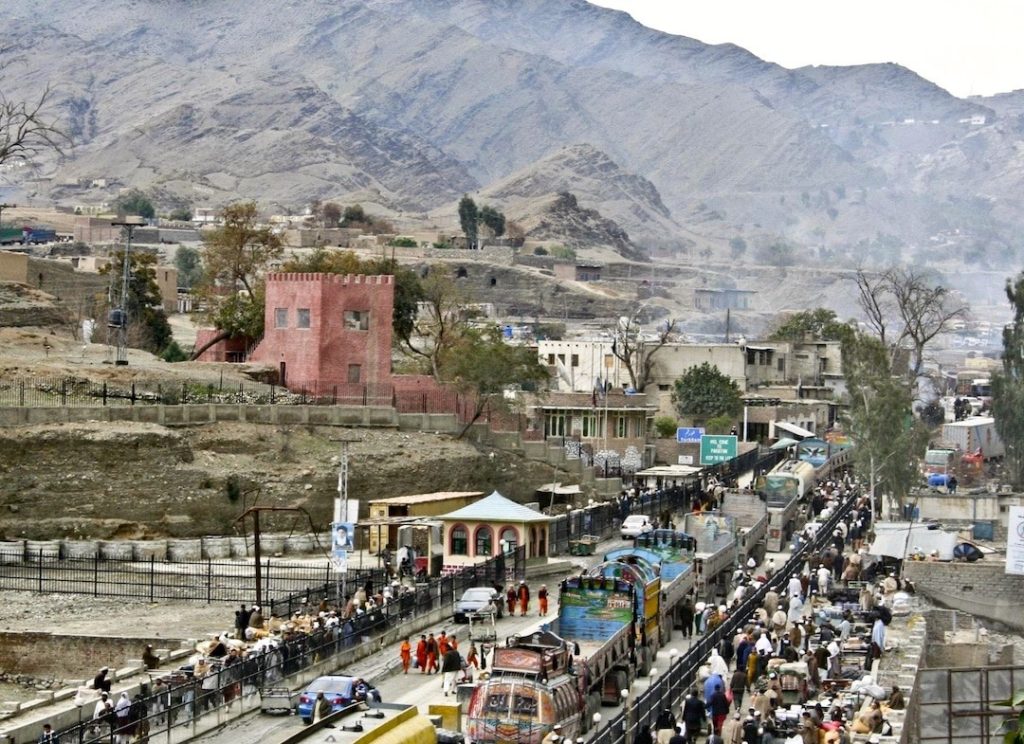
In Pakistan and many other cases, national policies threaten local communities in volatile border areas. Expanded border infrastructure, the closing of border bazaars, and limitations on the free movement of laborers across the border damage local livelihoods, leading to clashes with the government and protests over compensation. Afghan communities that rely on cross-border mobility for job opportunities, healthcare, education, and family visits on the Pakistani side of the border have been hit particularly hard.
These effects add up to a set of enduring grievances with Islamabad, and feature in the narratives of militant groups who continue to resist the expansion of state control. The paradox, then, is that while Pakistan’s security efforts have sought to stabilize its border, in many areas they have produced the opposite outcome, and are leading in the longer term to an increased risk of instability and violence.
Similar trends are observable along the Myanmar-Thailand border in the town of Shwe Kokko, featured in the final chapter of the report, where a new commercial development consisting of a hotel and casino complex is being built in the jungle by the Karen Border Guard Force (BGF), a local militia group that is a key ally of the Myanmar army. In an area that has experienced decades of conflict, a long-running, informal pact has allowed the army to extend its control over locally contested territory while offering the BGF nearly free rein on illicit economic activity, including gambling and smuggling.
While this arrangement benefits armed elites, author Naw Betty Han highlights the marginalization and violence experienced by local populations—a situation that has deteriorated since the military takeover in February 2021 with growing allegations of human trafficking and sexual exploitation. At the same time, the BGF has been at the frontlines of the new cycle of conflict, fighting alongside the Myanmar army against prodemocracy armed groups based in the border area.
Situations like those in Torkham and Shwe Kokko, where trade, conflict, and state intervention interact, can also be found in the report’s other four chapters, which cover Makha in Yemen; Sarmada, Syria; and Maiwut and the Northern Bahr el-Ghazal region in South Sudan. Together they point to the complexity of conflict-affected border regions and the perverse effects on local populations caught in the middle.
One highlight of the report is that it champions the voices of local populations: seven of the eight authors are nationals of the countries they write about, and all six case studies involve on-the-ground research and insights. Working with local researchers is a core component of the project, and the report emphasizes the importance of this approach for building a more complete understanding of the causes and consequences of conflict. Engaging local residents, who live in and intimately understand these conflict zones, is an essential strategy for achieving equitable development in conflict-affected border areas.
This podcast and article was originally published on The Asia Foundation’s website.
Introduction
While many observers claim that Iraq’s Tishreen protest movement has been coerced into silence, I believe it maintains mobilisation momentum beyond street demonstrations. This is because the movement roots itself in storytelling; as a result, its relived memories of mass protests continue to motivate a collective consciousness.
Storytelling as a Tool
Storytelling helps to transform lived experience into meaning through the recounting of narrative via verbal and/or physical enactment and its reception by an engaged listener or audience. Therefore, storytelling is inherently a sociocultural process where people engage with the narrated story. Specific to time and place, this process also produces discourses in which people come to understand themselves. This subjectivity is central to storytelling; voice is always present. Storytellers engage in reflexive narration while provoking reflexivity in their engaged audience. Through this process, we construct our identities, find purpose and reimagine the past. Storytelling is a means to relay personal and collective experiences and collective aspirations, and to work towards them. For it to be utilitarian, instructive and a catalyst for change, storytelling must be intimately connected with and directly accessible to audiences and tap into their emotions. During protest movements, which are cauldrons of emotion at the boil, storytelling is a powerful tool to rouse solidarity and challenge the status quo.
Against the backdrop of asymmetric power relations, storytelling both generates positive relationships within communities and intensifies social cleavages, perpetuating divisive rhetoric and systemic violence. By distinguishing between destructive and constructive storytelling, we can delineate narratives that provoke and warrant acts of resistance. According to Jessica Senehi, constructive storytelling “is inclusive and fosters collaborative power and mutual recognition; creates opportunities for openness, dialogue, and insight; a means to bring issues to consciousness; and a means of resistance”. In contrast, destructive storytelling is “associated with coercive power (‘power over’ rather than ‘power with’), exclusionary practices, a lack of mutual recognition, dishonesty, and a lack of awareness. It’s a form of storytelling which sustains mistrust and denial.” Destructive storytelling arises when people break between the ideal and real in the erasure and/or whitewashing of stories. Distinguishing between destructive and constructive storytelling recognises coercive power versus shared power, dehumanization versus mutual recognition, dishonesty and unawareness versus honesty and a critical consciousness, and resistance and agency versus passivity and hopelessness. Iraq’s Tishreen movement has been a site of such dynamics, where citizens with agency use storytelling as a tool of resistance.
Tishreen: The Story
In October 2019, Iraq’s Tishreen movement (October in Arabic is ‘Tishreen’) emerged as a spring of collective consciousness. In the most expansive protests in Iraq’s recent history, Iraqis demonstrated for their rights and self-agency, which have been denied for decades. Thousands of protesters filled public squares and blocked roads in several cities. They gathered in places such as Baghdad’s Tahrir Square and Nasiriyah’s Habbouby Square where monuments tell stories of the country’s rebellious past against colonialism. Joined by academics, professional unions and guilds, the protesters shared stories of collective fury towards a corrupt, undemocratic and that institutionalises ethno-sectarian discrimination under the guise of representation. Through chants, poetry, music and art, the protesters shared their stories of alienation from a system that also alienates them from each other through sectarian policies and violence. Recognising that unfair elections recycle the same political players, they proposed demands that included the resignation of government, a redrafting of electoral law, the repeal of elitist, exclusive policies, the dissolution of parliament and early elections. Bringing together people from varied ages and socioeconomic groups, protests gave Iraqis a newfound sense of unity and solidarity. Post-secondary students provided the backbone for the movement. Women were prominently involved. The most widespread slogans in Iraq and the diaspora were نازل_آخذ_حقّي (“I’m taking back my rights”) andنريد_وطن (“We want a homeland”).
Feeling threatened, political parties and paramilitaries attempted to divide protesters by embedding armed undercover agents in protests who would kill security forces and/or protesters to incite violence. Besides live ammunition and rubber bullets, state forces fired tear gas canisters directly at protesters, killing many. Gruesome videos of dead protesters with tear gas grenades embedded in their skulls circulated on the Internet. Within months, riot police and paramilitary snipers killed over seven hundred protesters and injured over twenty-thousand, permanently handicapping dozens. Numbers have continued to rise since and, as of March 2021, some 1,035 protesters were reported killed and 26,300 injured. In the Kurdish Region of Iraq, Kurdish security forces killed at least six protesters and arrested 400 in December 2020. The government and paramilitaries weaponised enforced disappearances to weaken protesters, activists and journalists. An estimated 7,663 people have gone missing in the past three years. Besides physical violence, symbolic violence and hate speech have been common. State and non-state actors waged a psychological war involving sound-flash bombs to terrorise protesters and a social media war with character assassinations to silence them. Engaging in destructive storytelling, Iran-backed paramilitaries created Telegram channels and hashtag factories to attack activists and protesters, labelling them as “jokers” and falsely accusing them of being foreign agents. Vicious and persistent hate speech campaigns targeted Iraqi activists both online and offline, aiming to delegitimise them and the movement and to incite assassinations. Meanwhile, the government enforced Internet blackouts to silence protesters who grew more resourceful and persistent. Radios placed in public squares warned those participating in sit-ins of armed threats. Activists in the Kurdish Region unaffected by the blackout worked to fill the information gap and reported human rights violations. Despite and because of the consistent attempts to silence them, Iraqis want to be heard and seen.
The paramilitaries created a culture of fear. Coupled with the impact of the coronavirus pandemic, the protest movement was forced to a halt, with many observers claiming the Tishreen movement was crushed. However, the movement remains alive in the collective consciousness of Iraqis and through other forms of .
Memory & Continued Mobilisation
Realising the lengths to which the government and paramilitaries will go to promote fear and silence protesters’ narratives, activists see the power of their storytelling. As Iraqis in the country and in the diaspora continue to discuss online their memories from the protests’ early days, these stories help to maintain the movement’s momentum. Social media outlets emerging from the movement have kept the protest alive through commemorations of important dates, events and persons. In particular, fallen protesters are celebrated on the anniversaries of their murders and massacres at Nasiriyah’s Zeitoun Bridge, Baghdad’s Sinak Square and Najaf’s Sadrain Square are commemorated. With the revisiting of these stories, calls for accountability continue and several campaigns have emerged. With hashtags and slogans asking #من_قتلني؟ (“Who killed me?”), Iraqis demand transparent investigations and prosecutions of those responsible for assassinations. #End_Impunity is a hashtag that has developed into an organisation that launches targeted campaigns against corrupt officials and members of security forces responsible for violence against civilians. Online awareness campaigns challenge unjust draft laws, such as the Combatting Cybercrimes Bill, The Freedom of Assembly and Peaceful Demonstrations Bill and dangerous proposed amendments to the Personal Status Law. انقذوا_الأيزيديات_المختطفات# (“Save Kidnapped Yazidi Women”) connects the cause to the wider Tishreen movement and blames state institutions for failing to respond to Islamic State’s attempted genocide and the sexual slavery of Yazidi women. Activists recognise the direct connection between memory, storytelling and activism to keep the movement alive in public consciousness. This is notable in the explosion of the Iraq arts scene. Murals at Tahrir Square and elsewhere remind the public not only of mass political protests but also of the potential for further grassroots mobilisation and self-expression.
Conclusion
Storytelling in Iraq’s Tishreen movement reminds us that memory, both an outcome and part of storytelling, is an indirect expansion of power. It helps to reclaim identities, histories and resistance movements. Owning the narrative around the protests has maintained the Tishreen movement’s momentum through other forms of other grassroots mobilisation. State institutions and paramilitaries’ attempts to erase collective memory will fail, as resilient and determined youth now believe in the power of public pressure and taunt them with defiance: إنت منو؟ (“who are you?”).
This article was originally published on the International Centre for the Study of Radicalisation’s website.
The modernization policies in Saudi Arabia supervised by Crown Prince Mohammed bin Salman have brought about a number of transformations in the structure of state institutions and Saudi society. One of the foremost domains in which change has been visible is religion. It is common to hear that the kingdom’s political-religious system was built on an alliance between the ruling Al Saud family and Wahhabi Salafism. However, Prince Mohammed appears to be moving away from this approach, as he seeks to mobilize the youth by reducing the religious and social constraints imposed as a result of that alliance.
These transformations raise an important question about Saudi ties with Salafism, a branch of Sunni groups that defines Islam as anything the prophet Muhammad said or did and that was upheld by his first three generations of his followers, which Saudi Arabia helped to spread over recent decades. Support for Salafism was one of the instruments of soft power that the kingdom used to expand its influence in Muslim societies. One place where this happened is Yemen. In 1982, Muqbil al-Wadi’i, a Salafi scholar who had been residing in Saudi Arabia, established Dar al-Hadith in the northern governorate of Saada. This is seen as the starting point for the Salafi movement in the country. By backing Wadi’i, the Saudis sought a counterweight to the Zaydi Shia community in Saada, leading members of which supported Iran’s revolution of 1979.
Saudi Arabia benefited from the Salafi expansion in Yemen. The Salafis’ discourse portrayed Saudi Arabia as the primary protector of Islam, and Salafi teachings were largely based on the ideas of Saudi Salafi scholars such as Abdel-Aziz bin Baz, Mohammed bin al-Uthaymeen, Mohammed bin Ibrahim Al al-Sheikh, and other figures. Subsequently, the religious divide in Yemen was driven by transnational ideas, with the Saudis influencing the Salafis and Iran influencing the Zaydis, a situation that later fueled the ongoing Yemeni civil war.
Given their ideological differences with the Iran-backed Houthis, Salafi groups have become a significant force supported by the Saudi-led Arab coalition.
While Salafism appears to be reducing in importance within the Saudi state, the kingdom has reinforced its alliance with Salafis in Yemen, even expanding cooperation in some areas as conflict rages on. Given their ideological differences with the Iran-backed Houthis, Salafi groups have become a significant force supported by the Saudi-led Arab coalition. Several military brigades dominated by Salafis were able to alter the balance of power on vital military fronts. For example, the Salafi Giants Brigades, which are supported by both Saudi Arabia and the United Arab Emirates, spearheaded the operations to control Yemen’s western coastal areas in 2017 and 2018. They again made major gains in the more recent battle for Shabwa.
The changing relationship between the Saudi state and Salafis in Saudi Arabia has been accompanied by transformations in the Salafi environment in Yemen. Traditionally, Yemeni Salafis are divided into three categories: Salafi-jihadis; political Salafis, who have Salafi roots but follow the path of political Islamist movements by involving themselves in politics, such as Al Rashad Union Party and the Peace and Development Party; and traditional Salafis, which encompasses most Yemeni Salafis. While the traditional Salafi schools have historically abstained from engaging in politics, prioritizing obedience to the ruler (wali al-amr), this principle was shaken by the Houthi takeover of the Yemeni capital, Sana’a, in 2014. The Salafis woke up to the fact that the Zaydi Houthis, whom they opposed, had become the dominant military force in Yemen.
This change in the political context prompted many followers of traditional Salafism to reconsider their quietist principles, as they found themselves at the center of a war effort, leading armed groups. Alongside Mohammed bin Salman’s transformations in Saudi Arabia, this reconsideration led to a new relationship between the two Salafi communities—one centered on Saudi support for Salafis who were engaged in a political conflict, not simply spreading their religious doctrine.
Saudi Arabi has three fundamental motives for strengthening its ties with Yemeni Salafi groups. First, there is deep enmity between Salafis and the Houthis, whom Saudi Arabia is also fighting. The clash between the Salafis and Houthis is not only one over doctrine, but also has a military dimension. In 2014, the Houthis took over the Saada-based Dammaj Center, the first Salafi school in Yemen, and forced the Salafi community to leave the area. The sense of grievance among Salafis was revived when the Houthis expanded into other areas in which Salafis were present. When the Saudi-led coalition began its military operations in March 2015, the Salafis proved to be reliable partners in the coalition’s ground operations.
A second motive is that the Salafis have no specific political agenda. Their primary aim is to combat the Houthis, based on a religious rationale, particularly after the takeover of the Dammaj Center and the expulsion of Salafis from Saada. This gave the Salafis pride of place among other Yemeni groups that were fighting alongside the coalition, including the Islah Party and southern separatists, who have political agendas that conflict with those of the Saudi-led coalition.
A third motive is to maintain Saudi religious influence in Yemen, which Salafi groups have helped to sustain in the past four decades, and to prevent Salafis from engaging in any compromises with the Houthis. To the Saudis, the agreements that some Salafi leaders signed with the Houthis in areas of northern Yemen in 2014 were alarming. These called for peaceful coexistence, an end to hostile rhetoric, and direct communications between the sides to deal with any issues. The kingdom is providing the Salafis with military and financial support, and at the same time is continuing to fund their religious centers. Although the Yemen conflict has impaired educational institutions in Yemen, Salafi schools continue to operate and are even expanding in several parts in the country, including Aden, Dhaleh, and Mahra.
For the Salafis, having regional backers, such as Saudi Arabia and the United Arab Emirates, is important. Receiving financial support is only part of the reason. The Salafis also seek some sort of legitimacy in their fight against the Houthis, especially after concerns emerged about ties between the traditional Salafis and Al-Qaeda groups. Fighting under the Saudi-led coalition has helped to water down such apprehensions, not least because Salafis have joined the Yemeni government. Indeed, the eight-member Presidential Leadership Council, the executive body of the internationally recognized government, includes the Salafi leader Abu Zara’a al-Mahrami, who is also the leader of the Giants Brigades.
Considering the political and military context in Yemen, the relationship between Saudi Arabia and Salafis there will remain strong, despite the religious changes inside the kingdom. While Saudi Arabia pursues its battle in Yemen, Salafis will remain their preferred partners and a key part of the kingdom’s network of influence in the country. The role of the Saudi-backed Salafi groups in Yemen has been shifting over the past years. While it was a soft power spread through religious teaching till last decade, Salafism today is becoming a part of Saudi hard power, transforming its students into fighters on the battlefield. This is not only the case in Yemen, but also in other areas such as Libya, where the Saudi-backed Madkhali Salafi groups witnessed similar transformation. The case of the Salafi groups underscores the complex evolution of cross-border exchange of religious ideas, with external powers able to grow influence amongst local communities.
In October 2020, Sudan’s transitional government – a coalition of military and civilian politicians – signed the Juba Peace Agreement (JPA) with several of the country’s armed rebel groups (collectively known as the Sudan Revolutionary Front). The peace agreement gave some leaders of these groups powerful positions in the transitional government or state administrations, thus providing them with a tangible stake in Sudan’s evolving political order following the fall of long-time president Omar al-Bashir. When the military launched a coup against the leadership of the civilian government in October 2021, some of the rebel leaders sided with the country’s generals, rather than its civilian leadership, many of whom had been their allies in opposing the previous regime. Why did a collection of long-time opponents to Sudan’s military-led dictatorship do this?
The Juba Peace Agreement gave some leaders of Sudan’s rebel groups powerful positions in the transitional government or state administrations, thus providing them with a tangible stake in Sudan’s evolving political order.
Borderland Rebels
Most of Sudan’s armed movements originated in the country’s peripheries, where wealth has been systematically drained through decades of exploitative and violent rule by an elite from the country’s metropolitan centre, enforced by a system of rural militias, armed and backed by the government. The main rebel groups originated in Darfur, Sudan’s expansive western region bordering Chad and Libya; and the borderlands between Sudan and South Sudan, specifically South Kordofan and Blue Nile states (known as the ‘Two Areas’).
In the latter years of the Bashir regime, the wars in Sudan’s peripheries had effectively ground to a standstill. Previously, the rebel groups in Darfur and the Two Areas had received significant support from neighbouring countries (mainly Chad, South Sudan and Ethiopia), but this had dried up. While the remaining rebels were not a large threat to the government, they also couldn’t be completely defeated and these long-running conflicts stuttered on with little prospect of resolution while Bashir remained in power.
When Bashir was deposed by his generals in 2019 after months of mass civilian protests, the new government developed plans to end the conflicts in Sudan’s peripheries with one, overarching peace agreement that was split into several regional tracks. Drawing on earlier ‘pay-roll peace’ deals, notably the Comprehensive Peace Agreement that ended Sudan’s north-south civil war in 2005; and the Darfur Peace Agreement, which attempted the same in 2006, the Juba Peace Agreement was born.
Destabilising the Peripheries
While the designers of the peace agreement had ambitions to craft a national, all-inclusive arrangement that would solve all of Sudan’s festering conflicts in one go, the reality was somewhat different. The peace agreement has shifted the balance of power in various local contexts and, as a result, has at times fuelled more conflict. For example, in Darfur, after the fall of Bashir, the (mostly Arab) groups that had generally benefitted from his rule feared that they would lose out. Particularly in North Darfur, the peace agreement has contributed to an increase in violence as Arab, mostly cattle herding communities have sought to strengthen their positions to avoid losing out in any political reorganisation.
In the Two Areas, the Bashir regime’s collapse created a power vacuum. Before the former president’s fall, the Sudan People’s Liberation Movement – North, which had been fighting the government since 2011, had acrimoniously split into two factions (one in South Kordofan and the other in Blue Nile). While the South Kordofan group rejected the peace agreement, the (weaker) Blue Nile faction chose to sign, and its leadership sided with the military during the coup in October 2021. The peace deal further entrenched splits in the group and isolated the South Kordofan faction, which has shown no serious inclination of signing.
In Eastern Sudan, military leaders have played divide-and-rule with the different communities in the region. In the run-up to the coup, they looked to exploit communal differences by securing the allegiance of the dominant Beja community through promises to renegotiate parts of the peace agreement. As a strategically important region that hosts Sudan’s largest sea port, its political elites have significant leverage over the Khartoum government and have not been afraid to use it – for example, during the blockade imposed on Port Sudan in 2021, which further damaged Sudan’s struggling economy.
Rebel Realpolitik
The peace agreement has emboldened opportunistic rebel leaders from the peripheries who had been on the political back-foot for years to trade their support for positions of power in national and regional administrations. This has helped buttress the country’s military leaders, who have side-lined the civilian members of the transitional government and appear determined to remain in power for the foreseeable future.
Sudan’s pro-democracy coalition, whose mass rallies and street protests were central to the removal of Bashir and his regime from power, expected that the returning rebel leaders would help tip the balance of power towards the civilian component of the transitional government, helping to off-set the creeping authority of Sudan’s military appointees. However, during the months that led up to the peace agreement, the Sudanese military successfully imposed itself on the process, signalling to the rebel leaders that it was in a better position to grant access to political power than the civilian members of the transitional government.
With the civilian administration unable to govern effectively, the economy in free-fall, and the military showing no desire to relinquish power, much of the rebel leadership took the practical political position of siding with the group most likely to help it assert its own interests. The political deal-making of rebel leaders in the wake of the coup reveals their calculations and objectives to safeguard their own positions within Sudan’s future governance arrangements. While some leaders share the pro-democracy agenda of the civilian government and the revolutionary movement that fuelled its rise, others are led by local political interests and may feel little connection to the urban-based revolutionaries. For many, the military appeared to be a more powerful partner in asserting, or protecting these interests, even if this is little more than a marriage of convenience.
The war in northern Ethiopia’s Tigray region has reshaped agriculture across the borderlands of Ethiopia, Sudan, and Eritrea, and redrawn the relationship between farming, politics, and conflict. Sesame is a case in point. This is a crop that thrives in two regions affected by the Tigray conflict – Western Tigray and Al Fashaga in eastern Sudan. These areas have been contested for decades, and the continuing conflict in Tigray is simply the latest chapter in a long history of territorial transfer.

Until November 2020, Tigray was a major player in global sesame production. This fertile region grew almost a third of Ethiopian sesame exports (a share worth around $350 million annually) – no mean feat, given Ethiopia is the world’s third-largest oilseed producer after India and Sudan, with sesame accounting for 30% of its oilseed production. Sesame is the second foreign currency earning crop after coffee in Ethiopia: most sesame grown here is intended for export.
Just across the border, in the contested region of Al Fashaga in eastern Sudan, Ethiopian farmers have grown sesame and other crops for decades. Until the onset of the Tigray conflict, farmers would send sesame back into Ethiopia for sale, swelling the agricultural products passing through Ethiopian markets. Their farms in eastern Sudan were protected by Ethiopian militia, effectively limiting the space for Sudanese farmers and, at times, intimidating local communities through frequent incidents of kidnapping and robbery.
The outbreak of war in Ethiopia’s Tigray region in November 2020 changed everything. The expulsion of Tigrayans from Western Tigray by Amhara forces, and Sudan’s expulsion of Ethiopian farmers from Al Fashaga have reshaped sesame production and trade across the agricultural value chain – the range of processes involved in moving a crop from farm to consumer. Power and profits now lie in the hands of new players, and cash from this lucrative crop is likely being used to back factions in the conflict.
Farming on the frontline
Following the assault on the Tigray region by the Ethiopian National Defence Force (ENDF) and soldiers from the neighbouring Amhara region, thousands of Tigrayan sesame farmers were killed, displaced, or fled; others joined the Tigray Defence Forces (TDF). Farms were looted or destroyed at the height of the harvest season, further exacerbating food insecurity for Tigrayans.
Western Tigray – an area under the administration of the Tigray regional government until the start of the war in 2020 – was de facto annexed by the Amhara regional government. Control over sesame production and trade passed from Tigrayan smallholders and cooperatives to Amhara owners. Some Amhara investors have been granted two-year leases for prime agricultural land by the new administration. Amhara smallholder farmers, large investors and cooperatives in this enlarged Amhara region now account for 70% of Ethiopian sesame production.
In Al Fashaga, meanwhile, Sudan capitalised on the bloody conflict across its border to retake control of this highly fertile agricultural triangle on its eastern border. With Ethiopia distracted by the conflict in Tigray, Sudan moved its troops into Al Fashaga and expelled thousands of mainly Amhara farmers between November and December 2020.
The Sudanese Armed Forces themselves managed the harvest of crops planted in 2020 by Ethiopians in Al Fashaga, including sesame. These were then sold on the market in Gedaref in eastern Sudan. Profits flowed to Sudan’s military and, by extension, to the military leadership participating in Sudan’s power-sharing arrangement after the overthrow of President Omar al Bashir in 2019. Since 2020, Sudanese landholders have been encouraged to return to some areas of Al Fashaga under military protection.
Follow the money
On the Ethiopian side of the border, Amhara capture of fertile land in contested Western Tigray is likely linked to funding for factions in the Tigray conflict, with profits propping up Ethiopia’s war machine and recalibrating the relationship between farming, politics, and conflict. The significance of sesame profits in funding conflict is hard to assess precisely – more research is vital here – but close links between agriculture and political and military interests demonstrate that these profits matter.
A handful of Amhara businesspeople who actively and openly support the Ethiopian government in its war with Tigray have been among new beneficiaries of the sesame market in Humera, an important sesame hub in the region. They are affiliated with the ruling Prosperity Party – some have even earned honorific military titles in recognition of their support in the war. Amhara politicians in senior government positions are also widely believed to be engaged in the sesame industry, linking party politics to agricultural profits gained through conflict.
This merging of political interests and agricultural profits reflects a well-established pattern in Ethiopia. During their decades in power, the Tigray People’s Liberation Front (TPLF)[1] dominated virtually all sectors of the Ethiopian economy through the companies under its massive conglomerate, the Endowment Fund for the Rehabilitation of Tigray (EFFORT) – by far the largest conglomerate in the country. Hiwot Agricultural Development, the buyer which dominated the pre-war sesame market around Humera, was part of EFFORT.
Since the conflict began, EFFORT’s control of the market has been steadily dismantled, with the Amhara-owned Nigat Agro-processing taking its place as the new market hegemon. Like EFFORT, it is politically connected, but to the Amhara branch of the Prosperity Party.
The rise of illegal sesame trading
Another seismic shift in the sesame sector is a switch from licit to illicit trading. Prior to the conflict, most Tigrayan sesame was exported legally, which meant the federal government benefitted via customs and duties on exports.
Today, illegal sesame trading is surging, with sesame from Tigray winding its way to the markets of neighbouring Eritrea without passing through customs authorities. Illegal activity has corrupted the sesame value chain. Sesame profits from illegal trading grease the hands of those who provide security, finance, or permissions along the chain from production to market.
Those involved in illegal sesame production include members of the security services, top administrators, and businesspeople – mainly Amhara, as well as their political sympathisers. Security actors (including Amhara regional forces and the Fano youth movement and militia), political leaders, and smugglers all gain, and are unlikely to re-invest productively in the sesame sector.
The smuggling of cash crops in the region often goes hand in hand with arms smuggling, using the same routes and even the same trucks, with arms hidden underneath crops. There are multiple reports that arms have proliferated over the course of the Tigray conflict, largely smuggled through the forests between the Ethiopia-Sudan border. According to some reports, you can find two or three guns per household – sometimes formally registered in the name of children.
A volatile future
The future of sesame farming in Tigray and Al Fashaga looks increasingly uncertain. In Amhara-controlled Western Tigray, Amhara dominance over sesame production is linked to the rise of Amhara nationalism and could still become a flashpoint for conflict with the federal government. Members of the National Movement of Amhara, an Amhara political party with a nationalist agenda, have vested interests in the sesame sector and a political agenda to weaken federal institutions and replace them with Amhara-controlled institutions – such as the commodity exchange – bringing the region into direct conflict with the federal government.
Sesame outputs have fallen, and Tigrayan farming communities that have lost their land and livelihoods face a future of aid dependence and hunger: more than five million people are in need of assistance in Tigray. Western Tigray and Amhara security forces have continued to deny Tigrayans access to food aid and blocked access to international aid convoys through Amhara. The Amhara look set to continue to consolidate their hold on contested Western Tigray, having laid an administrative structure for the allocation of land to ethnic Amhara through leases which are likely to be coming up for renewal soon.
In Al Fashaga, it is unlikely that the Amhara will accept the loss of this fertile territory, which has been an important source of sesame for Ethiopian farmers operating across the border and employment for otherwise landless Amhara. Once time and resources allow, Amhara attention will likely turn to reclaiming land they consider rightly theirs.
Sesame is not the only crop likely being used to sustain the war effort; other cash crops such as sorghum and cereals are likely playing a part. Writ large, the flow of income from agriculture into the war economy is draining much-needed resources from Ethiopia’s regional and federal governments. The government needs to raise foreign exchange – including through cash crops – to counter the downward spiral of the blighted Ethiopian economy. Further research into the illicit flows of money between cash crops and conflict would shed light on the intersection of agriculture and insecurity in conflict-affected borderlands, providing vital information for efforts to build peace and stability in the Horn of Africa.
Contact the XCEPT team at [email protected] for further information on the topics covered in this article.
[1] The TPLF came to power in 1991, as the leader of the political coalition, the Ethiopian People’s Revolutionary Democratic Front (EPRDF). It lost to President Abiy Ahmed’s Prosperity Party in 2018.