This article was originally published by The Conversation on 15 October 2024.
The assassination of Hezbollah’s leader, Hassan Nasrallah, in September sent shock waves through the Middle East and beyond. Nasrallah had evolved into the very embodiment of Hezbollah over his 32 years in charge, and had established himself as a key figure in Iran’s so-called axis of resistance.
At the height of his influence, Nasrallah was so widely admired from North Africa to Iran that shops sold DVDs of his speeches, cars were embellished with his image, and many Lebanese even used his quotes as ringtones.
He is not the first sectarian leader to have been assassinated in Lebanon. And on each occasion the killings have intensified sectarian tensions in the country and have jeopardised social stability. The impact of Nasrallah’s death will, in my opinion, probably be no different.
His killing could destabilise the fragile balance of power in the country. And it could also trigger a reshuffling of political alliances within Lebanon’s complex sectarian power-sharing framework that was established in 1990 after the end of the civil war.

A man in Baghdad, Iraq, carries an image of the late Hezbollah leader, Hassan Nasrallah. Ahmed Jalil / EPA
In 1977, the leftist leader of the Druze community, Kamal Jumblatt, was assassinated by two unidentified gunmen in his stronghold in the Shouf mountains of central Lebanon. Many of his followers believed they knew who was responsible, and channelled their anger toward Lebanon’s Christian community.
Security officials reported that more than 250 Christians were killed in revenge, many brutally, with their throats cut by Druze assailants. At least 7,000 Christians fled their villages after the killings, with around 700 of them travelling to the presidential palace in Baabda, a suburb of Beirut, to request government protection.
This spell of fighting marked a significant escalation of sectarian violence during the civil war, and resulted in a persistent cycle of retaliation, deepening division and entrenched sectarian identities.
Then, in June 1982, a powerful bomb explosion killed Lebanon’s Maronite Christian president, Bashir Gemayel. The assassination was carried out by two members of the Syrian Social Nationalist party, reportedly under orders from Syria’s then president, Hafez al-Assad.
The next day, Israeli troops entered west Beirut in support of the Phalange, a Lebanese Christian militia that blamed the Palestinian Liberation Organisation (PLO) for Gemayel’s death. Israel had earlier that month launched a massive invasion of Lebanon to destroy the PLO, which had been carrying out attacks on Israel from southern Lebanon.
Knowing that the Phalangists sought revenge for Gemayel’s death, Israeli forces allowed them to enter the Shatila refugee camp and the adjacent Sabra neighbourhood in Beirut and carry out a massacre a few months later. Lebanese Christian militiamen, in coordination with the Israeli army, killed between 2,000 and 3,500 Palestinian refugees and Muslim Lebanese civilians in just two days.
Scores of witness and survivor accounts say women were routinely raped, and some victims were buried alive or shot in front of their families. Women and children were crammed into trucks and taken to unknown destinations. These people were never seen again.
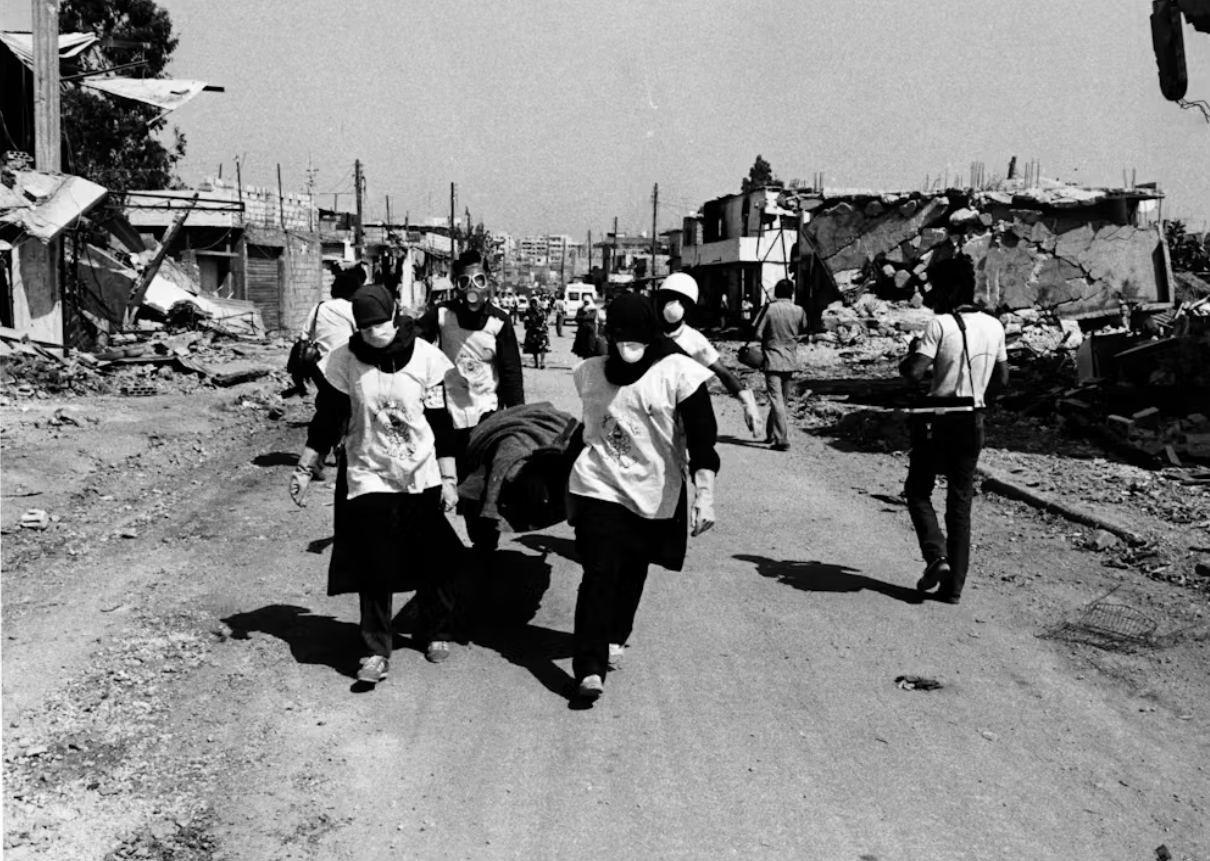
UN relief workers at the Shatila refugee camp in the aftermath of the massacre. Keystone Press / Alamy Stock Photo
Following the end of Lebanon’s civil war, there was a period of relative stability as a delicate balance of power was established between Lebanese sects. But a car bomb in downtown Beirut in 2005 killed the country’s former prime minister, Rafic Hariri, and again altered the dynamics of sectarian rivalry in Lebanon.
Lebanon lost one of its central figures, while fury over Syria’s alleged involvement in Hariri’s murder raised international pressure on Syria to end its 29-year occupation. The withdrawal diminished Syria’s influence as the primary mediator in the country, and the underlying tension between the two main sectarian groups vying for power, the Sunnis and Shia, surfaced abruptly.
Lebanon experienced 18 months of political deadlock and protests, with Hezbollah and its allies pushing for a veto power in the government. Hostilities intensified and violence became a constant threat.
Then, in May 2008, the Lebanese government attempted to remove a Hezbollah-aligned security officer and investigate the organisation’s private communications network. This ignited fierce clashes between supporters of the government and the Hezbollah-led opposition.
Hezbollah and its allies occupied west Beirut and at least 71 people, including 14 civilians, were killed over the following fortnight.
Hezbollah steadily expanded and enhanced its military capabilities over the next ten years. And it also emerged as a powerful regional player by joining Iran and Russia in supporting Bashar al-Assad’s regime in the Syrian civil war.
The organisation assumed an increasingly central role in Lebanese politics, and secured a majority of seats in the 2018 parliamentary elections.
Lebanon’s modern history is rife with conflict. The assassination of Nasrallah marks the latest in a series of bloody milestones that have served as sharp turning points – and even transformational moments – in Lebanon’s sectarian politics.
Christian and Sunni factions in Lebanon have for years viewed Hezbollah as effectively commandeering the state, leveraging its powerful military wing and Iranian backing. With Hezbollah now visibly weakened in the absence of its powerful and charismatic leader, this longstanding power dynamic may be set for a shift.
There are signs that divisions are already deepening. Videos from Tripoli, a predominantly Sunni city in northern Lebanon, show residents dancing in the streets in celebration of Nasrallah’s death. Other videos show people removing Hezbollah stickers from the vehicles of displaced Shias.
Meanwhile, Hezbollah supporters have pledged retaliation for Nasrallah’s elimination. Lebanon once again finds itself on the verge of fierce sectarian tension and instability.
This article was produced with support from the Cross-Border Conflict Evidence, Policy and Trends (XCEPT) research programme, funded by UK International Development. The views expressed do not necessarily reflect the UK government’s official policies.
Despite an end to the active conflict in the Tigray region, Ethiopia’s political and security crisis is deepening. Much of the country’s insecurity is linked to competition over natural resources, which has fuelled land disputes and intensified cross-border smuggling, driven inter-communal conflict, and aggravated environmental hazards.
Ethiopia has substantial gold reserves, particularly in the areas bordering Sudan. These reserves made up more than 95 per cent of the country’s $428 million in mineral exports between 2023–24. Ethiopia officially exported a high of 12 metric tonnes of gold between 2011–12, a figure that fell to 4.2 tonnes in 2023–24, despite the emergence of new gold projects and the expansion of artisanal, or small-scale, mining.
Gold mining is increasingly informal and outside of federal government control. Several large-scale gold projects have been ‘in the pipeline’ for over a decade without starting official production. Some have been overtaken by illegal exploration, extraction and smuggling operations, often in collusion with various government and non-government actors.
Gold mining in Ethiopia is increasingly informal and outside of federal government control.
Confidential reports suggest that some foreign investors and Ethiopian geologists possess more detailed mining data than the government. Artisanal mining employs at least 1.5 million people (74 per cent of miners) and accounts for 65 per cent of mining foreign exchange earnings.
Of Ethiopia’s regions, Tigray leads the way in exploration and commercial licensing, with over 90 licensed gold mining companies. Tigray was among the biggest suppliers of gold to the National Bank of Ethiopia before the war, with about 26 quintals (2.6 metric tonnes) of gold annually, valued at around $100 million. Since the Tigray war, much of the region’s gold has instead been smuggled – with estimates that nationally, this amounts to as much as 6 tonnes of gold annually, significantly more than current official exports.
Multiple non-state actors, including leaders of the Tigray Defense Forces (TDF), foreign nationals, and local businesspeople are involved. Control over gold has been one of the reasons impacting the recent internal split within the leadership of the Tigray People’s Liberation Front (TPLF), the dominant party in the region.
Reports suggest that TDF leaders and some members of the TPLF oversee most of the illicit mining, with gold smuggled out of Ethiopia through Sudan, to the UAE. This plunder of gold ultimately harms the Tigrayan public, as the resource should be used to rebuild the region destroyed by a devastating war. Equally worrying, the gold rush in Tigray is becoming increasingly violent. A recent conflict in a Rahwa gold mine in northwestern Tigray resulted in over 20 deaths.
Other conflict-prone regions are also seeing an expansion of the illicit gold sector, with Benishangul and Oromia regions ‘officially’ barely producing a quarter of the amounts projected by the government. A Canadian company agreed to invest $500m over 15 years in exploiting gold reserves around the small town of Kurmuk in Benishangul, along the Sudanese border. But encroachment by illicit miners has prevented access to the site, and the involvement of regional officials and local militants has left the federal government unable to act. There are reports of massive extraction taking place, with gold again being smuggled out via Sudan to the UAE.
Keen to prevent the loss of hundreds of millions of dollars every year, the Ethiopian government is trying to curb illegal mining. Cracking down on the illicit market, incentivizing legal suppliers, and amending restrictive and ambiguous laws are measures the government is taking.
However, contested authority between federal, regional and local administrations has paved the way for opportunistic, nepotistic, and criminal elements to profit, which fuels armed conflict. As such, the federal government’s ability to impose peace and security is uncertain at best.
These state and non-state elites also cooperate and compete for power in transnational spaces. Sudan is the primary recipient of illicit gold from Ethiopia due to its proximity to Ethiopia’s gold belt. Illicit gold from Benishangul, Gambela, Oromia, Tigray and parts of southern Ethiopia flows into Sudan via a porous border with the help of smugglers and brokers, facilitated by conflict in Ethiopia’s Tigray region and in Sudan.
The illicit gold networks in Sudan have flourished in its war economy. Profits generated by the smuggling of gold sustain the war efforts of armed actors.
Other smuggling routes traverse Afar to Eritrea and Somaliland, and the Guji area near the Kenyan border. Regional airports have also become transit points for illicit gold, which is sent to destinations like Uganda and then re-exported to the UAE.
The illicit gold networks in Sudan have flourished in its war economy. Profits generated by the smuggling of gold from and through Ethiopia, Eritrea, Uganda and as far as the DRC, alongside domestic Sudanese production, sustain the war efforts of armed actors, notably the Sudanese Armed Forces and Rapid Support Forces.
But it is the UAE that is the ultimate destination for much of Africa’s smuggled gold, including Ethiopia’s. According to a recent report by Swiss Aid, 2,569 metric tonnes of undeclared gold from Africa, worth a staggering $115 billion, ended up there between 2012 and 2022. The UAE’s questionable import procedures, which do not necessarily require detailed information about the origins of gold, as well as incentives to import ‘scrap’ gold, make it ideal for smugglers.
The expansion of illicit gold mining is exacerbating Ethiopia’s complex conflicts. Regional states have reclaimed mining concessions to assert control amid diminishing federal influence. At the same time non-state armed actors are competing for gold revenues to expand their local authority and, in some cases, challenge the authority of the state. The gold sector is becoming increasingly fragmented and militarized, and risks being drawn into multiple local and ethnic fractures as the federal government struggles to impose the rule of law.
But in addition to tackling issues at the national level, addressing this issue in the long term requires a better understanding of the transnational nature of gold flows across the region, and how these interconnections form part of a conflict ecosystem that operates across borders.
The UAE is both the prime customer for Ethiopia’s stolen resources and one of its most valued diplomatic partners, offering external support that is as valuable as gold to a government under enormous pressure. The UAE’s emergence as both patron and consumer of conflict gold is a contradiction that Ethiopian policymakers and international partners who support sustainable peace in the region will need to resolve if progress is to be made.
This article was produced with support from the Cross-Border Conflict Evidence, Policy and Trends (XCEPT) research programme, funded by UK International Development. The views expressed do not necessarily reflect the UK government’s official policies.
In Mosul, Iraq, efforts are underway to help the city move forward after decades of violent conflict and devastation under the rule of Saddam Hussein, the US occupation, and the brutal reign of Islamic State (IS).
One initiative which was created to support the city’s recovery was a community tree-planting project called Green Mosul. Green Mosul was developed by the Mosul Eye organisation with a dual objective to raise awareness of the climate crisis and to unite diverse communities after years of division and conflict.
The Green Mosul project was launched in 2022 with the goal of planting trees across the region, and Mosul Eye sought to involve the local population from the outset. If different parts of society could work together on the shared goal of making the city green, it was hoped that this would facilitate communication between divided communities, as well as offer them a chance to disconnect from the social and religious problems of the city.
The project made a concerted effort to choose religious and cultural sites to plant trees in. In this way, these places were turned into green public areas that could be enjoyed by all Mosulis, encouraging the pubic to see these heritage sites as shared spaces and not just for those from a particular community.
The planting of trees in cultural and religious sites also had another aim. Omar Mohammed, the founder of Mosul Eye, hoped that Mosulis would see that Mosul’s heritage was not just buildings, but the trees and the green spaces around them – and that this heritage needed to be protected too. When IS took control of Mosul, the city suffered an enormous amount of loss and devastation. The terrorist group might not come back but, if the climate crisis isn’t addressed, Mosul could face destruction of a different kind.
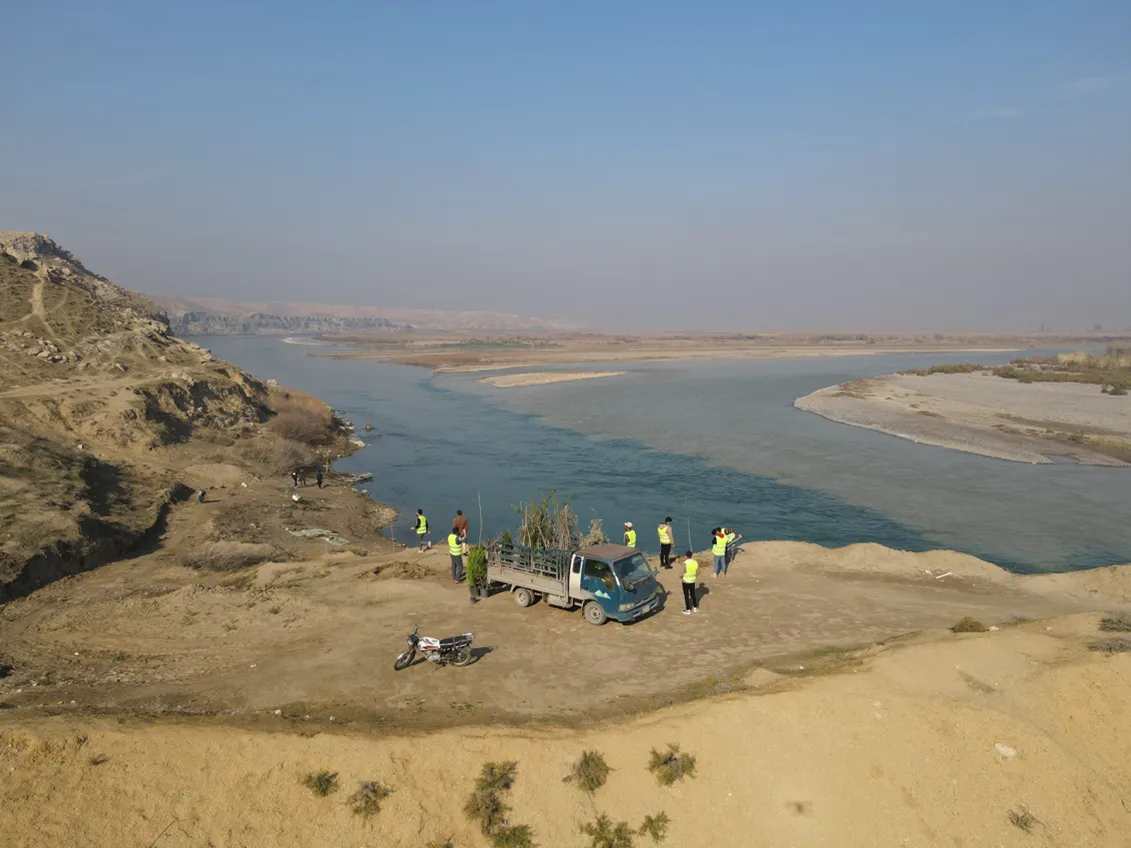
Mosul, historically known as the city of two springs due to its temperate autumn, is directly impacted by the climate crisis. The city now experiences longer and more intense heatwaves, reduced water flow, and an increasing frequency and intensity of extreme weather events, such as droughts and floods. This not only risks the health of the city’s population, but has profound socio-economic implications. Agriculture in the region relies on predictable weather patterns. With changes in rainfall and temperature come rising food prices, higher poverty levels, and increased migration as people move away from rural areas to seek better living conditions.
On top of this, Mosul’s rich cultural heritage is at risk, as extreme weather events and changing environmental conditions can accelerate the deterioration of its many historic buildings and archaeological sites.
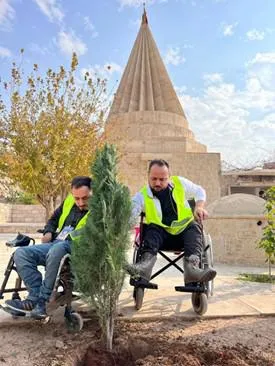
Mohammed believes that trees offered an ideal entry point for introducing environmental education to Mosul. Trees symbolise life and renewal, but they also play a key role in mitigating the climate crisis. To start the conversation on the climate crisis, Mohammed organised workshops and community meetings alongside the planting of trees, which encouraged locals to engage in discussions about trees, the climate crisis, and the effects of both on the local environment.
For Mohammed, it was important to make sure the impact of the climate crisis was discussed in a locally meaningful context. After years of conflict and destruction, the focus for most Mosulis was on restoring their livelihoods and rebuilding their lives, and Mohammed knew that many people wouldn’t engage with global narratives on the climate crisis while they had more immediate problems to deal with.
For example, when several neighbourhoods in the Al-Jadidae area of Mosul were experiencing water shortages, Green Mosul engaged the community in discussions about how the climate crisis impacts water availability and agricultural productivity and the need for sustainable water management practices.

In Mosul’s Old City, Green Mosul encouraged residents to consider the climate crisis and the importance of green spaces as they rebuilt their homes. The Old City had suffered immense destruction under IS’ reign, and the extensive use of heavy building machinery in reconstruction efforts was exacerbating the already-poor air quality. One resident, inspired by the project, transformed a narrow alley near his home in the Dakkah Barakah neighbourhood into a vibrant green space.
Green Mosul also arranged tree-planting events with local schools, businesses, and organisations in the hope this would foster collective action and introduce a sense of ownership and responsibility towards the environment. One participant, Anas, remarked that ‘planting these trees made me realise my role in combating the climate crisis. I am now more conscious of my daily actions and their environmental impact.’
As the city visibly turned greener, Green Mosul was able to attract the interest of both the public and the media, and to raise awareness of the need for sustainable practices and long-term strategies to safeguard the environment.
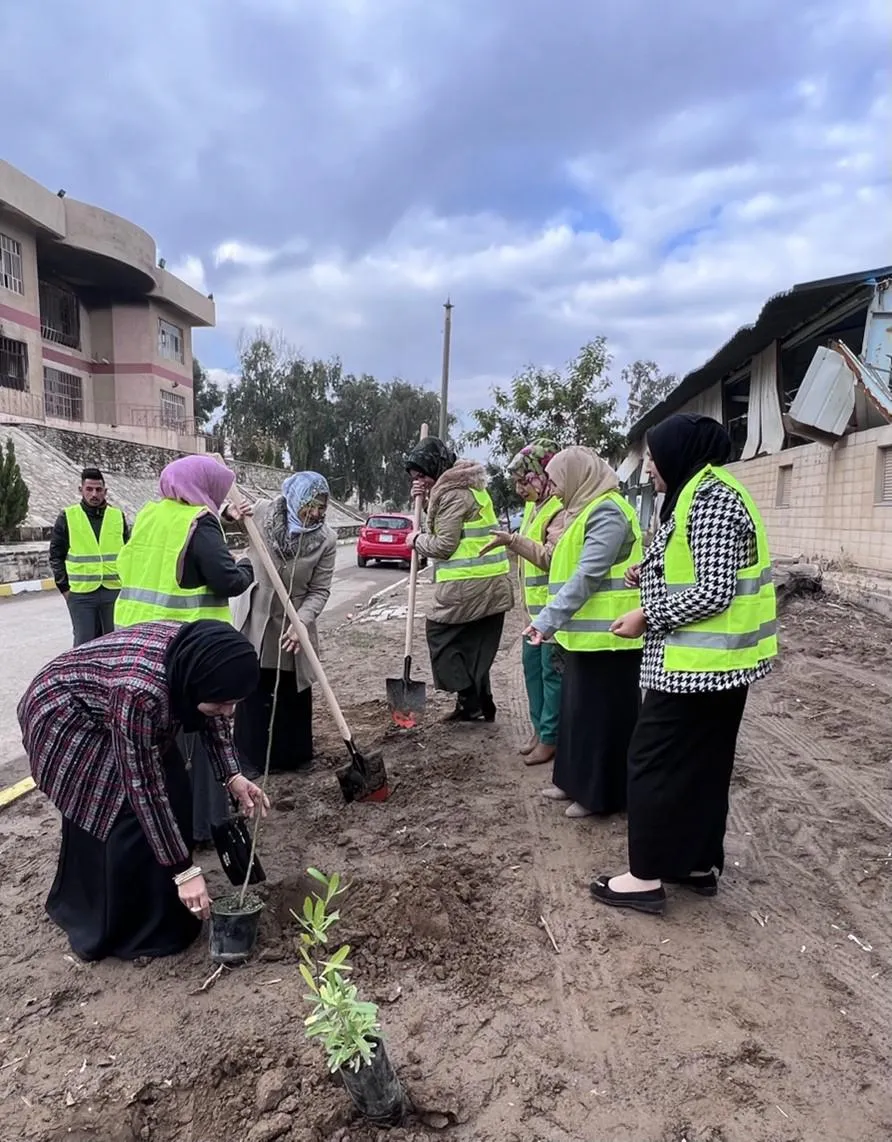
Through the planting of trees, Mosul Eye also found a language for the first time to speak to people about their areas without having to speak about sectarianism.
In Tel Skuf, 28km north of Mosul, the park in front of Mar Gorgis Church was transformed, thanks to Green Mosul, into a communal space that encouraged interaction and unity among different groups. In this instance, the need for more green areas became a bridge that allowed communities to engage across other divides and overcome tensions that had previously separated them.
In Bashiqa, another beneficiary of the Green Mosul project, farmers from different religious backgrounds came together to share knowledge about sustainable farming practices and crop rotation techniques, collaborating on a community garden project that utilised ancient irrigation methods to conserve water and increase crop yields. This practical co-operation resulted in improved agricultural output and strengthened inter-communal relationships.
In many places across the region, collaboration triumphed over division. In programme activities, conversations about Tal Afar no longer focused on Sunnis and Shia, but on the water springs and the green areas. When people spoke about Sinjar, they no longer talked about Muslims and Yezidis, but of the mountains and their importance. Discussions around the Nineveh Plains centred not on Christians and Muslims, but farming and green spaces.
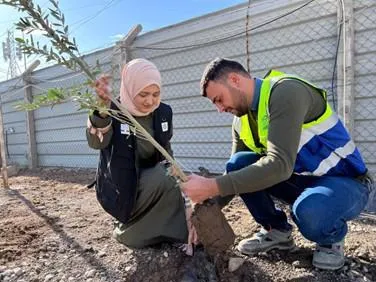
The Green Mosul project ended in March 2023, but the universities and the local government have committed to continuing to plant trees, and Mosul Eye is still working to facilitate discussions on the climate crisis. The organisation knows that addressing the issue not only provides an opportunity to support post-conflict reconciliation in a divided city, but it also helps to protect the city’s future.
Mohammed has recently convinced the University of Mosul’s Central Library to create a section on the climate crisis, and he is currently working with schools to get the topic of the climate crisis included in the curriculum. Although this initiative may take time, it is a crucial step towards embedding the climate crisis education from an early age and instilling hope and optimism about the future.
The project has also empowered individuals to take steps of their own. Ahmed, a citizen of Mosul and a volunteer with Green Mosul, has initiated advocacy efforts within his community to promote recycling and revitalisation of green spaces in Mosul. Abdulrahman, an agricultural engineer hired by Mosul Eye to conduct a study on soil health in Mosul, was so shocked by the extent of the city’s environmental damage that he has taken it upon himself to increase awareness about this problem in the academic community. In response to these efforts, the University of Mosul has been more proactive in integrating studies focused on the climate crisis in Mosul into its curriculum.
Through Green Mosul, Mosul Eye also successfully arranged the first international conference on the climate crisis in Mosul. For the first time, amidst the city’s ruins, people engaged in discussions about the climate crisis. Mohammed hopes that Mosul will become part of the global discourse on the climate crisis because, if Mosulis see that someone around the world is talking about the climate crisis in their city, they might be inspired to take the initiative themselves. He also hopes that they will set an example to other activists: if the people of Mosul, in the midst of destruction, can still discuss and tackle the climate crisis, then it should be possible anywhere.
Find out more about Green Mosul in this interview with Dr Omar Mohammed, for the XCEPT research project at King’s College London.
Over the past decade, the number and intensity of both inter- and intrastate conflicts has been rising. In 2022, mostly due to Russia’s invasion of Ukraine and the war between the Government of Ethiopia and the Tigray People’s Liberation Front (TPLF), the number of battle-related deaths from interstate conflicts reached its highest number since 1984.[i] According to the Armed Conflict Location and Event Data Project (ACLED), in the first month of 2024, one in six people around the world were estimated to have been exposed to conflict.[ii]
Human history, and our present, is rife with conflict, but researchers are still short of comprehensive theories that could explain the common ‘logic’ of conflicts across specific contexts. Why do people enter into conflict in situations when they could agree a peaceful settlement instead? The dynamics of conflict are incredibly complex and depend on countless, constantly evolving factors, from the environment to the unique individuals comprising the groups. This creates a serious challenge for predicting the emergence of conflict and its consequences. Models offer a means to consider various elements in parallel, untangling the complexity of conflict dynamics.
Models are sets of formulas developed by researchers to describe how different factors interact, integrating abstract theories to give a simplified, testable representation of real-life conflict. As the study of conflict is multidisciplinary, models provide a common language for researchers working in disparate fields, from political science to evolutionary biology. This is important as it allows for conflict analysis to integrate findings from different academic disciplines, and this can uncover new insights.
In one example, a model analysing strategic incentives for mass killings brought together several existing theories which yielded new, and somewhat unexpected, results: namely that constraints on the magnitude of mass killings, such as third-party intervention, may actually increase their probability under certain conditions.[iii] Models can also inspire further research by providing predictions that must then be tested against data collected from real conflicts.
A prototypical model of conflict is a simple ‘bargaining game’. In this model, two groups or individuals negotiate how to distribute something of value, which results in either a peaceful resolution or fighting. If fighting takes place, this item of value, be it a material or symbolic resource, is divided according to the outcomes of the conflict, but some of its value is destroyed, rendering aggression inefficient and collectively undesirable. Conflict dynamics are rarely that straightforward, and this model makes certain assumptions, such as theorising that groups are made up of members who have the same characteristics and who all act in the same way. Nevertheless, this still provides a useful base from which to generate testable hypotheses.
While models simplify various elements of conflict, they are beginning to take more detail into account. An example of this is the consideration of group heterogeneity. Groups in a conflict are not homogenous units, but are instead made up of individual agents with different motivations, identities, classes, behaviours, and more. Including these differences in models can significantly influence their predictions.
One facet of this heterogeneity is the difference in social classes within a population. A series of models by economists Esteban and Ray predicted that conflict was more likely to occur if religious or ethnic factions contained members from a mix of economic classes.[iv] An explanation for this is that conflict requires financing from the rich and fighting from the poor. Greater inequality also decreases the opportunity cost for both sides. It costs the rich less to fund the conflict, while, in the absence of other opportunities for income, fighting becomes the best option for potential gains for the poor.
Real-world data supported this prediction, finding that civil wars between groups with greater levels of internal economic inequality have been more severe in terms of death tolls and the length of the conflict.[v] This is just one example, but recent work has begun to make more nuanced predictions.[vi]
Models of conflict move us beyond stories to explanations. They allow us to consider how various elements interact side by side, and they help researchers from different fields to operate under a shared understanding. Work in this direction has already been generating increasingly complex models of conflict, and this will continue in the future as models take further nuances into account. Models offer an exciting avenue for exploring new ideas and will be instrumental in informing our understanding of conflict dynamics.
[i] Obermeier, A.M. & Rustad, S.A. (2023) Conflict Trends: A Global Overview, 1946–2022. PRIO Paper. Oslo: PRIO.
[ii] https://acleddata.com/conflict-index/
[iii] Esteban, J., Morelli, M., Rohner, D.: Strategic mass killings. Journal of Political Economy 123(5), 1087–1132 (2015) https://doi.org/10.1086/682584
[iv] Esteban, J., Ray, D.: Conflict and distribution. Journal of Economic Theory 87(2), 379–415 (1999) https://doi.org/10.1006/jeth.1999.2549; Esteban, J., Ray, D.: On the salience of ethnic conflict. American Economic Review 98(5), 2185–2202 (2008) https://doi.org/10.1257/aer.98.5.2185; Esteban, J., Ray, D.: A model of ethnic conflict. Journal of the European Economic Association 9(3), 496–521 (2011) https://doi.org/10.1111/j.1542-4774. 2010.01016.x; Esteban, J., Ray, D.: Linking conflict to inequality and polarization. American Economic Review 101(4), 1345–1374 (2011) https://doi.org/10.1257/aer.101.4.1345.
[v] Esteban, J., Mayoral, L., Ray, D.: Ethnicity and conflict: An empirical study. American Economic Review 102(4), 1310–1342 (2012) https://doi.org/10.1257/aer.102.4.1310
[vi] Rusch, H. (2023). The logic of human intergroup conflict: Knowns and known unknowns. Maastricht University, Graduate School of Business and Economics. GSBE Research Memoranda No. 014 https://doi.org/10.26481/umagsb.2023014
Nils Mallock is a postdoctoral researcher with the Cross-Border Conflict Evidence, Policy and Trends (XCEPT) research programme at King’s College London (KCL). Here, he tells us about his experience researching the psychological causes of violent and high-risk political action, touching on his previous work in Iraq and Lebanon.
I’m Nils Mallock, a postdoctoral researcher for the XCEPT team at KCL. My research focus has mostly been in political violence and extremism, and how this differs from more moderate forms of collective action, such as activism and peaceful political protest. Specifically, I have looked at the psychological causes underlying political behaviour, asking what motivates people to engage in, or disengage from, different forms of political action in different contexts.
Within the XCEPT project, I am working on our large longitudinal survey, called the Impact of Trauma Survey (IoTS), in Lebanon and Iraq. The IoTS is exploring the psychological impact of conflict exposure on things like mental health, trauma, and people’s perceptions of their social environment, and how these factors then in turn shape a person’s political beliefs and behaviours. As well as this, I’m jointly responsible for leading a multifaceted intervention study that we’re planning in Iraq, where we will test psychological interventions that could encourage reconciliation between groups in a post-conflict context.
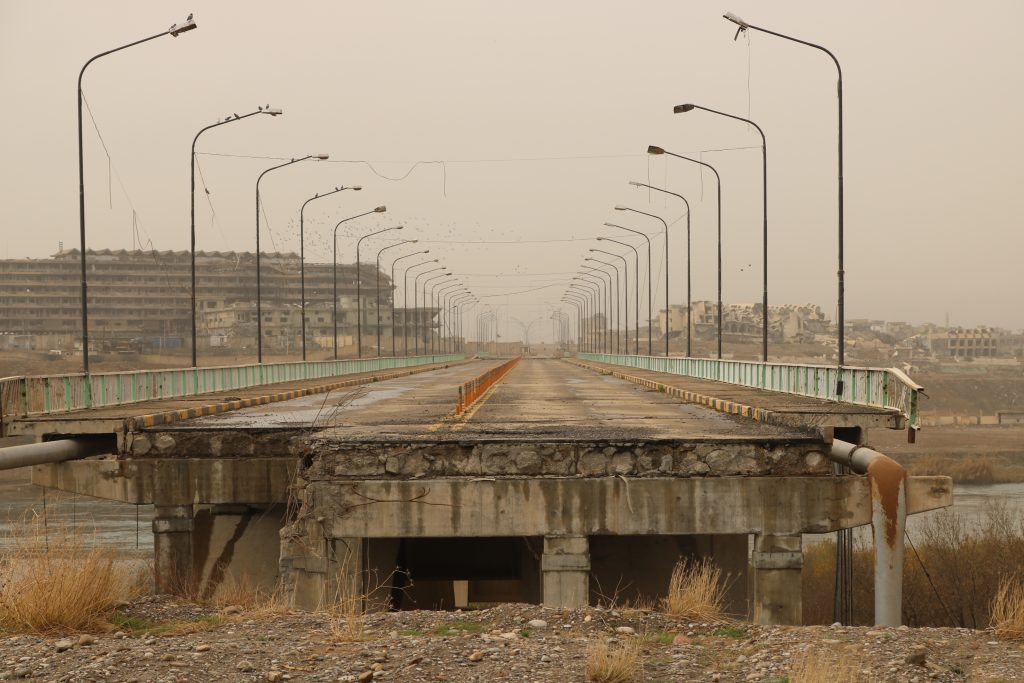
The Al-Shohada Bridge in Mosul, Iraq, which was destroyed during ISIS’ occupation of the city. Credit: Nils Mallock
After finishing my undergraduate studies in Germany, I moved to Lebanon to work as a researcher for the Konrad Adenauer Foundation’s Syria/Iraq office, as I was learning Arabic and interested in the dynamic politics of the Middle East. Seeing the effects of conflict first-hand made me want to understand how these conflicts emerge and what drives people to participate in them. I realised that everyone talks about political conflicts at a very structural and abstract level, looking at group dynamics, demographic changes, and social movements, but that this does not really explain why, among people in the same environment, some people embrace political violence, others embrace activism, and the vast majority do not even engage at all. There are clearly individual factors at play, but we don’t understand them robustly, especially in harder-to-access places, such as in conflict-affected regions, where insights are probably most valuable.
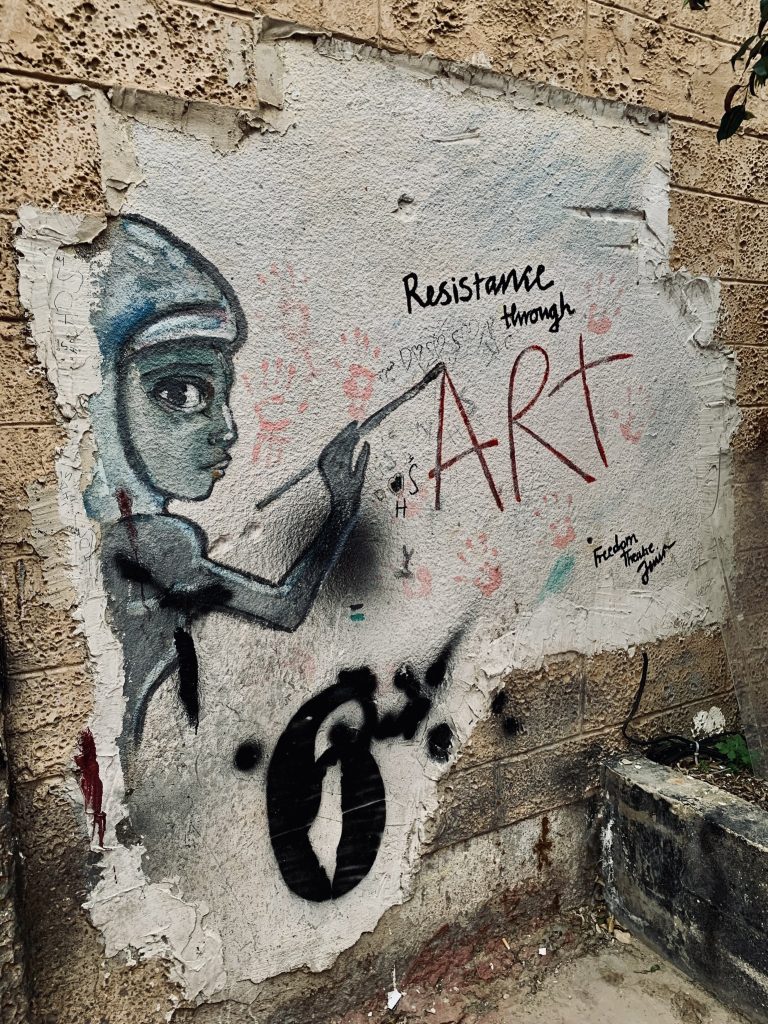
A display of art-based cultural and political action in Jenin Refugee Camp, West Bank. Credit: Nils Mallock
This interest led me to my PhD with the London School of Economics and Political Science (LSE), which examines the psychological motivations for violent versus peaceful political action in what I call ‘high-stakes’ environments. This can mean conflict-affected contexts, but also could be in countries with authoritarian governance. These high-stakes environments make it drastically more risky or costly for individuals to take even peaceful political action. I’m interested in what causes people to overcome these (seemingly) rational barriers and engage, especially for more radical and extreme political actions. This means asking: what psychological motivations are strong enough for people to ignore these costs and risks?
My PhD investigates this through quantitative studies in Iraq, Syria, Lebanon, Israel, and the Palestinian Territories, supplemented by interviews with activists and members of armed groups. For example, one study examined the effect of geographical proximity to Israeli settlements in the West Bank on different forms of protest behaviour. This study found that the mere presence of these settlements caused a shift towards participation in higher-risk action and away from lower-risk forms of protest.1
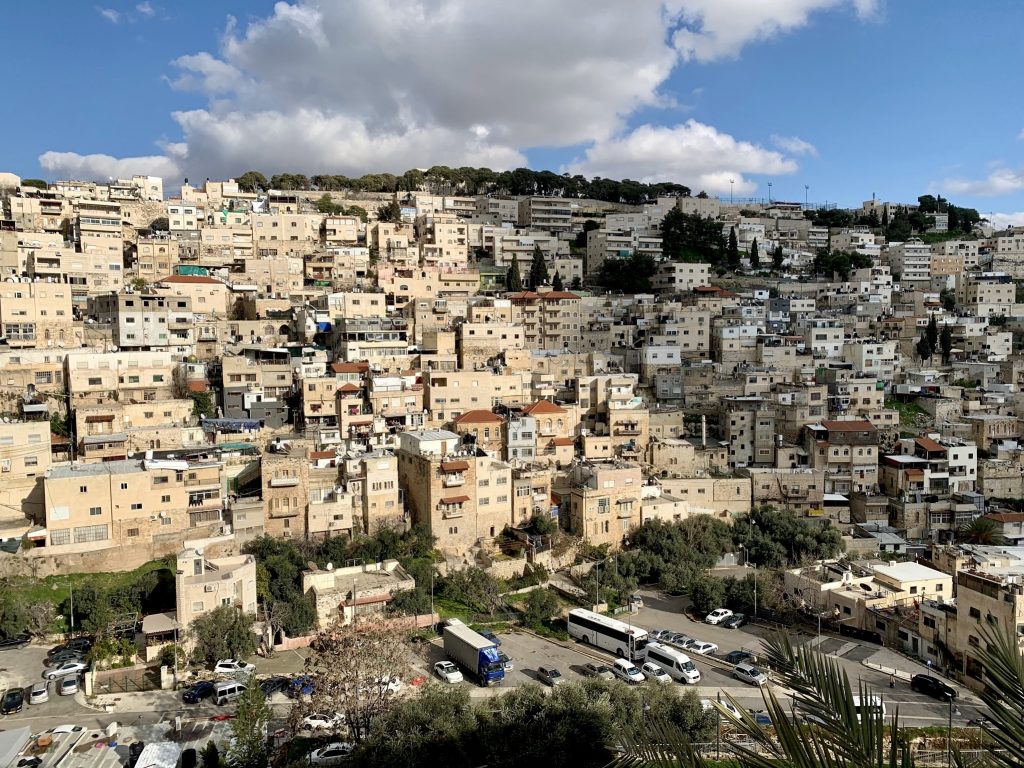
Silwan district in East Jerusalem. The predominantly Palestinian community is the site of intense land disputes, forced evictions and construction of Israeli settlements. Credit: Nils Mallock
I’m currently working on an XCEPT article, joint with my PhD at LSE, in which we report a series of experimental studies that I conducted in collaboration with civil society organisations and universities across seven locations in Iraq. These explored the role of uncertainty on political radicalism and activism. Previous studies have shown that, when someone’s sense of self is threatened, this creates feelings of uncertainty which often leads the person to act defensively. Interestingly, this defensiveness can manifest in expressing stronger opinions and extreme views about things that are completely unrelated.
For instance, if I lose my job, and that is central to my identity, I may try to compensate for that by expressing more extreme political opinions on controversial issues like abortion rights or discrimination against other groups, because this provides a feeling of certainty about my world view and restores a sense of unique identity. However, it wasn’t known at the time whether this mechanism extended also to intentions to actually act on those political beliefs. On top of that, we didn’t know whether this applied in conflict-affected settings, where uncertainty is generally higher.
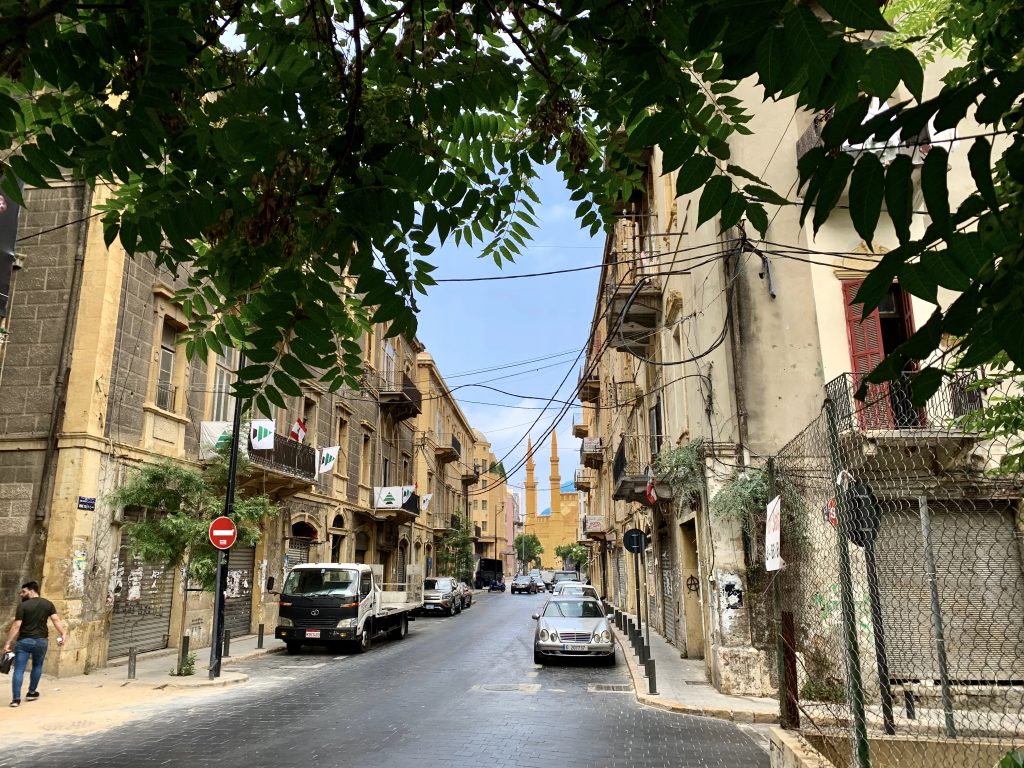
View onto Mohammad Al-Amin Mosque in Beirut, Lebanon. Credit: Nils Mallock
In our studies, participants were exposed to feelings of uncertainty, through an exercise in which they reflected on their own mortality. Their intentions to take different kinds of political action were then measured. What we found is that the people exposed to feelings of uncertainty were more willing to engage in political action, and especially in radical actions compared to more moderate activism. However, this was not the case when the participants were given another opportunity to restore their self-certainty – by reflecting on and writing a short text about something particularly meaningful to them – before measuring their intentions. Interestingly, we found some evidence that those measuring higher in emotional stability were in general not responding to those mechanisms. These findings could give some initial insights to help design targeted psychological interventions to support social reconstruction efforts in conflict-affected regions.
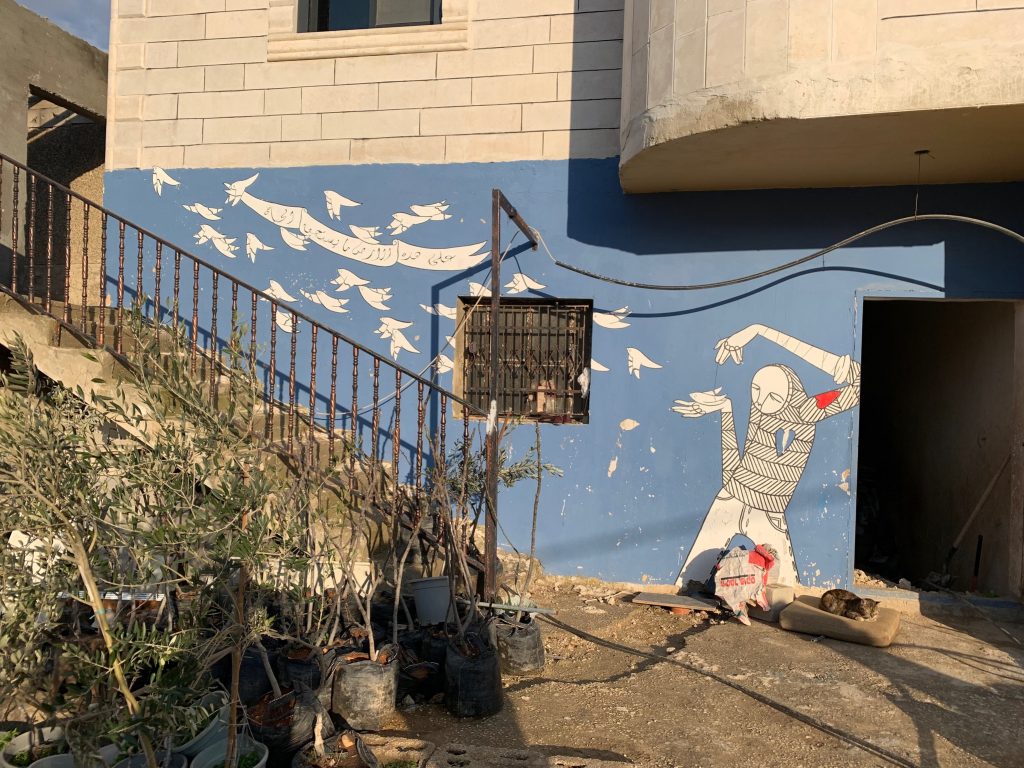
Street advocacy by Palestinian activists in South Hebron Hills, West Bank. Credit: Nils Mallock
My colleagues and I on the XCEPT project are going to conduct a comprehensive study in Iraq to understand causal mechanisms of intergroup conflict and, as importantly, pathways for reconciliation and peacebuilding between former or current conflict groups. Intervention studies have already been done in other complex settings, such as in the Israel-Palestinian conflict, but this kind of research is actually rare in Iraq. This is partly because it’s harder to access as a research population, especially with surveys of this scale.
What we will do is test several psychological interventions promoting reconciliation between groups, working with local partners and civil society organisations. For example, one intervention will aim to counter false perceptions of the outgroup as being ‘fixed’ and inherently incapable of change, which can be an obstacle for successful reconciliation. Then we will compare the different interventions in what’s called a ‘tournament’ study design, where the most successful intervention from this stage will be taken forward with participants from all over Iraq, including many of those taking part in our IoTS.
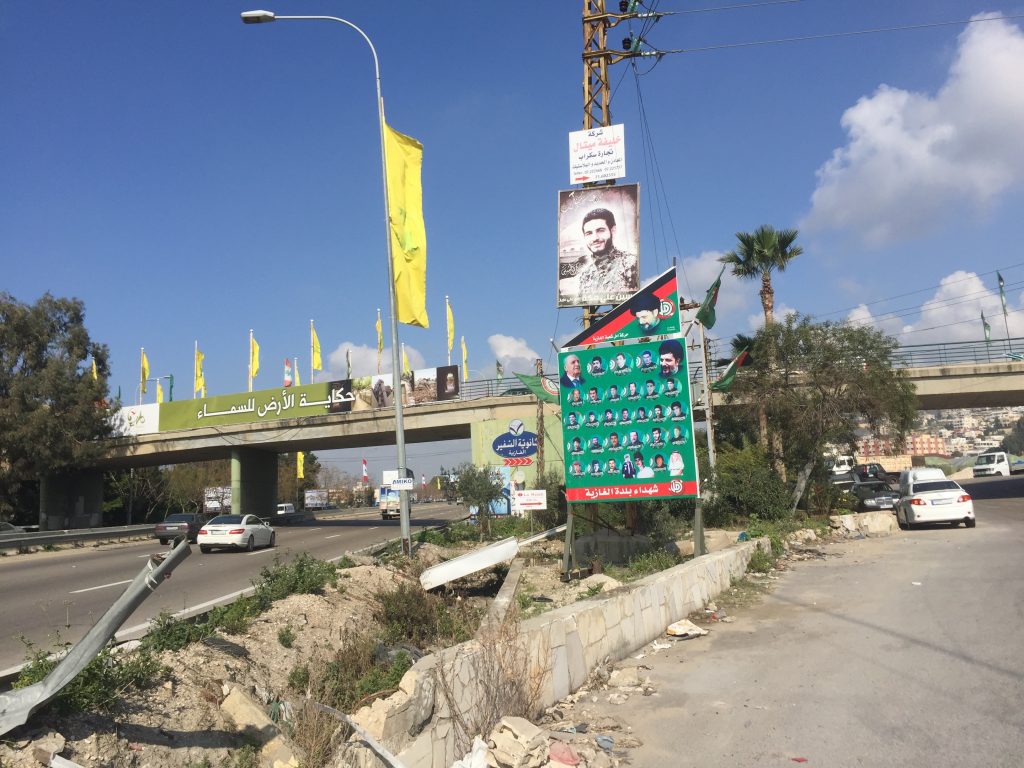
Banners in South Lebanon displaying members of political parties and militias. Credit: Nils Mallock
This will allow us to look at how different characteristics identified in our IoTS, such as mental health or personality traits, influence responses to the intervention. We will also target these interventions to their specific context within Iraq by working with local experts and advisors to make sure the materials are relevant to the different groups, and this will be interesting because it’s quite novel to do this kind of work.
The intervention study will be highly innovative research pushing into new territory. This is because it is being run in Iraq, which is rare, and because it will directly compare multiple interventions on a large-scale with a highly diverse sample. The overall goal is to identify causal mechanisms of conflict reconciliation and the improvement of intergroup relations. The big benefit of this study is that it involves measuring the intentions of the participant before and after the intervention. This will help practitioners, who are signalling strong demand for insights into what efforts might be effective to build social cohesion in a post-conflict setting.
This Q&A was originally published on the ICSR website.
Doing research in conflict-affected areas carries particular challenges and risks. In this video edition of the podcast, researchers working in borderland regions of Asia, the Middle East and Africa share their experiences and approaches to conducting fieldwork. Key challenges include engaging with diverse actors, maintaining local networks, and establishing trust with respondents. Our experts also share their thoughts on researchers’ positionality in the bigger picture of conflict response and reduction, and how the pandemic has enabled us to think about data collection in new ways.
This episode features:
Joseph Diing Majok, an anthropologist and researcher at the Rift Valley Institute in South Sudan. His work is focused on the borderland regions between Northern Bahr el-Ghazal state in South Sudan, and Darfur and Kordofan in Sudan.
M Seng Mai and Hkawng Yang Madang from Kachinland Research Centre in Northeastern Myanmar at the border with China. Their recent fieldwork examines the nexus between post-coup conflicts and illicit activities in Kachin State, focusing on the impacts on borderland communities.
Kheder Khaddour, a non-resident scholar at the Malcolm H. Kerr Carnegie Middle East Center in Beirut. His research centres on civil-military relations and local identities in the Levant, with a focus on Syria.
Tabea Campbell Pauli is a senior programme officer with The Asia Foundation’s XCEPT programme, and can be reached at [email protected]. The views and opinions expressed here are those of the authors, not those of The Asia Foundation.
They are a group of Lebanese muscular tattooed men dressed in uniform black t-shirts, some of them heavily bearded, and carrying provocative religious iconography and symbols.[i] They are not Muslims, but Christians. They call themselves Jnoud al-Rab (Soldiers of God) and lead their own political, religious, and spiritual uprising, guided by the word of Jesus Christ as they interpret it.[ii] Their coat of arms is shown on their cars, mopeds, and t-shirts: a picture of the wings of Saint Michael the Archangel and a shield decorated with the cross of Jesus Christ, all sitting above the Holy Bible.[iii]
Soldiers of God claims that it carries out the teachings of Jesus Christ and is entrusted with his commandments. It defines itself as neither a party nor an organisation, but a militia group formed with the aim of protecting Christians and offering reassurances to residents worried about rising levels of crime – including armed robberies, carjackings, handbag snatches, and the theft of internet and telephone cables – in the majority Christian neighbourhood of Achrafieh in Beirut.[iv]
Self-security in Beirut is already a concern as Hezbollah conducts security patrols, checks the identities of passing citizens, interferes in the movements of the Lebanese security services, and blocks journalists from moving freely in the areas under its control.[v] The rise of far-right Soldiers of God has raised fears that Achrafieh will join this self-securitisation and paramilitary policing phenomenon, bringing Beirut back to the time of the Lebanese civil war (1975-1990) when the state collapsed, militants controlled the streets, and the city was ideologically divided into the Christian East and Muslim West. These fears are increasing in light of the ongoing political paralysis and economic depression that has afflicted Lebanon since 2019, which crippled the state apparatus and is fuelling poverty in the worst shock since the civil war.[vi]
Read the full article here, originally published on the ICSR website.
[i] L’orient Today (2022) Who are Achrafieh’s Soldiers of God? [Online] available from https://today.lorientlejour.com/article/1304447/who-are-ashrafiehs-soldiers-of-god.html
[ii] Soldiers of God (2023) [Facebook] 25 July 2023. Available at https://www.facebook.com/photo/?fbid=670093338494283&set=a.628163606020590
[iii] Ibid.
[iv] Jnoud El Rab (2023) About Us [online] available at https://www.jnoudelrab.com/about-us/;
Reuters (2022) Beirut neighbourhood watch echoes troubled past [online] available at https://www.reuters.com/world/middle-east/beirut-neighbourhood-watch-echoes-troubled-past-2022-11-27/
[v] AlHurra (2022) The Eyes of Achrafieh… guardian angels or an introduction to self-security and division in Beirut? Translated by El Kari, Mohamad. [Online] available at https://bit.ly/3wysNVf
[vi] Ibid.
Dr Nafees Hamid interviews Dr Hannes Rusch about his work examining the ‘logic’ of intergroup conflict.
Dr Rusch talks us through the basic models which explain why groups might choose conflict, and highlights key questions that remain unanswered by the research.
You can also listen to the King’s College London War Studies podcast on their platform, where this episode was originally published.
In this episode, Dr Costanza Torre and Dr Fiona McEwen discuss XCEPT’s research in South Sudan, which aims to understand how experiences of conflict may lead someone to engage in violent, instead of peaceful, behaviour. They discuss the importance of hiring local researchers, the challenges of carrying out research in South Sudan, and how mental health disorders may be understood differently in South Sudan.
*This episode was recorded in early March 2024, before the recent escalation of violence in Sudan.
‘Resilience’ has become a buzzword in the field of countering violent extremism (CVE), but how useful is it?
In this episode, Federica Calissano interviews Dr Nafees Hamid about the benefits and drawbacks of CVE initiatives which focus on building resilience to violent extremism.
You can also listen on the King’s College London War Studies podcast channel, where this episode was originally published.
Read Federica’s XCEPT blog post: What do we mean when we talk about ‘resilience’ to violent extremism?
In recent years, numerous citizens of the KRI have lost their lives trying to cross the English Channel in small boats. Many people moving from the region to Europe and the UK since 2014 have done so in response to corruption and political conflict in the Kurdistan Region of Iraq (KRI). Since its creation in 1991 with the support of the US and the UK, the KRI has been under tight control of two main parties: the Patriotic Union of Kurdistan (PUK) and the Kurdistan Democratic Party (KDP). Ruling the region through a duopoly, the PUK/KDP have provided little power, resources and economic opportunities to citizens who fall outside their own clientelist and patronage networks.
Party dominance and corruption, combined with years of conflict over resource-sharing with the central government in Baghdad, have compounded the KRI’s financial and economic crisis and generated strong incentives for the region’s citizens to migrate using available smuggling networks. The KRI is riddled with active smuggling networks that make it possible for citizens from the region to invest their entire life savings in the hope of relocating to the UK to begin anew, highlighting the deep-seated desire for change and a better life away from the systemic issues plaguing their homeland.
Chatham House XCEPT research highlights the involvement of both local and international actors in a complex web of human smuggling, which capitalizes on the desperation of individuals seeking better lives. This transnational network exacerbates the plight of its victims, exploiting their circumstances for profit. The recent arrests have once again brought to light the issue of Kurdish migration, which for years has been driven by political corruption and conflict within the KRI, facilitated by transnational networks.
Read the full blog here, originally published on the Chatham House website.
I just came back from the 2024 Stockholm Forum on Peace and Development hosted by SIPRI. It was a stimulating event, replete with doom and data, attended by a throng of practitioners, activists and researchers, many doing remarkable things to put our fractured world to rights.
I was there with Simon Long’oli, Director of the Karamoja Development Forum, a community organisation in northern Uganda, where violence is an everyday reality. Simon and I were there to provoke colleagues on their notions of what constitutes good evidence in situations of violence and conflict.
We were arguing that community action research offers not only deep insight but also reaches the parts other research doesn’t reach. We were being cheeky, because we know that good qualitative and quantitative research has the capacity to be pivotal too. Nonetheless, in our experience, traditional research often does little to bring the community onside. What’s missing is research that systematises the knowledge and political energy of the people who suffer the violence.
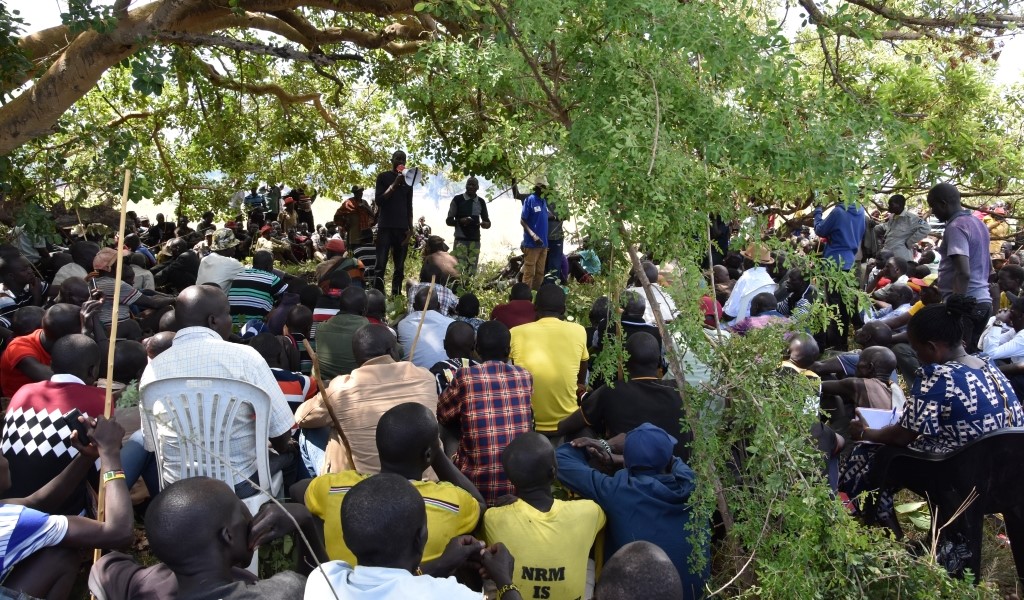
Take Roger Mac Ginty’s idea of ‘everyday peace’. It’s not less important because it’s every day, but more important because it’s the way in which situations of peace or insecurity come into being. If people’s efforts to make life safe and productive are well enough organised and powerful enough, then the place and people will be at peace. If they are constantly thwarted, then their distrust of the authorities and politicians will put them on the defensive – every day. More foot soldiers, more crime, more despair.
At least that is what Simon and his community colleagues found when they led community action research on the Uganda-Kenya border.
To read the full blog, visit the IDS website, where this was originally published.