


 Flickr Creative Commons License/ AMISOM Public Information
 Lead researcher: Peer Schouten
Partner: Danish Institute for International Studies (DIISs
Duration: November 2025 – October 2026
Countries: DRC, Libya, Uganda, Rwanda, Sudan, South Sudan, Yemen, Myanmar
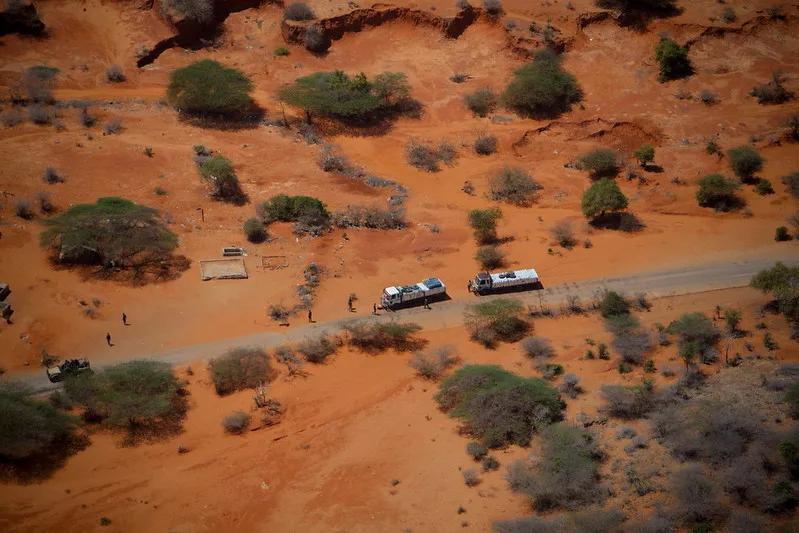
TRACE examines how checkpoints in conflict affected borderlands shape – and are shaped by – shifting forms of authority, trade flows and local moral economies. Combining participatory mapping, interviews and commodity chain analysis, the project develops and tests a typology of checkpoint governance across two workstreams: an in-depth case study in eastern Congo and comparative studies in other border regions. TRACE illuminates how roadblocks redistribute rents, negotiate protection and influence political ordering, while a dedicated uptake stream ensures the findings inform more nuanced humanitarian, diplomatic and development responses.
Scholars engaged under this workstream:
- Abubaker Lndi
- David Mansfield
- Ibrahim Jalal
- Joshua Craze
- Olivier Walther
- Xu Peng
For more information regarding this research, contact [email protected]