In this episode of the NUPI podcast The World Stage, Dr Cedric de Coning from the Norwegian Institute of International Affairs (NUPI) takes listeners into the heart of the Lake Chad region and into a two‑year research project Managing climate, peace and security risks from the borderlands of the Lake Chad. Joined by Freedom Onuoha from the University of Nigeria, and Thor Olav Iversen and Andrew E. Yaw Tchie from NUPI, they explore how the Regional Strategy for Stabilization, Resilience and Recovery (RS‑SRR) is being used to address climate‑related conflict risks.
Watch the podcast episode below, or listen on Spotify, Apple podcasts or Acast
The Rwandan Civil War (1990-1994), which was fought between the army and the Rwandan Patriotic Front (RPF) rebel group, was rooted in long-standing tensions between the two main ethnic groups in Rwanda, the Tutsis and the Hutus. The four-year conflict saw the RPF, a group primarily made up of Tutsis who had fled the country when the Hutu government came into power, clash with the government’s armed forces, and eventually culminated in the Rwandan genocide: a three-month period during which extreme Hutus massacred over 800,000 Tutsis and moderate Hutus[i]. In the aftermath of the civil war, the new Tutsi-led government sought to overcome these divisions by creating a unified identity. They proclaimed that there were no Hutus or Tutsis, only Rwandans.
Identity can play a key role in the origins, dynamics, and outcomes of a conflict. Intergroup conflicts can often be traced back to, or exacerbated by, people segregating their personal and their group’s identity from that of the group they are in conflict with. As the barriers between groups are defined, favouritism and superiority are often accredited to members of the ingroup, and there is greater exclusion of the outgroup group. When this occurs in combination with political divides, instability, or a perceived threat, it can increase hostility[ii] .On the other hand, promoting a common identity or encouraging identification with a benevolent group can be useful tools to promote post-conflict reconciliation. Understanding how identity can drive people towards reconciliation or radicalisation can help guide efforts to achieve post-conflict stability.
Group identity
As identity can cause division between groups, one strategy used to promote reconciliation in the aftermath of a conflict is ‘recategorisation’. This focuses on creating an all-encompassing larger group categorisation that both sides can identify with. The theory is that, by including the outgroup in a shared identity, the favouritism saved for those seen as members of the ingroup will be extended to include the outgroup[iii] .As noted above, reconstructing the national Rwandan identity was one way in which the Rwandan government sought to foster reconciliation following the end of the civil war. Ethnicity was removed from identity cards, and any mention of ethnic groups and identities was banned in the public sphere[iv] .Although enforcing this shared identity encouraged people to move beyond intergroup antagonism, it proved to be an ineffective method to promote reconciliation, as it limited freedom of discussion, and denied both sides the opportunity to express their grievances[v] .Recategorisation strategies often favour the dominant group, who want to focus on similarities, but they can cause difficulties for the disadvantaged group, who are denied opportunities to highlight power differences and systemic injustices. One study conducted with ‘survivors’ and ‘non-victims’ of the Rwandan genocide in 2009 found that, while the groups did not differ in their level of identification with the nation, the non-victim (i.e. dominant) group were more willing to reconcile than members of the survivor group[vi].
Dual identity
Depending on the situation, it is also unrealistic to assume people will be open to replacing one closely held identity with an entirely new, more inclusive one. In some circumstances, it can be more feasible to reframe people’s ideas of their identity by instead encouraging them to hold a dual identity. A dual identity means someone can retain their original identity, but, at the same time, adopt a second more inclusive identity, and it allows for recognition of both the similarities and differences between groups. This was studied in America by asking white Americans about their opinions on policies that were more favourable for ethnic minorities. Those who felt more strongly about their dual identities – identifying as Americans and with their ethnicity group – were more supportive of the policies than those who had more of a connection to their ethnicity than their American identity[vii]. Research in the case of migrants has also found that, when individuals identify with both their minority ingroup and their society of residence, it constrains politicisation, encouraging nonviolent forms of political action that are more likely to be widely accepted as legitimate. When two identities are incompatible, however, there is a risk this could encourage political radicalisation. In such cases, the dominant group has a responsibility to welcome the differences within a dual identity as a ‘promising contribution to a pluralistic society’, rather than treating them as a liability[viii].
Identity fusion
Aspects of identity can also fuel extremist behaviour when someone’s personal identity becomes intertwined with that of the group they are a member of. As the identities merge, people begin to view attacks on their group as a personal attack on them. This gives people a sense of responsibility for the group’s wellbeing and makes them more willing to fight back, give support, and risk themselves for the benefit of the group[ix]. It provides feelings of strength and immunity for the individual when they’re acting on behalf of something larger than themselves. The influence identity fusion can have on a person’s behaviour was analysed in a study on self-sacrificing behaviour in Spaniards. The participants’ fusion with their national identity was measured, and they were presented with a hypothetical situation and asked about their willingness to die to save multiple other lives. Those who were more strongly fused with their Spanish identity were more likely to sacrifice themselves for the ‘ingroup’ (fellow Spaniards), but not for the ‘outgroup’ (Americans)[x]. Having a strongly fused identity does not just encourage people to engage in radical or violent behaviour, however. If an individual’s identity becomes closely connected with a different group or with family members that do not take part in radical behaviour, it has the capability to move people towards more peaceful actions. One study in Spanish prisons with Latino gangs found fusion with one’s family helped to protect against radicalisation and prompted people to move away from more radical groups and behaviours[xi].
Conclusion
Exploring the role identity can play in encouraging reconciliation or radicalisation can provide insight into how to mitigate violence in a post-conflict setting. The influence of this factor is highly context dependent, so understanding the intricacies of a conflict is essential to being able to appropriately apply these theories. Interventions aimed at promoting a shared identity and fusion with an alternative identity could aid in the reconciliation process as long as they are adapted for each individual situation. If not, they could have the opposite effect and exacerbate the issue.
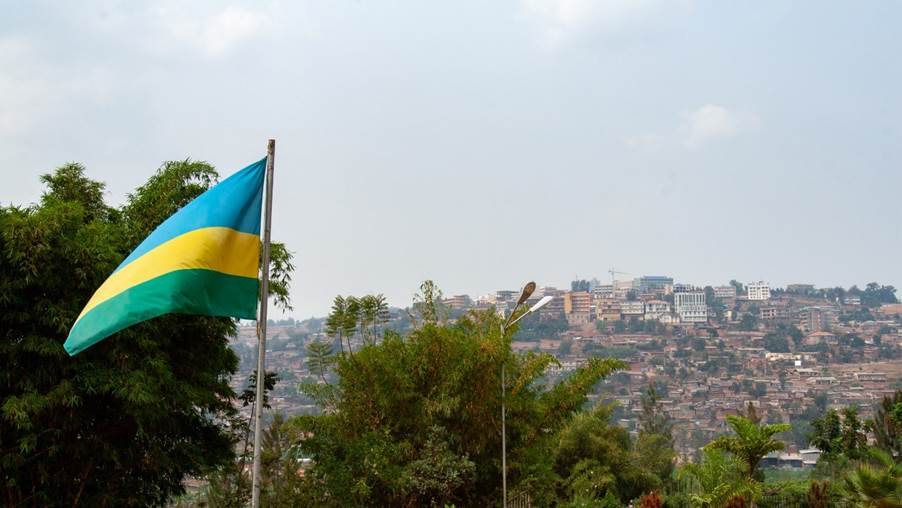
Rwandan flag waving at Kigali Genocide Memorial (August 8th 2008). Credit: MilanoPE / Shutterstock.com
[i] Sentama, E. (2022). National Reconciliation in Rwanda: Experiences and Lessons Learnt. European University Institute.
[ii] Brewer, M. B. (1999). The psychology of prejudice: Ingroup love and outgroup hate?. Journal of Social Issues, 55(3), 429-444. https://doi.org/10.1111/0022- 4537.00126
[iii] Gaertner, S., Dovidio, J., Nier, J., Banker, B., Ward, C., Houlette, M., & Loux, S. (Eds.) (2000). The common ingroup identity model for reducing intergroup bias: Progress and challenges. SAGE Publications Ltd. https://doi.org/10.4135/9781446218617
[iv] Kanazayire, Clémentine, Laurent Licata, Patricia Mélotte, Jean Pierre Dusingizemungu, and Assaad E. Azzi. “Does Identification With Rwanda Increase Reconciliation Sentiments Between Genocide Survivors and Non-Victims? The Mediating Roles of Perceived Intergroup Similarity and Self-Esteem During Commemorations.” Journal of social and political psychology 2, no. 1 (2014): 489–504.
[v] Staub, E. (2014). The challenging road to reconciliation in Rwanda: Societal processes, interventions and their evaluation. Journal of Social and Political Psychology, 2(1), 505-517. https://doi.org/10.5964/jspp.v2i1.294
[vi] Kanazayire, Clémentine, Laurent Licata, Patricia Mélotte, Jean Pierre Dusingizemungu, and Assaad E. Azzi. “Does Identification With Rwanda Increase Reconciliation Sentiments Between Genocide Survivors and Non-Victims? The Mediating Roles of Perceived Intergroup Similarity and Self-Esteem During Commemorations.” Journal of social and political psychology 2, no. 1 (2014): 489–504.
[vii] Huo, Y. J., Smith, H. J., Tyler, T. R., & Lind, E. A. (1996). Superordinate identification, subgroup identification, and justice concerns: is separatism the problem: Is assimilation the answer? Psychological Science, 7(1), 40- 45. https://doi.org/10.1111/j.1467-9280.1996.tb00664.x
[viii] Simon, B., Reichert, F., & Grabow, O. (2013). When Dual Identity Becomes a Liability: Identity and Political Radicalism Among Migrants. Psychological Science, 24(3), 251-257. https://doi.org/10.1177/0956797612450889
[ix] Gómez, Á, Brooks, M. L., Buhrmester, M. D., Vázquez, A., Jetten, J., & Swann, W. B., Jr. (2011). On the nature of identity fusion: Insights into the construct and a new measure. Journal of Personality and Social Psychology, 100(5), 918-933. https://doi.org/10.1037/a0022642
[x] Buhrmester, M., & Swann, W. (2015). Identity Fusion. In Emerging trends in the social and behavioral sciences: An interdisciplinary, searchable, and linkable resource. John Wiley & Sons; Swann, William B., Ángel Gómez, John F. Dovidio, Sonia Hart, and Jolanda Jetten. “Dying and Killing for One’s Group: Identity Fusion Moderates Responses to Intergroup Versions of the Trolley Problem.” Psychological science 21, no. 8 (2010): 1176–1183.
[xi] Gómez, A., Atran, S., Chinchilla, J., Vázquez, A., López-Rodríguez, L., Paredes, B., … & Davis, R. (2022). Willingness to sacrifice among convicted Islamist terrorists versus violent gang members and other criminals. Scientific Reports, 12(1), 1- 15. https://doi.org/10.1038/s41598-022-06590-0
Across Myanmar and its neighbouring borderlands, protracted conflict, sanctions regimes, illicit economies and gendered forms of agency continue to shape political order and everyday life. These border regions are characterised by overlapping authorities, militarised governance, fragmented markets and the circulation of goods, capital and people through both formal and illicit channels. Understanding how local actors adapt to sanctions, financial oversight, armed conflict and gendered constraints is vital for informing more effective policy responses.
XCEPT’s research on Myanmar and its neighbouring borderlands brings together four projects that examine how conflict actors navigate sanctions, how financial flows from borderland economies move through regional hubs, and how gendered norms create both obstacles and openings for women’s political and economic influence. These projects analyse how conflict economies evolve under international pressure, how anti‑money‑laundering and counterterrorism financing frameworks affect borderland financial networks, and how women in militarised borderlands shape governance, mobility and local security.
The projects
Sanctions and Conflict Economies in the Borderlands of Myanmar and Somalia
This project examines how borderland conflict actors adapt to increasingly targeted sanctions and how these adaptations affect local communities.
This study investigates how regional financial hubs such as Accra, Nairobi and Bangkok interact with illicit financial flows from conflict‑affected borderlands, and how AML and CFT frameworks can strengthen oversight and disrupt conflict‑linked networks.
Gendered authority and feminist agency across the Myanmar‑Bangladesh Rohingya borderlands
This project explores how women involved in border monitoring, armed groups, security structures and civil society navigate contradictory gender expectations to exert influence over territorial control and political economies.
Gendered frontlines: Structural disjunctures and women’s agency in the Indo-Myanmar borderlands
This project examines how women in the militarised Indo–Myanmar borderlands strategically exploit contradictions between overlapping gender systems to reshape conflict dynamics.
Across the Horn of Africa, shifting political centres, digital infrastructures, urban governance, historical state formations, and gendered forms of authority are reshaping how power is organised and contested. XCEPT’s 2026 research in the Horn of Africa brings together five studies that examine these dynamics across Sudan, South Sudan, Ethiopia, Somalia, and Somaliland.
The projects explore how historical legacies, new economic and geopolitical hubs, digital innovation, emerging urban centres, and women’s grassroots leadership are transforming political order across the region.
The projects
Historical and contemporary centers of power in Sudan
A study examining how historical state formation and shifting centres of authority in the greater Nile Valley help explain contemporary and future patterns of fragmentation.
Shifting centres & geopolitical futures of the Horn’s subnationalisms
Research on how emerging hubs such as Semera, Port Sudan, and Berbera are transforming political authority, investment dynamics, and centre–periphery relations.
Contested digital sovereignty in Sudan and Somali Horn of Africa
An examination of how digital innovation hubs and connective infrastructure shape state capacity and political contestation in fragmented contexts.
Beyond state fragmentation: How emerging urban centres are reshaping political order in Somalia
A study analysing how cities such as Garowe, Baidoa, Las Anod, and Kismayo act as quasi‑sovereign authorities through control over mobility, verification, and extraction.
Embodied Knowledge and Feminist Agency in a South Sudan borderland
Research examining how the Kabarze movement of older Murle women in Greater Pibor challenges invisibility in conflict‑affected borderlands and asserts culturally grounded moral authority.
Across the Levant, economic pressures, climate stress, and shifting political and security dynamics are transforming the way borderlands function. Fragmented governance, long‑running conflict, and illicit cross‑border flows continue to shape livelihoods and state authority along the region’s key frontiers, from the Syria–Iraq and Lebanon–Syria borders to Yemen’s coastal zones. Understanding these changes is essential for developing policies that support stability, formal trade, and climate resilience.
XCEPT’s Levant research brings together three projects that examine how border governance, climate‑driven adaptation, and illicit networks intersect across Iraq, Syria, Lebanon, and Yemen. The projects explore practical pathways for more coordinated cross‑border commerce, assess how drought and livelihood strain influence informal and illicit trade, and analyse how evolving smuggling networks reflect wider geopolitical transformations. They offer a grounded picture of the forces reshaping borderland economies and political orders in the Levant.
The projects
The Levant corridor: Policy pathways for rebuilding cross‑border commerce
This project develops policy tools that support gradual economic reintegration across the Levant Corridor by strengthening cross‑border regulation, customs coordination, and key trade mechanisms.
Fragile borderlands: Drivers of drought adaptation and instability in MENA
This project examines how drought‑driven livelihood pressures reshape informal and illicit trade in food, fuel, livestock, and water, and how these networks can either support climate adaptation or increase insecurity.
Illicit networks in the Levant: Political and economic implications in a post-war order
This project investigates changing patterns of smuggling and illicit trade, analysing how they reflect broader political shifts, weakened state structures, and transnational economic networks.
Centring local knowledge and voices is key to conducting impactful research. On the Cross-border Conflict, Evidence, Policy and Trends (XCEPT) research programme, we are collaborating with South Sudanese poet, Peter Kidi. His poetry highlights the human experience behind many of the themes we explore on XCEPT – including the effect that material factors like food insecurity have on undermining social structures and community relationships – provoking all of us to think more deeply about the reality of our research.
Around the world, governments are slashing aid budgets in favour of increased spending on defence. These cuts have had a devastating impact on the provision of humanitarian services in many parts of the world, and experts warn that this could cause millions of avoidable deaths.[i] In Kakuma camp – Kenya’s second largest refugee camp – a new system of aid delivery, known as Differentiated Assistance, has been introduced in response to the cuts. This system is not just denying people access to food, but is stripping away their sense of agency. As parents face the heartbreaking reality of not being able to feed their children, it is having a significant impact on mental health, family structures, and family cohesion.
The aid cuts in Kakuma
USAID had funded over two-thirds of refugee food aid in Kenya, and Kakuma’s population felt the brunt of the cuts almost immediately. Faced with a severe funding shortfall, the World Food Programme (WFP) and UNHCR halted the Bamba Chakula cash transfer initiative, and, in an attempt to ensure that the most vulnerable continued to receive aid, they introduced the Differentiated Assistance framework.[ii] Under this system, households have been placed into categories of ‘need’, according to their perceived vulnerability. Households in categories 1, 2, and 3 are entitled to receive food rations at 55 percent, 35 percent, and 20 percent of the recommended minimum food basket respectively. Those in category 4 are deemed to have the ability to meet basic needs and so receive nothing.
The WFP and UNHCR have since reintroduced Bamba Chakula for those in categories 1, 2, and 3, but there are concerns about the reliability of the categorisations.[iii] There are also some households that have not yet been categorised or who have found themselves removed from the system in the second cycle. Not only this, but the assumption that those who don’t receive aid can find other sources of income is troubling. It is very difficult to find work in Kakuma, and the new system is exacerbating the problem. Although Differentiated Assistance was introduced in response to the funding cuts, it is also part of the Kenyan government’s longer-term strategy to promote self-reliance amongst refugees.[iv] Yet, when assistance is reduced, it also reduces purchasing power.[v] This means that local traders in Kakuma can no longer rely on customers, which undermines their ability to be self-reliant.
Peter Kidi, observational poet
Peter is 24 years old and was born in Kakuma after his family fled their home in what is now South Sudan, during the second Sudanese Civil War (1983 – 2005). A self-taught poet, he has spent the last ten months documenting the reality of the aid cuts on the ground in Kakuma. Peter spends much of his time observing, listening, and reflecting upon what he sees and hears in ‘normal’ spaces in the camp, such as in the market, the street, and within his own family. He has recently been working on a collection of poems focused on fatherhood, showing how the cuts have increased the difficulties of being able to fulfil the expected social role of being a father. One of his poems that highlights these difficulties is The father who stopped building.
The father who stopped building
Before the dust and the borders,
his hands could tame timber,
nails bent to his will,
and walls stood because he told them to.
He was the kind of man
whose shadow looked like a scaffold,
and every house he raised
was a promise to his children
that they would always be safe.
Now,
he sits in the shade of a leaning shelter,
eyes fixed on something only he can see.
The hammer sleeps under his bed,
its handle cracked and thirsty,
its head cold with silence.
I’ve seen him watch
the wind pull at the plastic walls,
as if the gusts are old friends
reminding him of roofs he once built
roofs that kept rain from his children’s beds,
that held the sound of their laughter inside.
But here,
there is no wood worth cutting,
only thin poles,
plastic sheets that rip in the sun,
and rations that feed the body
but starve the pride.
He can no longer build them a home,
only watch the years
and the dust settle around them.
At night, they say,
he dreams in brick dust,
hears the rhythm of nails finding home,
and builds a house in his sleep
with doors wide enough
to let his children run through laughing,
and his manhood
walk in after them.
Expectations of fatherhood in Kakuma
Understandings of fatherhood vary cross-nationally, but a traditional gendered order is the norm amongst populations in Kakuma camp, who predominantly come from South Sudan, Burundi, and the Democratic Republic of Congo.[vi] In this context, the father is associated with being the provider of resources, while mothers are associated more directly with the caring and nurturing of children.[vii] Fatherhood is also traditionally aligned with being the ‘protector’ of the family: within the home, from economic hardship, and from security threats.[viii] In addition to providing for the family, fathers are expected to give advice, love, and guidance to their children, whilst also being a role model to their male children.[ix] Importantly, a father is supposed to be able to provide additional support if a child is sick or if there is an emergency.[x]
Perpetuating tensions in the home
In Kakuma, the ability of men to carry out these roles has already been undermined by the government’s encampment policies which have created a dependency on aid among the camp’s residents.[xi] Following the aid cuts, the situation has been exacerbated, and this is having a negative impact on both the men and their families. The inability to fulfil the ‘breadwinner masculinity’ role has caused many men to feel powerless, useless, or as though they lack agency – and with this comes a fear of losing one’s family. [xii] Within the traditional gendered order in Kakuma, having a ‘useless’ husband is viewed by many as a legitimate reason for a woman to leave her husband and seek out someone who can better provide for her children.
In an attempt to fulfil their expected roles, some men have sought to migrate to neighbouring countries to find work, while others have attempted to make the perilous journey north in an effort to get to Europe. These efforts to provide for their families serve only to distance fathers from their children, and this can have far-reaching consequences. Research conducted with Syrian refugee children found that those children whose fathers were absent had higher levels of depression symptoms and lower self-efficacy and self-esteem, indicating there had been significant disruption to their development.[xiii]
The inability of men to fulfil expected roles can, in some cases, also contribute to increased domestic tension, gender-based violence (GBV), crime, and alcoholism.[xiv] In August 2025, the NGO Refugee Group carried out a survey to assess the combined impact of funding cuts and the rollout of Differentiated Assistance among refugees in Kenya, which found that cases of GBV had more than doubled in the previous six months. Over half of refugee respondents also reported witnessing an increase in domestic violence, while there has been an increase in thefts and assaults among refugees.[xv] Peter has also observed how feelings of despair have led to a rise in alcoholism and drug use amongst men who are not able to work. Unregulated and high-strength alcohol is easy to gain access to in Kakuma, and a rise in consumption has been visible since the fallout of the aid cuts has taken hold.
It has also been reported that suicidal thoughts in Kakuma are widespread and that there has been an increase in suicides since the aid cuts.[xvi] Although it is important to be cautious about generalisations, research shows that men are more likely to develop negative coping mechanisms in response to psychological and material strain,[xvii] including self-harm.[xviii]
In his poem I am still here, Peter recalls a case of a young father attempting suicide in the camp. This takes place after the young man has been left with no means of income, faces the loss of his family and, feeling like there is no other option, tries and fails to take his own life. However, after his failed suicide attempt, he faces further ostracisation due to the Kenyan legal system, which treats suicide as a criminal offence.
I am still here
Peter… before the cuts, my hands smelled of paper and stamps.
I could sign my name at the end of a day’s work and know I had brought something home.
Maize. Soap. Maybe sugar, if the month was kind.
My children would run to meet me,
and my wife’s shoulders would loosen when she saw my arms full.
Then, Peter, the U.S. closed its fist on the funds.
It was just a headline somewhere far away.
But here in the camp, it broke us.
Jobs vanished.
Men went quiet.
I walked from one gate to another until even the dust learned my footsteps.
Still, I came back with nothing.
Then came the rollout.
Differentiated Assistance, they called it.
Sounds harmless, doesn’t it?
It put my family in Category Four.
No rations.
No soap.
No oil.
Nothing.
Hunger I could live with.
But my wife’s voice at night…
that was harder.
“What kind of man are you?
Why can’t you bring something home?”
Her words cut in places I didn’t know could bleed.
One day she stopped speaking altogether.
She stepped out of our silence and into the arms of a man who could feed her.
Peter, I didn’t shout.
I didn’t beg.
I took a rope and walked into the dark.
The knot felt solid in my hands.
The rope was the last thing I wanted to speak to.
But death wouldn’t have me.
I woke up coughing in the arms of strangers.
The police came.
Not to ask why.
Not to listen.
To punish.
To drag me before a law that has no space for hunger,
only for crime.
Young people blocked their way,
but I knew the government would never want my story
only my name on a charge sheet.
Now I hide in the corners of this camp.
I breathe, but I am not alive.
I sleep where no one looks.
Eat when someone remembers I exist.
Some nights, I hear whispers
How many more Johns are still here,
measuring the distance between their heart and the end,
wondering if the rope will hold next time?
Peter… I am still here.
But I don’t know for how long.
The impact of aid cuts on the population of Kakuma has been devastating.[xix] While the Differentiated Assistance model aims to ensure that the most vulnerable still receive support, there is a hidden human cost. As highlighted in Peter’s poetry, one consequence has been the diminished ability of men to fulfil expected fathering roles. This has a significant impact on the mental health of these men, but it also affects the lives of their families and communities, as it can contribute to increased domestic tension, GBV, crime, and reduced support within the home as men seek work in other countries.
The experience in Kakuma also has important implications for other contexts, particularly in fragile and conflict-affected areas where the feelings of insecurity caused by the aid cuts risk reinforcing instability and violence. As aid agencies respond to the funding shortfalls, it is important to recognise that the impact of food insecurity extends beyond physical health and needs; it also affects mental health, family cohesion, and can, in some cases, contribute to increased tensions and violence.
About the authors
Dr Heidi Riley is an Adjunct Research Fellow in the School of Politics and International Relations at University College Dublin, and a consultant for the XCEPT research programme at King’s College London. She is currently working with other XCEPT researchers to understand how conflict and insecurity have disrupted meanings and practices of fatherhood among pastoralist communities in South Sudan.
Peter Kidi is a South Sudanese poet and activist, who was born in Kakuma refugee camp in Kenya. His work has been published in The New Humanitarian and by the London School of Economics. He is collaborating with the XCEPT programme on our research on food insecurity, social roles, and moral personhood.
Clara May is the Communications Manager at the XCEPT research programme in King’s College London.
[i] Lau, Stuart, ‘Trump global aid cuts risk 14 million deaths in five years, report says’, 1 July 2025, BBC. Available at: https://www.bbc.co.uk/news/articles/cx2jjpm7zv8o
[ii] Bamba Chakula overview, available at: https://cdn.wfp.org/wfp.org/publications/BAMBA%20CHAKULA%20UPDATE%20MAR-JUN%202016.pdf
[iii] Bakewell, Madison, Vittorio Bruni, and Olivier Sterck, Why it’s a bad idea to triage refugee food aid when everyone’s hungry, 7 November 2025, The New Humanitarian. Available at: https://www.thenewhumanitarian.org/analysis/2025/11/07/triage-refugee-food-aid-kakuma-camp-differentiated-assistance; Yahya, Joljol, Rethinking Refugee Differentiated Assistance Model: Refugees’ Struggle for Survival in Kakuma Refugee Camp and Kalobeyei Integrated Settlement, Turkana County, Kenya, 22 October 2025, Refugee Law Initiative. Available at: https://rli.blogs.sas.ac.uk/2025/10/22/rethinking-refugee-differentiated-assistance-model-refugees-struggle-for-survival-in-kakuma-refugee-camp-and-kalobeyei-integrated-settlement-turkana-county-kenya/
[iv] The Kenya Shirika Plan: An Overview, Available at: https://refugee.go.ke/kenya-shirika-plan-overview-and-action-plan; Yahya, Joljol, Rethinking Refugee Differentiated Assistance Model: Refugees’ Struggle for Survival in Kakuma Refugee Camp and Kalobeyei Integrated Settlement, Turkana County, Kenya, 22 October 2025, Refugee Law Initiative. Available at: https://rli.blogs.sas.ac.uk/2025/10/22/rethinking-refugee-differentiated-assistance-model-refugees-struggle-for-survival-in-kakuma-refugee-camp-and-kalobeyei-integrated-settlement-turkana-county-kenya/
[v] Maina, Joseph, Refugee entrepreneurs in Kenya’s Kakuma camp struggle to survive aid cuts, 7 August 2025,The New Humanitarian. Available at: https://www.thenewhumanitarian.org/news-feature/2025/08/07/refugee-entrepreneurs-kenya-kakuma-camp-struggle-aid-cuts
[vi] UNHCR Data Portal, https://data.unhcr.org/en/situations/southsudan/location/9907
[vii] Lwambo, Desiree. (2013) Before the War, I Was a Man’: Men and Masculinities in the Eastern Democratic Republic of Congo.” Gender and Development, 21(1), pp. 47–66
[viii] Wojnicka, K. (2021). Men and masculinities in times of crisis: between care and protection. NORMA, 16(1), 1–5.
[ix] McLean, K. E. (2020). ‘Post-crisis masculinities’ in Sierra Leone: revisiting masculinity theory. Gender, Place & Culture, 28(6), 786–805.
[x] Riley, Heidi, Killing is part of their life’: the men raised on violence who are both perpetrators and victims as South Sudan faces return to civil war, 28 May 2025, The Conversation, Available at: https://theconversation.com/killing-is-part-of-their-life-the-men-raised-on-violence-who-are-both-perpetrators-and-victims-as-south-sudan-faces-return-to-civil-war-256177
[xi] Maina, Joseph, Refugee entrepreneurs in Kenya’s Kakuma camp struggle to survive aid cuts, 7 August 2025,The New Humanitarian. Available at: https://www.thenewhumanitarian.org/news-feature/2025/08/07/refugee-entrepreneurs-kenya-kakuma-camp-struggle-aid-cuts; H. (2022). Perception of Refugees towards International Humanitarian Aid in the Kakuma Refugee Camp, Kenya. Africa Journal for Social Transformation, 1(1), 1–13. Retrieved from https://journals.tangaza.ac.ke/index.php/AJST/article/view/8
[xii] Hanlon, N. (2012). Breadwinner Masculinities. In: Masculinities, Care and Equality. Genders and Sexualities in the Social Sciences. Palgrave Macmillan, London.
[xiii] Eltanamly, H., A. May, F. McEwen, E. Karam, and Michael Pluess. (2024). “Father-Separation and Well-Being in Forcibly Displaced Syrian Children.” Attachment & Human Development 27 (5): 715–35. doi:10.1080/14616734.2024.2406610.
[xiv] CGIAR, He said – She said: Reflections on gender relations at Tongogara Refugee Settlement,16 December 2024, CGIAR. Available at: https://www.cgiar.org/news-events/news/he-said-she-said-reflections-on-gender-relations-at-tongogara-refugee-settlement/
[xv] The NGO Refugee Group, Kenya Refugee Response Under Strain: Funding Cuts, Differentiated Assistance, and the Rising Social Cohesion Crisis, August 2025, The NGO Refugee Group. Available at: https://reliefweb.int/report/kenya/kenya-refugee-response-under-strain-funding-cuts-differentiated-assistance-and-rising-social-cohesion-crisis-august-2025; Yahya, Joljol, Rethinking Refugee Differentiated Assistance Model: Refugees’ Struggle for Survival in Kakuma Refugee Camp and Kalobeyei Integrated Settlement, Turkana County, Kenya, 22 October 2025, Refugee Law Initiative. Available at: https://rli.blogs.sas.ac.uk/2025/10/22/rethinking-refugee-differentiated-assistance-model-refugees-struggle-for-survival-in-kakuma-refugee-camp-and-kalobeyei-integrated-settlement-turkana-county-kenya/
[xvi] Bakewell, Madison, Vittorio Bruni, and Olivier Sterck, Why it’s a bad idea to triage refugee food aid when everyone’s hungry, 7 November 2025, The New Humanitarian. Available at: https://www.thenewhumanitarian.org/analysis/2025/11/07/triage-refugee-food-aid-kakuma-camp-differentiated-assistance
[xvii] Riley, Heidi and Clara May, The Cost of Ignoring Conflict Related Trauma Amongst Men and Boys, 13 February 2024, CSNS. Available at: https://www.xcept-research.org/the-costs-of-ignoring-conflict-trauma-in-men-and-boys/
[xviii] Slegh, H., W. Spielberg, and C. Ragonese. Masculinity and Male Trauma: Making the Connections. Washington: Promundo US, 2022.
[xix] Soy, Anna, Starvation alert as children fill Kenya refugee ward after US aid cuts, 12 June 2025, BBC. Available at: https://www.bbc.com/news/articles/c1dew7zyg49o
XCEPT is pleased to launch a new collection of research exploring how decentralisation and identity politics are reshaping governance and legitimacy in Sudan and South Sudan. Produced by leading researchers with deep regional expertise, these studies offer timely insights into how power is negotiated, contested, and reimagined in both countries.
About the Research
This collection includes three original studies:
Public webinar
To mark the launch of the collection, XCEPT hosted a public webinar on 23 October 2025, featuring authors Awet Weldemichael, Nicki Kindersley, Amar Jamal, and Machot Amoum Malou in conversation. The panel explored how decentralisation and identity politics are reshaping governance and legitimacy in Sudan and South Sudan.
The XCEPT Research Fund is commissioning research that deepens our understanding of conflict-affected borderlands and how conflicts connect across borders, and the implications for peace and stability.
We are accepting proposals for research under the following themes; follow the links below to see further detail for each call for proposals.
Who should apply?
We are inviting proposals from both individual researchers and organisations, depending on the size and complexity of the project. Consortia and partnerships are also welcome to apply.
We strongly encourage applications from researchers and research organisations based in or from countries in the Global South, either independently or in collaboration with Global North partners. We also welcome interdisciplinary approaches and collaborations between academics and policy professionals.
Application process
The application process will vary slightly depending on the funding call:
We anticipate that most selected projects will begin in November or December 2025. Projects will generally run for 12 months.
In December 2024, the Assad regime in Syria was overthrown. Today, Ahmed al-Sharaa is acting as the interim president of Syria, at the head of a new transitional government.
What will the future look like for Syria under its new leader? Will the coalition of rebel factions be able to work together to build a stable future for Syrians?
In this episode, Dr Nafees Hamid, Dr Rahaf Aldoughli, Nils Mallock, and Broderick McDonald discuss their research surveying and interviewing Syrian rebel fighters both before and after the fall of Assad, sharing insights into the motivations and values of Syria’s new rulers.
*This episode was recorded before the announcement of the new government. Follow ICSR_Centre on X to stay up to date with this research.
On this podcast, Jon Alterman speaks with Dr. Craig Larkin on Babel, where they explore different approaches to reconstruction and reconciliation following violence in the Middle East. Dr. Larkin is the director of the Center for the Study of Divided Societies at King’s College London and leads research on memory and conflict for XCEPT. His work examines how communal memory shapes and sustains violence.
In this interview, Clara May, Communications Manager for the Cross-Border Conflict Evidence, Policy and Trends (XCEPT) project at King’s College London, speaks to Dr Inna Rudolf about her research on the Islamic Resistance in Iraq (IRI) and the Popular Mobilisation Forces (PMF), and explores why we need to challenge the idea that Shi’a militants are simply Iranian proxies.
Inna Rudolf: The goal of my articles was to shed light on the landscape of Islamic resistance factions in Iraq and to provide nuance regarding the differences between the Islamic Resistance in Iraq (IRI) and thePopular Mobilisation Forces (PMF), otherwise known as hashd. The IRI consists of different resistance factions that have, specifically since the events of 7 October 2023, been engaging in armed operations outside of the formal chain of command in Iraq, and the PMF is a state-recognised paramilitary umbrella group, which is recognised as part of the Iraqi armed forces. In most of the public discourse, however, the two umbrella organisations are often confused.
In my paper, All the Mahdi’s Men: Contextualising Nuances Within Iraq’s Islamic Resistance, I examine the ideological, historical, political, and pragmatic factors shaping the sometimes diverging resistance practices favoured by Asa’ib Ahl al-Haqq (AAH) and Kata’ib Hezbollah (KH), two prominent Iran-leaning PMF factions. In The war on Gaza and Iraq’s resistance state, I explore how the differing responses of Iraqi resistance factions to Israel’s war on Gaza reflect their efforts to balance domestic and transnational considerations.
Most analysis of the resistance factions in Iraq considers the groups through the lens of proxy warfare, neglecting their agency and organisational identity, and instead framng them as pawns in a geopolitical chess match. This simplified portrayal is not only incorrect, but it is also dangerous, as it can lead to misguided policy decisions. It is important to understand that these groups have autonomy and possess agency to make decisions based on their own identity, values, interests, and ambitions.
In both articles, I sought to offer a fresh analytical perspective, allowing us to move away from seeing the groups as simply remotely controlled proxy actors and instead to consider their ability to act independently, while pursuing their own domestic and transnational visions. If we can understand the motivations, identity, and agency at the group level, this will allow us to paint a more accurate picture of the dynamics of the Islamic resistance landscape and thereby to adequately inform policymaking.
IR: The IRI is an umbrella brand, and there is no accurate data available on its operational capacities or the numbers of its constitutive members. As a result, it’s very difficult to trace which factions were involved in particular attacks. It’s plausible that, in some instances, there has been a higher degree of co-ordination between different groups, and, in other instances, one faction may have chosen to take the lead, while the others have merely followed suit or claimed credits.
I argue there is a logic to maintaining this ambiguity. Particularly for Iran-affiliated groups in the IRI which also have a presence in the PMF, it’s important not to jeopardise their affiliation with the PMF and the integrity of the paramilitary structure as a whole. The PMF provides a source of legitimacy, legal cover, economic benefits, and access to power, and it also retains a sacred status, as its origin is grounded in the fatwa of Grand Ayatollah Ali al-Sistani. Attributing attacks to the IRI umbrella, therefore, rather than to specific PMF groups, provides those factions with presumedly double membership with a convenient smoke screen. This is something that has allowed many of the veteran Iraqi resistance actors to pursue their domestic agendas while, at the same time, still positioning themselves as defenders of a transnational resistance cause.
IR: I always try to argue against this simplistic application of the label ‘proxy warrior’. Firstly, because there is no catch-all definition of what being a proxy entails, and secondly, because the term in itself is very static.
If a group engages in a military operation that involves actors from the so-called Axis of Resistance, or that aligns with Iran’s general interests, there is a tendency to believe that this group must be acting on the orders of Iran. Similarly, if a group chooses not to engage in such operations, then the assumption is that this conduct or hesitation signals a move away from Iran. While, in some cases, both of these presumptions may turn out to be true, neither of them necessarily reflects the real-time calculations of the actor involved. For instance, a group that is ideologically in sync with Iran’s vision for the region may also be focused on domestic matters and hence decide not to get engaged in armed resistance operations on Iraqi soil. Similarly, another faction may be opposed to some of Iran’s day to day policies regarding Iraq and its neighbours, but still decide to execute kinetic operations against Israel or US-led coalition forces, regardless of whether military escalation is in Iran’s imminent interest. As I argue in my papers, the way in which the Iraqi militants practice resistance is shaped by a complex interplay of motivations, ideological convictions, and interests, with each group possessing distinct and constantly evolving priorities, visions, and agendas.
We also need to consider the agility and learning curve of these veteran militant formations. A group may have acted as a conventional proxy agent under specific circumstances at a certain point in time, but its positioning vis-à-vis the Iran-led Axis of Resistance can evolve over the years. At a later point in time, the same group may have representatives in parliament, for example, and would re-evaluate the extent to which it wants to leverage its connections to Iran and other Axis actors. The relationship between Iran and the Iran-aligned militants is fluid and can’t be neatly summed up by the term ‘proxy warfare’.
One other key issue I want to highlight here is that sometimes we can be misled into thinking that Iran’s main interest in the PMF is in flexing the paramilitary’s muscle strength and exploiting its combat capabilities. Having pro-Iranian factions in the PMF means having allies embedded in a security agency which offers access to formal state legitimacy, financial resources, and domestic political leverage. This is far more beneficial to the Islamic Republic, especially at a time when Iran is politically and economically weakened and is likely to suffer further now that President Trump has restored his ‘maximum pressure’ campaign. Being able to rely on support from factions in the PMF also enables Iran to benefit from the smoke screen I mentioned earlier. The ambiguity means that Iran can play the PMF as a bargaining chip to sustain a threat perception, but it also offers Iran an opportunity to engage in plausible deniability where needed or whenever the factions’ affairs or readiness to escalate tend to spin out of control.
IR: It’s important to know what drives the different factions in order to understand how best to evaluate their actions and engage them accordingly. If you believe a group is simply acting as an Iranian proxy, your approach may neglect the group’s embeddedness in domestic formal and informal networks and therefore disregard the implications of an ill-timed targeted assassination campaign. Furthermore, if a group is pursuing a national political agenda in Iraq, you might have more success in sabotaging its influence and legitimacy claims if you simply focus on mapping and publicly highlighting incidents where it has acted outside of the formal chain of command of the state, or where it has disregarded or acted against the interests of Iraqi constituencies. Shedding light on such contradictions and exposing malign behaviour can, in the long run, be far more damaging to the group’s political and economic prospects than poorly executed targeting of its leadership cadres, especially whenever there is a risk of high collateral damage.
Similarly, it’s important to identify and acknowledge the ideological and structural differences between these groups if you are considering engaging them kinetically. If a member of a PMF-registered formation – which is part of the Iraqi security forces – is eliminated – let us say in the midst of a residential neighbourhood in the capital, this could be framed as a violation of Iraqi sovereignty. Such an action would simply give more fuel to the resistance rhetoric of Iraqi militants who claim that their ‘right to resist’ is rooted in the continued controversial presence of US forces, which is regarded by many of these factions as a form of foreign-imposed military occupation and thereby as a violation of Iraqi national sovereignty.
IR: The situation is continually evolving, but there are three key points to highlight. The first is that, despite widespread speculation, there has been no interference from the PMF in Syria following the fall of the Assad regime. The Iraqi government has shown a strong focus on restoring a degree of what we in a Western context would refer to as a state monopoly on violence, but this shouldn’t be mistaken for a disarmament of the PMF or a top-down stripping of their power. In the Iraqi security and political landscape, it is not uncommon for political parties to entertain an affiliated armed wing. By law, the PMF is part of the Iraqi security forces and so having registered brigades under the PMF roof is not viewed as an anomaly or even a violation. The PMF will thus undoubtedly continue to play a crucial role in Iraq’s security sector, but it remains to be seen whether the current Prime Minister will succeed in restraining certain PMF affiliates that act outside of the formal chain of command.
The second point to consider is the volatile dynamics in the security relationship between the US and Iraq. The Iraqi Prime Minister has signalled that the focus would be on transforming the security assistance received from the US-led coalition forces into a bilateral security sector cooperation between the US and Iraq. Even pro-Iranian militants tend to appreciate the need to continue cooperating with the US in the security field, especially with concerns over the resurgence of ISIS and a possible spillover of violence from Syria. However, provided such a beneficial arrangement does materialise, it would be quite a stretch for them to use this form of cooperation as a justification for waging armed resistance.
Furthermore, the breaking of the ceasefire between Israel and Hamas is likely to shape the domestic approaches of the resistance-leaning factions. Pro-Iranian factions in Iraq had announced a suspension of attacks on Israel following the news of a ceasefire, but, on numerous occasions since, they have signalled their continued commitment to defending the Palestinian cause and the rights of the Palestinian people. If Israel continues to attack Gaza, or if all parties fail to reach an inclusive agreement on ending the conflict that secures the future of Palestine, we are likely to see stronger responses coming from within Iraq. The perceived ‘responsibility to resist injustice’ is still central justification for the actions undertaken by representatives of Iraq’s Islamic resistance, regardless of whether or not this aligns with Iran’s geopolitical priorities. Without an end to Israel’s occupation of Palestinian territories and its continued violations of the truce agreement in Lebanon, it’s difficult to envision a scenario in which Iraq’s resistance warriors would voluntarily and sustainably lay down their weapons.
Nonetheless, while the moral imperative to defend the Palestinian cause offers a perpetual excuse for resistance-leaning factions to operate outside of the state’s chain of command, seasoned politicians from the Iran-leaning current are urgently seeking to project a more or less convincing veneer of a state monopoly over the use of force. The success of this delicate balancing act largely hinges on effectively managing the ongoing Security Sector Reform (SSR) process. The proclaimed goal is to neutralise rogue resistance factions – and prevent them from provoking an untimely military escalation in Iraq – by integrating them into a restructured and disciplined PMF, thereby reducing its perception as a challenge to state sovereignty. This manoeuvre seeks to appease Iraq’s American counterparts in the Trump administration, while consolidating the PMF’s status in the state defence infrastructure as an existential guarantee for the existing elite power-sharing framework.
In 2018, The Asia Foundation, the Malcolm H. Kerr Carnegie Middle East Center, the Rift Valley Institute, and their local research partners came together to establish the X-Border Local Research Network. The goal was to deepen global understanding of the political, economic, and social dynamics shaping conflict-affected borderlands.
This podcast episode examines the network’s lasting impact, highlighting its contributions to locally-led research in conflict and peacebuilding. It explores key lessons learned and provides insights into how donors and organizations can support and sustain community-driven research. Through discussions, the program team underscores the importance of fostering inclusive, long-term research networks that empower local voices, ensuring that knowledge remains relevant, contextual, and impactful in addressing complex challenges.
Disclaimer: The opinions, findings, and conclusions stated herein are those of the speakers and do not necessarily reflect those of the partner organizations or the UK government.