


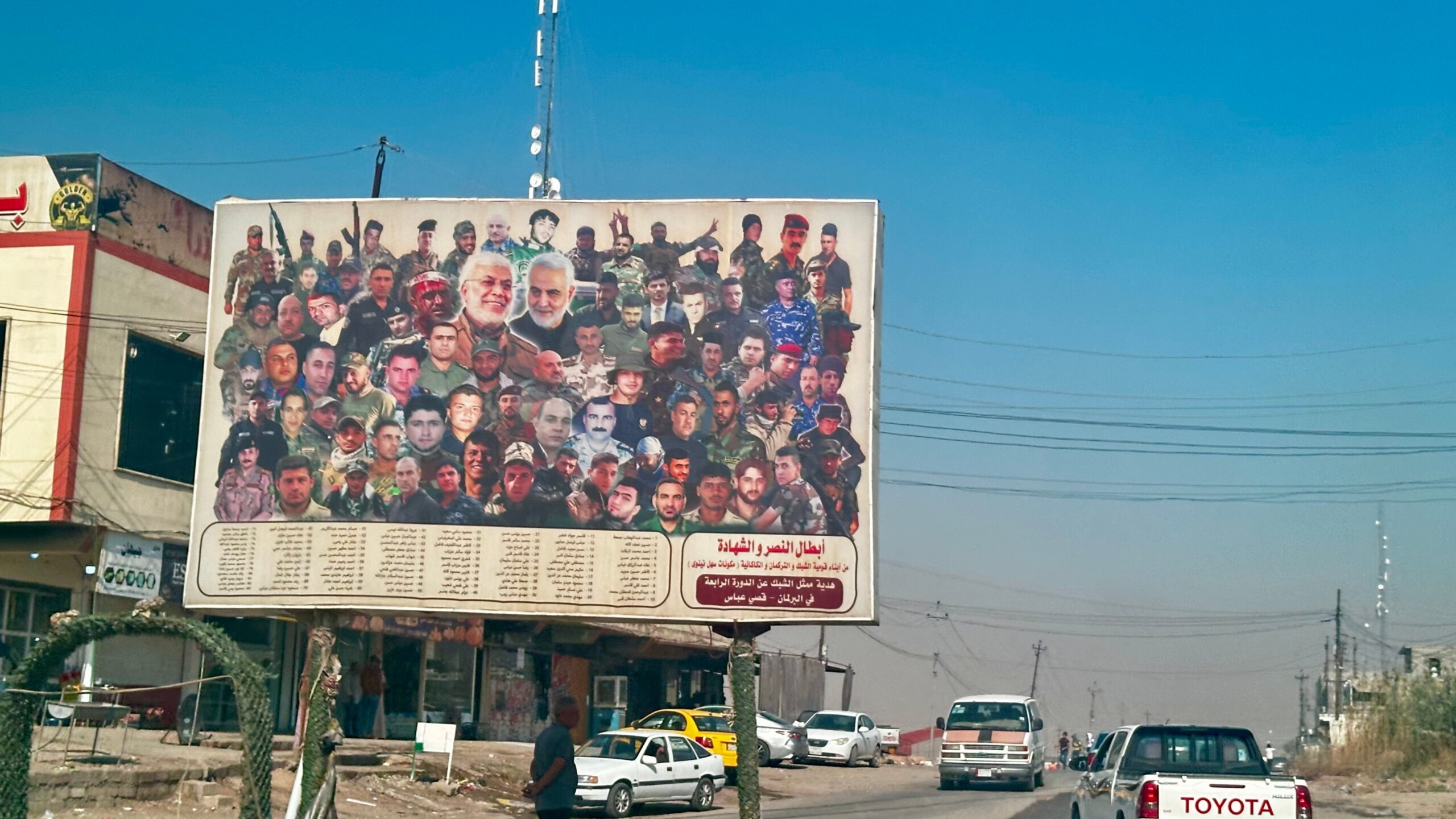
 Credit: Shutterstock/Obaida Hitto
 Lead researcher: Peter Salisbury
Partner: The Century Foundation
Duration: June 2025 – July 2026
Countries: Somalia, Sudan, Yemen, Lebanon
This mixed methods research project studies the transnational material and knowledge transfer networks that underpin the resilience and capability evolution of Iran-backed ‘Axis of Resistance’ groups across Yemen, the Levant, Somalia, and Sudan. It also considers implications for developing effective policy responses to these networked threats.
For more information regarding this research, contact [email protected]
The Beyond the Axis project demonstrates how Iran's Axis of Resistance has evolved from a centrally coordinated network into a resilient, self-sustaining ecosystem embedded within global supply chains and commercial networks. Drawing on extensive fieldwork, open-source investigations and data analysis, the research shows how armed groups develop increasingly sophisticated capabilities, adapt to disruption, exploit global commerce, and become more resistant to conventional military and policy responses. The project also introduces a "capability ladder" framework for understanding how non-state armed groups acquire and sustain advanced capabilities, offering policymakers a new tool for identifying emerging risks and designing more effective interventions. The findings highlight the need for policy approaches that move beyond targeting individual actors or supply routes and instead focus on ecosystem dynamics, the global proliferation of dual-use technologies, and long-term strategies to prevent armed groups from developing advanced military capabilities.
In addition to the flagship reports, Beyond the Axis, From smugglers to supply chains: How Yemen's Houthi movement became a global threat, and From spoke to hub:The Houthis in Africa, the research informed an episode of the Disorder podcast, Who is funding the Houthis?, which explored how the movement developed advanced weapons capabilities through global supply chains and considered the implications for regional security and arms control. At the report launch event, hosted by Century International, lead researcher Peter Salisbury discussed how Iran and allied groups developed resilient military procurement networks. He also shared insights from the research in an episode of the Order from Ashes podcast, highlighting the broader implications of the findings for modern conflict and global arms supply chains. The research was further featured in international media coverage, including Deutsche Welle's article, How drones transformed Iran's relationships with its proxies, which drew on the project's analysis of how drone proliferation and capability development have reshaped Iran's relationships with members of the Axis of Resistance.