


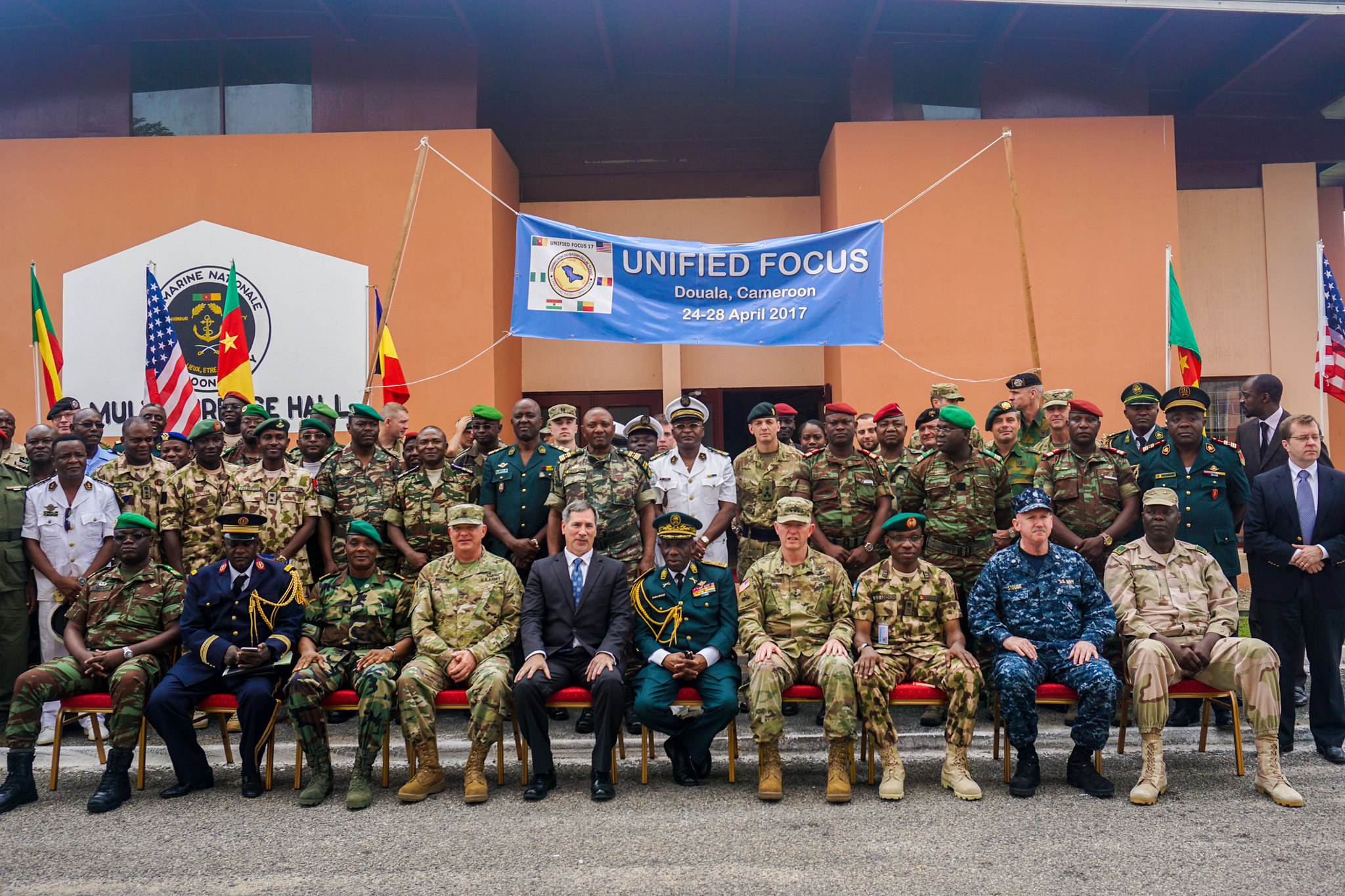
 Credit: US Army Africa Command, Creative Commons Licence 2.0
 Lead researcher: Dr Jillian Foster
Duration: March 2023 – August 2024
Countries: Nigeria
Terrorist organisations throughout Africa have evolved to become more transnational with increasing frequency in recent years. Their reach and influence, which have destabilising effects on governments and the people across the continent, are less restricted by the presence of national borders. For instance, Al-Qaeda in the Islamic Maghreb (AQIM) began in Algeria and now extends its impact into places like Mali. The Islamic State in the Greater Sahara (ISGS) has caused mayhem in Niger, Mali, and Burkina Faso. Al-Shabab in Somalia reaches fairly seamlessly into Uganda, Kenya, and Ethiopia. The Jamā'at Ahl as-Sunnah lid-Da'wah wa'l-Jihād, also known as Boko Haram (BH), has affected communities across Nigeria, Chad, Cameroon, and Niger. Indeed in 2022, the majority of the members of the Economic Community of West African States (ECOWAS) were battling jihadist in some manner.
To combat the growing influence of transnational terrorist organizations in Africa, governments and regional organizations in the continent have resorted to creating various forms of multi-country security partnerships, including the African Union Mission in Somalia (AMISOM) to address the threat of Al-Shabab and the Multinational Joint Task Force (MNJTF) against Boko Haram. In the case of Boko Haram, the group was initially treated as Nigeria’s own national challenge. Nigeria originally established the MNJTF in partnership with Chad, Niger, and Cameroon in 1994 to address armed banditry on the country’s northern border. In 2012, the deadly effects of BH were felt into Nigeria’s borderlands, encouraging the expansion of the MNJTF to tackle the escalating BH crisis. Despite the MNJTF reorganization to fight terrorism, the border communities in the Lake Chad Basin remain a terrorist haven.
This study worked to answer two key inquiries: first, identifying the factors influencing trust in multinational responses to terrorism in Africa; and second, examining the role of propaganda in either fostering or undermining support for multinational anti-terror campaigns. To address these queries, a survey experiment was conducted among residents in Borno State, Nigeria within the Lake Chad Basin.
Explore more about the project:
• Event | Multinational responses to terrorism in West Africa: the importance of trust
For more information regarding this research, contact [email protected]