


Date: 11 March 2026
Time: 13:00 – 14:00 GMT
Location: Online
Focusing on conflict-affected borderlands, this webinar examined how illicit, informal, and licit economic flows are often deeply intertwined. Moving beyond narrow crime-focused narratives, the session analysed when cross-border trade and mobility contribute to violence and exploitation, and when they instead sustain livelihoods, stability, and local order. By foregrounding grounded perspectives, the discussion challenged binary understandings of legality and offered a more nuanced view of how cross-border economies shape conflict and governance dynamics.
This was the third of a six‑part webinar series organised by the the Global Security Programme at the University of Oxford. The brings together leading scholars and practitioners to examine how conflict, governance, and illicit flows interact across borders, highlighting the growing significance of borderlands and emerging technologies. It will explore cross-border economies, trafficking networks, political transitions, and intervention dynamics, fostering policy-relevant, globally grounded debate.
Speakers:

Dr. Megan Stewart
An associate professor at the University of Michigan’s Gerald R. Ford School of Public Policy, where her research examines why and how shifts in social, economic, and political hierarchies – particularly across racial, gender, class, and religious or ethnic lines – are pursued and achieved, often in contexts shaped by war or political violence, using quantitative, qualitative, and experimental methods. She is the author of Governing for Revolution, which explains why some rebel groups undertake ambitious efforts to transform social orders during conflict while others do not, and her award‑winning work has been published in Comparative Political Studies, the Journal of Politics, the Journal of Conflict Resolution, International Organization, and other leading outlets, with features in the Washington Post, Political Violence at a Glance, and POMEPS. She received the Walter Isard Best Dissertation Award and an honourable mention from the APSA Conflict Processes Section.

Dr. Mohanad Hage Ali
Deputy Director for Research at the Malcolm H. Kerr Carnegie Middle East Center in Beirut. An academic and political journalist, he holds a PhD and MSc in Conflict Studies from the London School of Economics and Political Science. Specializing in nationalism and Islamic movements, he has written for major Middle Eastern and international media outlets, including Al Hayat, The Guardian, The Washington Post, and Foreign Affairs. At Carnegie, his research focuses on militant groups and illicit networks in the Levant.
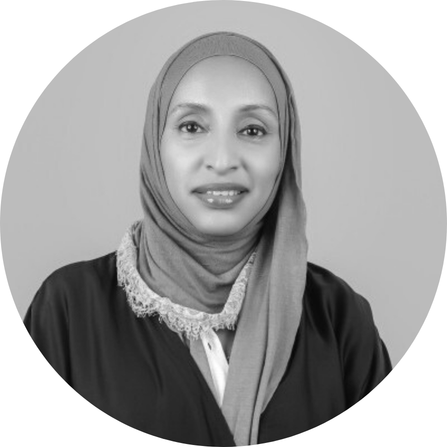
Samira Gaid
A leading regional security analyst with over two decades of professional experience in the HoA, including a decade in the security sector working at the highest levels in Somalia. Samira served as the Principal Security Advisor to the Prime Minister of the Federal Republic of Somalia. She led the extensive transformation and reform efforts of the Somali Security Sector, one of the key priorities for Somalia, by leading, coordinating, and implementing Somalia’s four-year Security Sector Reform (SSR) Strategy and
Roadmap (2017-20). She oversaw the PFM and HR reforms for all Somali National Security Forces and organizational change management efforts that enhanced the accountability and performance of the forces. She is currently a Senior Horn of Africa Analyst with Balqiis Insights, a Somalia based consultancy.
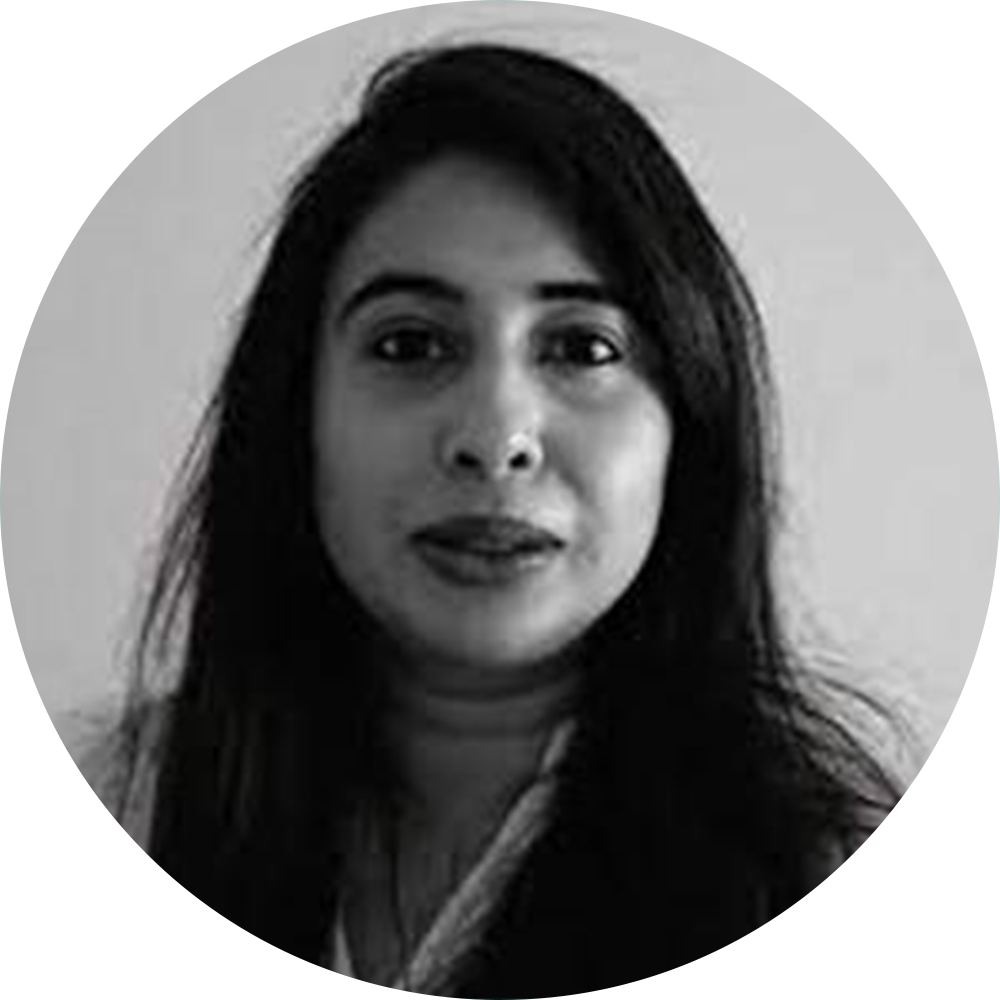
Azeema Cheema
A Founding Director at Verso Consulting where she leads the portfolio on Conflict, Fragility and Violence. Azeema has fifteen years of development sector experience. In addition to long-term positions with ADB and IRI, she has consulted for a range of multilateral, bilateral, and civil society organisations. She specialises in applied political economy and conflict sensitivity for complex programs. As a co-creator of the Mass Anxieties Project Azeema focuses on the discourse of violence and non-violence in social movements and developing communications frameworks to assist peace building. She has previously served as a Visiting Faculty member in public policy at the National Defence University and presently at Quaid-e-Azam University in Islamabad.
Moderator:
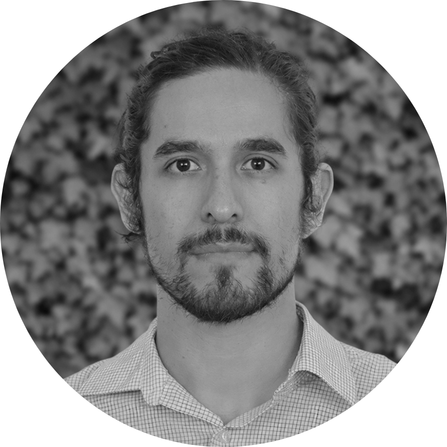
Dr. Hernán Manrique
A Postdoctoral Researcher at the University of Oxford’s Global Security Programme. His work takes an interdisciplinary approach to the study of illicit economies, governance, security, development and environmental degradation, with a particular focus on contested frontier regions in the Amazon biome and the Amazon–Andes interface. His research integrates GIS, spatial analysis, remote sensing and qualitative fieldwork to examine land‑use change, conflict and the impacts of drug trafficking and illegal gold mining. He holds a PhD in Biology from KU Leuven, along with master’s degrees in Statistics and Data Science and in Sustainable Development, and a BA in Sociology from the Pontificia Universidad Católica del Perú.