


Date: 4 March 2026
Time: 13:00 – 14:00 GMT
Location: Online
This session explored how Earth Observation (EO) and remote sensing technologies are reshaping conflict research and security governance. The discussion highlighted emerging efforts to integrate geospatial data with social science methods to better understand development, conflict, and human rights challenges, particularly in the Global South. The session also considered how combining EO-based insights with locally produced knowledge can strengthen monitoring, documentation, and policy responses in complex environments.
This was the second of a six‑part webinar series organised by the the Global Security Programme at the University of Oxford. The series will bring together leading scholars and practitioners to examine how conflict, governance, and illicit flows interact across borders, highlighting the growing significance of borderlands and emerging technologies. It will explore cross-border economies, trafficking networks, political transitions, and intervention dynamics, fostering policy-relevant, globally grounded debate.
Speakers:

Dr. Valerie Sticher
A senior researcher at the Center for Security Studies (ETH Zurich), where she uses qualitative and computational methods to study armed conflict. Her work focuses on how satellite data can support conflict research and humanitarian action, including projects that use nighttime light data to identify crises and deep learning to detect war‑related damage in open‑access imagery. She is Co‑Principal Investigator of two interdisciplinary initiatives on remote monitoring and conflict mapping. Her work has received several awards, including the 2024 Impact Award from the University of Zurich, the 2022 Young Scholar Award of the Swiss Political Science Association and the 2021 Cedric Smith Prize of the Conflict Research Society, and has been published in International Studies Quarterly, International Studies Review and the Journal of Peace Research.

Dr. Sebastian Schutte
A research professor at the Peace Research Institute Oslo (PRIO). Sebastian’s research investigates political violence, insurgencies, and civil wars using spatial and quantitative methods. He holds a PhD in political science from ETH Zürich and master’s degrees from the University of Freiburg and ETH Zürich. Sebastian currently serves as editor-in-chief of the Journal of Peace Research.

Lars Wirkus
Head of Research Infrastructure and Data at the Bonn International Centre for Conflict Studies (BICC). He leads the development of BICC’s research environment, including data policies and research data management structures, and oversees interactive databases and WebGIS platforms on topics such as arms exports, small arms control, global militarisation, war and peace, and forced migration. A geographer by training, he specialises in the use of remote sensing and GIS for analysing climate change, natural resource management and violent conflict. His work increasingly engages with new data sources such as call detail records and social media, alongside a strong focus on data ethics and the implications of digitisation.
Moderator:
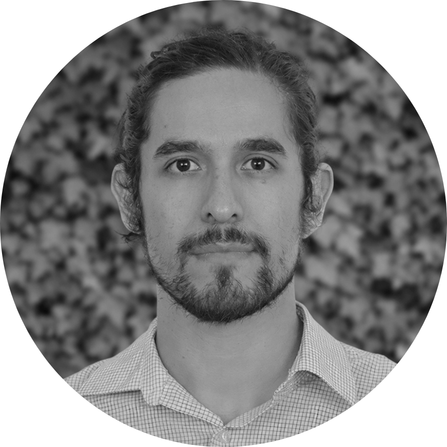
Dr. Hernán Manrique
A Postdoctoral Researcher at the University of Oxford’s Global Security Programme. His work takes an interdisciplinary approach to the study of illicit economies, governance, security, development and environmental degradation, with a particular focus on contested frontier regions in the Amazon biome and the Amazon–Andes interface. His research integrates GIS, spatial analysis, remote sensing and qualitative fieldwork to examine land‑use change, conflict and the impacts of drug trafficking and illegal gold mining. He holds a PhD in Biology from KU Leuven, along with master’s degrees in Statistics and Data Science and in Sustainable Development, and a BA in Sociology from the Pontificia Universidad Católica del Perú.