


Date: 18 November 2026
Time: 14:00 – 15:00 GMT
Location: online via Microsoft Teams
Critical minerals are key for the renewable energy transition as well as for many high-tech and military applications. Consequentially, the extraction of such minerals is increasing rapidly. This poses a dilemma, particularly where mineral deposits are located in conflict-affected regions. On the one hand, policy makers need to facilitate such mining expansion to secure supply chains and expand renewable energies. But on the other hand, mining often has adverse impacts on the environment and human rights, and the associated conflicts can threaten mineral supplies.
How do states, companies, and civil society deal with this dilemma? And are there potential synergies between critical mineral mining, environmental protection, and social rights?
At this event, we reflected on policies and strategies to critical mineral mining in the contexts of geopolitical competition, supply chain security, social justice, and environmental sustainability.
Speakers:
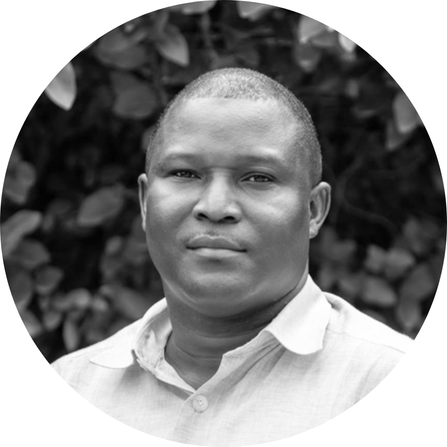
Daryl Bosu
Deputy National Director of A Rocha Ghana, a leading Ghanaian conservation organisation working across Ghana’s most ecologically sensitive landscapes and partnering with initiatives across the sub-region. He heads the organisation’s operations and leads its national policy and legal advocacy, which aims to advance the intergenerational value of nature’s ecosystem services while upholding social and environmental safeguards and rights in the use and management of natural resources. His work has a specific focus on forest and biodiversity risk commodities, as well as the extractive industries.
He has over 20 years’ experience working on sustainable natural resource governance and low-emissions, nature-centred development.
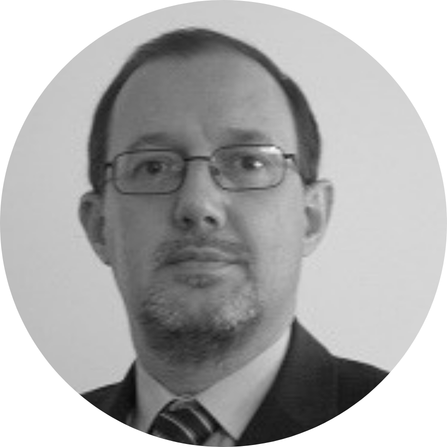
Joel Watson
A career diplomat, Joel Watson joined the Foreign & Commonwealth Office (FCO) in 1989. He currently works as the Head of Bilateral and Industry Team in the International Critical Minerals Team in the UK’s Foreign, Commonwealth & Development Office. He has been working on critical minerals for four years.
Prior to his current role Joel was the Head of the Emerging Economies Team, responsible for the UK’s bilateral energy relationship with India and China in the FCDO’s International Energy Unit.
Joel has completed five overseas postings; his last posting was as the Head of the Political & Communications Team at the British High Commission in New Zealand. Prior to that Joel was the Deputy Head of the FCO’s Global Strategic Impacts Team in London co-ordinating the FCO’s work on the threats posed to the UK’s national security in relation to climate change and resource security.
Joel has previously served overseas in the British High Commissions in Belize, Pakistan and Vanuatu and at the British Embassy in Qatar. He has also worked in London on European Union and International Security Policy issues.
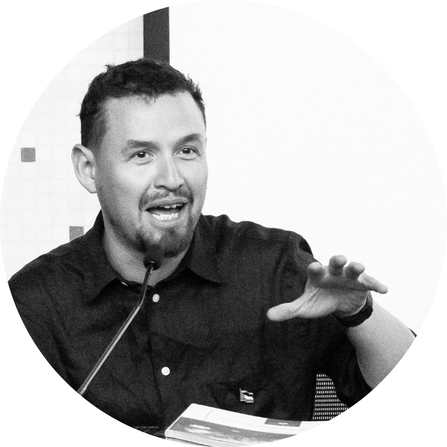
Ramon Balcazar
A Ph.D. candidate in Rural Development at the Autonomous Metropolitan University (UAM). He’s the Director at Fundación Tantí and co-coordinates OPSAL (Plurinational Observatory of Andean Salt Flats). Taking a participatory approach, his militant research sits at the intersection of multilateral climate policies and the subsequent expansion of green extractivism across Indigenous/rural territories in the Atacama Desert, northern Chile. Areas of expertise are rural development, agroecology, climate justice, international trade and extractivism, hydrosocial movements, and just transitions.

Shahila Perumalpillai
A human rights and social performance specialist with more than 20 years’ experience across the mining, energy and finance sectors. She brings insight into the human rights challenges associated with mining and the growing demand for minerals needed for the energy transition. At Anglo American, Shahila provides strategic guidance on human rights due diligence, governance and disclosure, supporting the integration of human rights considerations into business decision-making. Her previous roles have focused on economic inclusion and livelihoods through developing and implementing partnerships at local and international levels, and her experience includes human rights and social impact assessment, responsible supply chains, investment due diligence, and social impact management systems in alignment with international standards.

Zung Ting
An ethnic Kachin from Kachin State, northern Myanmar, with more than 20 years of experience in grassroots community development, natural resource governance, environmental justice, indigenous rights and just energy transition.
He is currently Technical Advisor at HTOI Gender Development Foundation and a Member of the Kachin Resources Concern Group (KRCG). He has previously worked with the Pestalozzi Children’s Foundation, the Myanmar Gems and Jewelry Entrepreneurs Association, the Japan Embassy in Yangon and SWISSAID.
He is a researcher, writer, public speaker and civil society leader whose work focuses on environmental governance, indigenous peoples’ rights, rare earth mining and the Myitsone Dam issue in Myanmar. He holds a Master of Environmental Studies from Nagoya University, Japan, and pursued doctoral studies in Political Science at Chulalongkorn University, Thailand, researching the impacts of rare earth extraction on the environment and local communities in Kachin State.
Moderator:
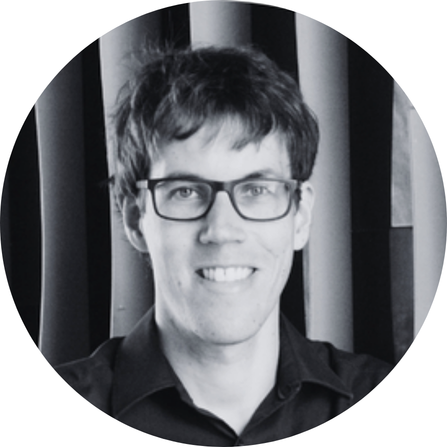
Tobias Ide
The XCEPT Conflict and Climate Research Fellow and a Professor of Peace and Conflict Studies at the Peace Research Institute Frankfurt (PRIF) and the Technical University of Darmstadt. Holding PhDs in Political Science and Earth Science, he studies the intersections of climate change, the environment, peace, and conflict. This has resulted in several books, over 60 journal articles, and strong engagement with a range of decision makers.