


Date: 1 October 2026
Time: 14:00 – 15:15 BST | 16:00–17:15 EAT
Location: online via Microsoft Teams
South Sudan’s borderlands are often portrayed as peripheral spaces shaped by conflict, insecurity and state absence. In practice, they are also places where authority is exercised through checkpoints, survival depends on migration and trade, and communities are left to navigate the consequences of conflict and economic crisis. Across these regions, communities continue to negotiate authority in gendered ways, sustain livelihoods and respond to violence through their own institutions and practices, with women often playing key roles outside of formal infrastructure.
Bringing together researchers from across the XCEPT programme, this webinar explored how power, governance and survival are shaped in everyday life, from cross-border migration and labour routes in Northern Bahr el-Ghazal and the Sudan-South Sudan borderlands, to women’s peacebuilding and political agency in Greater Pibor, and the informal systems of taxation and authority that structure checkpoint economies across South Sudan’s trade corridors.
Together, these perspectives challenge conventional assumptions about statehood, markets and conflict, highlighting how authority is exercised, contested and reimagined through locally grounded forms of organisation and economic exchange, as well as through extraction and exploitation by elites. The discussion considered what these realities mean for policymakers seeking to support peace and better governance in South Sudan.
Speakers:
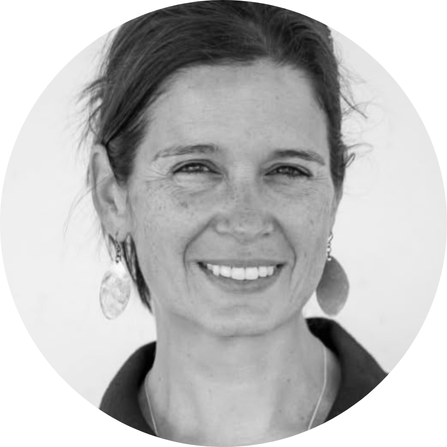
Diana Felix Da Costa
An anthropologist and researcher whose work focuses on conflict, governance and political authority in South Sudan. Her research draws on long-term ethnographic engagement with Murle communities in the Greater Pibor Administrative Area, where she has conducted research since 2011. Her work explores how authority and political knowledge are produced and communicated through embodied and performative practices, including song and dance, and what these reveal about social change, belonging, generational and gender relations, and ways of navigating uncertainty and conflict. Her work bridges academic research and applied policy and practice, including previous roles with UNMISS, the Danish Refugee Council and the Norwegian Institute of International Affairs (NUPI). She is an Associate Researcher at SOAS University of London and is currently completing a book on youth, embodied politics and generational authority among the Murle, forthcoming with James Currey.

Ferenc Dávid Markó
A social anthropologist specializing on the political economy and the fracturing of South Sudan since 2013. He carried out dozens of fieldtrips, accumulating more than 30 months of fieldwork experience in South Sudan. Currently, Markó is consulting the World Bank Group as a Fragility, Conflict and Violence advisor, and the Centre for Humanitarian Dialogue as a senior researcher. He is teaching anthropological theory, crisis management and anthropology of Africa at the Department of Cultural Anthropology of ELTE University, Budapest, where he is also the research director of the ELTE Africa Research Group. Previously, Markó worked for the International Crisis Group and the Small Arms Survey at the Geneva Graduate Institute.

Joshua Craze
A writer and researcher who is finishing a book for Fitzcarraldo Editions on war, bureaucracy, and silence in the Sudans. He regularly writes essays and fiction for the New York Review of Books, Boston Review, New Left Review, and n+1, amongst many other publications. He has spent eighteen years researching conflict in the Sudans for Small Arms Survey, the Centre for Humanitarian Dialogue, WFP, and the Norwegian Refugee Council, amongst many, many other organizations. He is a fellow at the Centre on Armed Groups and Type Investigates and was the UNESCO Artist Laureate in Creative Writing in 2014. He is currently a research fellow at the New York Public Library.

Joseph Diing Majok
A current PhD student in African Studies, University of Edinburgh, and a long-time research consultant with the Rift Valley Institute (RVI) in South Sudan. He has contributed to numerous research projects, including XCEPT where he was a member of the Local Research Network. Through XCEPT, Majok has co-authored and independently written several reports, policy briefs and blogs on cross-border migrations, militarisation and livelihood transitions.
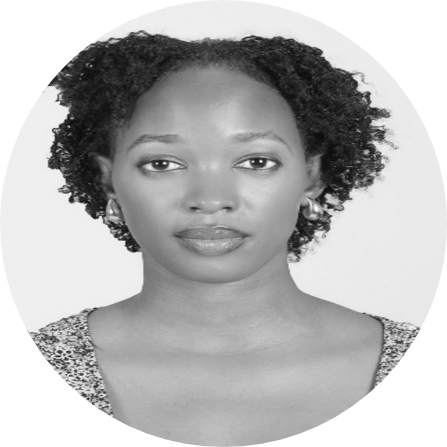
Kongkong Marshall Babanen
A young feminist activist from the Greater Pibor Administrative Area (GPAA), South Sudan, deeply committed to advancing gender justice and youth empowerment. Her research explores how Murle women utilise cultural arts and traditional mediums for communication, centering indigenous women’s voices within community discourse. She completed a five‑month political‑mindset training with the Friedrich‑Ebert‑Stiftung (FES), and subsequently implemented a three‑month practical project under the same foundation. In youth governance, she previously served as Deputy Chairperson of the Upper Nile Region Youth Union, and currently holds the position of Deputy Secretary for Information at the South Sudan National Youth Union. She advocates for inclusive youth participation and amplification of women’s perspectives in public spaces. Presently, she is pursuing a master’s degree in China, continuing to build expertise to drive meaningful social change back in South Sudan.
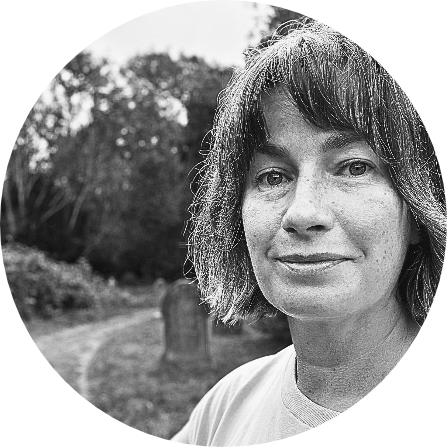
Nicki Kindersley
A historian of work and popular political theory focused on South Sudan and its borderlands. She is senior lecturer in African history at Cardiff University, and a visiting teaching fellow at the University of Juba School of Education. Her book New Sudans: Wartime Intellectual Histories in Khartoum (CUP, 2025) was shortlisted for the African Studies Association’s Bethwell A. Ogot Book Prize.
Moderator:
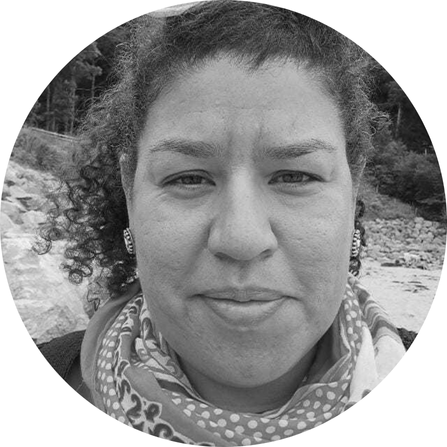
Hannah Stogdon
A Senior Research Manager for XCEPT, based in Nairobi. Until April 2024, Hannah was the head of the Rift Valley Institute (RVI) office in Addis Ababa, where she lived for three years, setting up the Foreign Commonwealth & Development Office-funded Peace Research Facility. Over the past 19 years, Hannah has lived and worked in Nairobi, Addis Ababa, and Khartoum where she served in the UN Mission in Sudan in the political affairs section. She has also worked with the International Crisis Group and Saferworld, focusing on the Horn of Africa.