


Date: 17 June 2026
Time: 09:30 – 12:30 BST
Format: Two 75-minute sessions with a 30-minute break in between
Location: online via Microsoft Teams
More than a decade of violent conflict involving Boko Haram and its splinter factions has deeply affected communities across the Lake Chad Basin, particularly in north-east Nigeria and the Far North of Cameroon. Since around 2016, and accelerating after 2021, tens of thousands of individuals – including fighters, abductees, family members, and civilians living under armed group control – have exited Boko Haram and returned to civilian society. These exits have not only reshaped the conflict landscape, but have also placed significant strain on communities, institutions, and policy responses tasked with managing return, reintegration, reconciliation, and the prevention of recurrence.
This workshop examined new evidence on conflict exits and reintegration in the Lake Chad Basin emerging from Professor Daniel Agbiboa’s latest research – in partnership with the expertise of the UNIDIR’s Managing Exits from Armed Conflict (MEAC) project. The workshop brought together policymakers, practitioners and researchers to reflect on what current evidence tells us about reintegration, its gendered dynamics, and how more context-responsive approaches can support stronger outcomes.
Session one – 09:30-10:45 | Afterlives: Conflict exits and reintegration in the Lake Chad Basin
This session explored how people leave armed groups and what enables them to stay out. It examined why individuals disengage, what kind of support prevents their return, and where current exit pathways fall short. Drawing on XCEPT and MEAC research, it also looked at how communities negotiate and accept returnees, and how responses can better reflect lived realities to support more durable exits from violence.
Speakers:

Daniel Agbiboa
An Associate Professor of African and African American Studies at Harvard University, where he is also affiliated with the Weatherhead Center for International Affairs, the Bloomberg Center for Cities, the Harvard Center for African Studies and the Harvard Mellon Urban Initiative. A former Assistant Professor of Conflict Analysis and Resolution at George Mason University and Postdoctoral Fellow at the University of Pennsylvania, he holds a DPhil from Oxford and an MPhil from Cambridge. His research examines violence and order, urban governance, mobility, environmental politics, empire and African subjectivity, using discourse analysis and ethnographic methods. He is the author and editor of several influential books on urban politics and mobility in Africa, and his scholarship has received numerous major awards, including honours from the International Studies Association, APSA and the American Sociological Association.
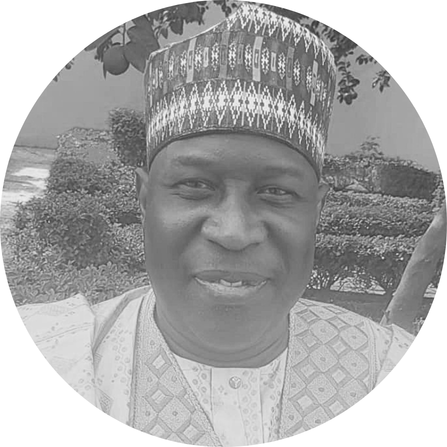
Saibou Issa
A Professor of History and Security Studies at the University of Maroua, Cameroon, and currently serves as Co-Director of the Observatory on Organized Crime and Violence in Central Africa, a joint initiative of the Institute for Security Studies (ISS) and the Global Initiative Against Transnational Organized Crime (GI-TOC), funded by the European Union. He has extensive research experience on criminality, conflict, peacebuilding, and security dynamics in the Lake Chad Basin and Central Africa. In 2019, he served as Chairman of the Disarmament, Demobilization, and Reintegration (DDR) Commission during Cameroon’s Major National Dialogue. His work focuses on the intersections of security, governance, organized crime, and conflict transformation in the region.

Siobhan O’Neil
Head of UNIDIR’s Managing Exits from Armed Conflict (MEAC) Project, which examines trajectories into and out of armed groups in order to inform policy and practice. Previously, Siobhan managed the United Nations University (UNU)’s research on the future of DDR and on children and extreme violence. She has worked as a consultant to the United Nations Mine Action Service (UNMAS) and as a research analyst at the RAND Corporation. After 9/11, Siobhan had a career in counterterrorism and homeland security, working with the New York State Office of Homeland Security, New Jersey Office of Homeland Security Preparedness, and as the analyst for domestic security and intelligence at the Congressional Research Service (CRS). Siobhan has a PhD in international relations from UCLA, an MA in Homeland Security and Defense from the Naval Postgraduate School, and an M.Litt. in International Security Studies from the University of St. Andrews.
Moderator:
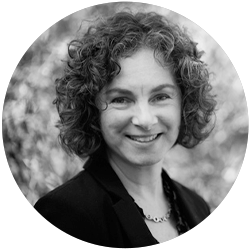
Ruth Citrin
XCEPT Executive Director. Ruth brings a rare, proven ability to translate research and analysis into actionable policy and previously served as director for Syria at the White House National Security Council, policy planner on then Secretary John Kerry’s staff, and senior Levant analyst with the US Department of State. She is the former director of the European Council on Foreign Relations (ECFR) Middle East and North Africa programme.
Break – 10:45-11:15
Session two – 11:15-1230 | Gendering exit: Barriers faced by women and girls face in returning to civilian life
This session explored the distinct, often overlooked challenges faced by women and girls exiting Boko Haram and reintegrating into civilian life, including barriers to leaving forced marriages, limited access to tailored reintegration support, and ongoing stigma and insecurity. It highlighted how these gendered obstacles affect their ability to rebuild their lives, and identified practical, context-sensitive responses to strengthen protection, agency and reintegration outcomes across the Lake Chad Basin.
Speakers:
Daniel Agbiboa
An Associate Professor of African and African American Studies at Harvard University, where he is also affiliated with the Weatherhead Center for International Affairs, the Bloomberg Center for Cities, the Harvard Center for African Studies and the Harvard Mellon Urban Initiative. A former Assistant Professor of Conflict Analysis and Resolution at George Mason University and Postdoctoral Fellow at the University of Pennsylvania, he holds a DPhil from Oxford and an MPhil from Cambridge. His research examines violence and order, urban governance, mobility, environmental politics, empire and African subjectivity, using discourse analysis and ethnographic methods. He is the author and editor of several influential books on urban politics and mobility in Africa, and his scholarship has received numerous major awards, including honours from the International Studies Association, APSA and the American Sociological Association.

Francesca Batault
An Associate Researcher at UNIDIR’s Managing Exits from Armed Conflict (MEAC) project, where she coordinates the project’s work in the Lake Chad Basin. Prior to joining UNIDIR, Francesca worked on humanitarian mine action and weapons dynamics in the Lake Chad Basin for Mines Advisory Group, as well as the International Committee of the Red Cross (ICRC) and the International Crisis Group (ICG). Her research interests and expertise include conventional arms control, dynamics of armed group violence, conflict prevention and mediation, international humanitarian law, and protection of civilians during armed conflict. Francesca received a Master’s degree in International Relations from the London School of Economics and Political Science, and a Bachelor’s degree in Politics, Philosophy and Economics from Northeastern University.
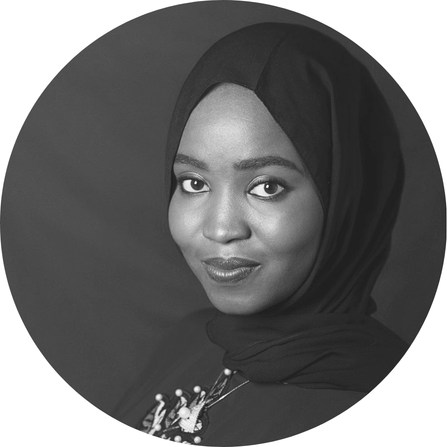
Fatima Yetcha Ajimi Badu
A Senior Researcher at Mobukar Consultancy Services. Fatima lives and works in Maiduguri, Nigeria, where she has worked as a research consultant and full-time field Researcher for INGOs and government agencies in nNorth-eastern Nigeria. She hasd worked with both adults and children and specializes in research with women and girls who are impacted by the Boko Haram conflict.