


Date: 30 September 2026
Time: 14:00 – 15:15 BST | 16:00–17:15 EAT
Location: online via Microsoft Teams
What explains the persistence of political order in contested borderlands that are marked by armed conflict, weak state institutions, and intense competition over resources? How do political, military, and economic elites establish authority in these environments? And what are the implications for peacebuilding, development, and international engagement?
From the mineral-rich frontier regions of Pakistan, to Iraq’s disputed territories, to the borderlands of Sudan and South Sudan, political authority often relies on complex relationships between formal institutions, armed actors, business networks, and local communities. New XCEPT research shows how elite actors shape access to resources, mediate conflict, influence patterns of governance, and maintain political and economic power in settings where territorial control and state authority remain contested.
As part of the XCEPT Contested Borderland Elite Trajectories (CBET) project, this webinar presents findings from three new studies. The first examines Pakistan’s western borderlands, namely North and South Waziristan, where a rapidly expanding minerals sector is creating new “frontier moments” that reshape authority and resource extraction. The second explores Iraq’s disputed territories in the Kurdistan Region, showing how competing elite projects and frontier dynamics complicate efforts to build stability and support economic development. The third focuses on the Sudan-South Sudan borderlands, revealing how military entrepreneurs and commercial elites rule through a combination of resource control, coercion, and limited forms of social provision.
Bringing together researchers from across the three case studies, the discussion will also consider what these findings mean for policymakers, donors, investors, and international organisations working in fragile and conflict-affected settings.
Speakers:
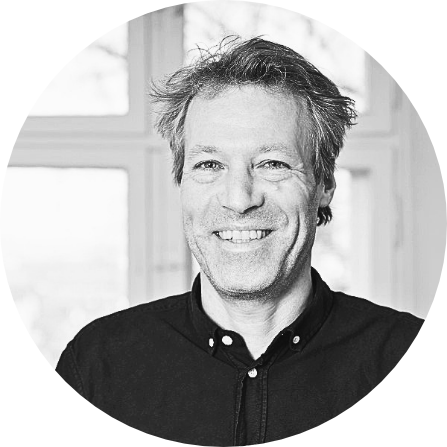
Tobias Hagmann
An XCEPT Fellow, Senior lecturer at the University of Basel and Senior Program Officer with swisspeace. A political scientist by training, his research focuses on the sociology of the state, qualitative conflict research, and international development with a particular focus on the Horn of Africa. Tobias has held appointments at universities and think tanks in Denmark, Switzerland and the US. He has consulted for various development and international organizations. His latest book (with Finn Stepputat) is Trade makes states: Governing the greater Somali economy (Hurst/OUP 2023).
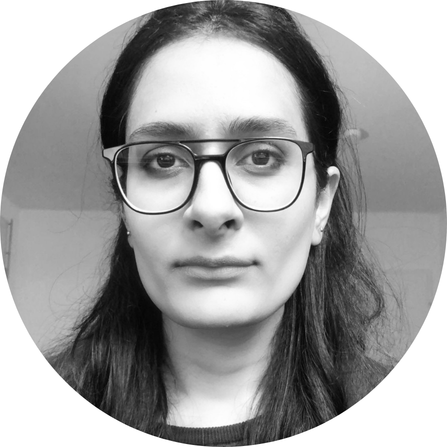
Faryal Khan
A doctoral researcher at the University of Bonn and a Fellow at the Bonn International Centre for Conflict Studies (bicc). Her work examines transnational militancy and resource politics in Pakistan’s western borderlands, with a particular focus on Waziristan and the Pakistan–Afghanistan borderland. Her research brings together conflict studies, borderland research, and political economy to analyse how armed conflict, military operations, displacement, and extractive economies shape political life in frontier regions. Her current work focuses on hydrocarbons, minerals, and cross-border trade, and on how communities, state actors, and external investors contest land, security, and benefit-sharing.
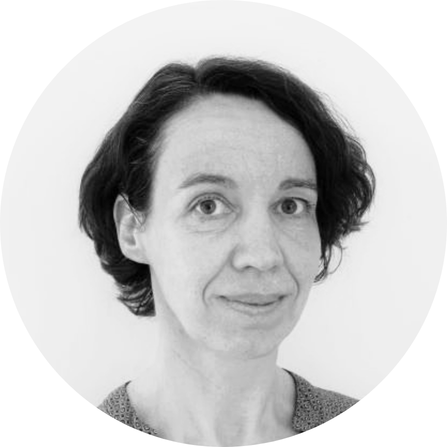
Katja Mielke
A political sociologist and postdoctoral researcher at the Bonn International Centre for Conflict Studies (bicc), her research focuses on ‘the political’ at the intersection of conflict, migration and development studies. Her work explores questions of (non/violent) order(ing), power, and the production of knowledge in and about conflict-affected settings. For more than two decades, she has conducted extensive field research in South and Central Asia, particularly in Afghanistan, Pakistan and their shared borderlands. Her research interests include state–society relations, local governance – including structures of representation, authority and legitimacy – and resource politics.
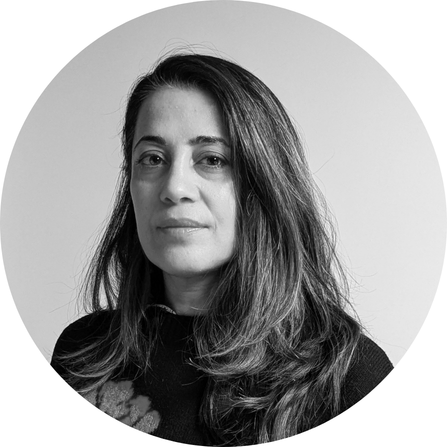
Zeynep Kaya
A lecturer in international relations at the University of Sheffield and an academic associate at Pembroke College, University of Cambridge. She holds a PhD from the LSE and specialises in nationalism, territoriality, self-determination, gender and conflict in Middle Eastern borderlands. Her monograph, Mapping Kurdistan: Territory, Self-Determination and Nationalism, was published by Cambridge University Press in 2020. She also co-edits the I.B. Tauris Kurdish Studies series and co-runs Kurdish Studies at the LSE Middle East Centre.
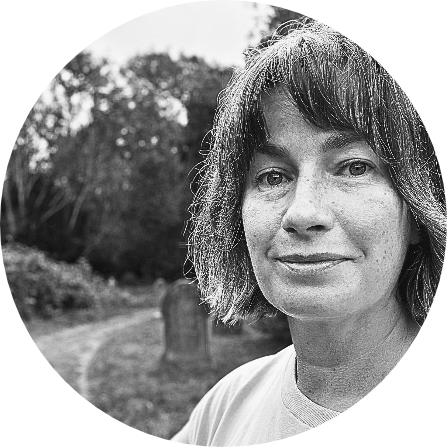
Nicki Kindersley
A historian of work and popular political theory focused on South Sudan and its borderlands. She is senior lecturer in African history at Cardiff University, and a visiting teaching fellow at the University of Juba School of Education. Her book New Sudans: Wartime Intellectual Histories in Khartoum (CUP, 2025) was shortlisted for the African Studies Association’s Bethwell A. Ogot Book Prize.
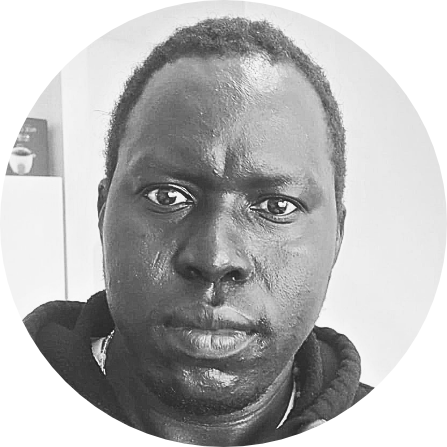
Joseph Diing Majok
A current PhD student in African Studies, University of Edinburgh, and a long-time research consultant with the Rift Valley Institute (RVI) in South Sudan. He has contributed to numerous research projects, including XCEPT where he was a member of the Local Research Network. Through XCEPT, Majok has co-authored and independently written several reports, policy briefs and blogs on cross-border migrations, militarisation and livelihood transitions.
Moderator:
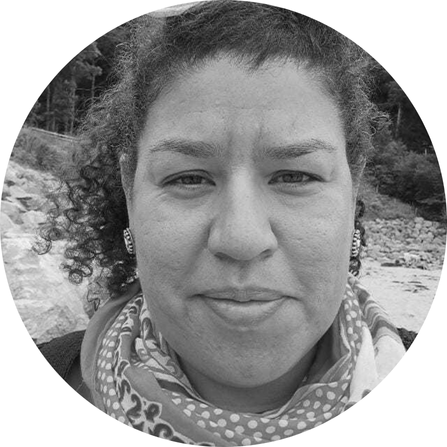
Hannah Stogdon
A Senior Research Manager for XCEPT, based in Nairobi. Until April 2024, Hannah was the head of the Rift Valley Institute (RVI) office in Addis Ababa, where she lived for three years, setting up the Foreign Commonwealth & Development Office-funded Peace Research Facility. Over the past 19 years, Hannah has lived and worked in Nairobi, Addis Ababa, and Khartoum where she served in the UN Mission in Sudan in the political affairs section. She has also worked with the International Crisis Group and Saferworld, focusing on the Horn of Africa.